Local culture · June 29, 2026
Wat Sri Suphan: Chiang Mai's Silver Temple on Wualai Road
By The Ada House team
Some temples in Chiang Mai impress you with gold; one impresses you with silver. Walk a few minutes south of the Old City, down the craft-lined length of Wualai Road, and you will find Wat Sri Suphan — the Silver Temple — where an entire ordination hall shimmers with hand-tooled metalwork. It is one of our favourite places to send guests who have already seen the famous gilded halls and want something quieter, stranger and made entirely by the neighbourhood around it.
The silver ordination hall
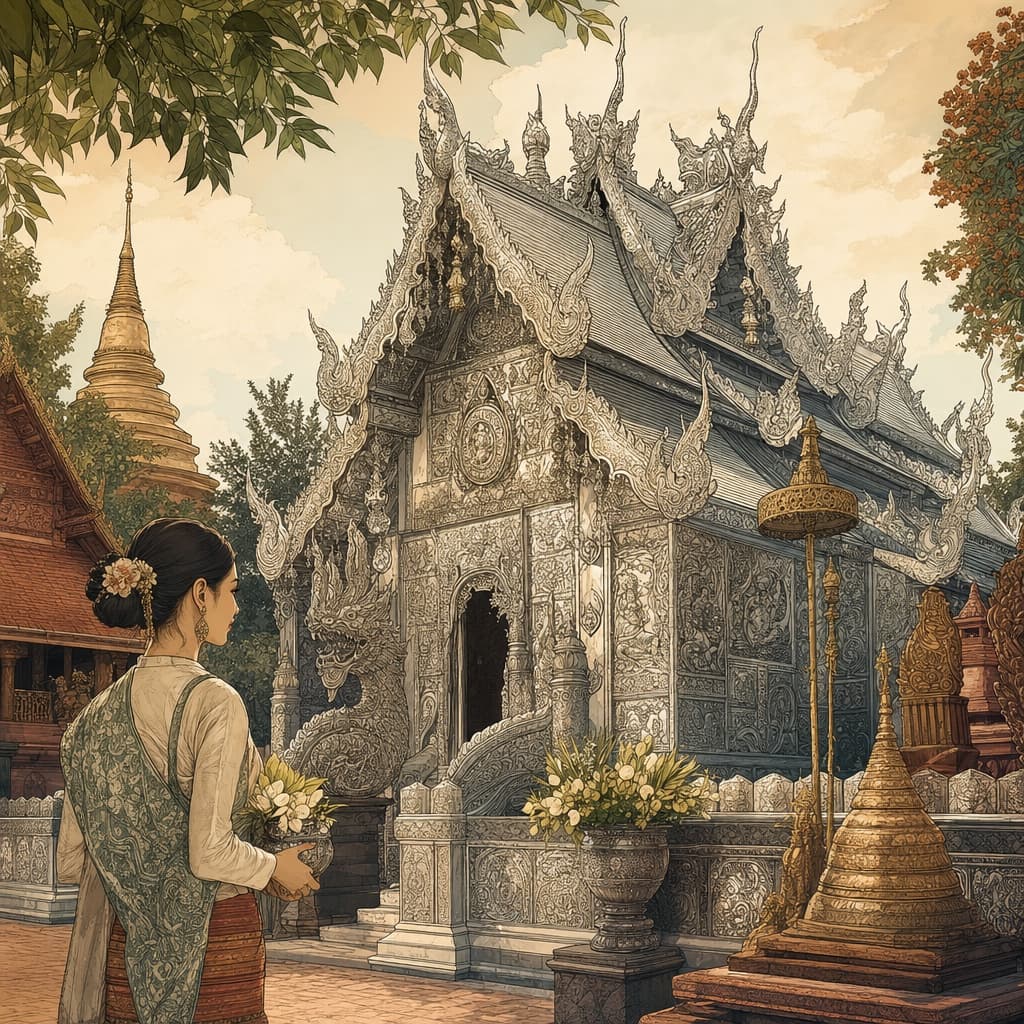
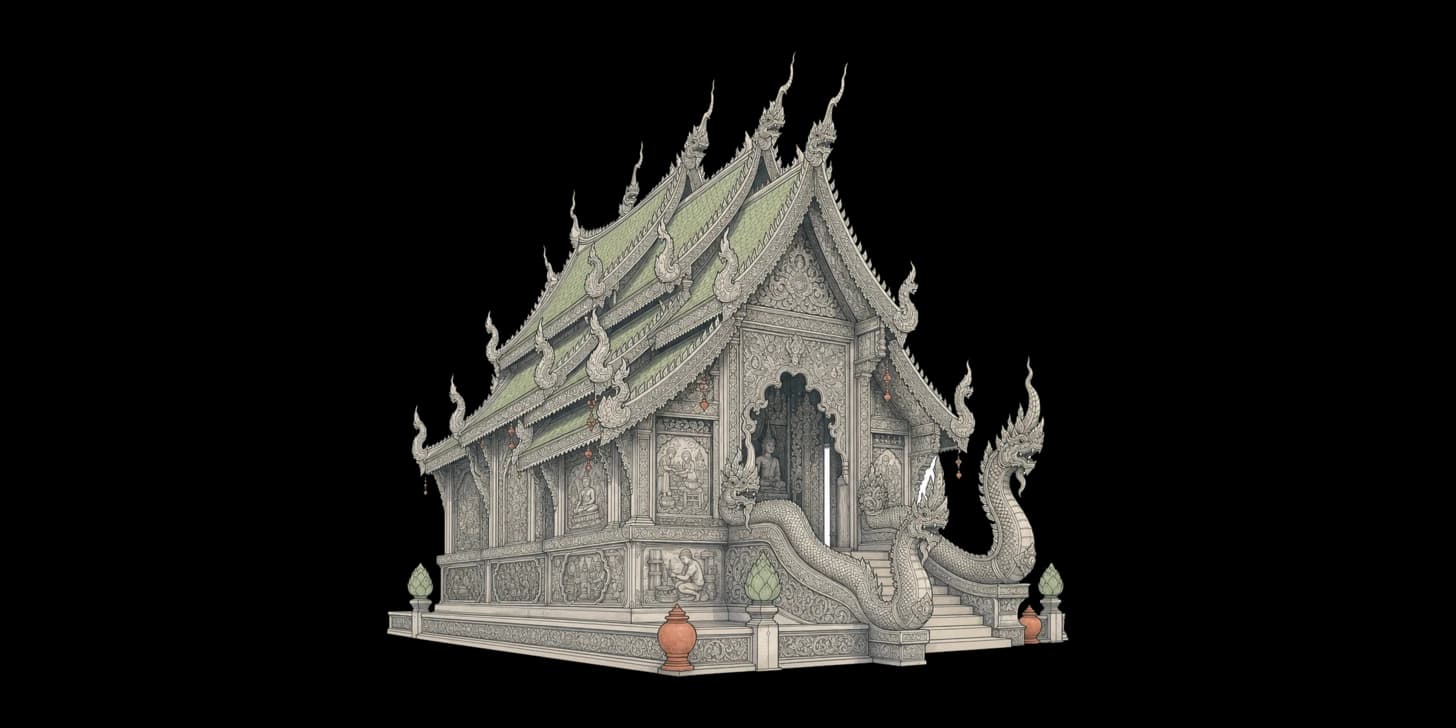
The showpiece is the ubosot, or ordination hall, and there is genuinely nothing else like it in the city. Walls, ceiling, pillars and panels are clad in silver, nickel and aluminium repoussé — sheets of metal hammered and tooled by hand from behind to raise the designs into relief. Up close you can read whole stories in it: scenes from the Buddha's life, Lanna motifs, elephants, lotus, the zodiac, even a few modern flourishes the silversmiths slipped in. In daylight it glows a soft pewter grey; after dark, lit up, it turns properly dazzling. Where temples like Wat Phra Singh and Wat Chedi Luang dazzle with gold leaf and teak, this one dazzles with the work of metalsmiths' hands.
A craft quarter centuries in the making
Wat Sri Suphan was founded around 1502, in the early Mangrai era, at the heart of the Wualai silversmith quarter — a community of metalworkers who have hammered bowls, jewellery and offering vessels here for generations. That heritage is the whole point of the silver ubosot: the temple's abbot conceived it as a way to honour the neighbourhood's craft, and the people who made it are the very silversmiths who live and work on the surrounding lanes. So while the temple is old, the silver cladding you see is a recent, ongoing labour, built panel by panel over years. It belongs firmly in any tour of the Old City's temples, but it tells a different story from the rest: not royal patronage, but a living trade.
Why women may not enter the ubosot
There is one thing to know before you go, and we'd rather you heard it from us than felt caught out at the door. By a centuries-old monastic rule, women may not enter the ubosot itself. It's an old convention attached to the ordination hall as a consecrated space, the kind of boundary you'll find explained in any introduction to Thai Buddhist practice — not a judgement, and not unique to here, simply observed. The good news: the rest of the grounds are open to everyone, and the exterior of the hall — arguably the most photogenic part — can be admired in full from a few steps away. Signs at the entrance set this out plainly, and a little awareness of temple etiquette goes a long way at any Chiang Mai wat.
Saturday nights on Wualai Road
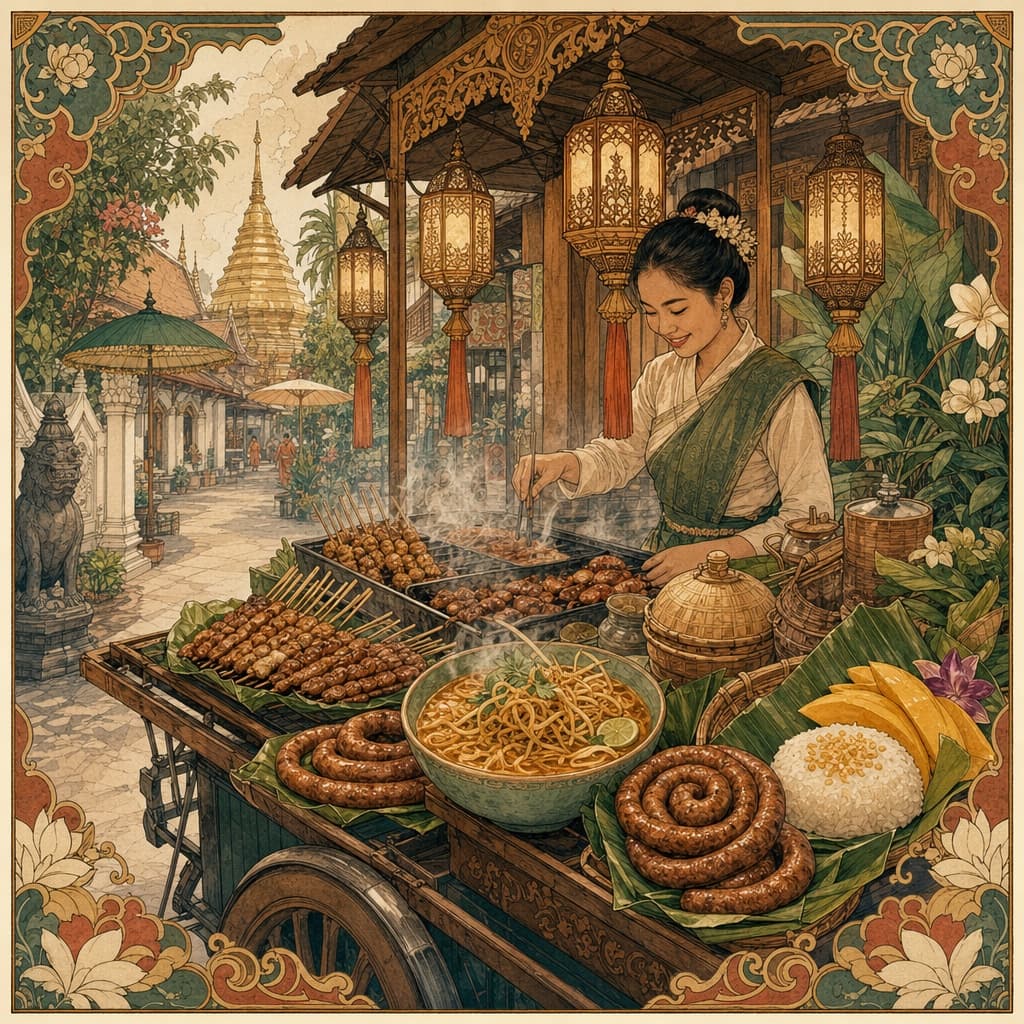
Time your visit for a Saturday evening and the temple becomes the anchor of a whole night out. Wualai Road is closed to traffic and transforms into the Saturday Walking Street — the silversmiths' own market, smaller and a touch more local than its Sunday cousin in the Old City. You can wander past food carts and craft stalls, then duck into the temple grounds to find the ubosot lit and, often, artisans tapping away at metal under the lights. There's frequently a light-and-sound element in the evening too. It's an easy, unhurried couple of hours, and it slots neatly into a few days in Chiang Mai if your stay happens to span a weekend. We always tell guests: see it once in daylight for the detail, once after dark for the glow.
Meeting the silversmiths
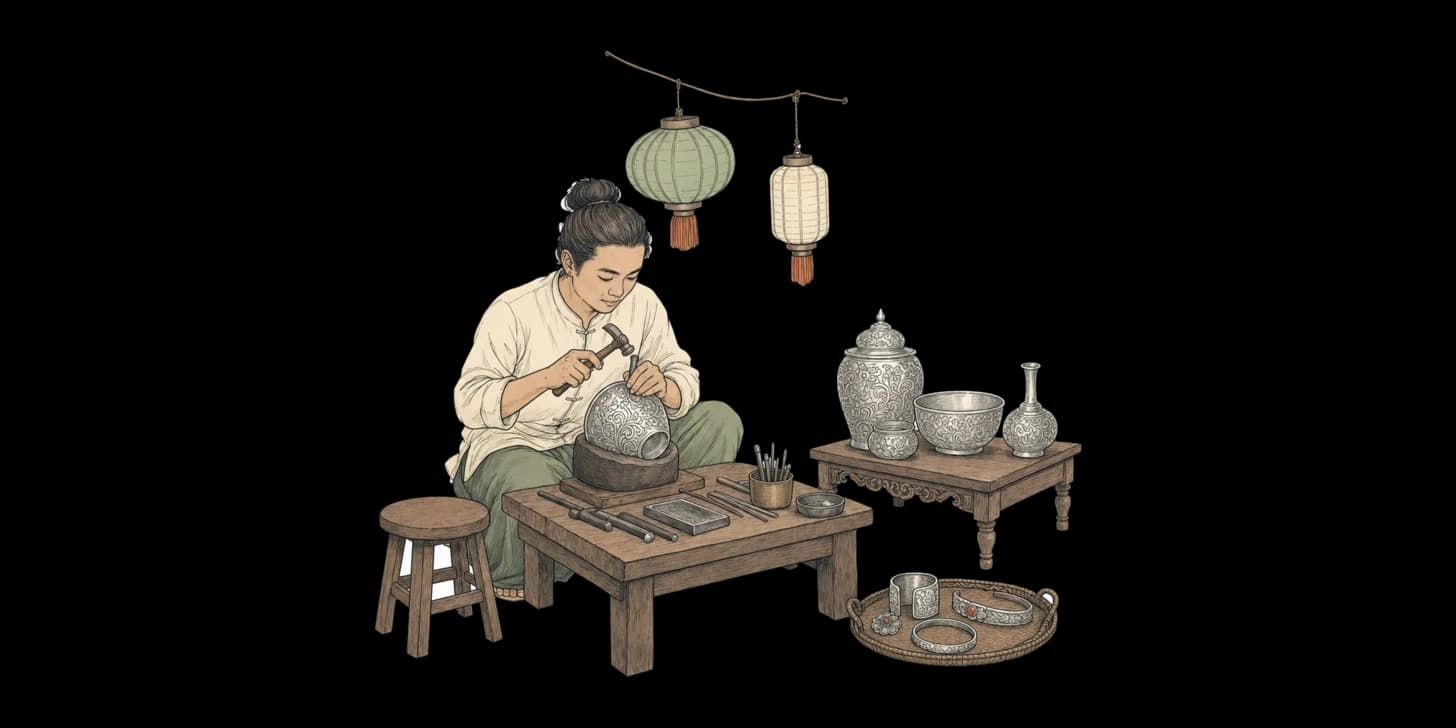
What makes Wat Sri Suphan more than a photo stop is that the craft is still alive on its doorstep. The temple runs a silversmithing learning centre, and the workshops along Wualai sell everything from delicate jewellery to hammered bowls and decorative panels. Some offer short hands-on sessions where you can tool a small piece of your own. If the metalwork sparks an interest, it's a natural gateway into the wider world of Lanna handicrafts — the umbrellas, ceramics, carving and weaving that northern Thailand is known for. Buying directly from the makers here means your money goes to the community that built the temple in the first place.
Visiting Wat Sri Suphan
The temple sits on Wualai Road, just south of Chiang Mai Gate in the old city wall — an easy walk, ride or short scooter trip from most of the centre. A small donation is appreciated as you enter; keep it modest and you'll be welcome. Dress respectfully as you would at any working temple: shoulders and knees covered, shoes off where signed, voices low near anyone at prayer. Mornings are calm and good for unhurried photos of the silverwork; evenings are when it's magical, lit up against the dark. However you come, give yourself a little time to stand close to those panels — every inch of them was raised by hand, here, by the neighbours next door.
Frequently asked questions
Where is Wat Sri Suphan and how do we get there?
It sits on Wualai Road, just south of Chiang Mai Gate in the old city wall, so it is only a few minutes from the Old City. You can reach it on an easy walk, a ride or a short scooter trip from most of the centre. We love sending guests here once they have already seen the famous gilded halls and fancy something quieter.
Can women go inside the silver ordination hall?
By a centuries-old monastic rule, women may not enter the ubosot itself, as it is treated as a consecrated ordination space. It is an old convention that you will find at other temples too, not a judgement and not unique to here. The good news is that the rest of the grounds are open to everyone, and the exterior of the hall, arguably the most photogenic part, can be admired in full from just a few steps away.
What is the temple actually made of?
The showpiece ordination hall has its walls, ceiling, pillars and panels clad in silver, nickel and aluminium repousse, sheets of metal hammered and tooled by hand from behind to raise the designs into relief. Up close you can read whole stories in it, from scenes of the Buddhas life and Lanna motifs to elephants, lotus and the zodiac. In daylight it glows a soft pewter grey, and after dark, lit up, it turns properly dazzling.
When is the best time of day to visit?
Mornings are calm and lovely for unhurried photos of the silverwork in soft light. Evenings, though, are when it is truly magical, with the hall lit up against the dark. We always tell guests to see it once in daylight for the detail and once after dark for the glow.
Is it worth coming on a Saturday evening?
Very much so. On Saturday evenings Wualai Road is closed to traffic and becomes the Saturday Walking Street, the silversmiths own market, smaller and a touch more local than its Sunday cousin in the Old City. You can wander past food carts and craft stalls, then duck into the temple grounds to find the ubosot lit and artisans often tapping away at metal under the lights, with a light-and-sound element frequently on too.
Can we try silversmithing while we are there?
Yes, the craft is still alive on the temples doorstep. The temple runs a silversmithing learning centre, and the workshops along Wualai sell everything from delicate jewellery to hammered bowls and decorative panels, with some offering short hands-on sessions where you can tool a small piece of your own. Buying directly from the makers here means your money goes to the very community that built the temple in the first place.