Local culture · June 29, 2026
Wat Chedi Luang: the great ruined chedi at the heart of the Old City
By The Ada House team
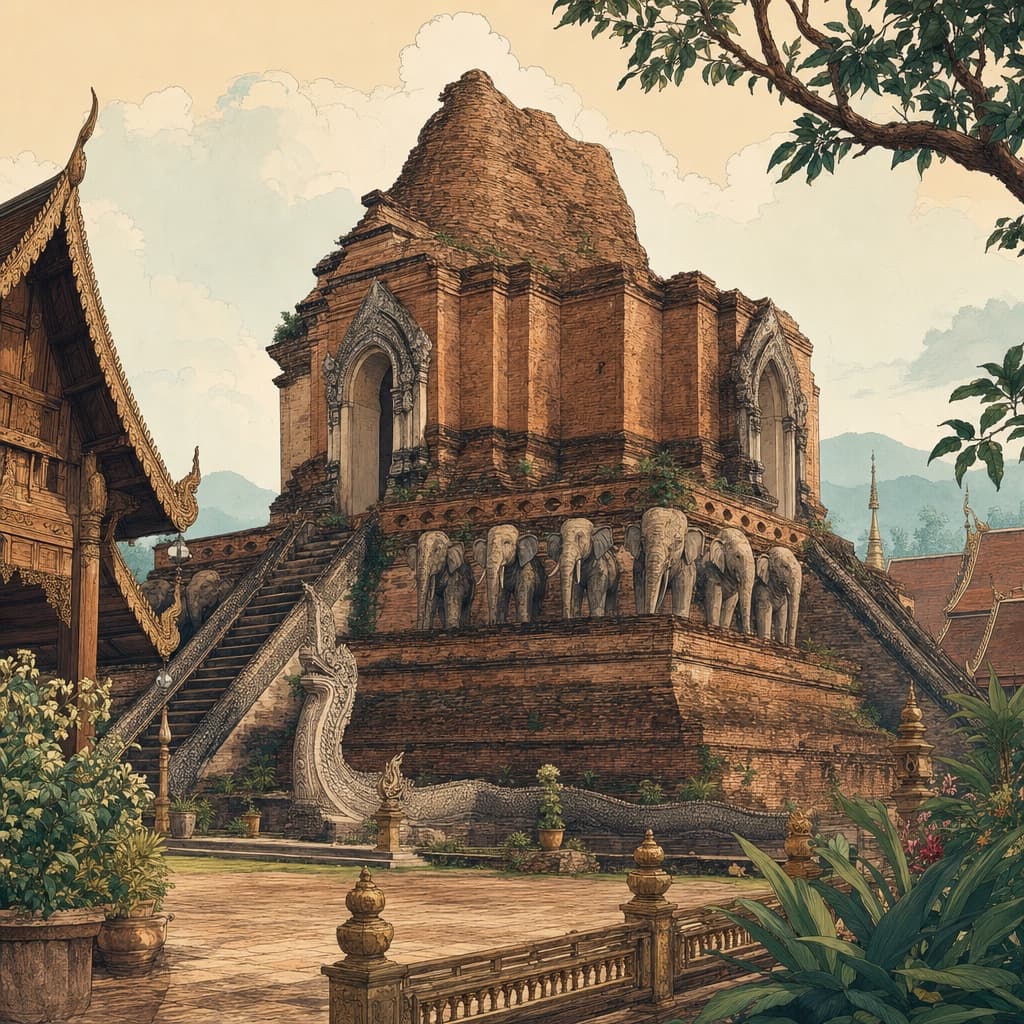
Of all the temples inside Chiang Mai's square moat, none stops you in your tracks quite like Wat Chedi Luang. Walk in from Phra Pok Klao Road and you come face to face with an enormous, weathered brick stupa — broad as a small hill, blunt at the top where it once rose higher, and quietly magnificent. It has stood at the literal and spiritual centre of the Old City's temples for some six hundred years, and even half-ruined it remains the most imposing thing in town. Here is what you are looking at, and how to visit it well.
The great chedi
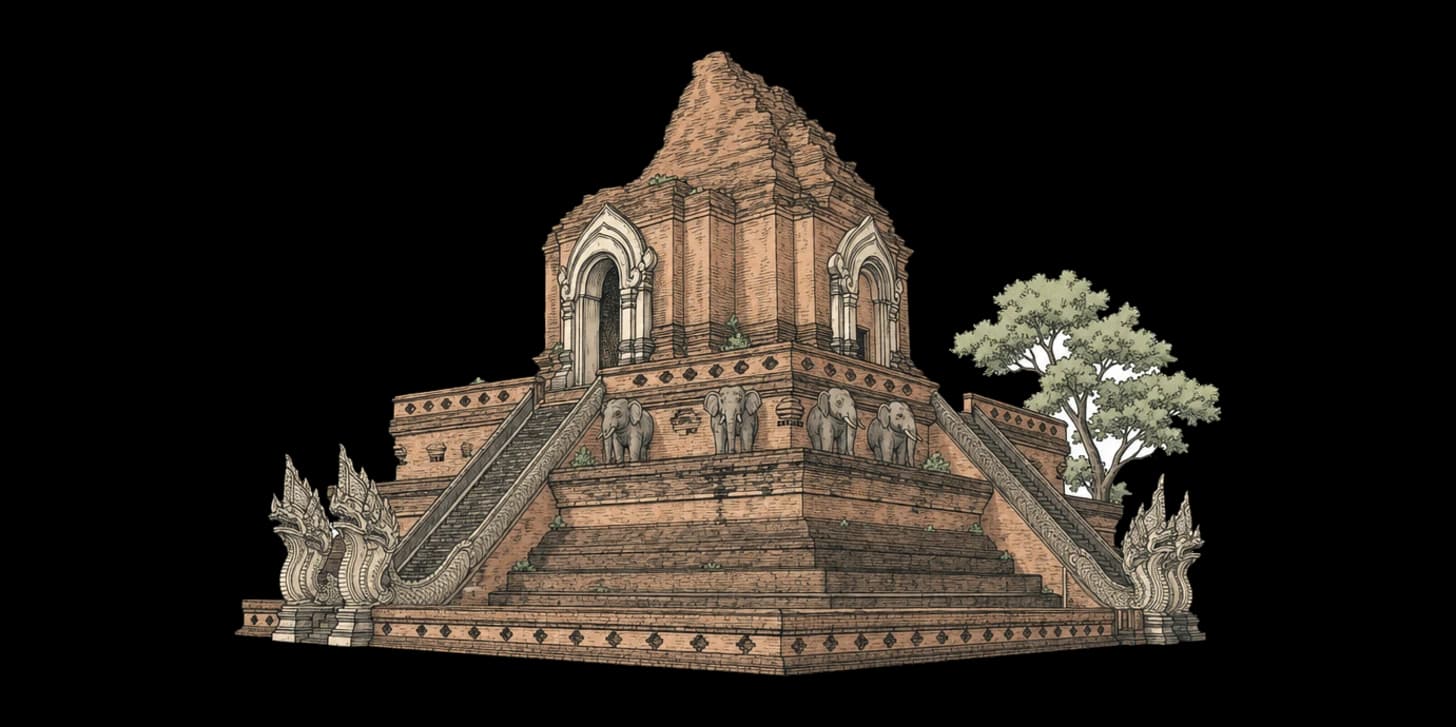
Construction began in the late fourteenth century, when King Saen Muang Ma set out to raise a chedi over the ashes of his father. The work outlived him, and the monument was only finished in the mid-fifteenth century under King Tilokaraj — by which point it stood around eighty metres tall on a base some fifty metres wide, the tallest structure in the whole Lanna kingdom. For a sense of scale, it would have loomed over the timber city like a brick mountain.
Then, in 1545, a powerful earthquake shook the valley and brought down the upper portion — perhaps thirty metres of it — leaving the flattened crown you see today. Rather than diminish the place, the damage gives it its character: terraces of time-darkened brick, guarded at the corners by stone elephants and approached by staircases flanked with Naga serpents. A 1990s restoration stabilised and partly rebuilt the lower tiers, but wisely left it a ruin.
The Emerald Buddha that once lived here
This is not just any old stupa. For most of a century, Wat Chedi Luang was home to the Emerald Buddha — Thailand's most sacred image, carved from a single block of green jade — which sat in a niche on the chedi's eastern face from 1468. After the earthquake it travelled on: first to Luang Prabang, later to Vientiane, and finally to Bangkok, where it remains the spiritual centrepiece of the kingdom at Wat Phra Kaew. The eastern niche today holds a jade replica, installed in 1995 to mark the chedi's six-hundredth anniversary — a small, graceful nod to what once stood there. If you want to understand why a single statue matters this much, it helps to know a little about Thai Buddhism.
The city pillar and the guardian trees
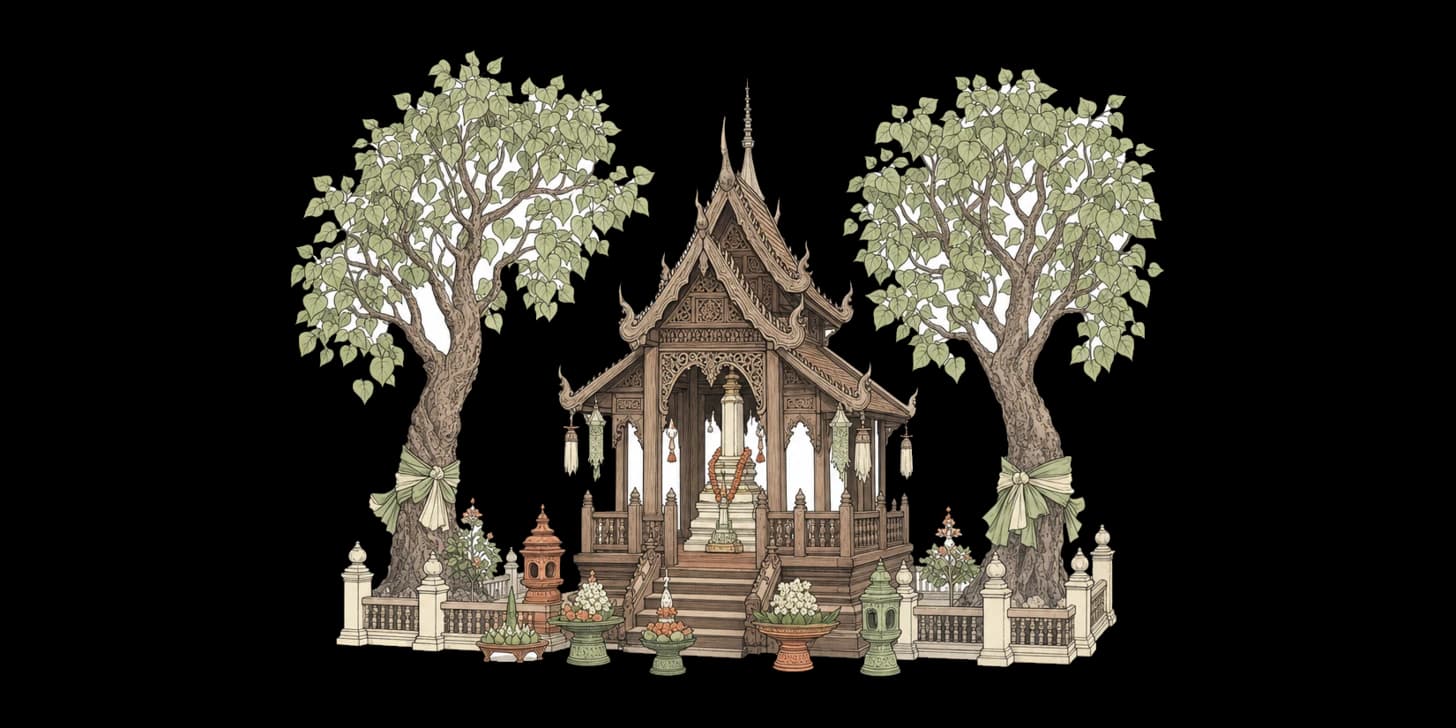
Tucked into the grounds is one of Chiang Mai's most important shrines: the Sao Inthakhin, the city pillar or lak mueang. Every old Siamese city was founded around such a pillar — the spiritual navel that holds its fortune — and Chiang Mai's was moved here around 1800 by the reviver-king Kawila. Beside it stand a few enormous gum (yang) trees, dipterocarps so tall they seem to prop up the sky; local belief holds that the city's luck is bound up with them, and that should they fall, misfortune follows. Once a year the shrine becomes the focus of the Inthakhin festival, when locals queue with little bowls of flowers — a story we tell in full in our piece on the city pillar.
The viharn and its Buddhas
Facing the chedi is the temple's grand viharn (assembly hall), rebuilt in the twentieth century with a soaring Lanna roof and guarded at its steps by Naga balustrades. Inside stands a tall standing Buddha, Phra Chao Attharot, watching calmly over the worshippers. Elsewhere on the grounds you will find a reclining Buddha and a scatter of smaller shrines, lacquer and gold catching the light. Slip your shoes off, keep your voice down, and you can sit a while in the cool — it is one of the loveliest quiet corners in the centre of town.
Visiting, and the monk chat
You will find Wat Chedi Luang on Phra Pok Klao Road, a short stroll from the old city walls and gates and easy to fold into a wander between the other temples. There is a small entry fee for foreign visitors, and it is generally open through the day — do check current hours locally, as they shift. Most afternoons you will spot the Monk Chat: tables set out under the trees where novice monks practise their English and field visitors' questions about robes, meditation and daily life. It is genuinely two-way and completely unhurried; if the idea appeals, our guide to the monk chat and meditation explains how it works.
Dressing and behaving respectfully
This is a living, active temple, so a little care goes a long way. Cover your shoulders and knees — bring a light scarf or sarong if you are in shorts, though wraps can usually be borrowed at the entrance — and remove your shoes before stepping into any hall. Don't point your feet at a Buddha image, lower yourself rather than tower over seated monks, and note that women should not touch a monk or hand anything to him directly. A quick read of our etiquette notes will see you right at any temple in the north. One more thing: the inner Inthakhin shrine is, by old tradition, closed to women — no slight intended, simply a custom worth knowing before you go.
Fitting it into your Old City wander
Wat Chedi Luang sits within a short walk of Wat Phra Singh and a dozen smaller temples, so it slots naturally into a morning on foot. We'd give it half an hour at least: long enough to circle the great chedi, find the elephants, pause at the pillar and let the sheer scale of the place sink in. For a relaxed plan that takes it all in, see our three days in Chiang Mai. However you come to it, this old brick giant is the heart the rest of the city was built around — and standing at its foot is the closest thing we know to feeling Chiang Mai's full six centuries at once.
Frequently asked questions
Where is Wat Chedi Luang and how do we find it?
You will find it on Phra Pok Klao Road, right at the literal and spiritual centre of Chiang Mai's Old City, inside the square moat. It is a short stroll from the old city walls and gates, so it folds naturally into a wander between the other temples. Walk in and you come face to face with the enormous weathered brick stupa straight away.
Is there an entry fee, and when is it open?
Yes, there is a small entry fee for foreign visitors. The temple is generally open through the day, but do check the current hours locally as they tend to shift.
What should we wear, and are there any rules to follow?
This is a living, active temple, so please cover your shoulders and knees. If you are in shorts, bring a light scarf or sarong, though wraps can usually be borrowed at the entrance, and remember to remove your shoes before stepping into any hall. Keep your voice down, don't point your feet at a Buddha image, and lower yourself rather than tower over seated monks.
Is the Emerald Buddha still there?
No, it isn't. Wat Chedi Luang was home to the Emerald Buddha from 1468, when it sat in a niche on the chedi's eastern face, but after the 1545 earthquake it travelled on, first to Luang Prabang, then Vientiane, and finally to Bangkok, where it remains today at Wat Phra Kaew. The eastern niche now holds a jade replica, installed in 1995 to mark the chedi's six-hundredth anniversary.
How long should we set aside to visit?
We'd give it half an hour at least. That is long enough to circle the great chedi, find the stone elephants, pause at the city pillar shrine and let the sheer scale of the place sink in. Since it sits within a short walk of Wat Phra Singh and a dozen smaller temples, it slots naturally into a morning on foot.
Are there any customs women visitors should know about?
Yes, a couple worth knowing before you go. By old tradition, the inner Inthakhin city pillar shrine is closed to women, and women should not touch a monk or hand anything to him directly. No slight is intended by either custom; they are simply Lanna traditions worth being aware of. If the Monk Chat appeals, you'll often find novice monks at tables under the trees most afternoons, happy to answer questions.