Health & wellness · June 24, 2026
Traditional Thai & Lanna medicine in Chiang Mai
By The Ada House team
Walk past a quiet shophouse in the old city and you might catch it before you see it: the warm, green smell of lemongrass and camphor steaming from a muslin pouch. That scent is one of the oldest things in Chiang Mai. Long before modern clinics, the North kept its own body of healing knowledge — herbal, hands-on, patient — and you can still meet it here today, if you know where to look.
A system built on balance
Traditional Thai medicine isn't a grab-bag of folk cures. It rests on a quiet logic: the body is made of four elements — earth, water, wind and fire — and health is what happens when they sit in balance. Aches, sluggishness, a cold that won't shift: these read as the elements drifting out of tune, and the treatments aim to coax them back rather than simply switch off a symptom.
Chiang Mai matters here because it was the heart of the Lanna kingdom, a culture with its own herbs, its own healers — the mo boran — and its own recipes passed down outside the better-known Bangkok tradition. If you've enjoyed the story of the Lanna kingdom, think of this as its living, breathing chapter. Much of what travellers call "Thai massage" grew from exactly this root, which is why a session here can feel less like a spa treatment and more like an inheritance.
The signature treatments
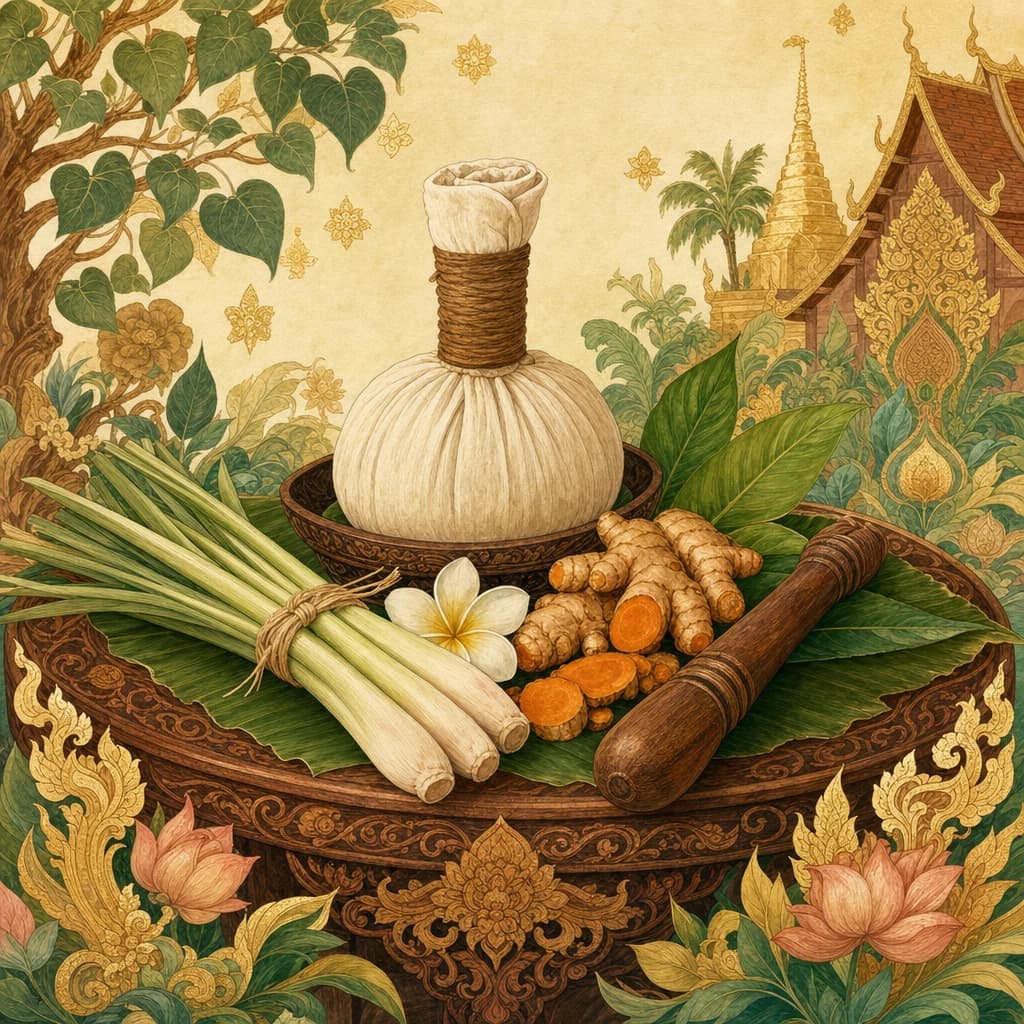
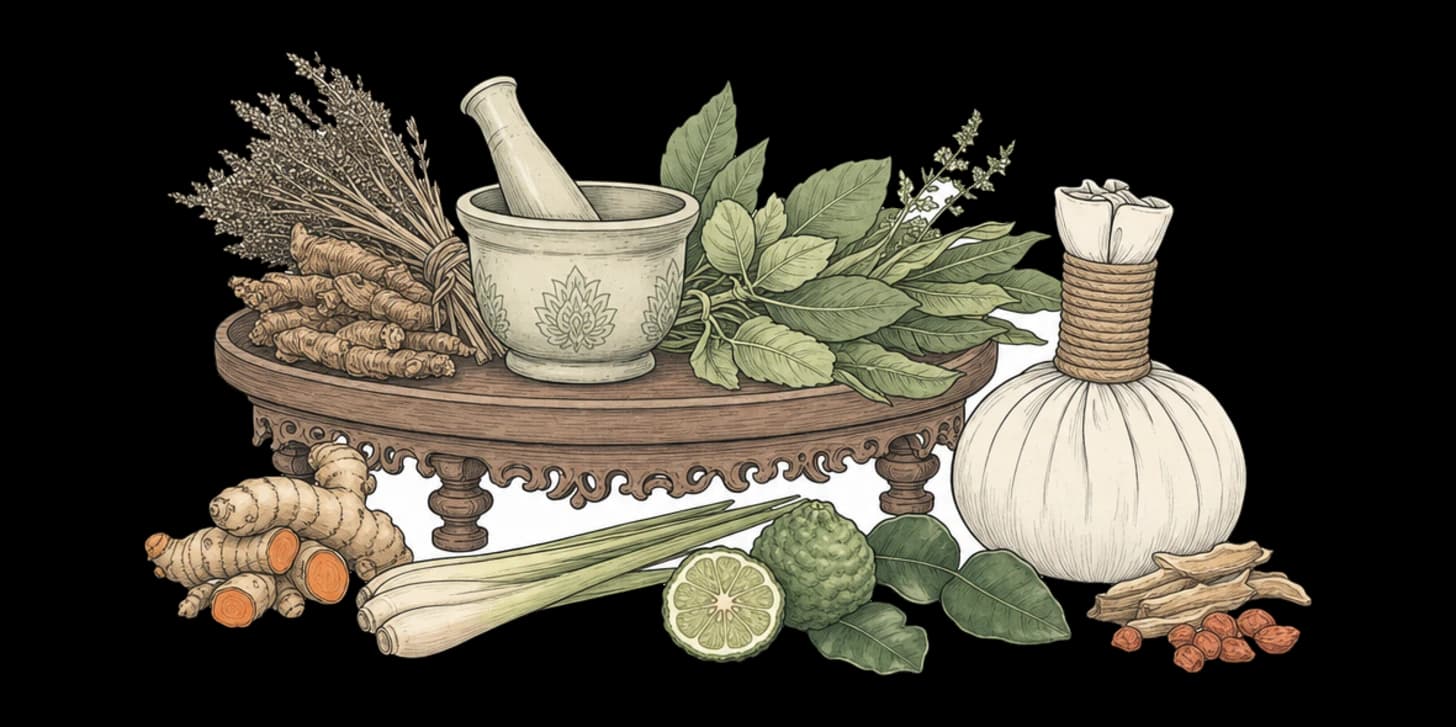
The one you'll smell first is the herbal compress — luk pra kop, a ball of herbs bundled in cloth, steamed until hot, then pressed and rolled across tired muscles. The classic blend leans on plai (a wild ginger), turmeric, lemongrass, kaffir lime and camphor: heat to loosen, aroma to settle the mind, and the herbs themselves working through the skin. It's deeply relaxing and pairs naturally with the bodywork in our guide to Thai massage in Chiang Mai.
Then there's Tok Sen, and this one is properly Northern — you won't find it everywhere in Thailand. Tok means "to tap"; sen are the body's energy lines. The therapist lays a smooth wooden wedge along a muscle and taps it with a small tamarind-wood mallet, sending a steady, rhythmic vibration deep into the tissue. It sounds alarming and feels strangely meditative — a tuning-fork hum rather than a thump — and it's prized for stubborn knots and chronic tension.
The third pillar is the herbal steam sauna: a small room thick with the vapour of a dozen-odd herbs, often taken straight after a massage to open everything up. Many traditional clinics keep one, and a private session is usually inexpensive — often little more than a hundred-odd baht for an hour. Beyond these, the tradition carries a whole apothecary: herbal balms and inhalers (the menthol ya dom tube you'll see Thais sniff at bus stops), and cupping, where warmed glass is used to draw at the surface of the skin.
Where to experience it well
For the real thing, start with the Old Medicine Hospital (Shivagakomarpaj) just outside the centre — a teaching institution running since the 1960s and widely seen as the birthplace of Northern-style massage. It offers treatments, herbal compresses and a steam sauna under one roof, and trains practitioners from around the world, so the lineage is genuine rather than dressed up for visitors. Reputable Thai traditional medicine clinics and the better Lanna spas around town also offer Tok Sen, compresses and steam from properly trained therapists; ask whether the practitioner is trained in traditional Thai medicine, and you'll quickly tell the difference. For herbs to take home, the old market stalls and traditional pharmacies near Warorot are the place — and it pairs beautifully with the contemplative side of the city you'll find in meditation and monk chats or even the sacred ink of sak yant.
A note of respect — and of caution
Treat all of this as what it is: a cultural and wellness practice, a beautiful complement to a well-lived life here. It is not a substitute for modern medicine. A herbal compress is wonderful for a stiff back; it is not the answer to a high fever, a worrying lump or anything that frightens you. For those, Chiang Mai has excellent hospitals and clinics — see our practical notes on healthcare in Chiang Mai — and a good traditional therapist will tell you the same, sending you on rather than overselling. Respect also means coming with curiosity, not a shopping list: these are living traditions, tied to teachers and temples, not novelties.
Try it, though. There's something quietly grounding about lying still while warm herbs are pressed into your shoulders, the city humming outside — a slower, older way of being in Chiang Mai, and one of the gentlest ways to feel at home here.
Frequently asked questions
What is traditional Thai medicine based on?
It rests on a quiet logic rather than a grab-bag of folk cures. The body is seen as made of four elements, earth, water, wind and fire, and health is what happens when they sit in balance. Aches and lingering colds read as the elements drifting out of tune, and the treatments aim to coax them back rather than simply switch off a symptom. Chiang Mai matters because it was the heart of the Lanna kingdom, with its own herbs and healers known as mo boran.
What are the signature treatments?
The one you'll smell first is the herbal compress, or luk pra kop, a ball of herbs steamed hot and rolled across tired muscles, leaning on plai, turmeric, lemongrass, kaffir lime and camphor. Then there's Tok Sen and the herbal steam sauna, a small room thick with the vapour of a dozen-odd herbs. The tradition also carries herbal balms and inhalers, such as the menthol ya dom tube, and cupping.
What exactly is Tok Sen?
Tok Sen is properly Northern and you won't find it everywhere in Thailand. Tok means to tap and sen are the body's energy lines, so the therapist lays a smooth wooden wedge along a muscle and taps it with a small tamarind-wood mallet, sending a steady, rhythmic vibration deep into the tissue. It feels strangely meditative, like a tuning-fork hum, and is prized for stubborn knots and chronic tension.
Where can I experience it authentically?
For the real thing, start with the Old Medicine Hospital, also known as Shivagakomarpaj, a teaching institution running since the 1960s and widely seen as the birthplace of Northern-style massage. Reputable Thai traditional medicine clinics and the better Lanna spas also offer Tok Sen, compresses and steam from properly trained therapists, so ask whether the practitioner is trained in traditional Thai medicine. For herbs to take home, try the old stalls near Warorot.
Can traditional medicine replace seeing a doctor?
No, and a good traditional therapist will tell you the same. Treat all of this as what it is, a cultural and wellness practice and a beautiful complement to a well-lived life, but not a substitute for modern medicine. A herbal compress is wonderful for a stiff back, but it is not the answer to a high fever, a worrying lump or anything that frightens you, for which Chiang Mai has excellent hospitals and clinics.