Local culture · June 21, 2026
Sak Yant: Thailand's sacred tattoos, with respect
By The Ada House team
Few things in Thailand are as misunderstood by visitors as Sak Yant — the sacred geometric tattoos you'll see on shoulders and backs across the country. They're beautiful, yes, but they're a spiritual practice and a commitment, not body art. If you're drawn to one, the most important thing you can bring is respect. Here's what they mean and how to approach the tradition thoughtfully.
What the tattoos mean
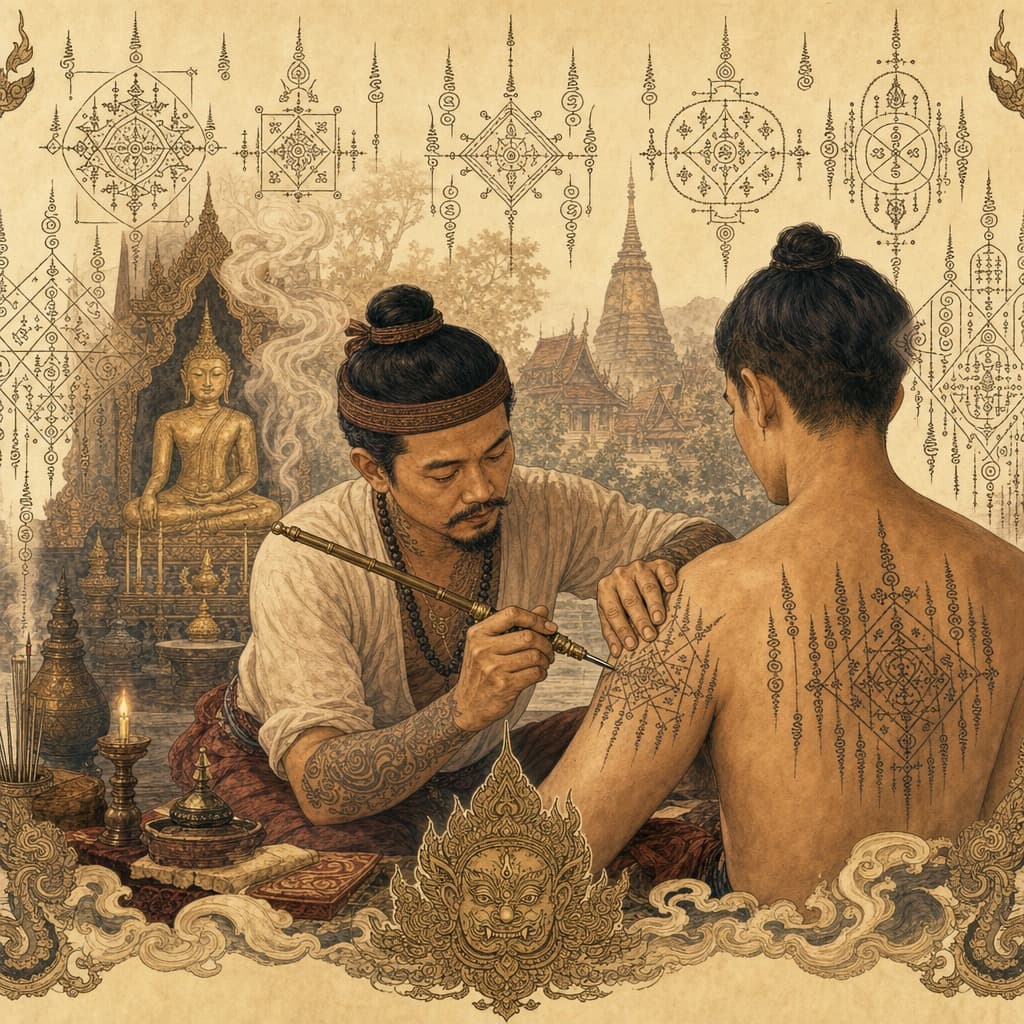
Sak Yant (yantra tattoos) blend animist, Hindu-Brahmin and Buddhist beliefs into geometric designs, animals, deities and Pali mantras, traditionally believed to give the wearer protection, luck, strength and loving-kindness. The key idea: the "magic" is tied to how you live, not just the ink. A few classic designs:
- Ha Taew (Five Lines) — protection, charm and good fortune.
- Gao Yord (Nine Spires) — broad protection and success; a kind of "master" yant.
- Tiger — power and fearlessness.
- Hanuman — bravery, loyalty and overcoming obstacles.
A good master often adapts the design to your intentions and life situation.
Who gives them
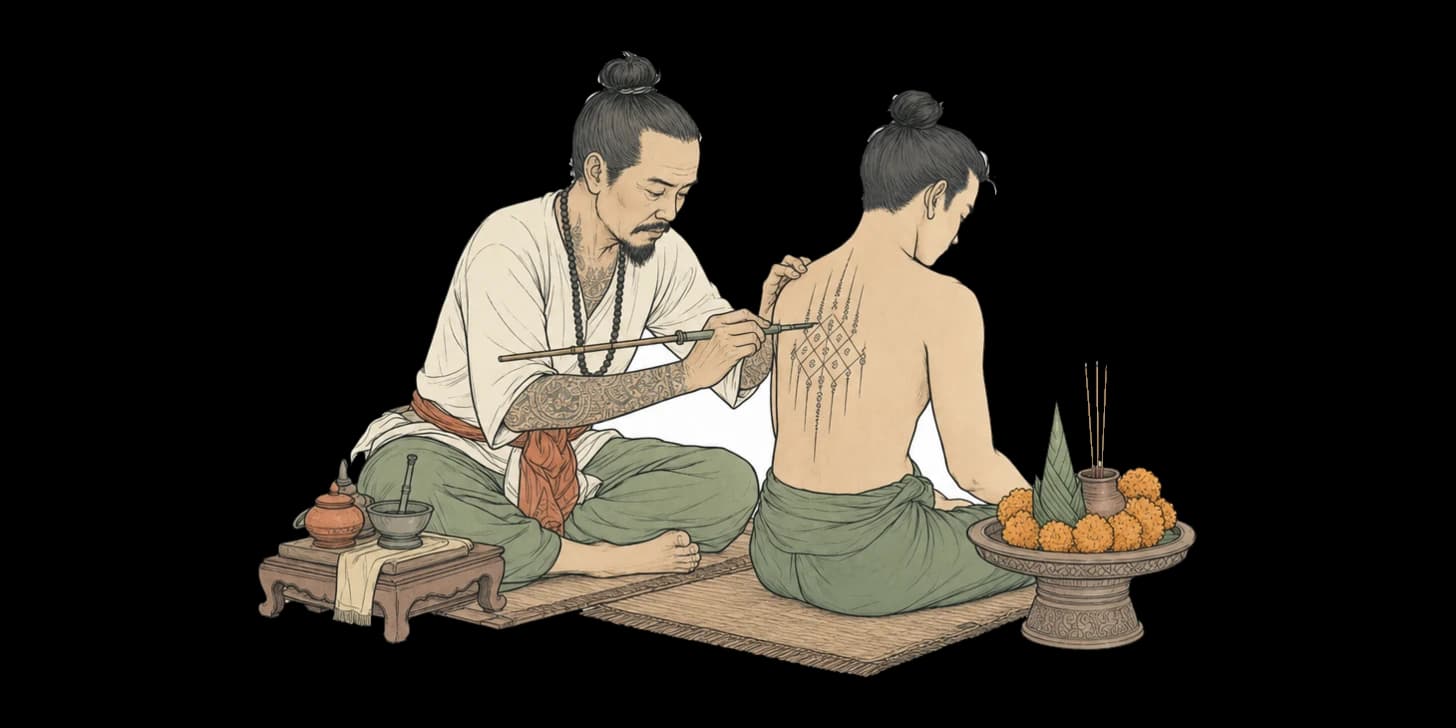
Traditionally a Sak Yant is applied and blessed by a Buddhist monk at a temple, or by a lay master called an ajarn. The classic method is hand-poked with a long rod (mai sak) — fast, rhythmic, intense; some studios now offer the designs and blessing by machine with modern hygiene. Both can carry meaning, but if authenticity matters, ask whether the ajarn performs a proper blessing and ritual, not just the design.
It comes with rules
This is the part visitors often miss: a Sak Yant traditionally carries moral precepts the wearer is expected to keep for the blessing to "work" — usually the Five Precepts (no killing, stealing, lying, sexual misconduct or intoxication), sometimes with extra lineage rules like honouring your parents and your master. After the tattoo, the monk or ajarn recites sacred chants (kata) and may blow on the ink to empower it. The blessing matters as much as the design — and so does being honest with yourself about whether you'll live by the precepts.
Respect & etiquette
A living faith, not a souvenir. Thais are clear that Sak Yant carries prayers and commitments — please don't treat it as "just another tattoo." Approach it sincerely, understand the meaning before you commit, and be thoughtful about how you photograph or post it.
A few specifics that matter:
- Dress modestly (shoulders, chest, knees covered), remove shoes in sacred spaces, keep your body lower than the monk, and greet with a wai — the same respect as visiting any temple (see our Thai etiquette guide).
- Placement follows a body hierarchy — the head is holiest, the feet lowest — so sacred designs go above the waist (back, shoulders, chest), never on the legs or feet.
- Women and monks: by tradition a monk cannot touch a woman, so female visitors are usually tattooed by a lay ajarn, or with a cloth barrier. Treat this as a religious norm, not a personal slight.
If this resonates, the temples in our old-city temples guide and a monk chat are lovely ways to understand the spiritual world a Sak Yant belongs to before you decide. It's the same world of monk-blessed protection that produces the Thai amulets many Thais wear at the neck — a less permanent way to carry the same idea.
Hygiene & choosing well
Even for a sacred tattoo, never compromise on safety: insist on single-use sterilised needles, fresh ink and clean procedures, and choose a reputable ajarn or temple on reputation — not the cheapest or most viral option. At temples it's typically donation-based (bring a respectful offering and cash, often ending in a lucky 9); studios price by size and method. Aftercare is normal tattoo care: keep it clean and dry, no pool or strong sun, don't pick.
Our honest advice: take your time. It's completely fine to observe, ask questions, and sit with the decision. Approached with respect and a clear understanding, a Sak Yant becomes a meaningful connection to a living tradition — ask us at the house and we'll point you toward reputable, respectful masters.
Frequently asked questions
What does a Sak Yant actually mean?
Sak Yant are sacred geometric tattoos that blend animist, Hindu-Brahmin and Buddhist beliefs into designs, animals, deities and Pali mantras. They are traditionally believed to give the wearer protection, luck, strength and loving-kindness. The key idea is that the power is tied to how you live, not just to the ink, so it is a spiritual practice and a commitment rather than body art.
Who gives a Sak Yant?
Traditionally it is applied and blessed by a Buddhist monk at a temple, or by a lay master called an ajarn. The classic method is hand-poked with a long rod (mai sak), which is fast, rhythmic and intense, though some studios now offer the designs and blessing by machine with modern hygiene. If authenticity matters to you, ask whether the ajarn performs a proper blessing and ritual, not just the design.
Are there rules that come with a Sak Yant?
Yes, and visitors often miss this. A Sak Yant traditionally carries moral precepts the wearer is expected to keep for the blessing to work, usually the Five Precepts of no killing, stealing, lying, sexual misconduct or intoxication, sometimes with extra lineage rules. The blessing matters as much as the design, so be honest with yourself about whether you will live by the precepts.
Can women receive a Sak Yant?
Yes. By tradition a monk cannot touch a woman, so female visitors are usually tattooed by a lay ajarn, or with a cloth barrier between master and skin. Please treat this as a religious norm rather than a personal slight. The same body hierarchy applies to everyone, with sacred designs going above the waist on the back, shoulders or chest, never on the legs or feet.
How do I stay safe and choose well?
Even for a sacred tattoo, never compromise on safety: insist on single-use sterilised needles, fresh ink and clean procedures, and choose a reputable ajarn or temple on reputation rather than the cheapest or most viral option. At temples it is typically donation-based, so bring a respectful offering and cash, often ending in a lucky 9. Aftercare is normal tattoo care: keep it clean and dry, avoid pools and strong sun, and do not pick.
How should I show respect around the tradition?
Approach it sincerely and understand the meaning before you commit, and be thoughtful about how you photograph or post it, because Thais are clear this is a living faith and not a souvenir. Dress modestly with shoulders, chest and knees covered, remove your shoes in sacred spaces, keep your body lower than the monk, and greet with a wai. It is completely fine to observe, ask questions and sit with the decision.