Local culture · June 25, 2026
Thai amulets: the sacred pendants Thais wear, explained
By The Ada House team
Look closely on the songthaew, in the queue at the market, behind the counter at your favourite café, and you'll start to notice them: small pendants, often a Buddha figure, sometimes a portrait of a monk, worn close to the chest. These are Thai amulets — phra khrueang — and they sit at the heart of everyday belief here. Once you understand them, a quiet layer of Thai life opens up.
What a phra khrueang actually is
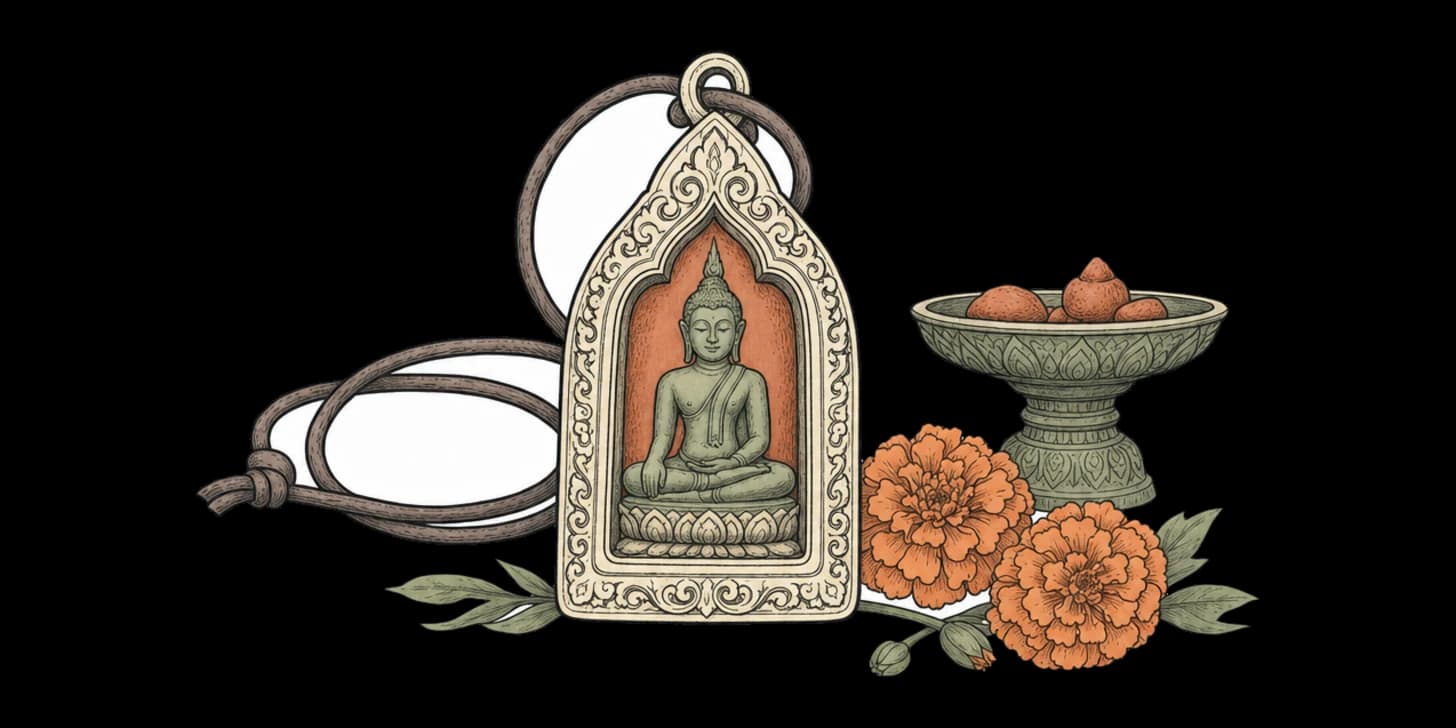
An amulet is a small sacred object worn for protection, luck, charisma or wealth. Most carry a tiny Buddha image; others show a revered monk, a deity, or a protective symbol. They're pressed from humble stuff — clay, herbal powders, flower pollen, fragments of metal — sometimes mixed with materials considered sacred, then fired or moulded into shapes small enough to vanish inside a closed hand.
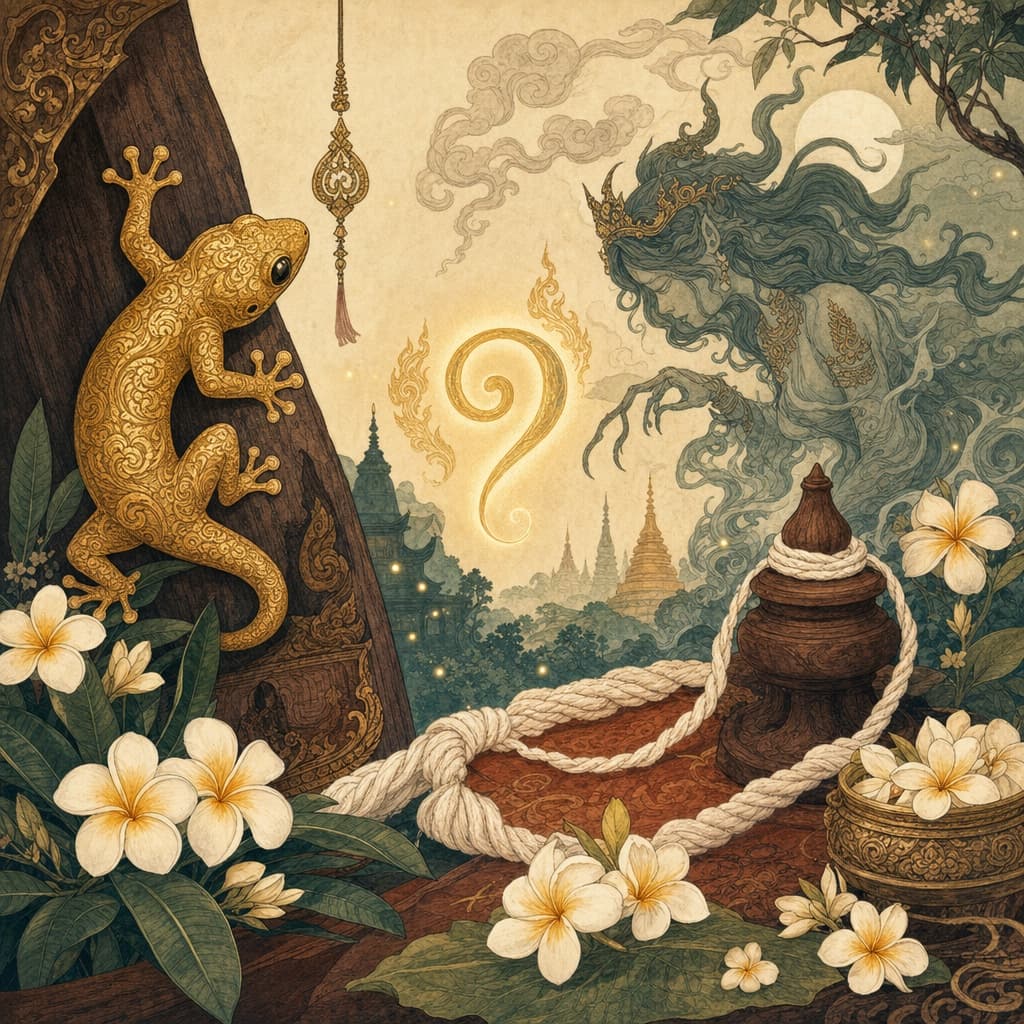
What turns a little disc of clay into something powerful is the blessing, or consecration. Monks chant sacred verses — katha — over batches of amulets in temple ceremonies, often for hours, sometimes across days. The belief is that a monk who has accumulated great merit through years of meditation can transfer that spiritual energy into the object. The maker matters enormously: an amulet's reputation rests on which monk blessed it, and when. This is the same syncretic worldview that produces spirit houses on every corner and the sacred sak yant tattoos some Thais carry on their skin — a living blend of Buddhism, animism and Brahmanism that we explore further in our guide to Thai Buddhism.
The famous ones, and the eye-watering prices
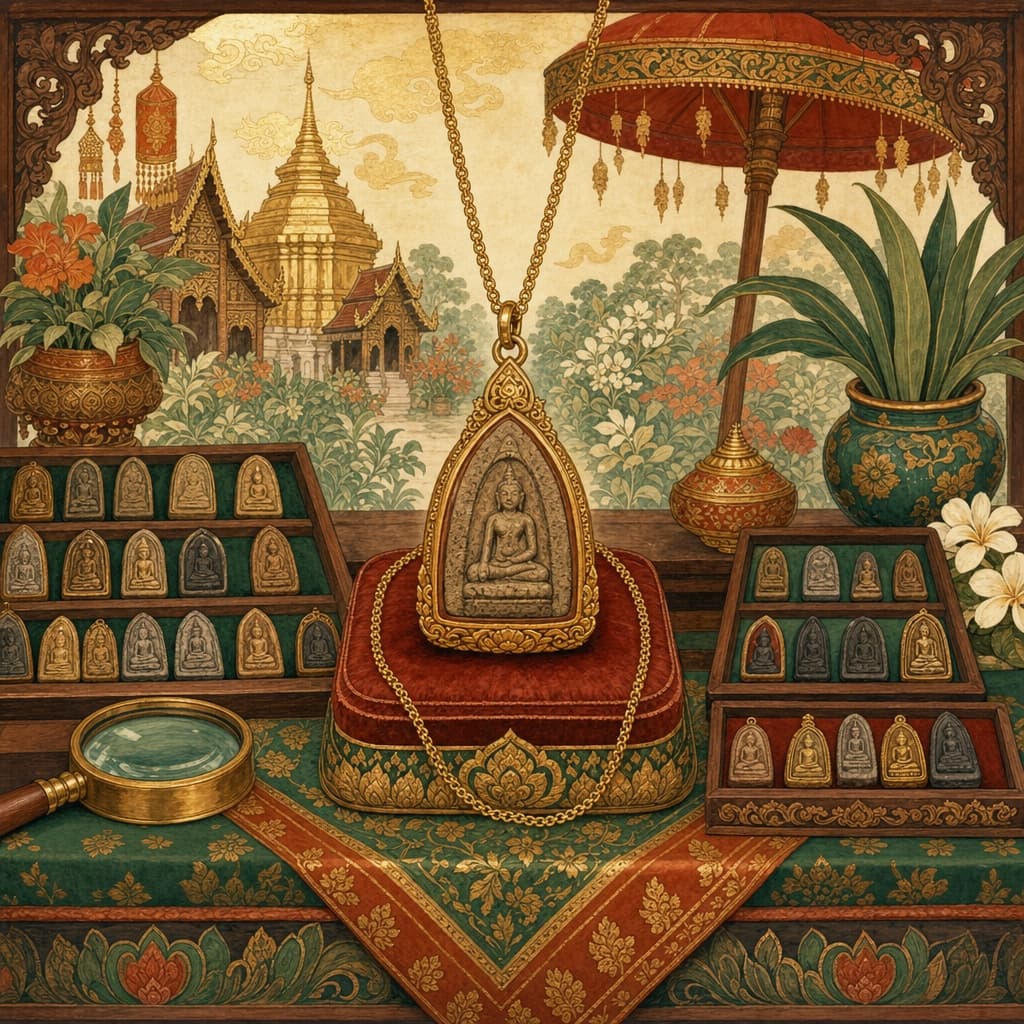
Some amulets are legendary. The most coveted come from a handful of revered abbots — affectionately titled Luang Phor or Luang Pu ("venerable father" / "grandfather") — whose consecrations are prized for decades. The Phra Somdej, associated with the nineteenth-century monk Somdej Toh, is often called the king of amulets; collectors speak of a "big five" of rare classical types that command extraordinary respect. There's also the takrut, a thin metal scroll inscribed with sacred yantra script and rolled tight, sometimes worn on a waist cord.
Because the right amulet from the right monk is believed to carry real power — and because the supply is finite — a rare, authenticated piece can change hands for astonishing sums, occasionally millions of baht, the price of a house. That has created a serious collector culture, complete with specialist magazines, grading conventions, and, inevitably, a flourishing trade in fakes.
The market, and the magnifying loupe
This is where it gets wonderfully human. Chiang Mai has its own amulet trading scene, clustered near the riverside markets around Warorot and Ton Lamyai — the same buzzing quarter we cover in our Warorot Market guide. Wander through and you'll find tables laid with trays of tiny amulets, and collectors bent low over them, magnifying loupe pressed to one eye, studying the grain of the clay and the wear of an edge for the tells of authenticity. They flip through dog-eared catalogues, murmur, compare, and occasionally walk away with something small wrapped in tissue. You don't need to buy a thing to enjoy watching the appraisal — it's part flea market, part connoisseurship, entirely absorbing.
How to engage respectfully
The most important thing to hold onto: for most Thais, an amulet is devotional, not a souvenir. Browse with curiosity, not as if you're raiding a bargain bin.
A few simple courtesies go a long way. Handle amulets gently and with clean hands, ideally with both hands, and never set a sacred image down somewhere low or dirty. If you do buy one to wear, keep it above the waist — Thais wear them at the neck or chest, never below, because in Thai culture the lower body and feet are the least respectful place for anything sacred. Bargaining happens, but keep it light and good-natured; haggling aggressively over something someone holds holy reads as rude. These instincts are the same gentle ones we lay out in our etiquette guide for visitors, and a monk chat at a temple — see our note on meeting monks — is a lovely way to ask about all this directly, from the source.
You may leave without an amulet of your own, and that's perfectly fine. But you'll carry something better: a feel for how protection, memory and faith hang quietly around so many necks in this city. It's one of the quiet ways Thai belief shows up day to day — the loud, joyful counterpart being Songkran in Chiang Mai, when that same devotion spills into the streets as the New Year water festival.
Wishing you curious eyes and a respectful heart, The Ada House team
Frequently asked questions
What is a phra khrueang?
A phra khrueang is a small sacred amulet worn for protection, luck, charisma or wealth. Most carry a tiny Buddha image, while others show a revered monk, a deity or a protective symbol. They are pressed from humble materials such as clay, herbal powders, flower pollen and fragments of metal, then fired or moulded small enough to vanish inside a closed hand.
What makes an amulet powerful?
What turns a little disc of clay into something powerful is the blessing, or consecration. Monks chant sacred verses (katha) over batches of amulets in temple ceremonies, often for hours and sometimes across days. The belief is that a monk who has accumulated great merit can transfer that spiritual energy into the object, so which monk blessed it, and when, matters enormously.
Why are some amulets so expensive?
Because the right amulet from the right monk is believed to carry real power, and the supply is finite, a rare authenticated piece can change hands for astonishing sums, occasionally millions of baht. The Phra Somdej, associated with the nineteenth-century monk Somdej Toh, is often called the king of amulets. This has created a serious collector culture, complete with specialist magazines, grading conventions and, inevitably, fakes.
Where can I see the amulet scene in Chiang Mai?
Chiang Mai has its own amulet trading scene clustered near the riverside markets around Warorot and Ton Lamyai. Wander through and you will find tables laid with trays of tiny amulets and collectors bent low over them, a magnifying loupe pressed to one eye, studying the grain of the clay and the wear of an edge. You do not need to buy a thing to enjoy watching the appraisal.
How should I handle amulets respectfully?
For most Thais an amulet is devotional, not a souvenir, so browse with curiosity rather than as if raiding a bargain bin. Handle amulets gently and with clean hands, ideally with both hands, and never set a sacred image down somewhere low or dirty. If you buy one to wear, keep it above the waist at the neck or chest, and keep any bargaining light and good-natured.