
Practical tips · June 27, 2026
Common scams in Chiang Mai (and how to sidestep them)
By The Ada House team
Let's open with the reassuring truth: Chiang Mai is one of the most easygoing cities in Thailand, and a world away from the hard-sell tourist traps of Bangkok's backpacker strips or the islands. The scams here are few, mild, and almost always avoidable — more "mild over-charge" than anything sinister. We've never had a guest come to real harm over one. Still, knowing the handful of classics means you'll spot them coming a mile off and travel with a relaxed, knowing smile. Here's the honest list.
The scooter "damage" deposit
The one worth knowing best. A small number of rental shops inspect the bike loosely, wave off existing scratches, then claim you caused damage on return — quoting an alarming repair bill, sometimes while holding your passport as deposit. The fix is simple and total: photograph and film the scooter from every angle before you ride off, scratches and all, and email the clips to yourself so they're time-stamped. Use a shop with strong recent reviews, and never hand over your passport — offer a cash deposit or a photocopy instead. Done that way, renting is smooth and the vast majority of shops are completely honest; our full scooter-rental guide walks through choosing a good one.
Tuk-tuks, red trucks and the "temple is closed" detour
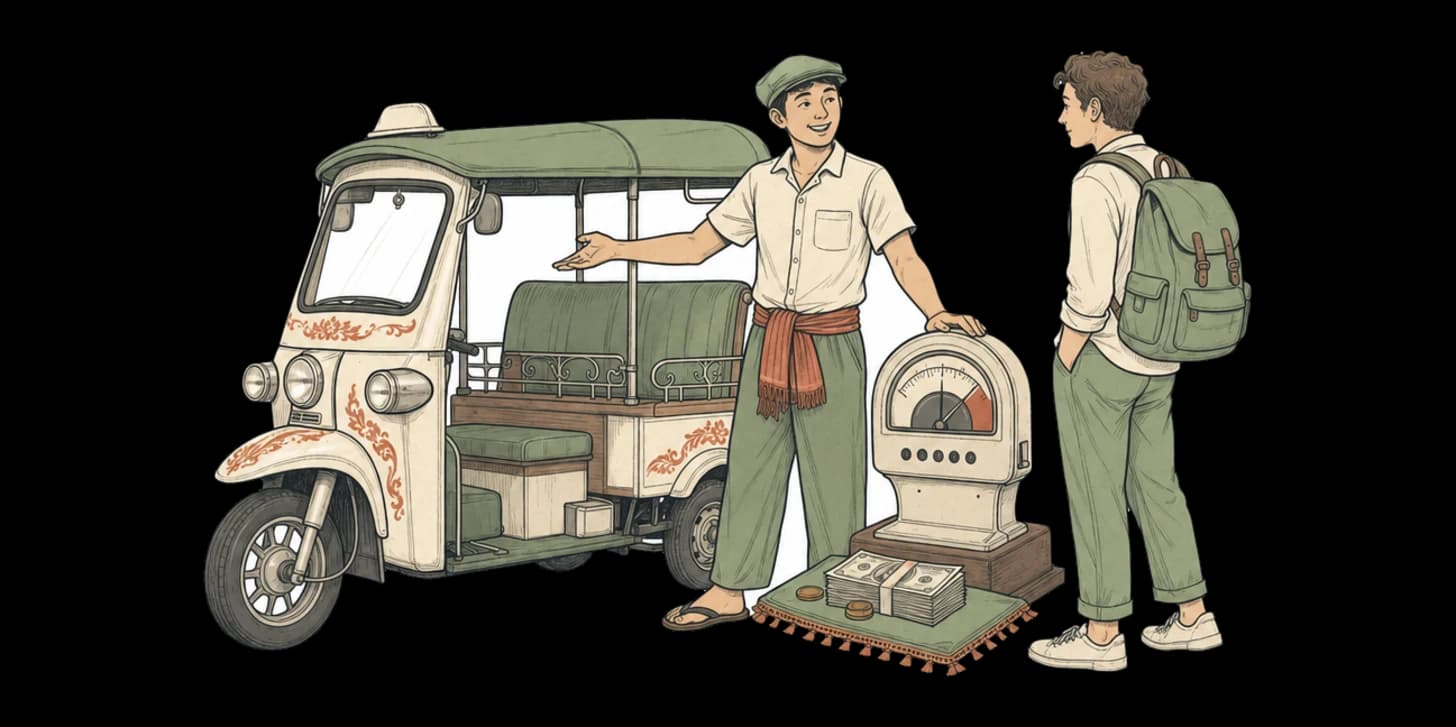
Chiang Mai's red songthaews (shared trucks) and tuk-tuks are part of the fun, but a few drivers quote a tourist price or take the scenic route. A close cousin is the friendly "that temple's closed today — let me take you to a special gem shop instead" detour, where the driver earns a commission and the "duty-free" gems are low-quality or fake. Agree the fare before you climb in, decline any unrequested shopping stops, and remember that major temples like Wat Phra Singh keep normal daytime hours — a stranger telling you otherwise is the tell. Honestly, the easiest sidestep is Grab (or Bolt): the price is fixed on screen before you book, no haggling required. Our getting-around guide breaks down what a fair ride actually costs.
Taxis and the airport run
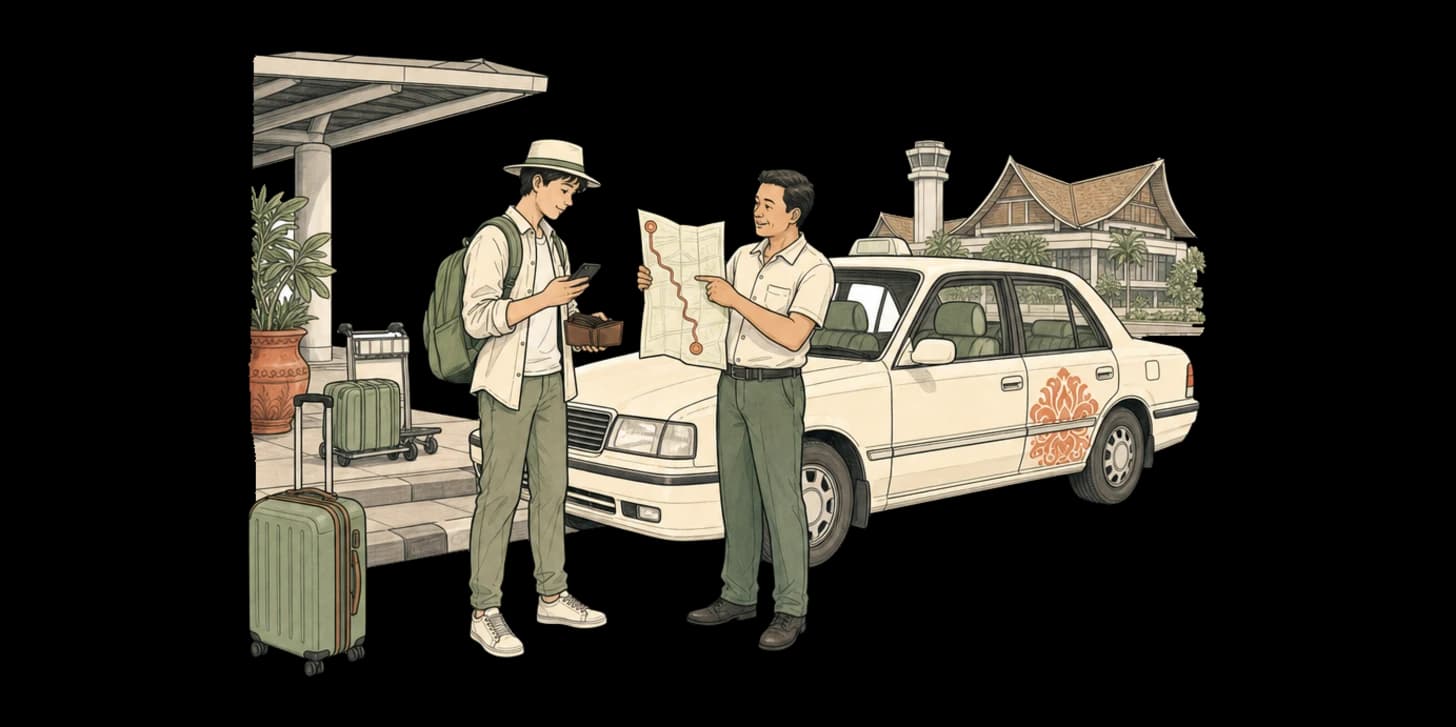
The airport sits barely fifteen minutes from the old city, so any quoted fare that sounds like a long-haul journey is a red flag. Inside the terminal there's an official metered-taxi desk; outside, Grab is usually cheaper and entirely fuss-free. The same logic applies all over town — if a driver won't use the app or quote a clear number up front, just wave the next one down. There's always another along in a minute.
Tours, touts and deals that sound too good
Most tour operators here are genuinely lovely, but a few padded or "exclusive" deals get pushed hard around Tha Phae Gate and the Night Bazaar. Be a little wary of anyone who approaches you unprompted with an unbeatable price, an elephant "sanctuary" that lets you ride, or a same-day trek that's strangely cheap. Book through your accommodation or a well-reviewed operator, check exactly what's included, and treat real urgency or "today only" pressure as your cue to walk on. We're always happy to point Ada House guests to the ethical, properly-run operators we trust.
Cards, ATMs and the currency trick
Card fraud is uncommon here, but two small habits keep it that way. First, the dynamic currency conversion prompt: when a shop terminal or ATM asks whether to charge you in your home currency or Thai baht, always choose baht — "convenience" conversion bakes in a poor exchange rate. Second, favour ATMs attached to actual bank branches over lonely standalone machines, give the card slot a quick wiggle for anything that looks bolted-on, and shield the keypad. A heads-up: most Thai ATMs add a fixed ~220 baht foreign-card fee, which is normal, not a scam.
Rentals, deposits and a few street-smart habits
Staying a while and renting a flat? Read the lease, photograph the condition on day one, and be cautious with large cash deposits to anyone who isn't a verified owner or established agent — the occasional dodgy sublet does the rounds. Beyond that, the everyday street smarts are gentle ones: keep your bag zipped and in front in crowded markets and at the bus and train stations, ignore the rare "fake monk" asking for cash near the old-city gates (real monks don't solicit tourists), and trust your gut. Chiang Mai is famously relaxed for everyone, including solo and female travellers, so none of this needs to weigh on you.
So, how worried should you be?
Barely at all. As we say in our wider is-Chiang-Mai-safe rundown, the real risks here are practical — traffic, not crime — and the scams above are the mild, predictable kind you can disarm with a photo, a fixed fare, or a polite "no thanks". Keep the Tourist Police number handy (1155), stay friendly but unhurried, and you'll find this city about as low-hassle as travel gets.
A little awareness is all it takes — and if you're ever unsure about a shop, a fare or a tour, just ask us at the house and we'll set you straight.
Frequently asked questions
How worried should I be about scams in Chiang Mai?
Barely at all. Chiang Mai is one of the most easygoing cities in Thailand, and the scams here are few, mild and almost always avoidable, more mild over-charge than anything sinister. A little awareness is genuinely all it takes, and it helps to keep the Tourist Police number handy on 1155.
How do I avoid the scooter damage deposit scam?
The fix is simple and total: photograph and film the scooter from every angle before you ride off, scratches and all, and email the clips to yourself so they are time-stamped. Use a shop with strong recent reviews, and never hand over your passport as a deposit, offering a cash deposit or a photocopy instead. Done that way, renting is smooth and the vast majority of shops are completely honest.
What is the temple is closed detour?
A few tuk-tuk or songthaew drivers use a friendly line that a temple is closed today and offer to take you to a special gem shop instead, where they earn a commission and the gems are low-quality or fake. Agree the fare before you climb in, decline unrequested shopping stops, and remember major temples like Wat Phra Singh keep normal daytime hours. The easiest sidestep is Grab or Bolt, where the price is fixed on screen before you book.
How do I avoid being overcharged on the airport run?
The airport sits barely fifteen minutes from the old city, so any quoted fare that sounds like a long-haul journey is a red flag. Inside the terminal there is an official metered-taxi desk, and outside, Grab is usually cheaper and entirely fuss-free. If a driver will not use the app or quote a clear number up front, just wave the next one down.
How do I protect myself at ATMs and card terminals?
When a terminal or ATM asks whether to charge you in your home currency or Thai baht, always choose baht, as the convenience conversion bakes in a poor exchange rate. Favour ATMs attached to actual bank branches, give the card slot a quick wiggle for anything that looks bolted-on, and shield the keypad. Note that most Thai ATMs add a fixed fee of around 220 baht for foreign cards, which is normal, not a scam.
Any tips on tours and street touts?
Most tour operators are genuinely lovely, but a few padded or exclusive deals get pushed hard around Tha Phae Gate and the Night Bazaar. Be wary of anyone who approaches you unprompted with an unbeatable price, an elephant sanctuary that lets you ride, or a strangely cheap same-day trek, and treat today only pressure as your cue to walk on. Book through your accommodation or a well-reviewed operator, and we are always happy to point you to ethical, properly-run ones.