Local culture · June 27, 2026
Spirit Mediums of Northern Thailand: The Living Tradition of the Ma Khi
By The Ada House team
In Chiang Mai, the sacred is never far from the everyday. You feel it at dawn, when saffron-robed monks pad barefoot down our lane, and again at dusk, when a stick of incense glows at a roadside shrine. Yet alongside the serene world of temple Buddhism, there is another, older layer of belief here in the North, one that rarely makes the guidebooks. It is the tradition of the spirit mediums, the men and women who lend their bodies, for a time, to the spirits. We at the Ada House team have come to find it one of the most moving and least understood facets of life in our adopted home.
The Animist Layer Beneath the Buddhism
Long before Buddhism arrived in the Lanna kingdom, the people of these valleys honoured the phi, the spirits that inhabit rivers, forests, fields and family lineages. Buddhism did not erase this older faith; it simply settled gently on top of it. The two have coexisted for centuries, and most Northern Thai people see no contradiction in offering rice to a monk in the morning and tending a guardian spirit in the afternoon. If you have ever wondered how the calm philosophy of the temple lives side by side with shrines and amulets, our piece on understanding Thai Buddhism traces exactly this graceful overlap.
What a Spirit Medium Is
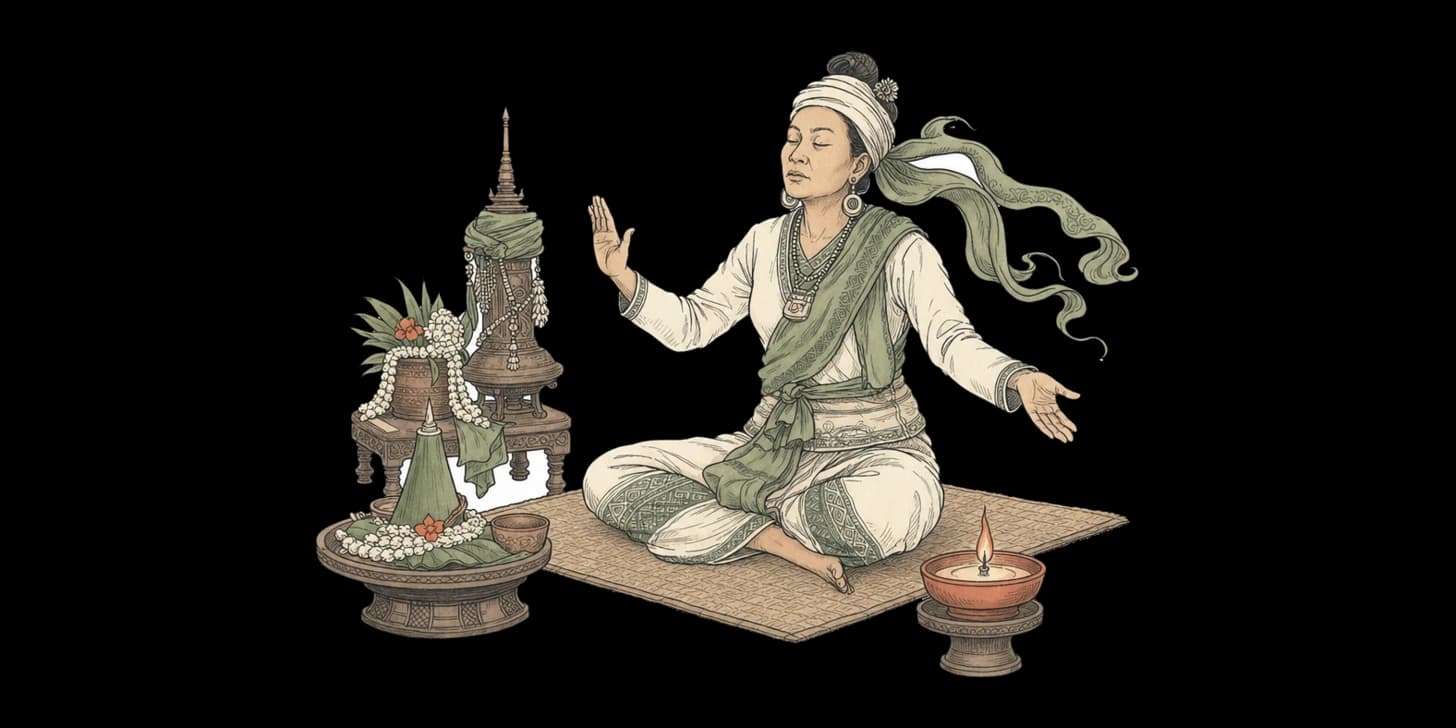
A spirit medium is known in the Northern dialect as a ma khi, a phrase that translates, beautifully, as "spirit horse". The image is precise: the spirit is said to "step down" and mount the medium's shoulders much as a rider mounts a horse. In standard Thai the medium may be called a rang song, the spirit's vessel. During possession, the medium is no longer quite themselves; the visiting spirit speaks through their mouth, moves through their limbs, and afterwards the medium often remembers nothing at all but a loud rushing sound in the ears.
The spirits who come are not random. Many are chao nai, the spirits of former Lanna lords and royalty, while others are revered ancestors or local guardians. People seek them out for very human reasons: a blessing before a journey, advice on a marriage or a business, the naming of a child, or healing for an ailment that medicine has not eased.
The Annual Gatherings: Dance, Trance and Costume
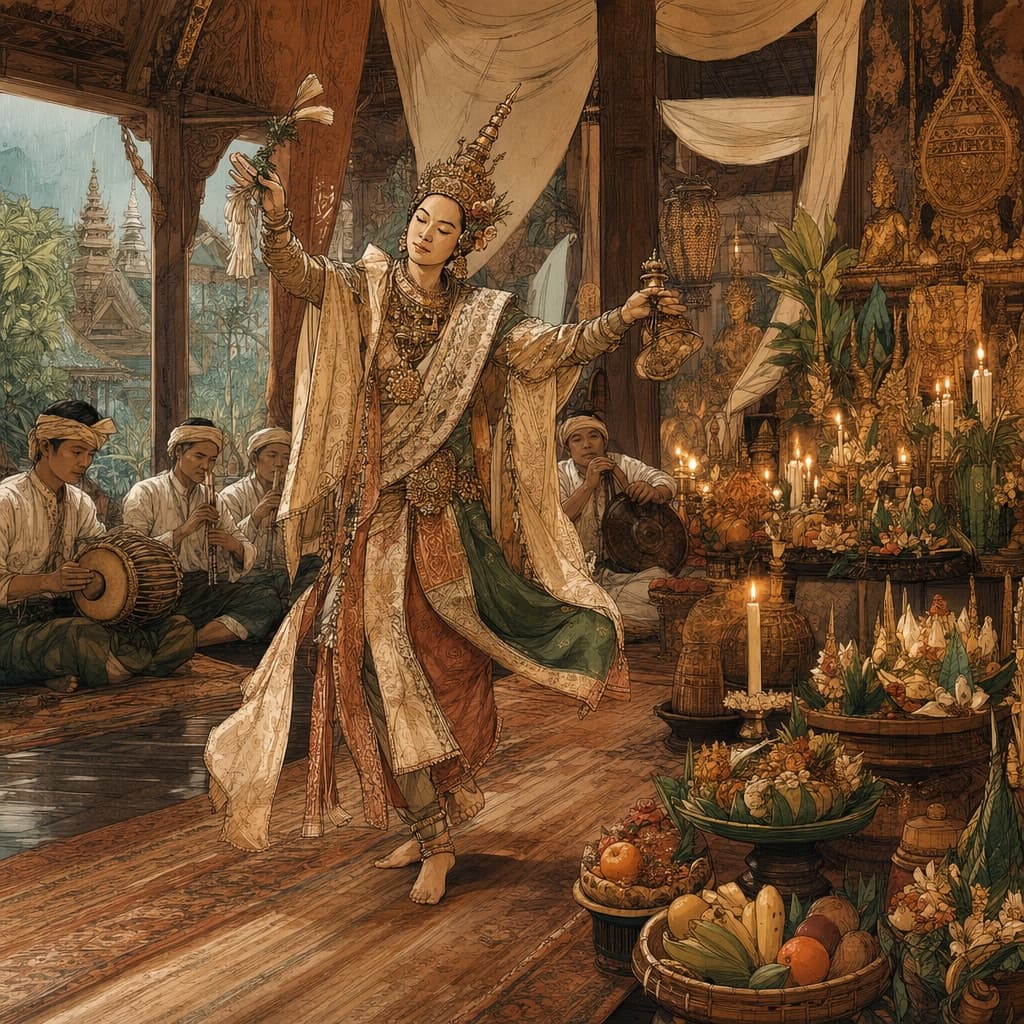
The most spectacular expression of all this is the fon phi, the spirit-possession dance, held most often in the warm months of May and June. A clan or group of families will raise a pavilion, lay out offerings, and invite their spirits to descend. Over two or three days the mediums dance almost without pause to the shimmering, hypnotic sound of a traditional Northern orchestra.
What strikes a first-time observer is the sheer theatre of it. As each spirit arrives, the medium is helped into the costume that spirit prefers, perhaps a white sarong and scarf for one, a warrior's sash for another. They drink, they smoke cheroots, they hold court with their living relatives, all in the manner of the spirit riding them. It is solemn and joyful at once, a family reunion in which the guests of honour have been dead for generations.
A World of Houses, Amulets and Protective Magic
The mediums do not stand alone. They belong to a far wider landscape of Thai folk belief, one you will notice the moment you arrive. Every home and hotel, ours included, keeps a small shrine where the resident spirit is offered flowers and fresh water each day; if those miniature dwellings intrigue you, we have written a whole love letter to Thai spirit houses. Many believers also carry blessed amulets, or wear sacred ink applied by a master, a practice we explore in our story on sak yant sacred tattoos. Spirit medium, spirit house and sacred tattoo are all threads of a single fabric: a quiet, daily negotiation with the unseen.
For the Curious Visitor: How to Be Present
If you are fortunate enough to encounter a fon phi, perhaps glimpsed through an open gate or invited by a Thai friend, we ask only one thing of you: approach it as the genuine, important practice it is. This is not a show staged for tourists, and it is never to be mocked. For the families gathered there, the spirits in the room are utterly real, and the advice they give will shape decisions in the year to come.
Observe quietly. Ask before photographing. Remove your shoes where others have removed theirs. Accept a blessing graciously if it is offered. You do not have to share the belief to honour it, and a little reverence opens doors that curiosity alone never will.
The longer we live in Chiang Mai, the more we sense that the city's true depth lies in these older currents, running just beneath the surface of daily life. Come stay with us, and let the North reveal its quieter mysteries in its own good time.
Frequently asked questions
What is a spirit medium called in Northern Thailand?
In the Northern dialect a spirit medium is known as a ma khi, which translates beautifully as spirit horse: the spirit is said to step down and mount the medium much as a rider mounts a horse. In standard Thai the medium may be called a rang song, the spirit's vessel.
How does the animist tradition fit with Buddhism?
Long before Buddhism arrived in the Lanna kingdom, people honoured the phi, the spirits of rivers, forests, fields and family lineages. Buddhism didn't erase this older faith; it simply settled gently on top of it. Most Northern Thai people see no contradiction in offering rice to a monk in the morning and tending a guardian spirit in the afternoon.
Which spirits come, and why do people seek them?
The spirits are not random. Many are chao nai, the spirits of former Lanna lords and royalty, while others are revered ancestors or local guardians. People seek them out for very human reasons: a blessing before a journey, advice on a marriage or business, the naming of a child, or healing for an ailment that medicine has not eased.
What is the fon phi?
The fon phi is the spirit-possession dance, the most spectacular expression of the tradition, held most often in the warm months of May and June. A clan or group of families raises a pavilion, lays out offerings and invites their spirits to descend, and over two or three days the mediums dance almost without pause to the hypnotic sound of a traditional Northern orchestra.
What happens when a spirit arrives during the dance?
As each spirit arrives, the medium is helped into the costume that spirit prefers, perhaps a white sarong and scarf for one, a warrior's sash for another. They may drink, smoke cheroots and hold court with their living relatives in the manner of the spirit riding them. It is solemn and joyful at once, a family reunion in which the guests of honour have been dead for generations.
How should I behave if I witness a fon phi?
Approach it as the genuine, important practice it is, never a show staged for tourists and never to be mocked. Observe quietly, ask before photographing, remove your shoes where others have removed theirs, and accept a blessing graciously if it is offered. You don't have to share the belief to honour it.