Local culture · June 25, 2026
Thai spirit houses: the little shrines you'll see everywhere
By The Ada House team
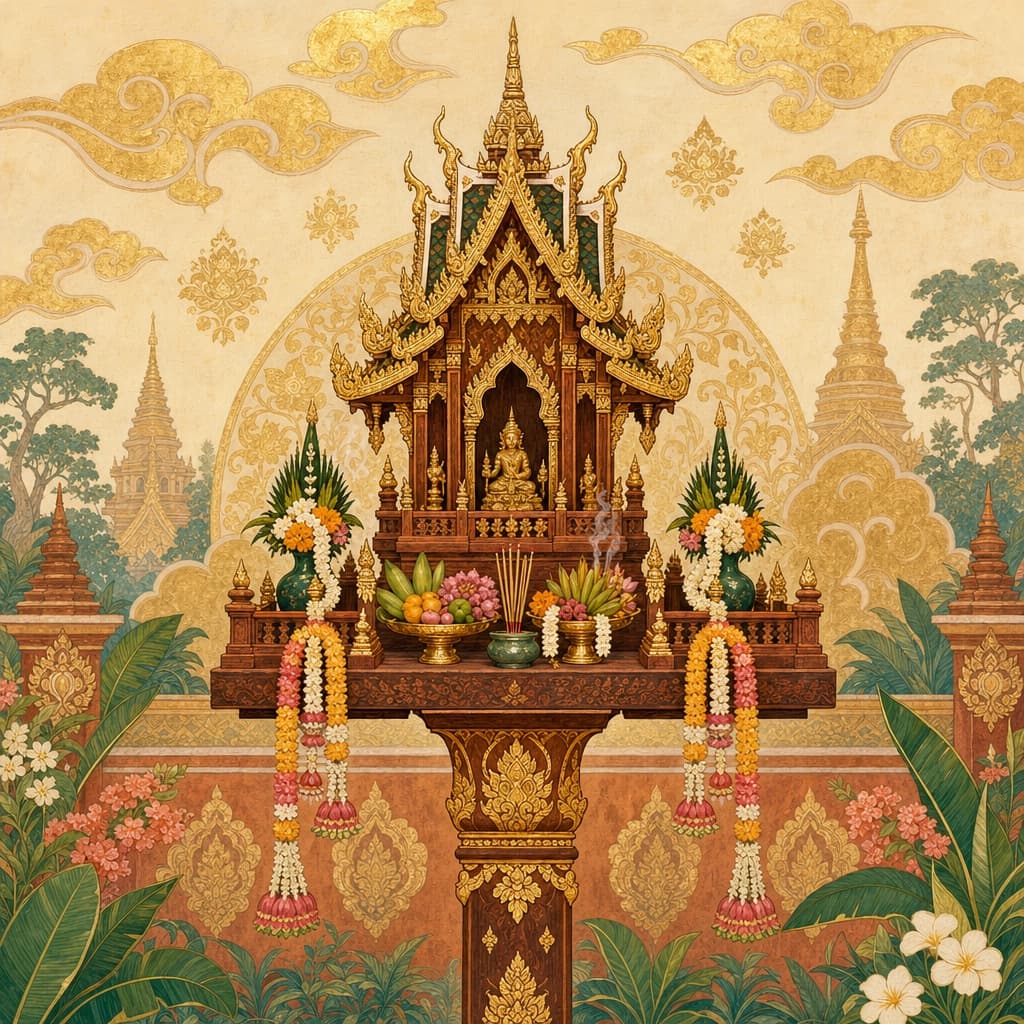
Once you start noticing them, you can't stop. Outside almost every home, café and hotel in Chiang Mai stands a small, ornate shrine on a pedestal — fresh garlands draped over it, incense curling up, and very often a bottle of bright red Fanta. These are spirit houses, and they're one of the most charming windows into everyday Thai belief you'll find.
What a spirit house actually is
The idea is gentle and very human. When people build on a piece of land, they believe they're sharing it with a guardian spirit who was there first. Rather than displace that spirit — and risk it moving into the building, where it might cause mischief or misfortune — they give it a home of its own. The shrine is, quite literally, a house for the spirit, so everyone lives in good order side by side.
This sits inside a beautiful blend of beliefs. Thailand is Buddhist, but daily life also carries a deep current of animism (the sense that places and natural things have spirits) and Brahmanism, the old priestly strand of Hinduism that shaped the early kingdoms here. The spirit house tradition is actually older than Buddhism in Thailand, woven through the Lanna kingdom's long history in the North. None of it feels contradictory to Thai people — it all simply belongs together.
The two kinds you'll see
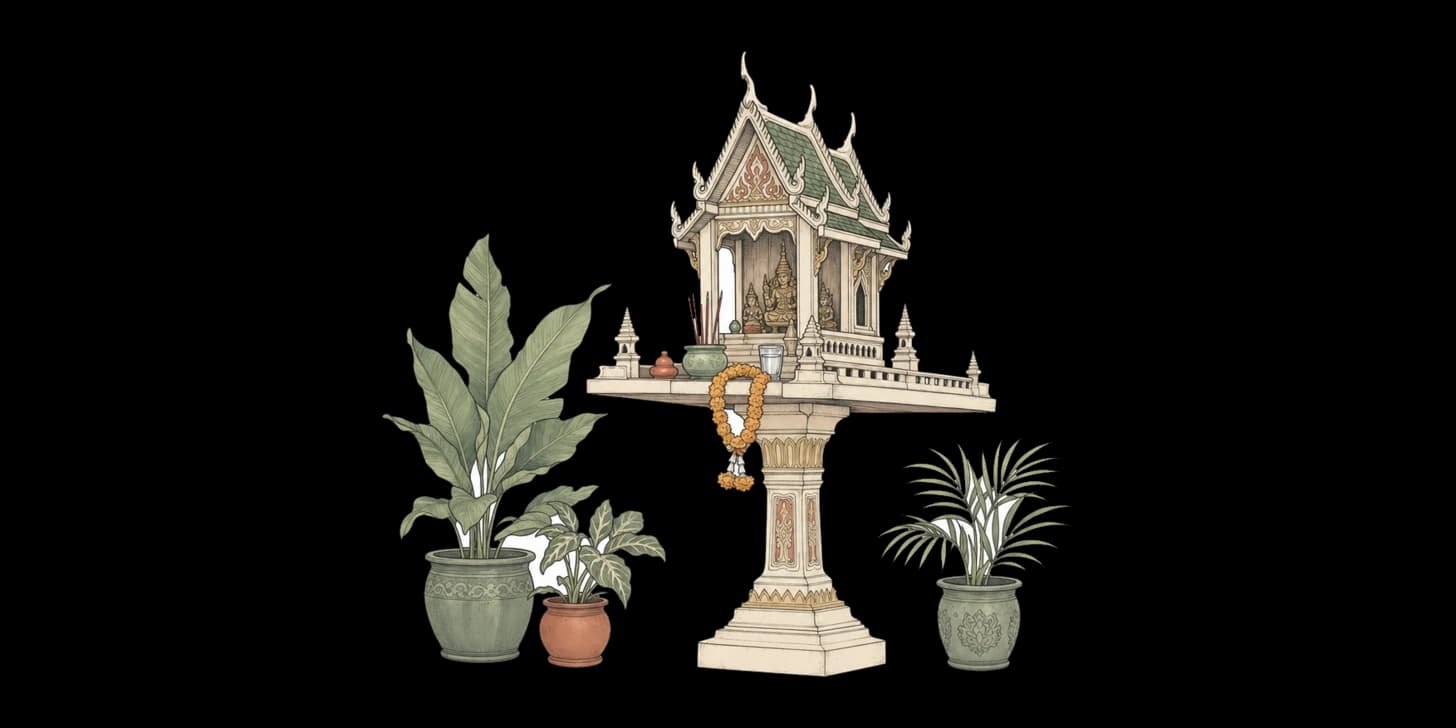
Look closely and you'll spot two common types. The smaller one, on a single pillar, is the san phra phum — the house of the land's guardian deity. Inside you'll often see a little figure holding a sword or staff: Phra Phum himself, the formal protector of the plot.
The larger, house-shaped shrine that stands on several legs (sometimes with a tiny ladder for the spirits to climb) is the san jao thi. This one welcomes ancestral and household spirits — Thais affectionately call it the "grandpa-grandma" shrine. One is celestial and formal; the other is homely and familial. Big hotels and old family homes often keep both.
Offerings, and the red Fanta mystery
The little figurines, animals and fresh flowers aren't decoration — they're offerings, renewed daily as a small act of care. You'll see garlands of jasmine and marigold, lit incense and candles, plates of rice or fruit, and glasses of sweet drinks. Keeping the spirits content and well-fed is thought to keep the household lucky and at peace.
And then there's the red Fanta. The popular explanation is lovely: long ago, offerings to spirits sometimes included blood, a symbol of life and vitality. As tastes (and convenience stores) changed, a bottle of bright strawberry-red soda became a sweet, bloodless stand-in — the colour red being deeply auspicious in Thai culture. No one needs to slaughter anything; the spirits get something they're believed to love, and everyone's happy. It's folk belief at its most practical and warm.
Where they're placed
Position matters enormously. A spirit house can't just go anywhere — the spot is chosen carefully, often with a monk or a Brahmin priest consulted for an auspicious date, direction and placement. The shrine should sit in sunlight, never in the building's shadow (no one wants to live in the dark), and it's raised on a pedestal, usually above eye level. You'll notice they're often tucked into a sunny corner of a courtyard, facing away from doors and bathrooms.
How to be a respectful guest
This is where you come in, and the rule is simple: enjoy them, but don't disturb them. Don't touch, move or "borrow" the offerings, however photogenic that Fanta looks. Don't sit, lean or climb on the platform. If you can, step around a shrine rather than through the space directly in front of it, and lower your voice nearby — the same easy courtesy you'd bring to any sacred place. (It's all of a piece with the broader etiquette that smooths daily life here.)
You don't need to share the belief to honour it, and a little curiosity goes a long way. If these everyday spirits intrigue you, the same animist threads run through Chiang Mai's old-city temples, its traditional healing customs, and the quiet wisdom you can hear first-hand at a monk chat.
So next time you pass a spirit house — and in Chiang Mai, that'll be within the next few minutes — pause a second. There's a whole worldview in that small, bright shrine, and now you're in on it.
Warmly, the Ada House team
Frequently asked questions
What is a spirit house actually for?
When people build on a piece of land, they believe they are sharing it with a guardian spirit who was there first. Rather than displace that spirit, and risk it moving into the building where it might cause mischief, they give it a home of its own. The shrine is quite literally a house for the spirit, so everyone lives in good order side by side.
Why are there two different kinds?
Look closely and you will spot two common types. The smaller one on a single pillar is the san phra phum, the house of the land's guardian deity, often with a little figure holding a sword or staff inside. The larger, house-shaped shrine on several legs is the san jao thi, which welcomes ancestral and household spirits and is affectionately called the grandpa-grandma shrine. Big hotels and old family homes often keep both.
What is the story behind the red Fanta?
The popular explanation is lovely. Long ago, offerings to spirits sometimes included blood as a symbol of life and vitality. As tastes and convenience stores changed, a bottle of bright strawberry-red soda became a sweet, bloodless stand-in, the colour red being deeply auspicious in Thai culture. It is folk belief at its most practical and warm.
What are all the offerings I see inside?
The little figurines, animals and fresh flowers are not decoration but offerings, renewed daily as a small act of care. You will see garlands of jasmine and marigold, lit incense and candles, plates of rice or fruit, and glasses of sweet drinks. Keeping the spirits content and well-fed is thought to keep the household lucky and at peace.
Why are spirit houses placed where they are?
Position matters enormously, and the spot is chosen carefully, often with a monk or a Brahmin priest consulted for an auspicious date, direction and placement. The shrine should sit in sunlight and never in the building's shadow, since no one wants to live in the dark, and it is raised on a pedestal usually above eye level. They are often tucked into a sunny corner facing away from doors and bathrooms.
How do I behave respectfully around a spirit house?
The rule is simple: enjoy them, but do not disturb them. Do not touch, move or borrow the offerings however photogenic that Fanta looks, and do not sit, lean or climb on the platform. If you can, step around a shrine rather than through the space directly in front of it, and lower your voice nearby.