Local culture · May 30, 2026
Thai etiquette: a friendly cheat sheet for visitors
By The Ada House team
One of the quiet joys of Chiang Mai is how warmly you're welcomed — and a little local know-how goes a long way. Don't worry about getting everything perfect; Thais are famously kind and forgiving when they see you're trying. But a few small customs will smooth your whole stay, so here's the friendly cheat sheet.
The wai
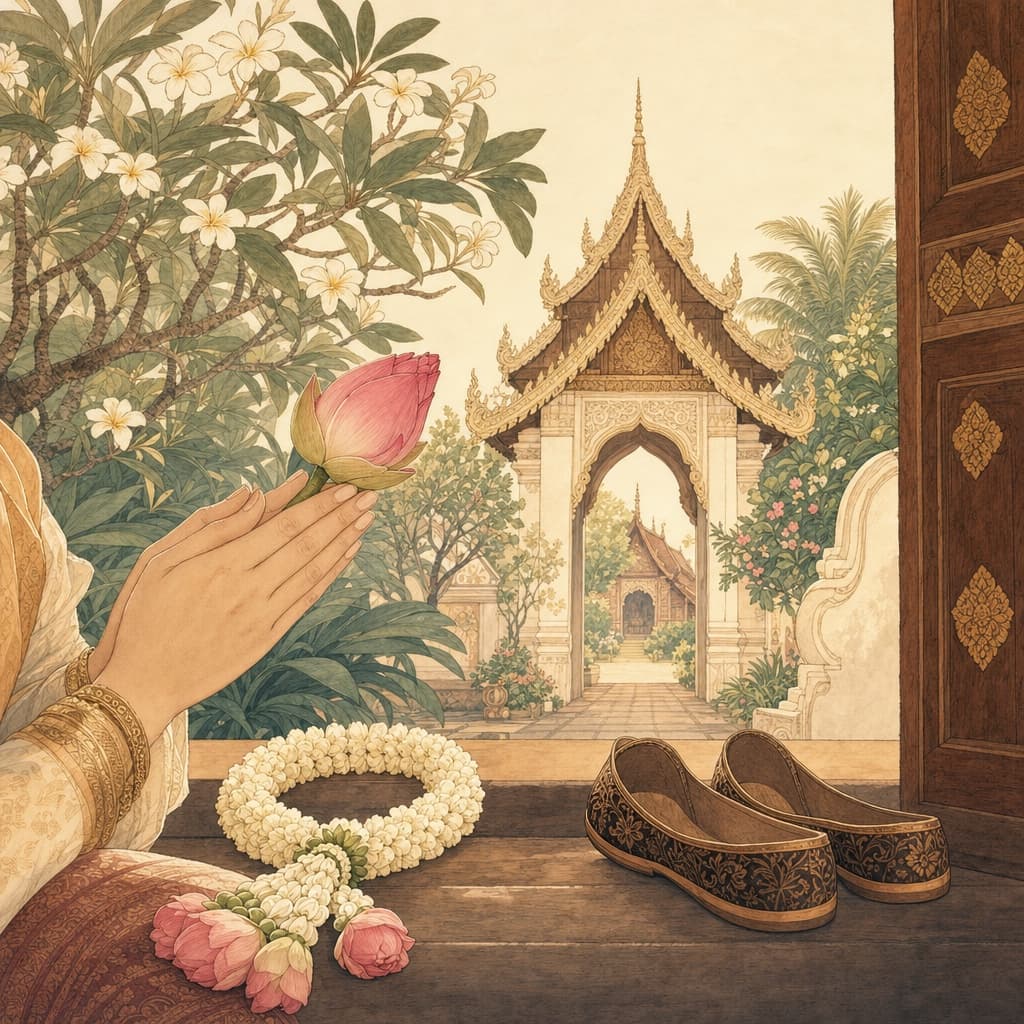
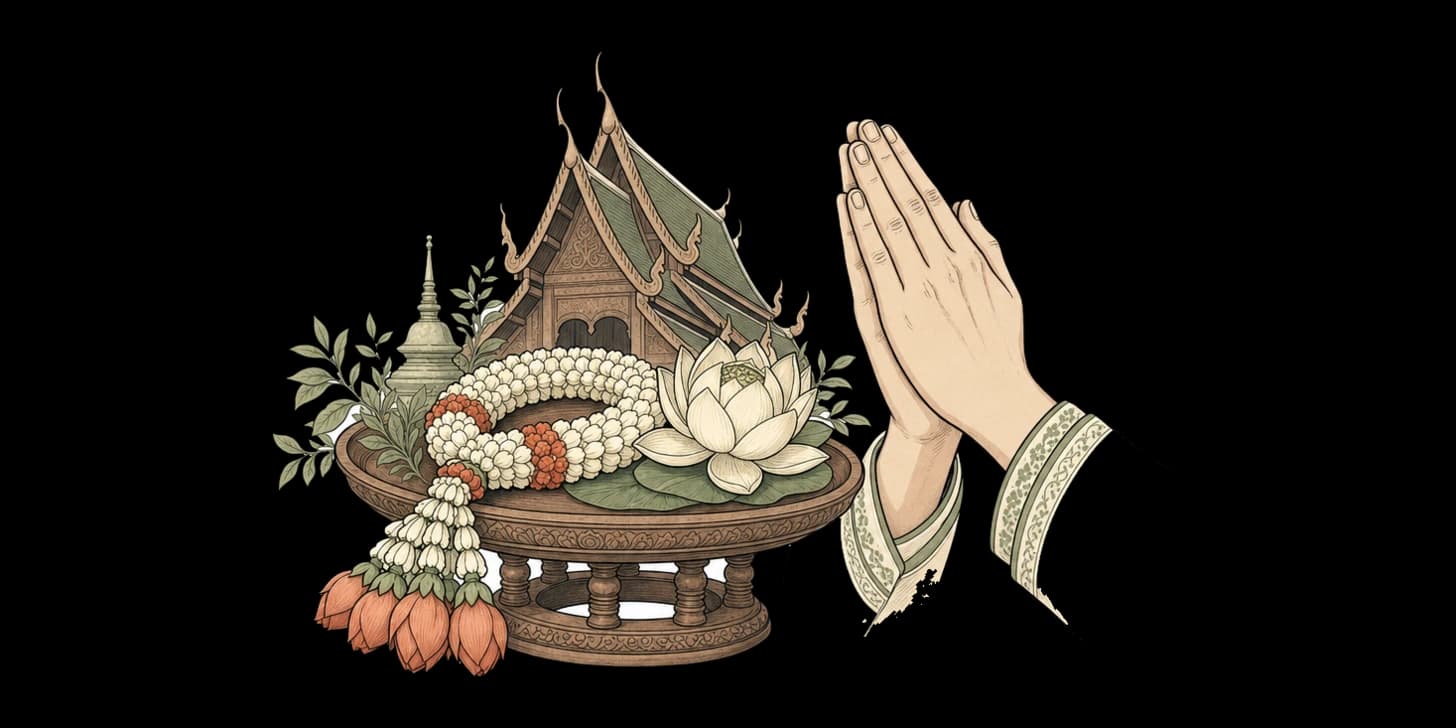
The wai — palms together, a small bow of the head — is the Thai greeting, thank-you and sign of respect all in one. The easy rule for visitors: return a wai when you receive one, with a smile. Don't go around initiating wais to shop staff or children (a warm "sawasdee" and a smile is plenty). When in doubt, a friendly nod never offends.
Keep your cool
This is the big one. Thai culture prizes staying calm and not making anyone "lose face." Public anger — raised voices, arguing, visible frustration — is genuinely frowned upon and, practically, gets you nowhere. If something goes sideways, stay soft, smile, explain gently. Smile, breathe, no problem will get you further than being right ever will.
Heads and feet
Thais see the body as a hierarchy: the head is sacred (never pat anyone's head, even a cute kid), and the feet are the lowest part. So don't point your feet at people or Buddha images, don't step over someone, and keep feet off chairs and tables. Sitting on the floor? Tuck them behind you.
Temples & the monarchy
Two things deserve real care. First, deep respect for the King and royal family is non-negotiable — never joke about or criticise the monarchy (the laws around this are strict, and our guide to royal etiquette in Thailand explains what that means in practice). Second, temples are living places of worship: cover shoulders and knees, slip shoes off before the prayer halls, keep your voice low, don't touch the Buddha images — and women shouldn't touch monks or hand things to them directly (place items down instead). Our old-city temple walk and Monk Chat guide go deeper.
At the table
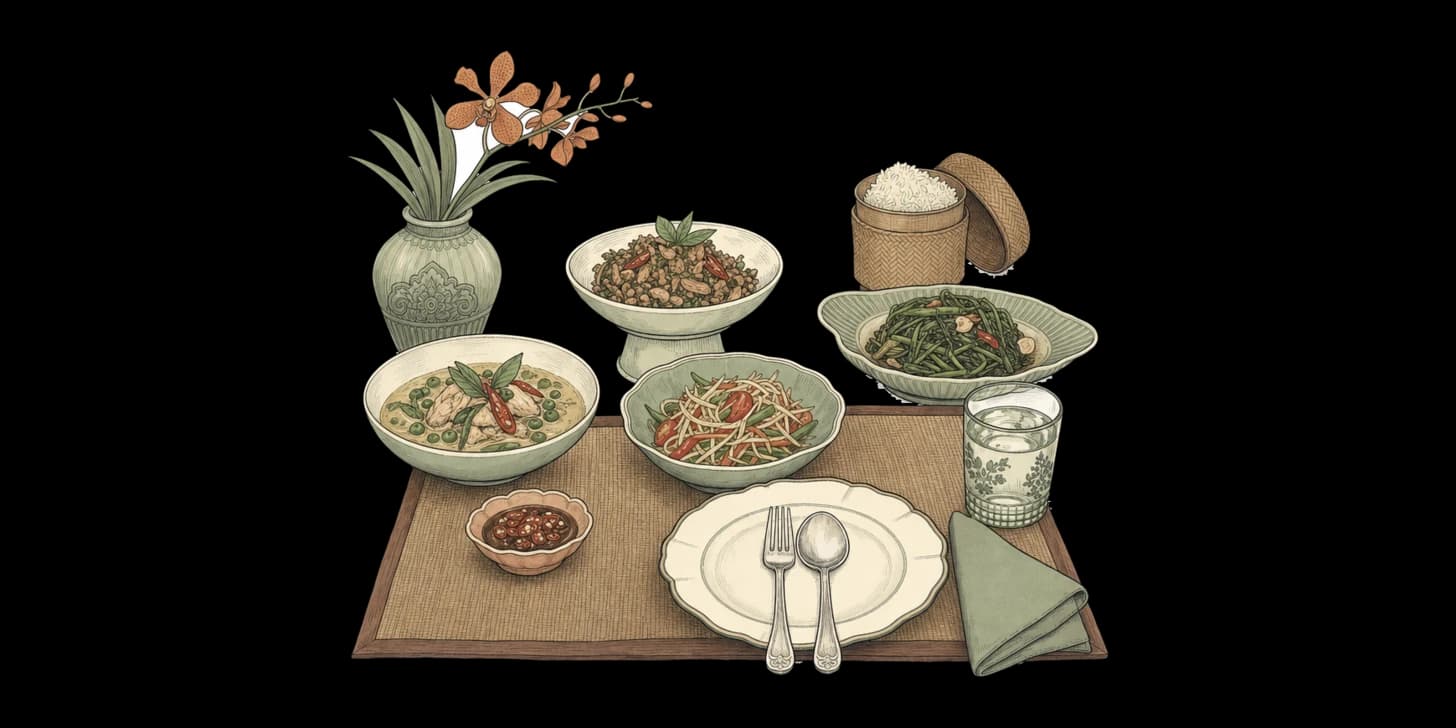
Thai meals are shared and joyful. Expect several dishes in the middle and your own rice. The cutlery move: spoon in your right hand, fork in your left, using the fork to push food onto the spoon (the fork doesn't go in your mouth). Sticky rice is eaten with your right hand, rolled into little balls. Tipping isn't required — rounding up or ~10% for good restaurant service is a kind gesture; small change is plenty at street stalls.
The little things
- Point with your whole hand (palm down), not one finger — and beckon palm-down, never with a snap or whistle.
- Give and receive money or objects with your right hand (or both), with a small nod.
- Keep your voice moderate, queue politely, and smile — it really is the local superpower.
Forget something? Don't panic — a smile and a calm manner fix almost anything here. Get these few basics and Chiang Mai (and our house) will feel easy and genuinely welcoming from day one.
Frequently asked questions
What is the wai, and should I initiate one?
The wai, palms together with a small bow of the head, is the Thai greeting, thank-you and sign of respect all in one. The easy rule for visitors is to return a wai when you receive one, with a smile. Don't go around initiating wais to shop staff or children; a warm sawasdee and a smile is plenty.
Why is staying calm so important?
Thai culture prizes staying calm and not making anyone lose face. Public anger, whether raised voices, arguing or visible frustration, is genuinely frowned upon and, practically, gets you nowhere. If something goes sideways, stay soft, smile and explain gently.
What is the rule about heads and feet?
Thais see the body as a hierarchy: the head is sacred, so never pat anyone's head, even a child's, and the feet are the lowest part. Don't point your feet at people or Buddha images, don't step over someone, and keep your feet off chairs and tables. If you're sitting on the floor, tuck them behind you.
What should I know about temple manners?
Cover your shoulders and knees, slip your shoes off before the prayer halls, keep your voice low, and don't touch the Buddha images. Women shouldn't touch monks or hand things to them directly; place items down instead.
How do Thais use cutlery at the table?
Hold the spoon in your right hand and the fork in your left, using the fork to push food onto the spoon, as the fork doesn't go in your mouth. Sticky rice is eaten with your right hand, rolled into little balls. Tipping isn't required, though rounding up or about 10 percent for good restaurant service is a kind gesture.
Are there small gestures I should get right?
Point with your whole hand, palm down, rather than one finger, and beckon palm-down, never with a snap or a whistle. Give and receive money or objects with your right hand, or both hands, and a small nod. Keep your voice moderate and queue politely; a smile really is the local superpower.