Local culture · June 20, 2026
A short history of Lanna, the kingdom behind Chiang Mai
By The Ada House team
Spend a few days in Chiang Mai and you start to feel it: the square moat, the teak temple roofs, the dialect in the market, the food on your plate — they're all echoes of Lanna, a kingdom that ruled the north for centuries. A little history goes a long way toward reading the city. Here's the short version.
How it began
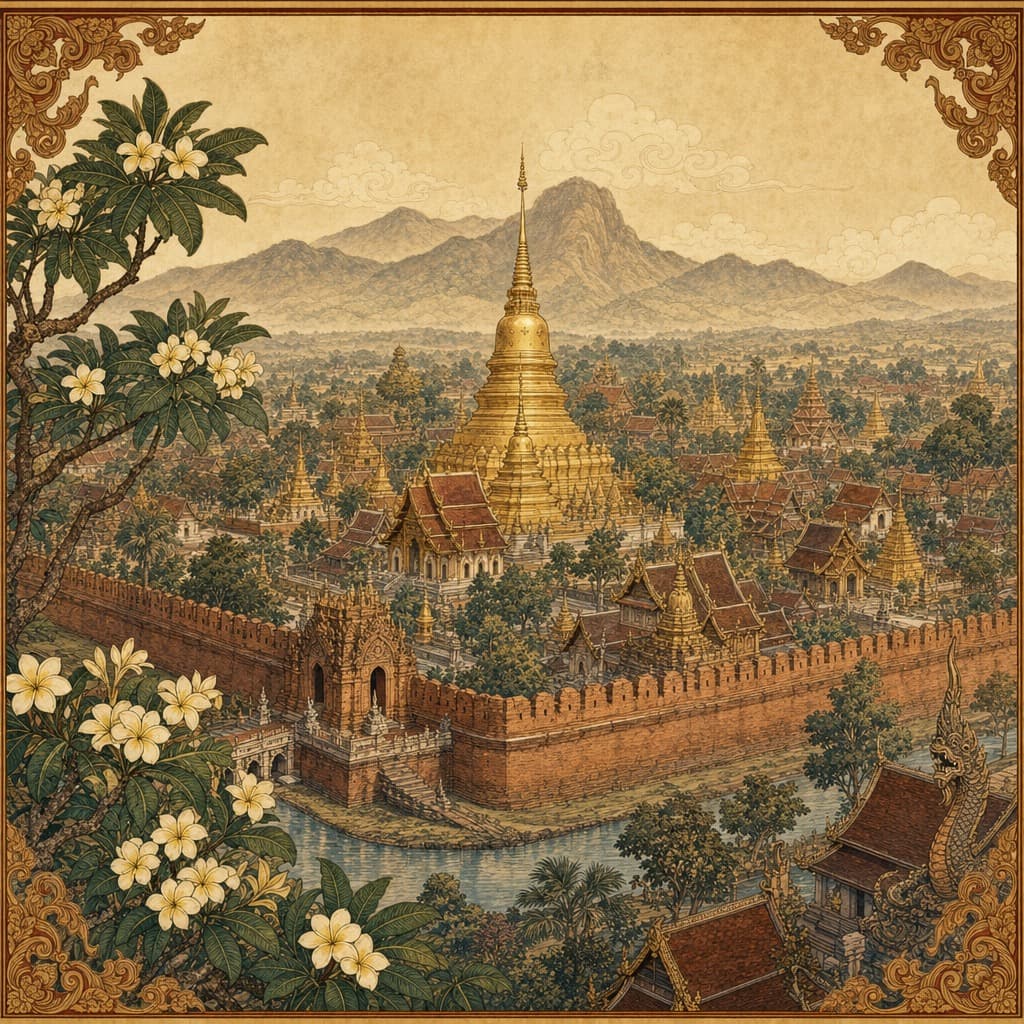
The Lanna Kingdom was founded in the late 13th century by King Mangrai, a Tai ruler who united the small city-states of the north. He first ruled from Chiang Rai, but wanted a better trade-and-defence capital — and in 1296 he founded Chiang Mai in a fertile, mountain-ringed valley. When you walk the square old city today, you're tracing Mangrai's plan: a fortified capital laid out with walls, gates and a moat around the kingdom's heart.
"A million rice fields"
Lanna (Lan Na) means roughly "Land of a Million Rice Fields" — a nod to the irrigated valleys that made the region rich. Every green paddy you pass on a scooter ride is the landscape that gave the kingdom both its name and its wealth.
The golden age
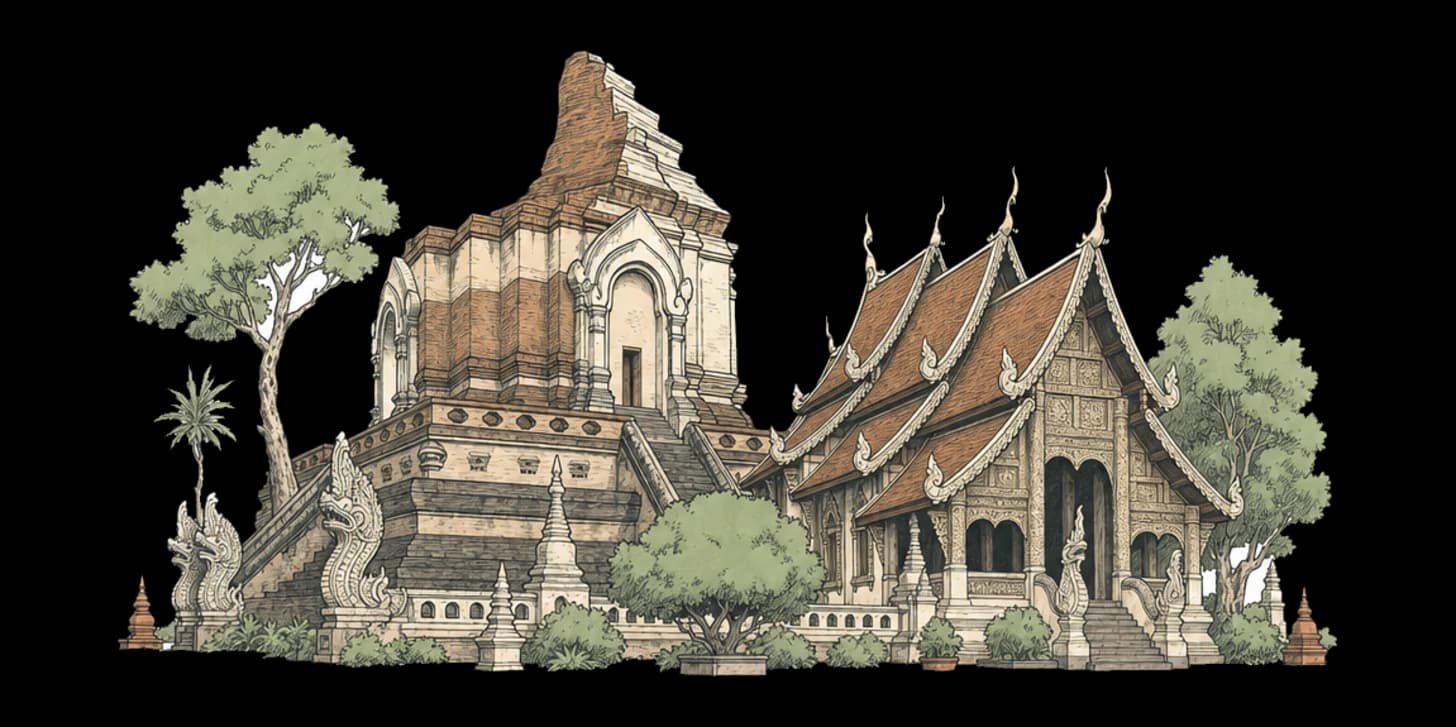
Lanna peaked in the 15th–16th centuries, especially under King Tilokaracha. Chiang Mai became a great centre of Theravada Buddhism — almost a monastic university — sponsoring temples, religious art and scholarship, and developing its own Tai Tham (Lanna) script and a distinctive architecture: deep multi-tiered wooden roofs, carved gables, naga-serpent stairways. You can still stand inside that golden age at the classic Lanna temples in our old-city temples guide.
Two centuries under Burma, then Siam
Around 1558 Chiang Mai fell to Burma and stayed a tributary state for roughly two centuries — which is why some temples carry Burmese-style chedis and details. From the late 1700s, northern leaders like Kawila helped drive the Burmese out, and Lanna aligned with Siam. Through the 1800s Bangkok gradually absorbed it, and by the early 20th century Lanna was no longer a separate kingdom — it had become part of modern Thailand.
What survives today
The kingdom is gone, but Lanna is everywhere once you know how to look:
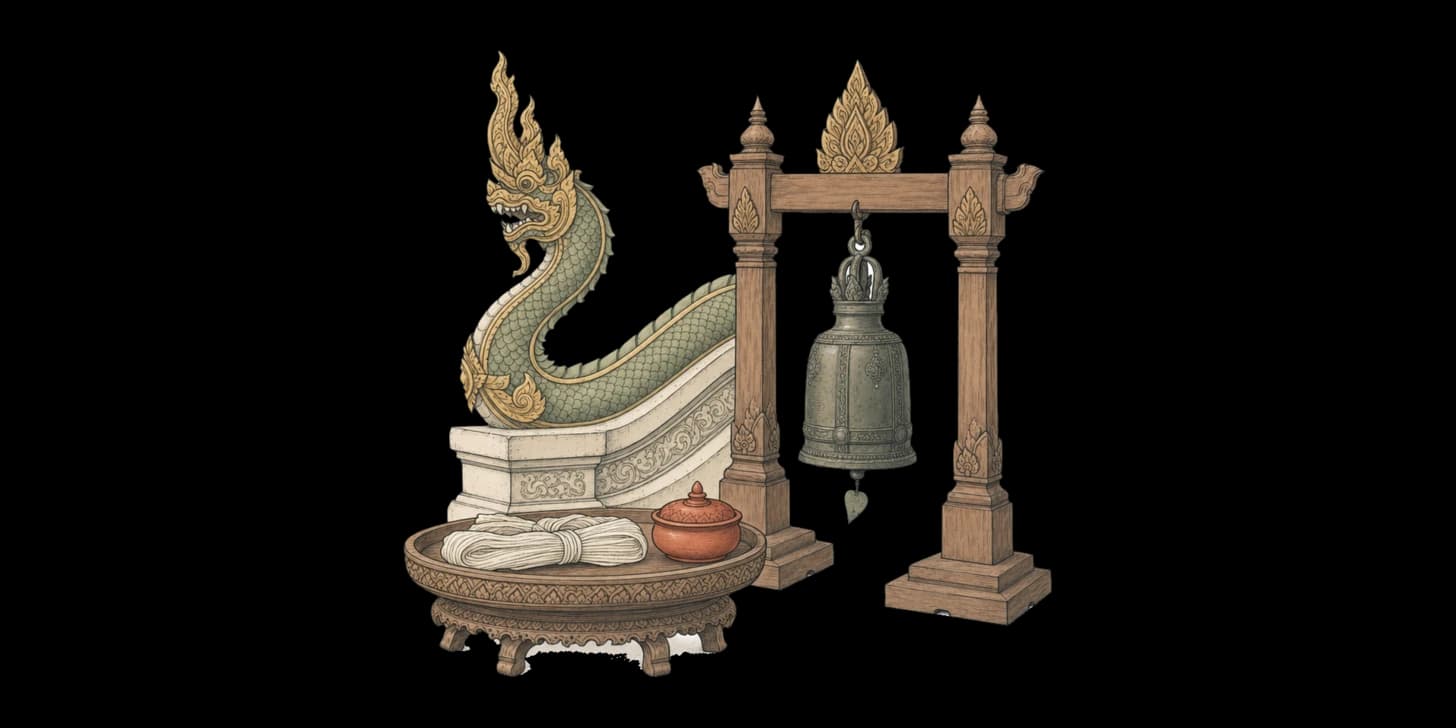
- The walls & moat — the square old city is the footprint of Mangrai's fortified capital. Walking or cycling the moat traces the edge of medieval Chiang Mai.
- The temples — Wat Chiang Man (the oldest, founded with the city), Wat Phra Singh (classic Lanna style) and Wat Chedi Luang (its great chedi half-toppled by a 16th-century quake).
- The architecture — teak buildings, tiered roofs and naga stairways, echoed today in cafés and guesthouses.
- The language — Northern Thai, Kham Mueang, still spoken in markets and on songthaews, distinct from Bangkok Thai.
- The food — khao soi, sai ua, nam prik ong and sticky rice all draw on northern traditions (see our Northern Thai food guide), and you can still sit down to a khantoke dinner, the ceremonial Lanna feast served on a low pedestal tray.
- The festivals — the lantern festival Yi Peng and Chiang Mai's temple-centred Songkran both grow from Lanna-era rituals.
Why it's worth knowing
Once you see Chiang Mai as a former royal capital with its own language, script and art, everything clicks: the relaxed pace, the deep temple culture, the pride in local food and crafts. The best way to honour it is simply to pay attention — walk the old city mindfully, visit the temples with respect, learn a word or two of Kham Mueang, eat the northern dishes, and support the artisans keeping Lanna skills alive. Ask us at the house and we'll map you a little "Lanna walk" through the old city.
Frequently asked questions
Who founded Chiang Mai, and when?
The Lanna Kingdom was founded in the late 13th century by King Mangrai, a Tai ruler who united the small city-states of the north. He first ruled from Chiang Rai but wanted a better trade-and-defence capital, and in 1296 he founded Chiang Mai in a fertile, mountain-ringed valley. When you walk the square old city today, you are tracing Mangrai's plan.
What does the name Lanna mean?
Lanna (Lan Na) means roughly the Land of a Million Rice Fields, a nod to the irrigated valleys that made the region rich. Every green paddy you pass on a scooter ride is the landscape that gave the kingdom both its name and its wealth.
When was Lanna at its peak?
Lanna peaked in the 15th and 16th centuries, especially under King Tilokaracha. Chiang Mai became a great centre of Theravada Buddhism, almost a monastic university, sponsoring temples, religious art and scholarship. It developed its own Tai Tham (Lanna) script and a distinctive architecture of deep multi-tiered wooden roofs, carved gables and naga-serpent stairways.
What happened to the kingdom after its golden age?
Around 1558 Chiang Mai fell to Burma and stayed a tributary state for roughly two centuries, which is why some temples carry Burmese-style chedis and details. From the late 1700s northern leaders like Kawila helped drive the Burmese out, and Lanna aligned with Siam. Through the 1800s Bangkok gradually absorbed it, and by the early 20th century Lanna had become part of modern Thailand.
How can I see Lanna in the city today?
The kingdom is gone, but Lanna is everywhere once you know how to look. The square walls and moat are the footprint of Mangrai's fortified capital; temples like Wat Chiang Man, Wat Phra Singh and Wat Chedi Luang show classic Lanna style; the Northern Thai dialect Kham Mueang is still spoken in markets; and dishes like khao soi and sai ua draw on northern traditions. Festivals such as Yi Peng grow from Lanna-era rituals too.