
Move here · July 4, 2026
Condo, townhouse or moo baan: choosing your Chiang Mai home
By The Ada House team
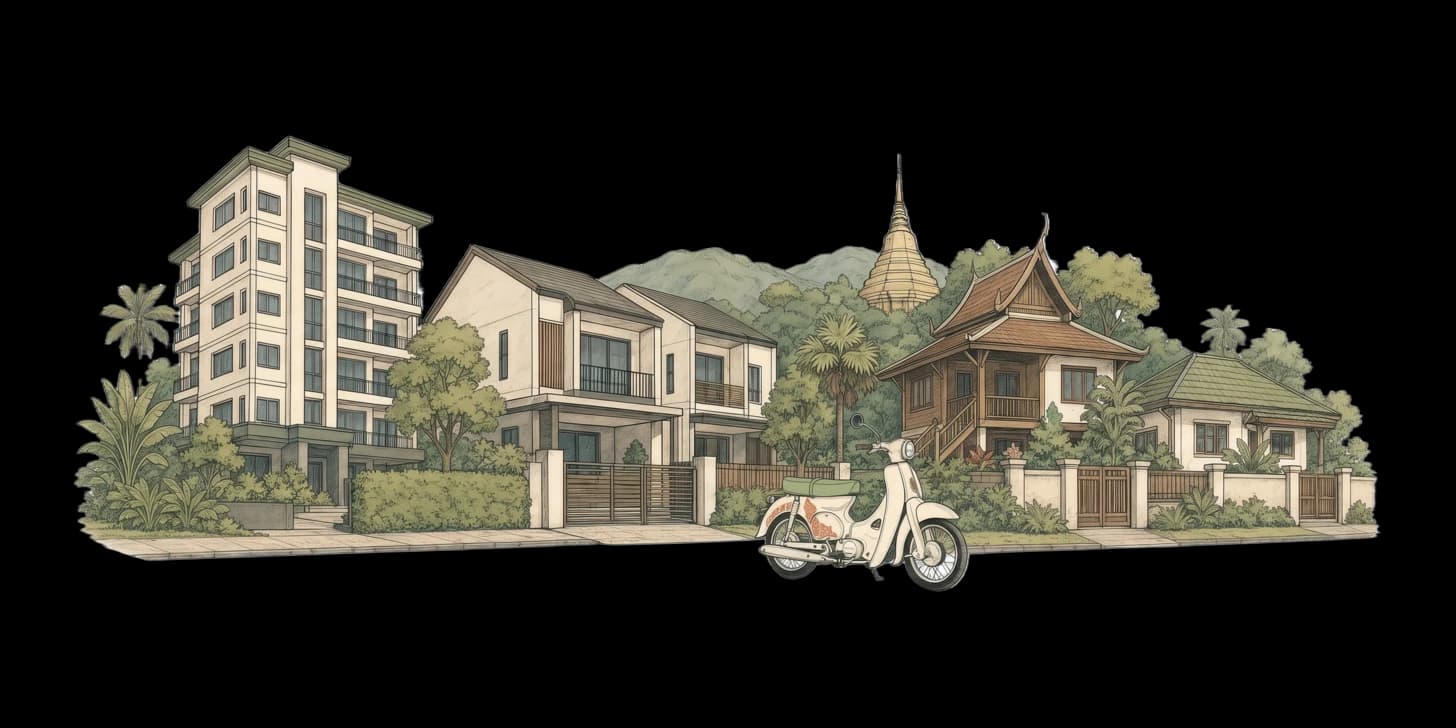
Deciding to move to Chiang Mai is the easy part. The question that sneaks up afterwards is trickier: what kind of home do you actually want here? The city offers four broad answers — the condo, the townhouse, the standalone house and the gated moo baan — and each one shapes your daily life far more than the postcode does. Here's what each option really means on the ground.
Condos: the easy default
Condos are where most newcomers land, and for good reason. You get keycard entry, a front desk that signs for parcels, usually a pool and a gym, and bills that arrive predictably. Maintenance is someone else's problem, and locking up for a month of travel takes thirty seconds.
What you often don't get is a kitchen worth the name. Many Thai condos assume you'll eat out or order in, so expect two hobs and a microwave shelf rather than a proper cooking space. Units skew small, too.
If you're thinking of buying rather than renting, condos are also the one property type foreigners can own outright here — subject to the building-wide foreign quota of 49% of saleable floor area under Thailand's Condominium Act. That's general information, not legal advice — the full picture, lawyer included, is in our guide to buying property in Chiang Mai.
Townhouses and shophouses: space where the action is
The townhouse — often a converted shophouse — is Chiang Mai's underrated middle option. For similar money to a decent condo you get two or three storeys, a real kitchen, and an address in the thick of things — markets, cafés and the Old City on your doorstep.
The trade-offs are honest ones. You're on the street, so you hear the street — motorbikes, delivery trucks, the neighbour's renovation. Older buildings can be dark on the ground floor and warm on the top one, and there's no pool, gym or guard. For people who want space and location more than polish, though, it's a genuinely good deal.
Houses and the moo baan: gardens, guards and the commute
A standalone house in town gives you a garden, room for a dog and no shared walls — but security is your own affair and good in-town houses are scarce. Which is why so many families end up in a moo baan: a gated village, usually on the edges of the city in areas like Hang Dong, Mae Hia or San Sai, with a guarded entrance, quiet internal lanes and often a shared pool or playground.
Moo baan life is genuinely lovely for children and pets — it features heavily in our guide to where to live in Chiang Mai. Two things to check before you sign: the monthly common fee (covering guards, rubbish and street cleaning — sometimes the owner pays it, sometimes the tenant, so get it in the contract), and the commute. Most moo baan sit 15–30 minutes' drive from the centre, so you'll almost certainly need your own wheels.
The renter's decision tree
A few practical forks decide most cases. Furnished or not? Condos almost always come furnished; houses are frequently empty or only partly kitted out, and furnishing a three-bedroom house is a real cost if you're not staying years.
Heat and bills. A concrete condo box under a west-facing window can be brutal in April, and hot-season air-con bills in the low thousands of baht are normal — more if your building charges above the government electricity rate of roughly four baht a unit — so always ask what rate you'll pay. Houses fight heat differently: shade, trees and airflow can keep them liveable with fans alone, but big rooms cost more to cool when you do need it.
The garden reality. Houses come with nature attached — ants, geckos (harmless, keep them), the odd snake at the garden's edge, and grass that grows visibly in rainy season. Budget for a gardener or enjoy the exercise. Our guide to renting an apartment in Chiang Mai covers deposits, contracts and viewings in detail.
Noise and pets: the deciding details
Noise is the tiebreaker people underestimate, and houses lose it more often than condos. Village life comes with roosters at 5am, temple bells and dawn chanting, soi dogs with opinions, and the occasional weekend karaoke session that ends when it ends. None of it is hostile — it's just Thailand being alive — but light sleepers should visit any house at dawn before committing. A condo on a high floor is the reliably quiet option.
Pets flip the ranking. Most condos ban them outright, townhouse landlords decide case by case, and moo baan houses are easily the most pet-friendly homes in the city — a garden, a gate and neighbours who mostly have dogs too.

What it all costs, roughly
Treat any precise figure with suspicion — but the tiers are real. Basic condo studios start from very little, a few thousand baht a month outside the trendy areas. Comfortable one-bedroom condos in popular neighbourhoods run to the low tens of thousands. And a three-bedroom family house in a moo baan often rents for what a single room costs in a Western city. Add utilities, common fees and transport before comparing — our cost of living guide breaks the full budget down.
Try before you commit
Here's the advice we give everyone: don't sign a year's lease on arrival. Spend a month in each area that tempts you — one near the Old City, one in Nimman, one out towards the mountains — and let the city tell you where you belong. A coliving stay is the natural first move: you land somewhere comfortable with instant community, and you house-hunt from a position of knowledge rather than jet lag. That's exactly what Ada House is for — come for a month, and choose your Chiang Mai home the slow, smart way.
Frequently asked questions
What is a moo baan in Chiang Mai?
A moo baan is a gated residential village, usually on the edges of the city in areas like Hang Dong, Mae Hia or San Sai. Expect a guarded entrance, quiet internal lanes and often a shared pool or playground, plus a monthly common fee covering guards, rubbish collection and street cleaning. They are especially popular with families and pet owners, though most sit 15-30 minutes' drive from the centre.
Should I rent a condo or a house in Chiang Mai?
Condos win on convenience: security, a pool and gym, predictable bills and easy lock-up-and-travel living, though kitchens are often tiny. Houses and moo baan villages win on space, gardens and pet-friendliness, but come with commutes, garden upkeep and more ambient noise. Light sleepers and solo movers usually prefer condos; families and dog owners usually prefer a moo baan house.
Can foreigners own a condo in Chiang Mai?
Condos are the one property type foreigners can generally own outright in Thailand, subject to the Condominium Act's building-wide foreign quota of 49% of saleable floor area. That is general information rather than legal advice — have a Thai property lawyer verify the quota and paperwork for any specific building before committing.
Do rental homes in Chiang Mai come furnished?
Condos almost always come fully furnished. Standalone houses and moo baan homes are frequently empty or only partly kitted out, so furnishing a three-bedroom house is a real cost worth factoring in if you are not planning to stay for years.
How noisy are houses in Chiang Mai compared to condos?
Houses lose the noise contest more often than condos. Village life can include roosters at 5am, temple bells and dawn chanting, soi dogs and occasional weekend karaoke. None of it is hostile, but light sleepers should visit a house at dawn before signing. A condo on a high floor is the reliably quiet option.
How much does it cost to rent a house or condo in Chiang Mai?
Treat precise figures with suspicion, but the tiers are real: basic condo studios start from a few thousand baht a month outside the trendy areas, comfortable one-bedroom condos in popular neighbourhoods reach the low tens of thousands, and a three-bedroom moo baan family house often rents for what a single room costs in a Western city. Add utilities, common fees and transport before comparing.