Local culture · June 25, 2026
Wat Umong: the forest tunnel temple of Chiang Mai
By The Ada House team
After a few days of glittering, golden temples in the old city, you may start to crave something quieter. Wat Umong is that something. Tucked into the forest at the foot of Doi Suthep, west of the moat and just south of the university, it trades gold leaf for moss, bustle for birdsong — and instead of soaring halls, it sends you underground, into brick meditation tunnels dug some 700 years ago.
A temple you walk through, not just look at
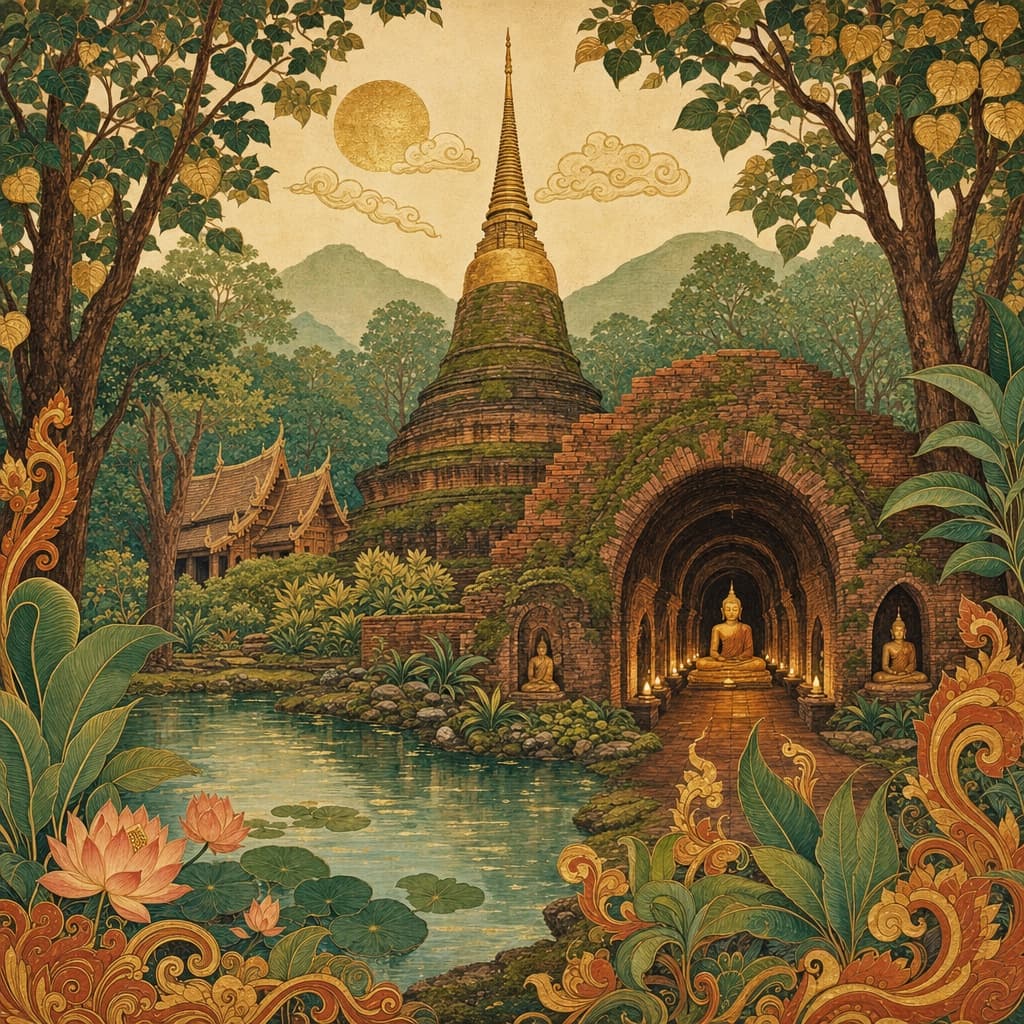
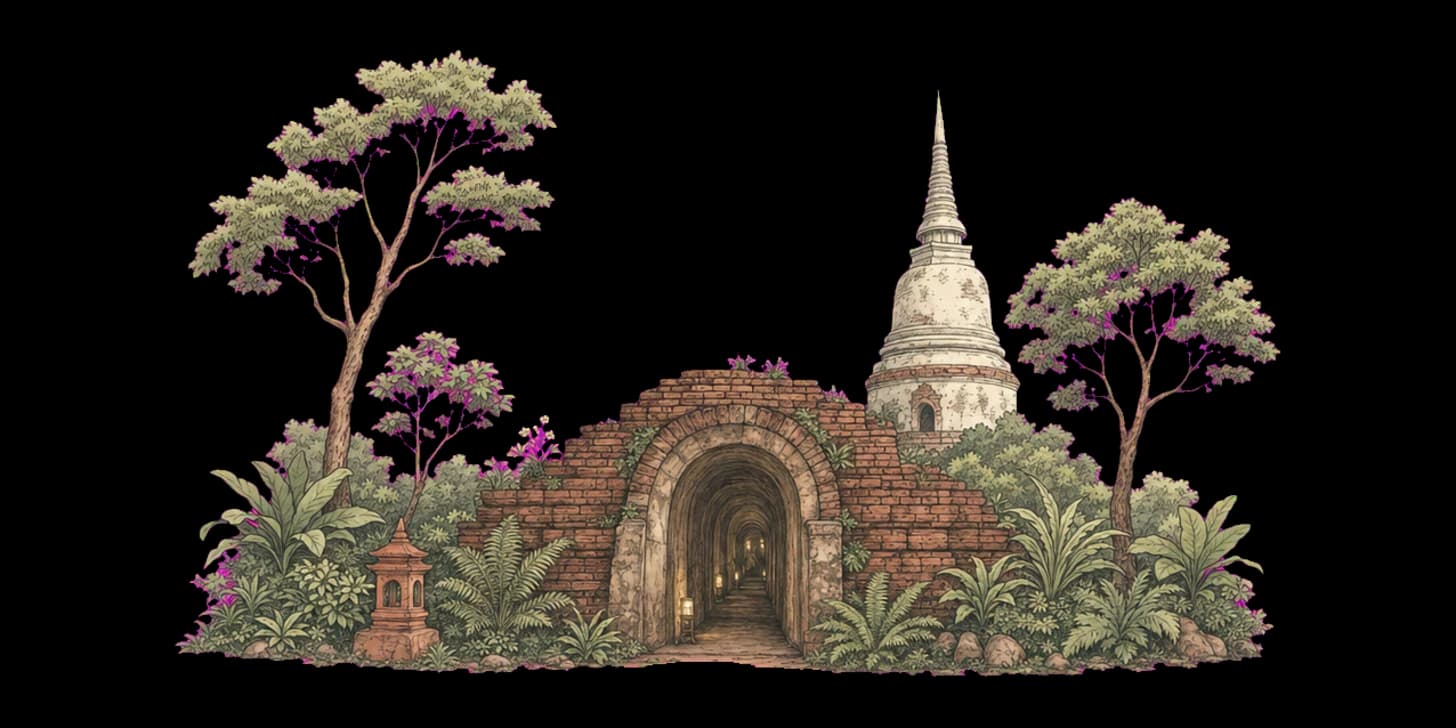
Wat Umong's full name, Wat Umong Suan Phutthatham, roughly means "the temple of tunnels and the Dhamma garden" — and the tunnels are the heart of it. Founded in the late 13th century under King Mengrai, the Lanna kingdom's first ruler, the passages were carved into an earth mound, lined with brick and once painted with murals. You duck inside, and the air turns cool and dim; small niches hold weathered Buddha images, candle smoke and incense hanging in the low light. People still come here to sit and meditate, so keep your voice down and let the hush do its work.
Climb the worn steps over the tunnels and you reach the great chedi — a huge, bell-shaped Lanna stupa, weathered and half-swallowed by greenery, far removed from the polished spires you saw in town. It's a different chapter of the same story you can trace across the old city temples and through the wider Lanna kingdom's history.
The forest, the lake and the talking trees
What makes Wat Umong linger in the memory is everything around the tunnels. The grounds spread across roughly fifteen acres of shaded woodland, criss-crossed by leafy paths. Wander them and you'll meet the "talking trees": wooden signs hung from the branches, printed with Dhamma sayings and proverbs in Thai and English — gentle, sometimes funny nudges to slow down and pay attention.
The paths lead down to a lake thick with fish, turtles and clouds of pigeons you can feed (a few baht buys a bag of food at the stalls). Off to one side sits a quietly haunting spot: a field of broken and abandoned Buddha images, heads and torsos gathered under the trees, mossy and serene rather than sad. It all feels less like a monument and more like a forest that happens to be sacred.
A living meditation temple
Wat Umong isn't a relic — it's a working monastery and meditation centre, with resident monks and a long tradition of welcoming foreign practitioners. Drop by at the right time and you can join a public monk chat, sitting down with a monk to ask about Buddhism, daily monastic life, or whatever's on your mind. The temple also runs meditation sessions and Dhamma talks, and can arrange longer retreats for those who want to go deeper. If that pull is strong, our guide to meditation and monk chats maps out your options around the city.
It pairs beautifully with a wider day in the hills. Wat Umong sits at the base of the same mountain as the jungle shrine on the Wat Pha Lat monk's trail and the golden temple of a Doi Suthep weekend — string two together and you've got a gentle, soulful day out of the house.
Visiting: the practical bits
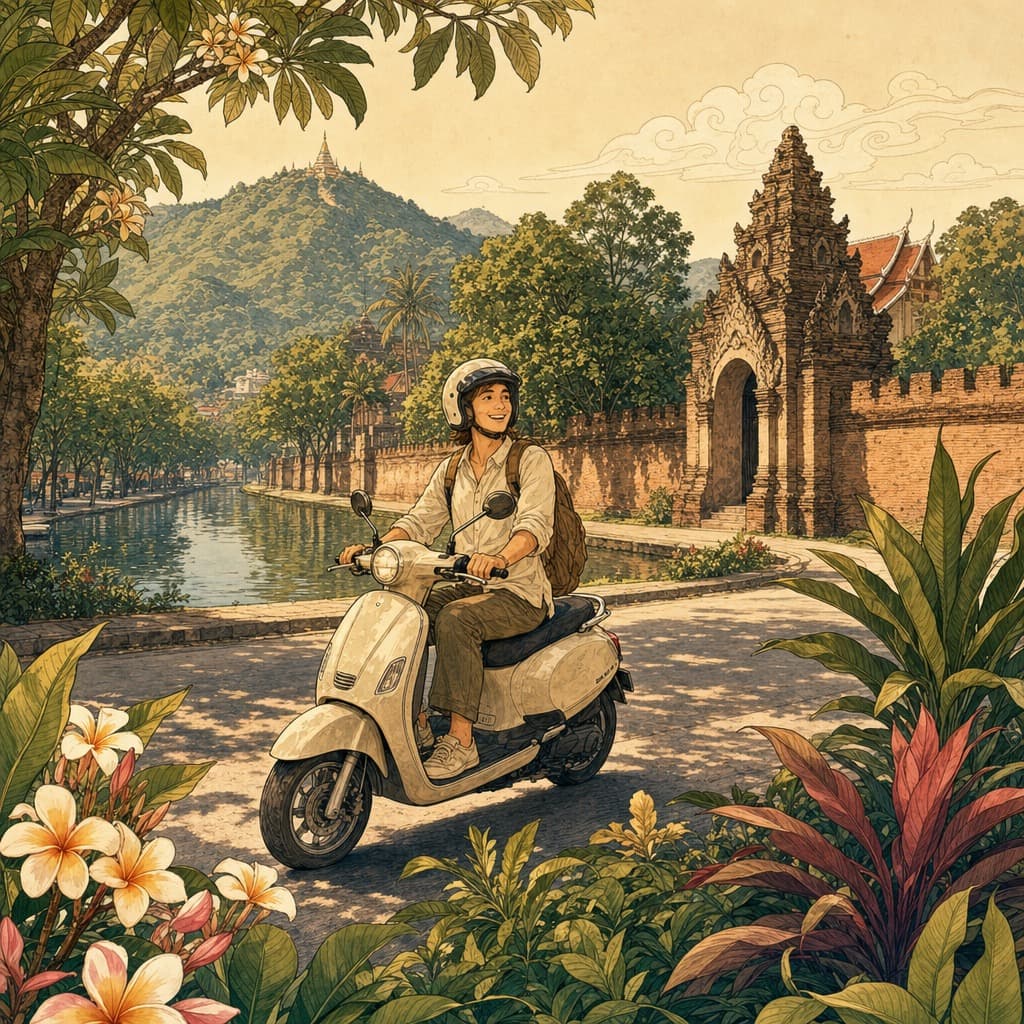
Wat Umong sits about fifteen minutes west of the old city, just south of Chiang Mai University. The easiest way is your own scooter, but a songthaew (the red shared trucks) or a Grab will get you there cheaply, and confident cyclists can pedal out on a quiet morning — our notes on getting around Chiang Mai cover all three. Entry is free, though a donation is always welcome.
As at any active temple, dress modestly: keep shoulders and knees covered, and tuck a light scarf or layer into your bag if you're in shorts. Go early — mornings are cooler, the light through the trees is lovely, and you'll often have the tunnels almost to yourself.
Come for the quiet, stay for the strange calm of it all. After the colour and noise of the markets, Wat Umong is the deep breath your Chiang Mai trip didn't know it needed. See you under the trees.
Frequently asked questions
What makes Wat Umong different from the old city temples?
Instead of gold and bustle, Wat Umong trades gold leaf for moss and birdsong, and sends you underground into brick meditation tunnels dug some 700 years ago. It is a forest temple at the foot of Doi Suthep, far quieter and more contemplative than the golden temples in town.
Where is Wat Umong and how do I get there?
It sits about fifteen minutes west of the old city, just south of Chiang Mai University. The easiest way is your own scooter, but a songthaew (the red shared trucks) or a Grab will get you there cheaply, and confident cyclists can pedal out on a quiet morning.
Is there an entrance fee?
Entry is free, though a donation is always welcome.
What is the dress code?
As at any active temple, dress modestly with shoulders and knees covered. If you are in shorts, tuck a light scarf or layer into your bag so you can cover up.
What are the 'talking trees'?
They are wooden signs hung from the branches throughout the woodland, printed with Dhamma sayings and proverbs in Thai and English. They are gentle, sometimes funny nudges to slow down and pay attention as you wander the leafy paths.
Can I meet a monk or meditate there?
Yes. Wat Umong is a working monastery and meditation centre with resident monks. At the right time you can join a public monk chat, and the temple also runs meditation sessions and Dhamma talks, and can arrange longer retreats for those who want to go deeper.