Practical tips · June 8, 2026
Getting around Chiang Mai: songthaews, Grab & scooters
By The Ada House team
Good news: getting around Chiang Mai is cheap, easy, and refreshingly low-stress after somewhere like Bangkok. Here's the honest rundown of your options, what they cost, and the one safety talk worth reading before you rent anything.
Red songthaews
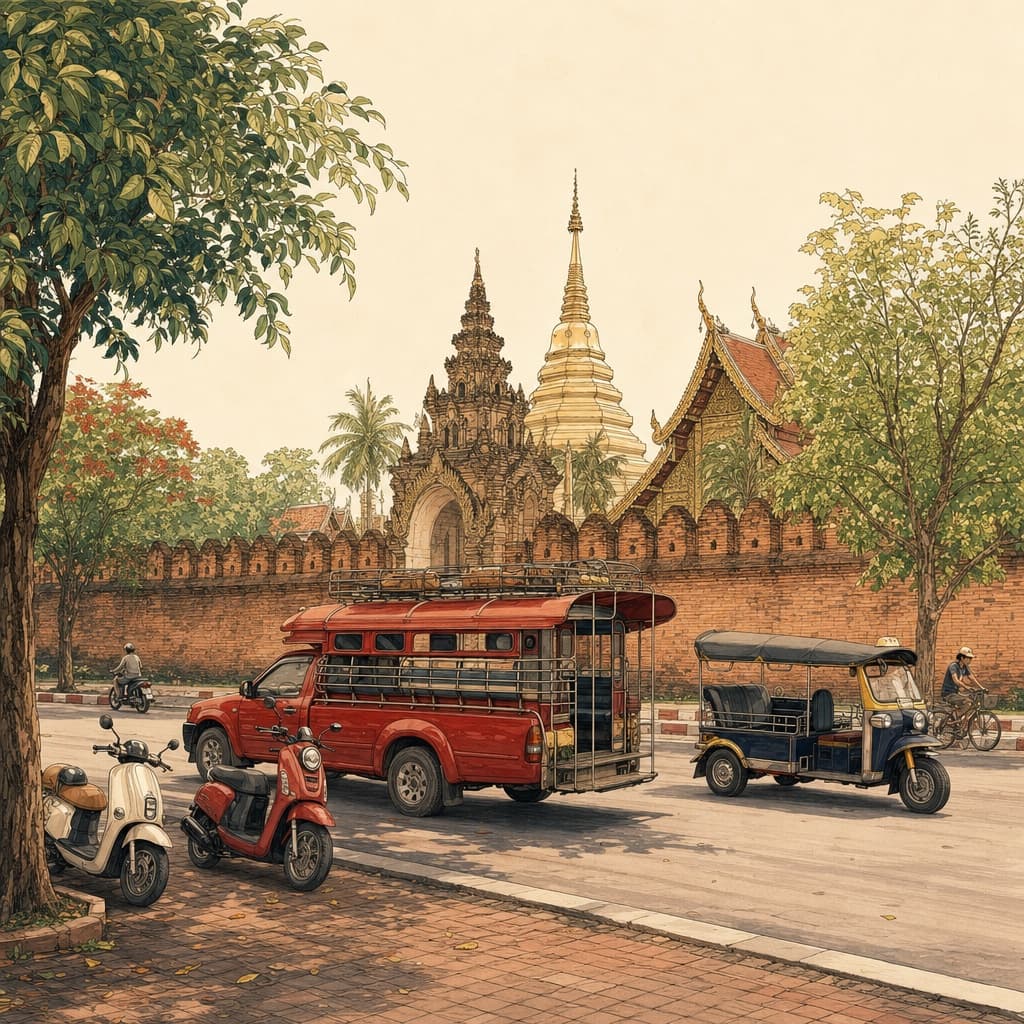
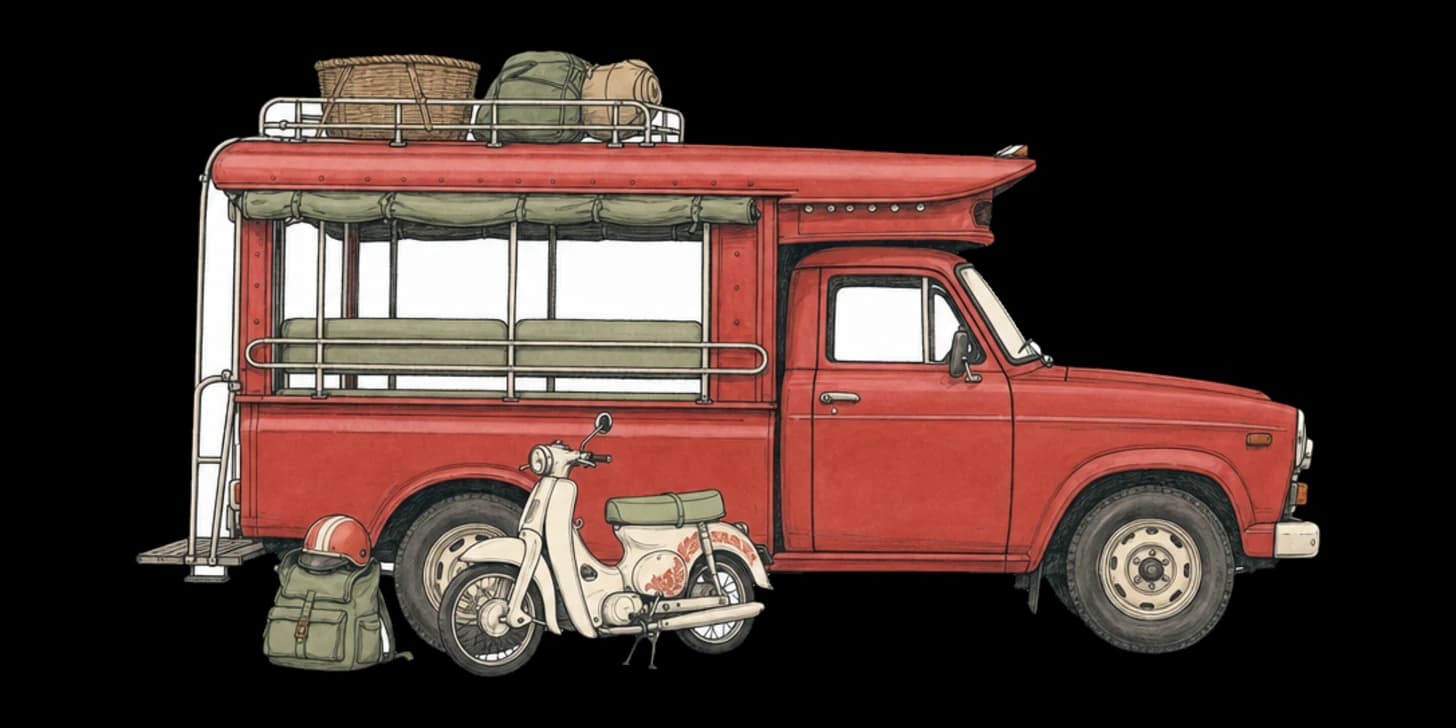
The red shared trucks are the city's unofficial buses, and they're everywhere. Flag one heading your way, tell the driver where you're going, and hop in the back if they nod. Press the buzzer when you're close, and pay cash as you get off. It's about 30 THB for most hops around the Old City, a little more out to Nimman. For longer or private trips you negotiate up front. Cheap, characterful, and very Chiang Mai.
Grab & Bolt
For door-to-door with no haggling, the Grab and Bolt apps are your friends: set your destination, see the fare upfront, pay cashless, enjoy the air-con. Most central rides land around 60–120 THB — usually cheaper than a tuk-tuk, and zero language barrier. This is what we'd reach for at night or in the heat.
Scooters — read this bit
A scooter is the most freeing way to explore (around 150–300 THB a day, less by the month). But here's the honest part: scooter accidents are the single biggest risk for visitors here, so please take it seriously.
- You legally need a motorcycle licence plus an International Driving Permit with a motorbike endorsement. A car licence isn't enough.
- Always wear a helmet — it's the law, police run regular checkpoints, and it's just sensible.
- Critically: most travel insurance won't cover a motorbike crash if you lacked the right licence or weren't wearing a helmet.
If you're already a confident rider, it's wonderful. If you're not, don't learn on Chiang Mai's roads — the songthaew-and-Grab combo will get you everywhere happily.
Tuk-tuks, walking & cycling
Tuk-tuks are fun for a short hop (negotiate first, ~80–150 THB) but often cost more than a comfier Grab. Honestly, though, the Old City is tiny — a 1.5 km square you can cross on foot in 20 minutes — so for temples, cafés and coworking you'll mostly walk. A bicycle (~50 THB/day) is lovely for the quiet backstreets.
From the airport
The airport is only 3–5 km out, so it's a quick hop: Grab/Bolt 80–180 THB, a metered taxi 150–200 THB, or a shared songthaew from 40–60 THB. With luggage and jet lag, we'd just grab a Grab.
For a relaxed long stay, the easy formula is: walk the Old City, songthaews for cheap trips, Grab for comfort — and a songthaew up to Doi Suthep when you want the mountain. If you're settling in for a month and tempted by your own scooter, our settling-in guide has the monthly-rental rundown.
Heading further afield — Pai, Chiang Rai, Bangkok? Our guide to Chiang Mai's bus stations covers which terminal you need, where it is and how the ticket desks work.
Frequently asked questions
How do the red songthaews work, and what do they cost?
The red shared trucks are the city's unofficial buses and they're everywhere — just flag one heading your way, tell the driver where you're going, and hop in the back if they nod. Press the buzzer when you're close and pay cash as you get off. It's about 30 THB for most hops around the Old City, a little more out to Nimman, and for longer or private trips you negotiate the fare up front.
Songthaew or Grab — which should I use?
It depends on the moment. Songthaews are wonderfully cheap and characterful for quick hops, while Grab and Bolt give you door-to-door comfort with the fare shown upfront, cashless payment, air-con and no language barrier. Most central Grab rides land around 60 to 120 THB, and it's what we'd reach for at night or in the heat.
Do I really need a scooter to get around?
Honestly, no. The Old City is tiny — a 1.5 km square you can cross on foot in 20 minutes — so for temples, cafés and coworking you'll mostly walk, with songthaews for cheap trips and Grab for comfort. A scooter is the most freeing way to explore, but if you're not already a confident rider, the songthaew-and-Grab combo will get you everywhere happily.
What do I need to know before renting a scooter?
Please take it seriously, as scooter accidents are the single biggest risk for visitors here. You legally need a motorcycle licence plus an International Driving Permit with a motorbike endorsement (a car licence isn't enough), and you must always wear a helmet — it's the law and police run regular checkpoints. Critically, most travel insurance won't cover a motorbike crash if you lacked the right licence or weren't wearing a helmet.
Are there buses, or how else can I move around cheaply?
The red songthaews are effectively the city's shared bus network, and they're the cheapest everyday option at around 30 THB a hop. Beyond that, walking is genuinely the best way to see the compact Old City, and a bicycle at roughly 50 THB a day is lovely for pottering down the quiet backstreets. Tuk-tuks are fun for a short hop, though they often cost more than a comfier Grab.
What's the best way to get from the airport?
The airport is only 3 to 5 km out, so it's a quick hop. You can take a Grab or Bolt for 80 to 180 THB, a metered taxi for 150 to 200 THB, or a shared songthaew from 40 to 60 THB. With luggage and jet lag, we'd just grab a Grab.