Things to do · June 25, 2026
The Mae Hong Son Loop: northern Thailand's great road trip
By The Ada House team
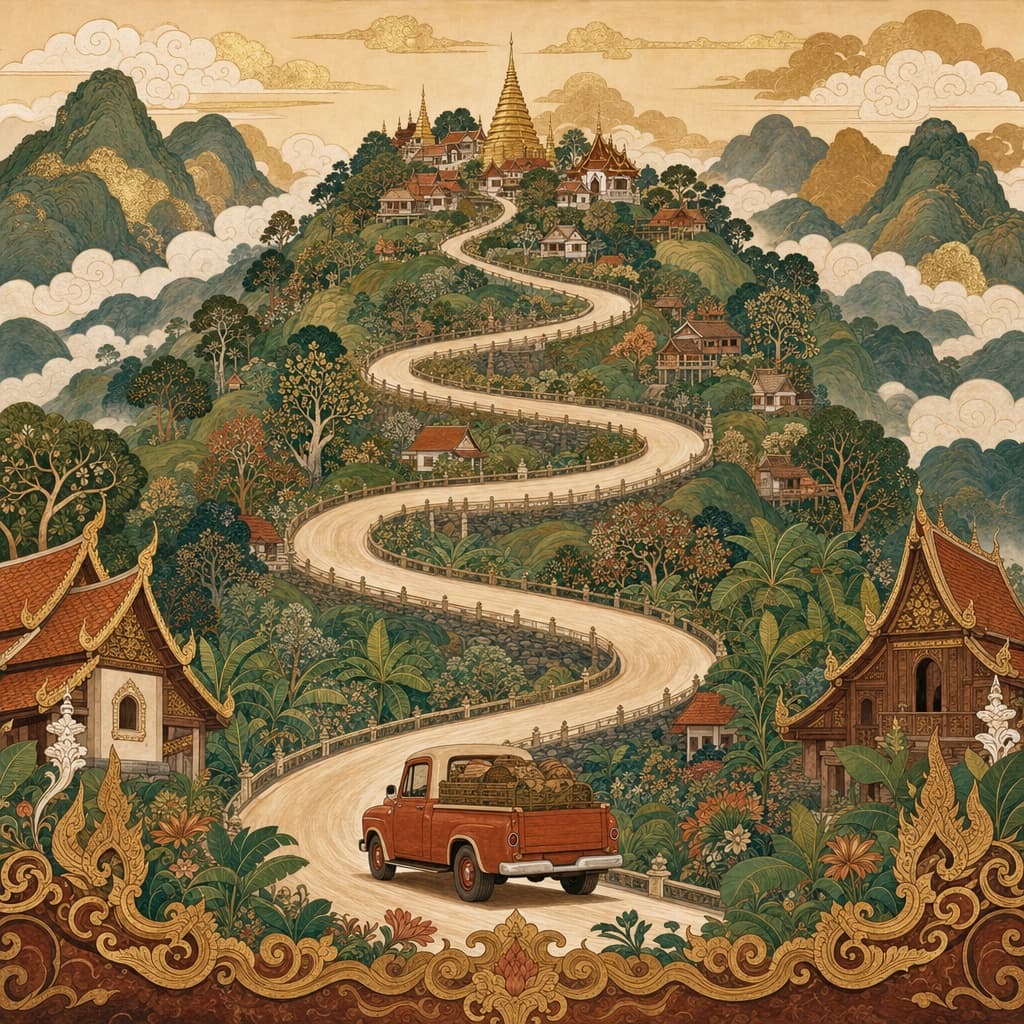
Some trips you do in an afternoon. This one you earn over days. The Mae Hong Son Loop is the great road trip of northern Thailand — roughly 600 km of mountain, jungle and tea terrace that swings northwest from Chiang Mai, brushes the Myanmar border, and curls back home. If the Samoeng Loop is a gentle half-day warm-up, this is its grown-up sibling: longer, wilder, and unforgettable.
What it is, and how long to give it
The loop strings together the whole of Mae Hong Son province on two great highways — Route 108 down the western side and Route 1095 through Pai on the way back. The famous figure is the 1,864 curves on the Mae Sariang-to-Mae Hong Son stretch alone; add the Pai road and the real total runs into the thousands. Nobody rides it for the numbers, though. They ride it for the morning mist sitting in the valleys, the empty switchbacks, and the feeling of a province slowly unfolding.
Three to four days is the sweet spot — enough to enjoy the riding without spending every waking hour in the saddle. Give it five or six if you'd rather linger: there's a tea village to dawdle in, a cave to raft through, and hot springs that reward a slow morning. Rush it in two and you'll see the road but none of the magic.
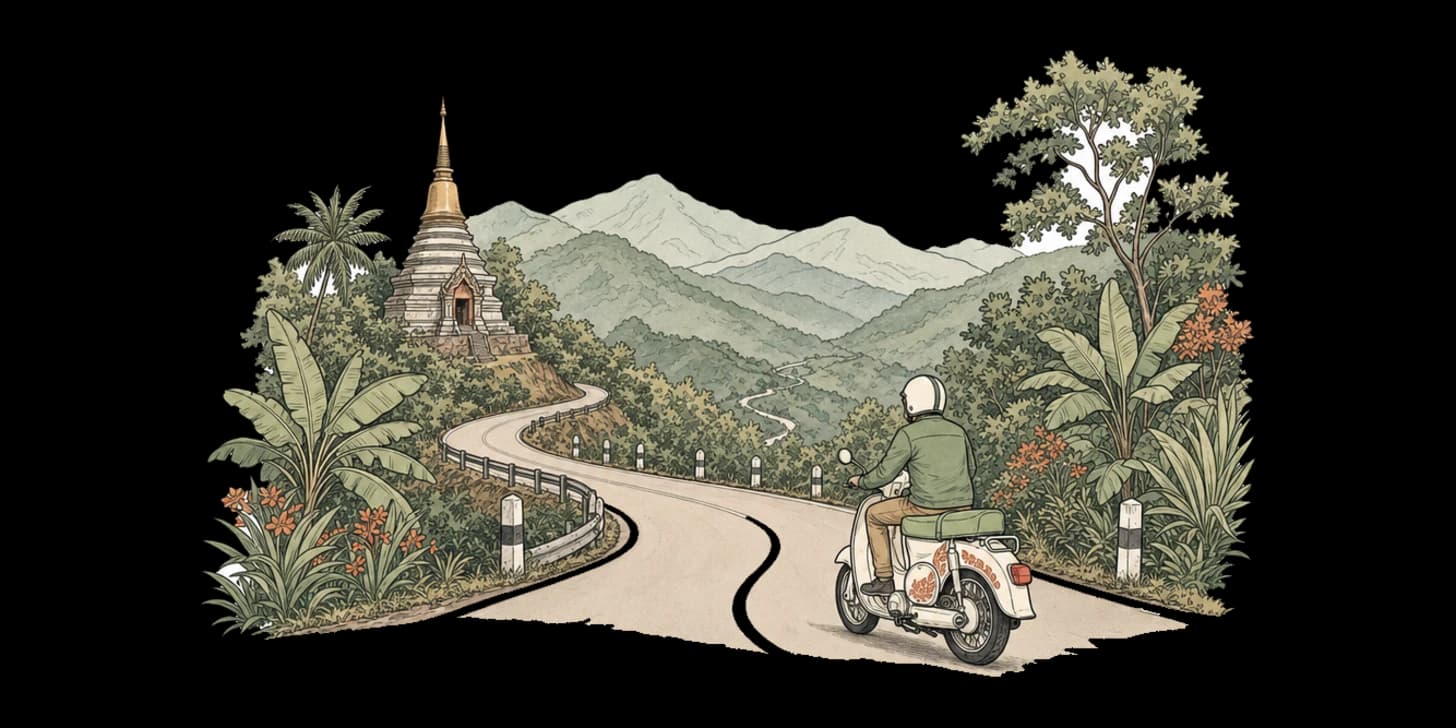
Which way round?
This is the one real decision. Anti-clockwise (Pai first) front-loads the hardest riding — the legendary 762 curves of Route 1095 and the high passes beyond — onto your first days, when you're freshest, and saves wide, gentle Route 108 for the tired ride home. Clockwise (Mae Sariang first) does the opposite: easy kilometres to find your rhythm, with the technical Pai road last. If you're newer to mountain riding, go clockwise and build confidence; if you want the toughest stuff behind you early, go anti-clockwise. Either way you see everything — only the order changes.
The stops that make it
The towns are the whole point. Pai is the famous one — a hammock-and-rice-field mountain town that turns a one-night plan into three; we've written a whole love letter to Pai if it tempts you. Near Soppong (Pang Mapha), drift by lamplit bamboo raft through Tham Lod, a vast cave the swifts and bats call home. Mae Hong Son town sits in a misty bowl of mountains, its lake circled by Burmese-style temples that glow at dusk.
From there, push north to Ban Rak Thai, a Yunnanese tea village right on the Myanmar border where you'll sip oolong by a still lake and feel a very long way from anywhere — one of the loveliest places in the north to meet the hill-tribe and minority communities who shaped these hills. Don't miss the Su Tong Pae, a 500-metre bamboo bridge that floats across the paddies to a quiet forest temple. Coming down the western side you'll pass laid-back Mae Sariang and rural Mae Chaem, and from there it's a short hop to Doi Inthanon — Thailand's highest peak makes a glorious finale, and our Doi Inthanon guide shows how to fold it into the return leg.
Scooter, car, or tour?
Be honest with yourself here. Riding it on a proper geared bike is the dream — total freedom, every viewpoint yours — but it's serious work: days of relentless curves, real fatigue, and Thailand's sobering road-accident record. Only confident, experienced riders should attempt it, and please read our notes on renting a scooter first; an automatic city scooter is the wrong tool for these passes. A rental car is the comfortable, weatherproof, family-friendly choice and lets a nervous passenger relax. A guided minivan tour suits anyone who'd rather just look out of the window — though those who get motion sickness should sit up front and take a tablet before the worst of the bends.
A few honest words on safety
Treat this route with respect. Fuel up at every major town — stretches like the back roads have few stations and fewer roadside sellers. Start early, rest often, and never ride tired into the afternoon, when concentration fades. The cool season (roughly November to February) is ideal: clear skies, crisp mountain air, golden light. The rainy season (June to October) is gloriously green but genuinely riskier — morning fog, slick tarmac, flooding, and the odd landslide on the high passes; if you go then, check conditions and never push through bad weather. Our when-to-visit guide breaks the seasons down in full.
Whichever way you ride it, you'll come back to the house quieter, a little wind-burned, and grinning. The loop has a way of doing that. Ride safe, take your time, and let the mountains set the pace.
— The Ada House team
Frequently asked questions
What is the Mae Hong Son Loop and how long is it?
It is the great road trip of northern Thailand, roughly 600 km of mountain, jungle and tea terrace that swings northwest from Chiang Mai, brushes the Myanmar border, and curls back home. It strings together the whole of Mae Hong Son province on two great highways, Route 108 down the western side and Route 1095 through Pai on the way back, famous for figures like the 1,864 curves on one stretch alone.
How many days should I give the loop?
Three to four days is the sweet spot, enough to enjoy the riding without spending every waking hour in the saddle. Give it five or six if you would rather linger over a tea village, a cave to raft through and hot springs. Rush it in two and you will see the road but none of the magic.
Which way round should I ride it?
This is the one real decision. Anti-clockwise (Pai first) front-loads the hardest riding, including the 762 curves of Route 1095, onto your first days when you are freshest. Clockwise (Mae Sariang first) gives you easy kilometres to find your rhythm, with the technical Pai road last. If you are newer to mountain riding, go clockwise and build confidence.
What are the best stops along the way?
The towns are the whole point. Pai is the famous hammock-and-rice-field town, near Soppong you can drift by bamboo raft through the vast Tham Lod cave, and Mae Hong Son town sits in a misty bowl of mountains. Push north to Ban Rak Thai, a Yunnanese tea village on the Myanmar border, and do not miss the Su Tong Pae, a 500-metre bamboo bridge across the paddies.
Should I ride a scooter, drive, or take a tour?
Riding a proper geared bike is the dream but serious work, with days of relentless curves and real fatigue, so only confident, experienced riders should attempt it, and an automatic city scooter is the wrong tool for these passes. A rental car is the comfortable, weatherproof, family-friendly choice, while a guided minivan tour suits anyone who would rather just look out of the window.
When is the best time to ride, and any safety tips?
The cool season, roughly November to February, is ideal, with clear skies and crisp mountain air. The rainy season from June to October is gloriously green but genuinely riskier, with fog, slick tarmac and the odd landslide. Fuel up at every major town, start early, rest often, and never ride tired into the afternoon.