
Move here · July 4, 2026
Health insurance for expats in Thailand: a practical guide
By The Ada House team
Sooner or later, every long-stayer in Chiang Mai has the same quiet realisation: the travel policy that felt so reassuring at the airport was never designed for the life you are actually living now. Health insurance is one of the least glamorous parts of moving abroad, and one of the most consequential. One thing before we begin: this is general information, not financial or medical advice — compare policies carefully and verify current visa requirements with official sources such as Thai immigration or your embassy.
Why travel insurance runs out of road
Travel insurance is built around a trip — a departure date, a return date and a home country where your "real" healthcare lives. That architecture shows. Most policies cap a single trip at a set number of days, many quietly require you to remain a resident of your home country, and some stop covering you altogether after months of continuous time abroad. Crucially, there is no continuity: a policy bought year by year can decline to renew after a big claim — precisely when you need it most. We've written about what travel insurance does well — short stays, lost luggage, an emergency flight home. Living here is a different problem, and it needs a different tool.

Thai insurers or international expat cover?
Most expats end up choosing between two broad routes. Thai domestic insurers price their policies in baht, tend to be noticeably cheaper, and usually offer smooth direct billing at local private hospitals — you show your card and walk out without paying upfront. The trade-offs: cover is generally limited to Thailand or the region, entry age limits can be strict, and renewal terms deserve close reading. International expat insurers cost more, but the policy typically travels with you if you move countries, limits are higher, and many offer guaranteed lifetime renewal once you're accepted. Neither route is objectively better; it depends on whether Thailand is a chapter of your life or the whole book.
Inpatient, outpatient, and what you're actually buying
Policies split care into two buckets. Inpatient (IPD) cover pays when you are admitted to hospital — surgery, intensive care, serious illness: the events that can genuinely ruin you financially. Outpatient (OPD) cover pays for clinic visits, consultations and prescriptions. In Chiang Mai, everyday care is remarkably affordable — a routine consultation at a private hospital often costs less than a nice dinner out — which is why many long-stayers buy inpatient-only cover and pay for the small stuff in cash. OPD cover adds real cost to a premium; whether it earns its keep depends on how often you actually see a doctor.
Where visas and insurance collide
Some Thai visas come with insurance strings attached. The best-known example is the O-A retirement visa, which has carried a mandatory health-insurance requirement for several years — with minimum coverage levels and insurer paperwork that have changed more than once since it was introduced. Other long-stay routes have their own rules, and details can vary between embassies and immigration offices. We won't quote figures here precisely because they move: if your visa route involves an insurance requirement, verify the current rules directly with Thai immigration or your embassy before buying anything. If you're weighing up retirement in Chiang Mai, build that checking step into your planning early.
Pre-existing conditions: moratorium or full underwriting
Insurers handle your medical history in one of two ways, and the difference matters. Under a moratorium approach, you skip the medical questionnaire; anything pre-existing is automatically excluded, though some policies will cover an old condition again after a defined period with no symptoms, treatment or advice. Under full medical underwriting, you declare your entire history upfront and the insurer lists its exclusions in writing — more paperwork, but you know exactly where you stand before a claim, not after. Whichever route you take, disclose honestly: non-disclosure is the classic reason claims get refused. If you have an ongoing condition, this section of a policy deserves more attention than the price.
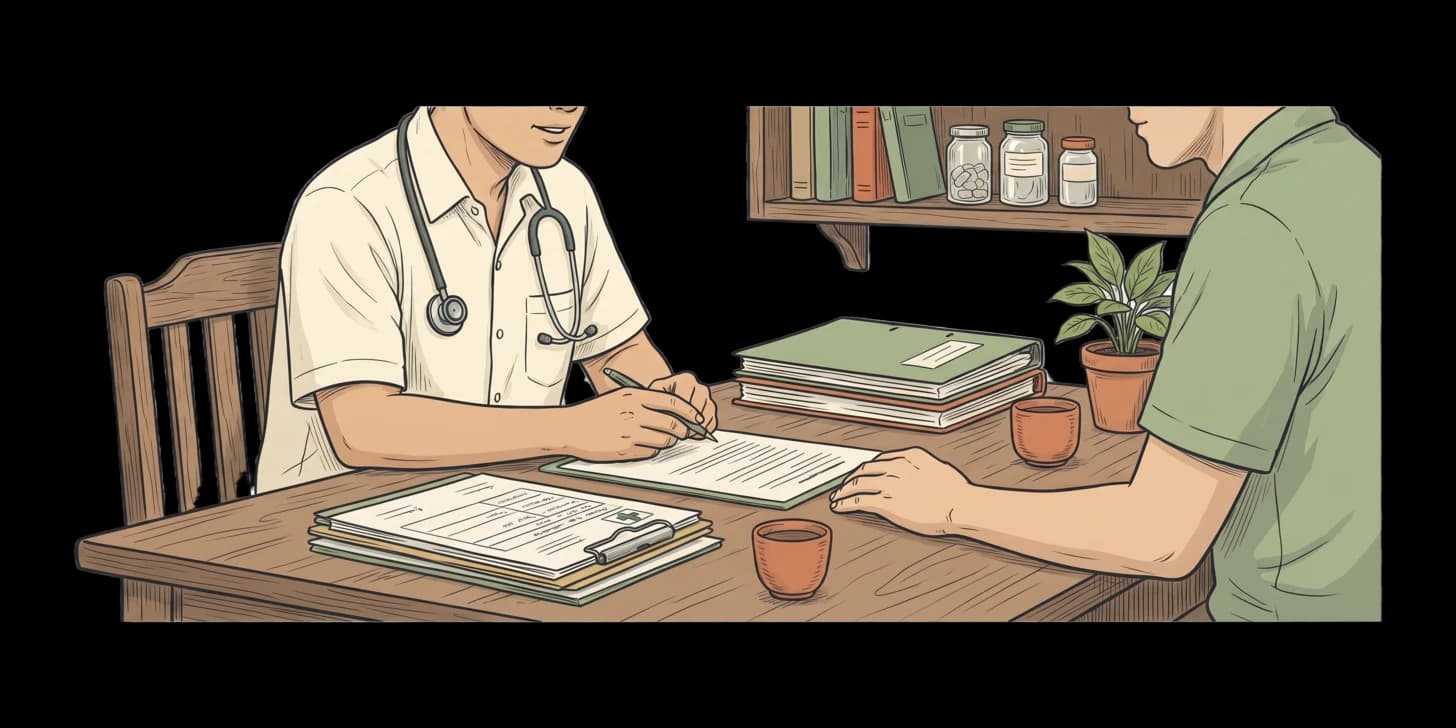
The deductible is your friend
Here is the quiet logic that makes premiums manageable: insure the catastrophe, not the sniffles. Chiang Mai's private hospitals cost far less than their Western equivalents, but "cheaper than home" is not the same as cheap — intensive care can run to tens of thousands of baht per day, and major surgery can climb into the hundreds of thousands. Those are the sums insurance exists for. A higher deductible (the amount you pay before the policy kicks in) can cut premiums substantially, and if you've read our cost-of-living breakdown, you'll know routine medical bills sit comfortably within most budgets here. Pick the largest deductible you could absorb without stress, and spend the savings on higher overall limits.
Questions to ask before you sign
A short interrogation list for any policy, Thai or international:
- Is renewal guaranteed for life, or can the insurer drop me after a claim or at a certain age?
- Which Chiang Mai hospitals offer direct billing on this plan?
- What exactly is excluded — and can I have that in writing?
- How are premiums likely to rise as I get older?
- Does it cover medical evacuation to Bangkok if I ever need care Chiang Mai can't provide?
- What happens to my cover if I move to another country?
None of this is thrilling reading, but an hour of it now buys years of not thinking about it later. That, in the end, is what good insurance is for: the freedom to get on with your life here — and let the paperwork sit quietly in a drawer.
Frequently asked questions
Is travel insurance enough if I live in Chiang Mai long-term?
Generally not. Travel insurance is built around a trip — with day caps, home-country residency conditions and no guaranteed renewal — and some policies stop covering you after months of continuous time abroad. Long-stayers usually need proper health insurance instead. This is general information, not financial advice, so compare policies carefully.
Should I choose a Thai insurer or an international expat insurer?
Neither is objectively better. Thai domestic policies tend to cost less and offer smooth direct billing at local private hospitals, but cover is usually limited to Thailand or the region and entry age limits can be strict. International expat policies cost more but typically move countries with you, carry higher limits and often guarantee lifetime renewal. It depends on whether Thailand is a chapter of your life or the whole book.
What is the difference between inpatient and outpatient cover?
Inpatient (IPD) cover pays when you are admitted to hospital — surgery, intensive care, serious illness. Outpatient (OPD) cover pays for clinic visits, consultations and prescriptions. Because everyday care in Chiang Mai is affordable, many long-stayers buy inpatient-only cover and pay for minor care in cash.
Do Thai visas require health insurance?
Some do — the O-A retirement visa has carried a mandatory health-insurance requirement for several years, and the minimum coverage levels and paperwork have changed more than once. Requirements vary by visa route and can change, so always verify the current rules with Thai immigration or your embassy before buying a policy.
How do insurers handle pre-existing conditions?
In one of two ways. A moratorium approach skips the medical questionnaire and automatically excludes pre-existing conditions, though some policies cover an old condition again after a defined symptom- and treatment-free period. Full medical underwriting means declaring your entire history upfront, with exclusions listed in writing. Either way, disclose honestly — non-disclosure is the classic reason claims get refused. This is general information, not medical or financial advice.
How can I keep health-insurance premiums manageable?
A common strategy is to insure the catastrophe, not the small stuff: choose a higher deductible you could comfortably absorb, pay routine bills in cash, and put the premium savings towards higher overall limits. Private-hospital care in Chiang Mai is far cheaper than in the West, but intensive care and major surgery can still reach serious sums — those are what insurance is really for.