Local culture · June 27, 2026
Chiang Mai's old city walls, gates and moat: a history you can walk
By The Ada House team
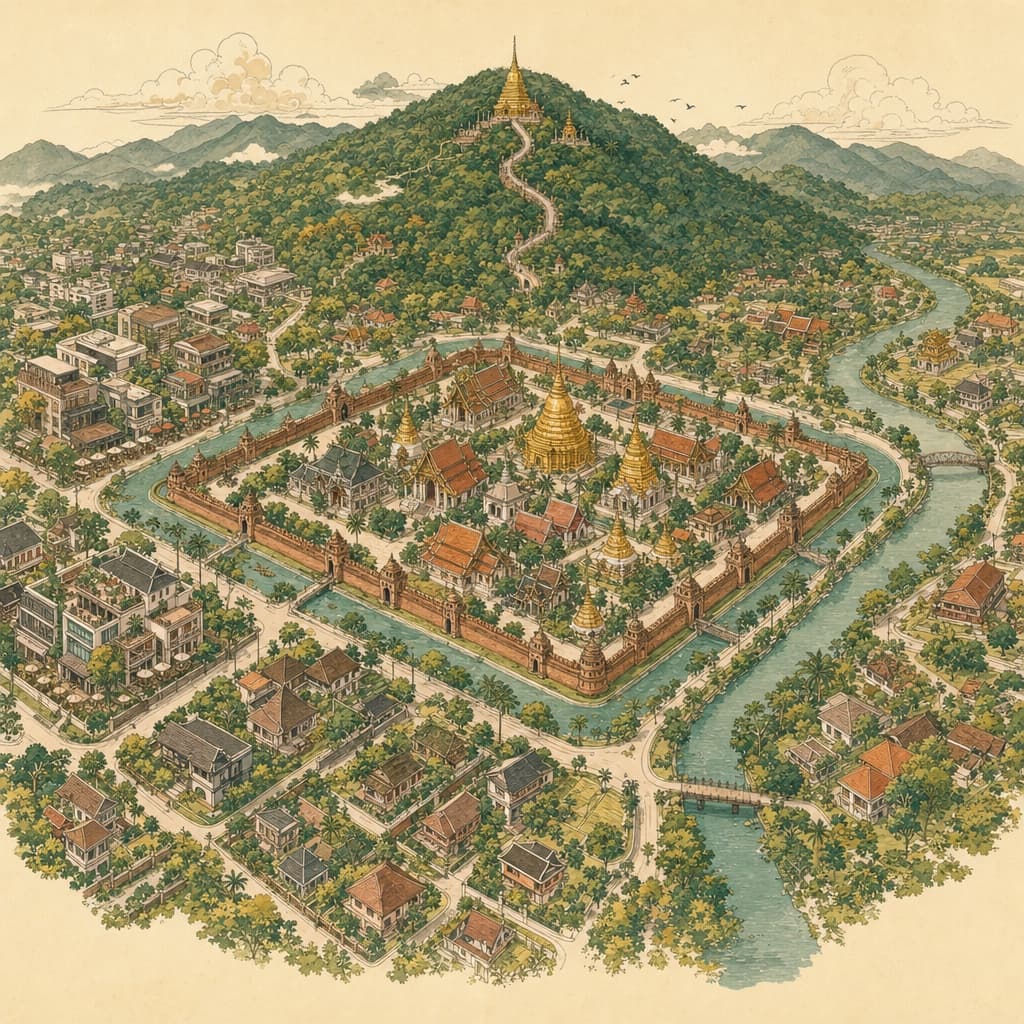
Most cities keep their history behind glass. Chiang Mai keeps its on the street — a square of water and old brick you can walk in an afternoon, with cafés and temples tucked inside. The walls are the oldest thing here, and once you learn to read them, the whole old city makes a different kind of sense.
A square laid out for a kingdom
King Mengrai founded Chiang Mai in 1296 as the new capital of his Lanna kingdom, and he built it the way a king builds something meant to outlast him: as a near-perfect square, ringed by a brick wall and a wide moat drawn from the Ping river. The orientation was anything but accidental — the alignment, the placing of the gates, even where the first ground was broken were settled by geomancy and ceremony, the city read like a body with a head, a navel and a guardian spirit. The moat was defence and drainage at once; the wall, defence and statement. For the full sweep of who Mengrai was and what he built, our Lanna kingdom history piece is the place to start.
Tha Phae Gate, the lively heart
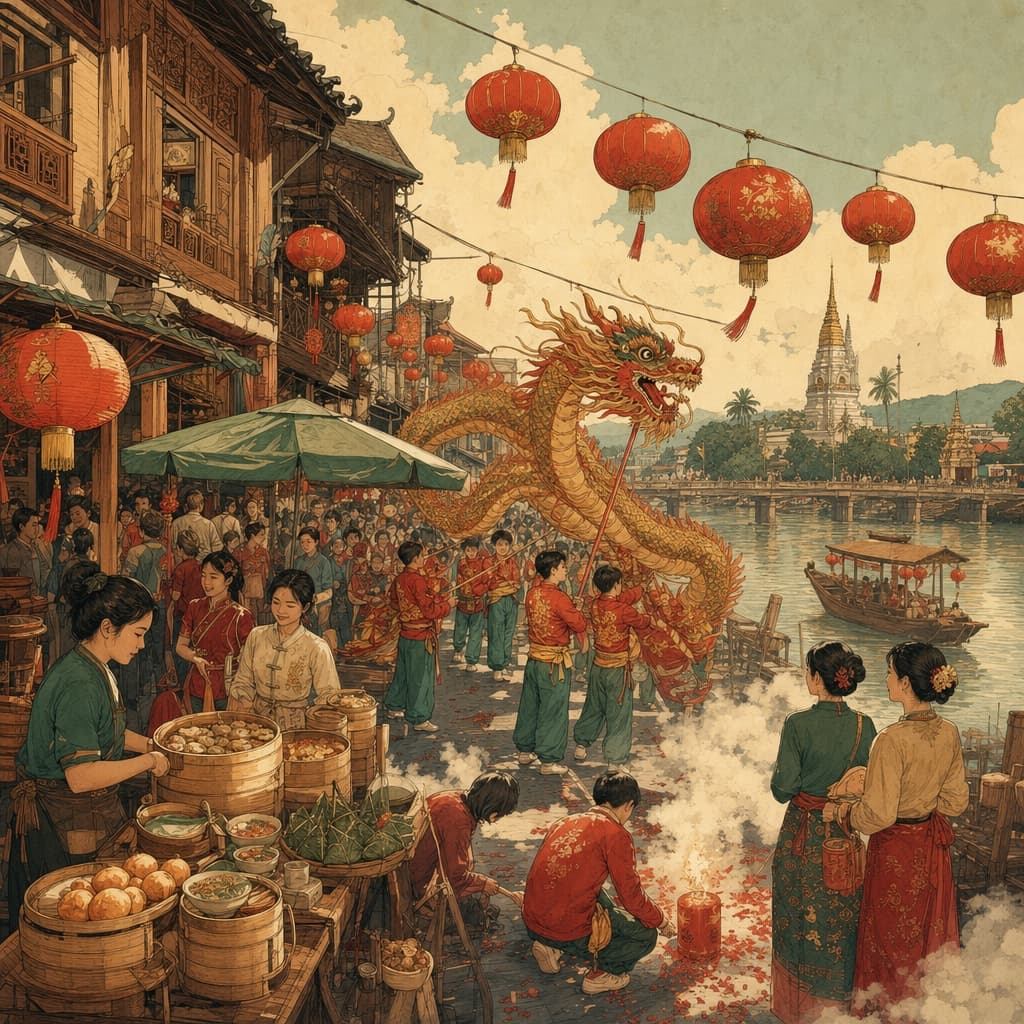
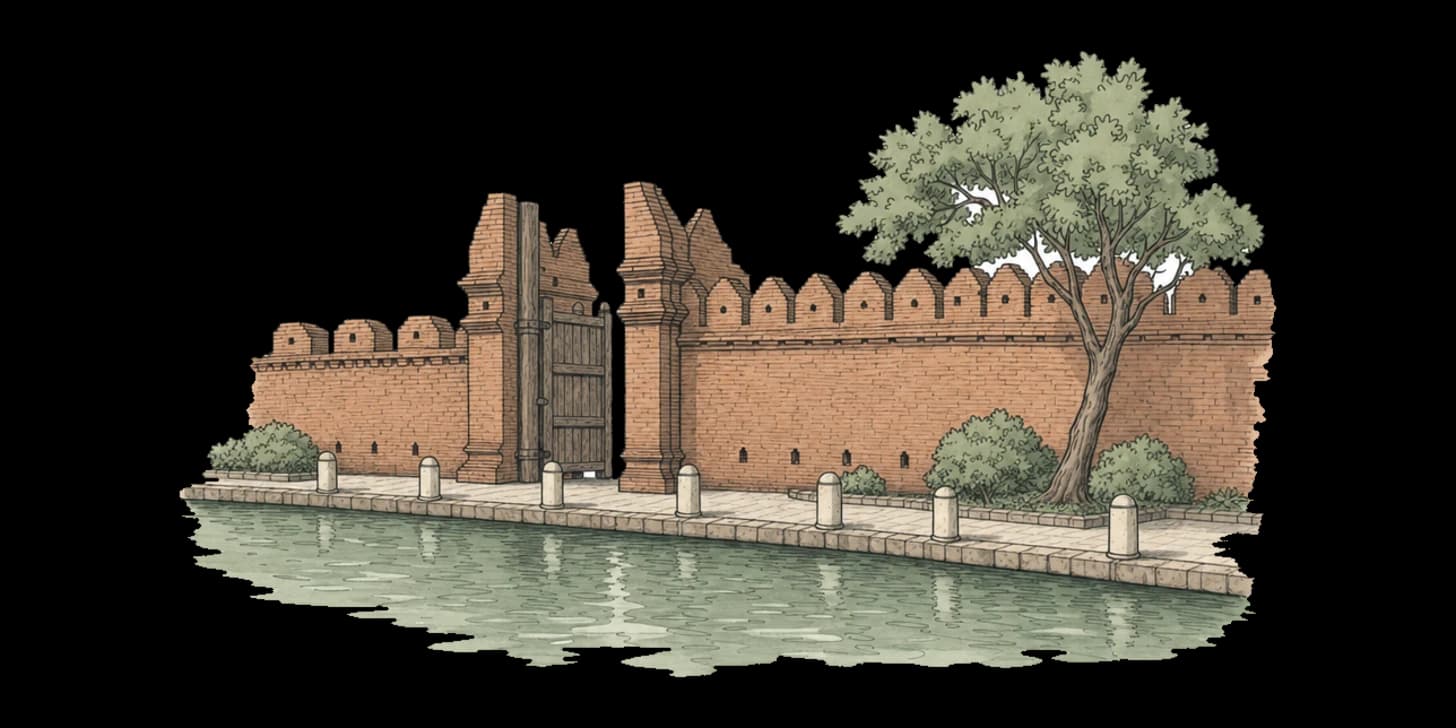
If the old city has a front door, it is Tha Phae Gate on the eastern wall — the one gate everyone knows, restored to its weathered brick grandeur and almost never still. Pigeons wheel up in clouds when children chase them; couples pose; buskers play; festivals and parades take the open plaza in front as their natural stage. Come Sunday evening the famous Walking Street market pours out from right here and floods the lanes behind it with food carts, lanterns and handicrafts. It is touristy, yes — and genuinely lovely, especially as the light goes gold.
A slow lap of the moat
Walk the moat and you meet the other gates one by one. On the north side stands Chang Phuak Gate, the "Elephant Gate", fronting one of the city's best street-food markets — the place locals send you for legendary stewed-pork rice after dark. West is Suan Dok Gate, the "Flower Garden Gate", quieter and leafier. The southern wall carries two: Chiang Mai Gate, with its busy morning and evening market, and Suan Prung Gate, traditionally the one the dead were carried through. Five gates in all, each a different mood, each still threaded by traffic exactly where carts and elephants once passed.
The quiet corners
The gates take the attention, but the corners reward the curious. Each of the four is a bastion — a jaeng in Thai — and two survive especially well: Katam in the south-east and Hua Lin in the north-west, stout angles of old brick where you can stand alone with the moat and almost no one else. These are the spots we send guests who want the walls without the crowds: early, with a coffee, before the heat settles in.
Walls that frame a temple town
What the square really does is hold things in. Inside its few kilometres sit some of the oldest and finest temples in the north, close enough to string together on foot — chedis, teak viharns and gold catching the light down every other lane. The wall gives the old town its scale and its hush; you always know roughly where you are, because the moat is never far off. We have mapped the best of it in our walking tour of the old city temples, and it pairs perfectly with a lap of the walls.
How we would walk it
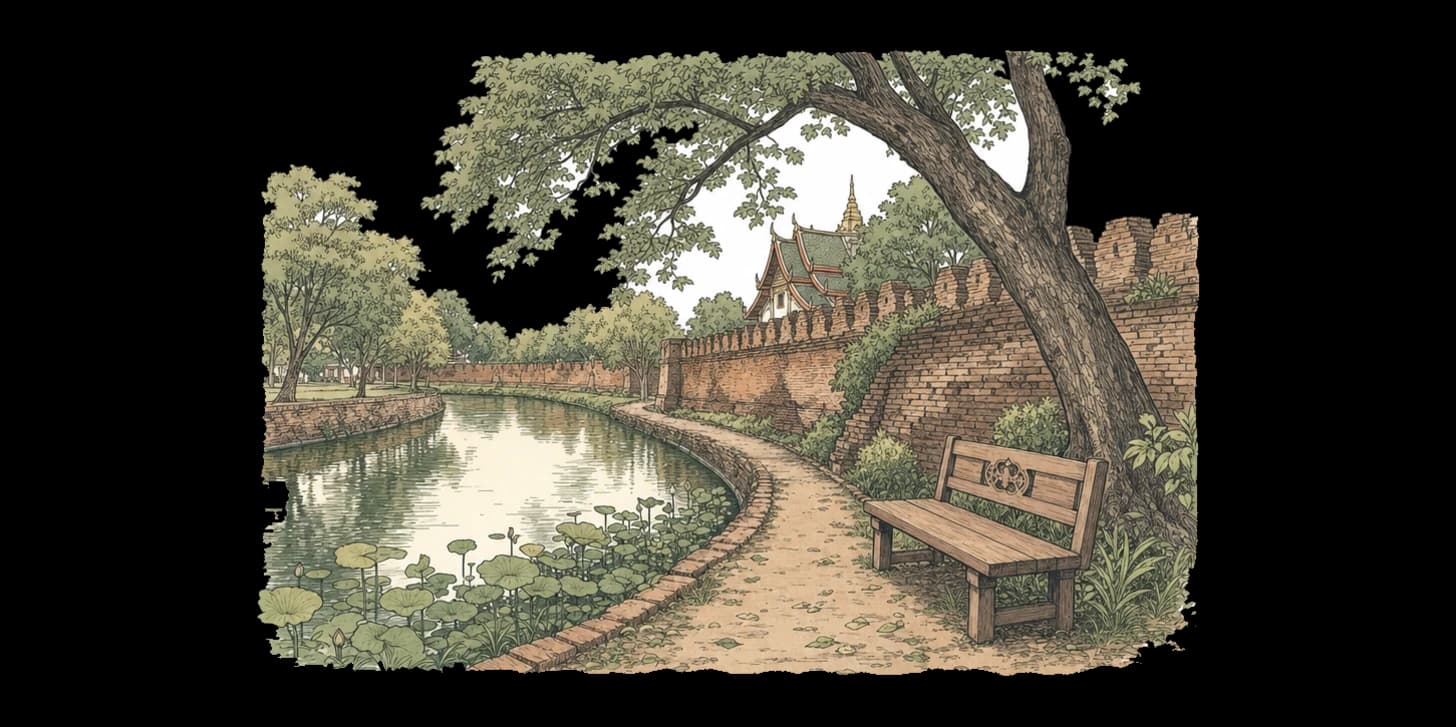
Go at the edges of the day. At dawn the moat lies glassy and the gates belong to monks and joggers; at dusk the brick warms and the swallows come out. Start at Tha Phae, head north and anti-clockwise to Chang Phuak for the elephant gate and a bite, cut west to Suan Dok, then drop down to the southern gates and back — a gentle few-kilometre loop with a temple or a café whenever the mood takes you. Save it for a Sunday if you can, so you finish into the Walking Street just as the lanterns come on.
The city before this city
Here is the twist the walls keep to themselves: this square was not Mengrai's first attempt. Just south, on the banks of the Ping, lie the half-sunken ruins of Wiang Kum Kam, the earlier capital he abandoned when the river kept flooding it — which is precisely why Chiang Mai was raised on higher, drier ground behind these walls. A short trip to the lost city of Wiang Kum Kam is the prequel to everything inside the moat.
Come trace the square with us — the walls have waited seven hundred years; an afternoon is the least we can give them.
Frequently asked questions
When was Chiang Mai's old city founded?
King Mengrai founded Chiang Mai in 1296 as the new capital of his Lanna kingdom. He laid it out as a near-perfect square, ringed by a brick wall and a wide moat drawn from the Ping river. The walls are the oldest thing in the old city.
How many gates does the old city have?
There are five gates in all. Tha Phae stands on the eastern wall, Chang Phuak (the Elephant Gate) on the north, Suan Dok on the west, and the southern wall carries two, Chiang Mai Gate and Suan Prung.
Which gate should I start at?
Tha Phae Gate on the eastern wall is the lively heart of the old city and the one gate everyone knows, restored to its weathered brick grandeur. It is the natural front door and a great place to begin a slow lap of the moat.
When and where is the Walking Street market?
The famous Walking Street market pours out from Tha Phae Gate on Sunday evenings, flooding the lanes behind with food carts, lanterns and handicrafts. We love to time a walk so it finishes here just as the lanterns come on.
When is the best time of day to walk the walls?
Go at the edges of the day. At dawn the moat lies glassy and the gates belong to monks and joggers; at dusk the brick warms and the swallows come out. Early morning with a coffee is also when the quiet corner bastions are at their most peaceful.
Where can I find the quietest spots along the walls?
Each of the four corners is a bastion, a jaeng in Thai, and two survive especially well: Katam in the south-east and Hua Lin in the north-west. They are stout angles of old brick where you can stand almost alone with the moat before the heat settles in.