Things to do · June 25, 2026
Wiang Kum Kam: the lost city just south of Chiang Mai
By The Ada House team
Only about five kilometres south of the moat, past the last of the city traffic, the lanes go quiet and the rice fields begin. Tucked among them stand crumbling brick chedis that almost nobody visits. This is Wiang Kum Kam — a royal capital that came before Chiang Mai, was swallowed by the river, and lay forgotten underground for hundreds of years.
The capital that drowned
The story begins with King Mengrai, the founder of the Lanna kingdom. Around 1286 he raised Wiang Kum Kam on the banks of the Ping river as his new seat of power, complete with temples, ramparts and a moat fed from the water. It was meant to last for centuries.
It lasted barely one decade. The Ping flooded again and again, drowning the streets and undermining the temples, and the king accepted that he had built on the wrong ground. In 1296 he moved a few kilometres north to higher land and founded Chiang Mai instead — the city you know today. Wiang Kum Kam limped on for a while, then the river kept changing course, layering silt over the abandoned shrines until the whole settlement vanished beneath the fields. If you want the full sweep of how this dynasty rose and fell, our guide to Lanna kingdom history sets the scene.
Rediscovered, dug up, and standing again
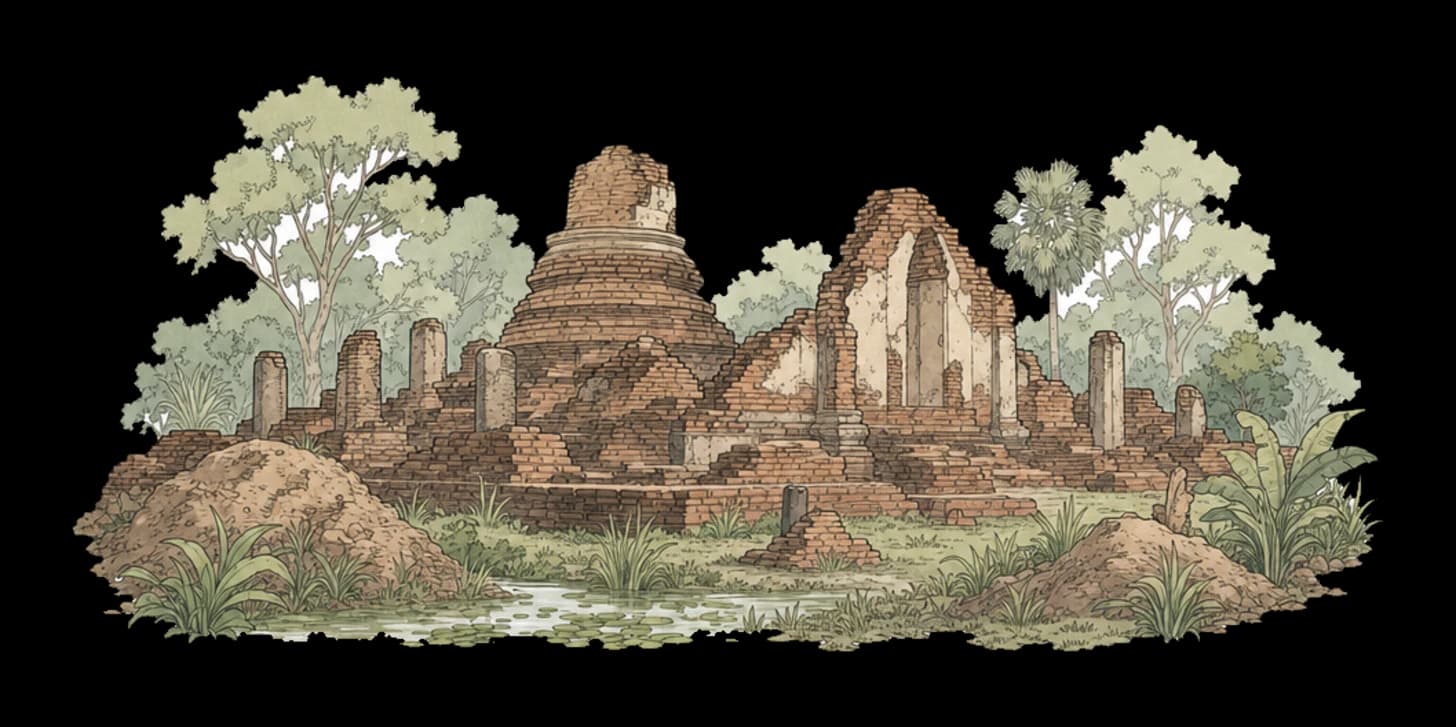
For roughly five hundred years Wiang Kum Kam was little more than a local legend — a name attached to a few stray mounds. Then in the 1980s the Fine Arts Department began to dig, and the lost city started to surface. Over the following decades archaeologists uncovered and partly restored more than forty temple sites, along with inscriptions, pottery and Buddha images that proved this had been a genuine centre of trade and religion, not a minor outpost.
What makes it so atmospheric is that the ruins were never tidied into a fenced-off park. The brick chedis rise straight out of an ordinary working village — between someone's mango trees, beside a noodle stall, across from a parked pickup. You wander from one to the next down sleepy residential lanes, which is a large part of the charm.
The ruins worth seeking out
Start with Wat Chedi Liam, the one landmark that never sank. Its tall, stepped, square chedi in the Mon style — echoing the great chedi down in Lamphun — is still an active temple, gilded and tended by monks. It's the easiest place to grasp what the others once looked like before the silt took them.
From there, the brick ruins reward slow looking. Wat Chang Kham, built around 1290 on Mengrai's orders, is where the modern rediscovery began; its name nods to the elephant figures that once buttressed the base. Wat E-Kang, named after the monkeys that haunted the site, keeps a beautifully preserved tiered chedi, while nearby Wat Pu Pia still wears delicate stucco ornament around the niches of its stupa. Don't skip the information centre: alongside unearthed artefacts, it recreates a Lanna-era house and market, and it makes everything outside read more clearly.
Making a half-day of it
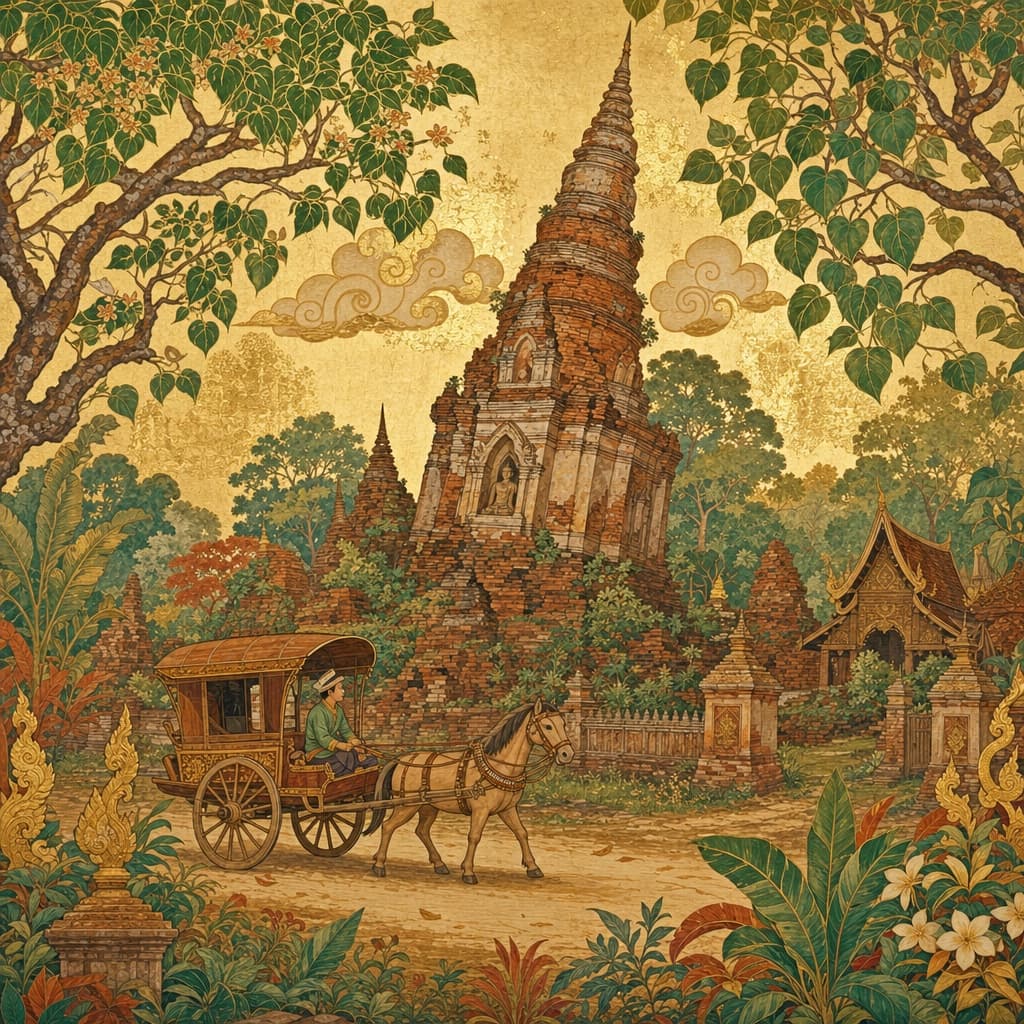
The ruins are spread out over a wide area, so plan how you'll get between them. The classic and most delightful option is the horse-drawn carriage that waits near the centre — a gentle clip-clop loop of the main temples with a driver who knows the route. There's also an electric tram for small groups, and you can hire a bicycle for next to nothing if you'd rather set your own pace. With your own wheels, our notes on cycling around Chiang Mai and the practicalities in getting around Chiang Mai will help you plan the short ride down. Entry to the site is free and it opens daily from around 8am to 5pm; come earlier for cooler, softer light.
Half a day is plenty, which makes Wiang Kum Kam easy to fold into a bigger southward outing — it sits neatly on the way to a day trip to Lamphun, the even older town just beyond. Pack water, wear a hat, and let yourself get a little lost among the bricks. There are few quieter ways to feel just how deep this valley's history runs.
Wishing you a peaceful wander through the old capital, the Ada House team
Frequently asked questions
What is Wiang Kum Kam and why was it abandoned?
It is a royal capital that came before Chiang Mai, raised by King Mengrai around 1286 on the banks of the Ping river as his new seat of power. It lasted barely a decade, as the Ping flooded again and again, drowning the streets and undermining the temples. In 1296 the king moved a few kilometres north to higher land and founded Chiang Mai instead, and over centuries the river silted the abandoned shrines under the fields.
How was the lost city rediscovered?
For roughly five hundred years it was little more than a local legend attached to a few stray mounds. Then in the 1980s the Fine Arts Department began to dig, and over the following decades archaeologists uncovered and partly restored more than forty temple sites, along with inscriptions, pottery and Buddha images. These proved it had been a genuine centre of trade and religion, not a minor outpost.
How far is it and how do I get around the site?
It lies only about five kilometres south of the moat, among quiet lanes and rice fields. The ruins are spread out over a wide area, so plan how you will get between them. The classic and most delightful option is the horse-drawn carriage that waits near the centre, though there is also an electric tram for small groups and bicycles to hire for next to nothing.
What is the entry fee and when is it open?
Entry to the site is free, and it opens daily from around 8am to 5pm. Come earlier for cooler, softer light. Half a day is plenty of time to see it well.
Which ruins are worth seeking out?
Start with Wat Chedi Liam, the one landmark that never sank, a tall stepped square chedi in the Mon style that is still an active temple. From there, look for Wat Chang Kham, built around 1290, where the modern rediscovery began, plus Wat E-Kang with its tiered chedi and Wat Pu Pia with its delicate stucco. Do not skip the information centre, which recreates a Lanna-era house and market and makes everything outside read more clearly.
Can I combine it with anything else nearby?
Yes, half a day here is easy to fold into a bigger southward outing. It sits neatly on the way to Lamphun, the even older town just beyond. Pack water, wear a hat, and let yourself get a little lost among the bricks.