Things to do · June 25, 2026
A day trip to Lamphun: Chiang Mai's quiet ancient neighbour
By The Ada House team
Some days you don't want another temple-crowd or another scooter horn. You want somewhere slow. Thirty kilometres south of Chiang Mai sits Lamphun, one of the oldest continuously inhabited towns in Thailand — a place most travellers pass straight through on the train to Bangkok without ever stepping off.
A kingdom older than Chiang Mai
Long before Chiang Mai existed, there was Hariphunchai. Lamphun was its capital, a Mon city said to have been founded around the 7th century by the legendary Queen Chamthewi, who travelled north from Lopburi to rule it. That makes this little town centuries older than the Lanna kingdom that eventually absorbed it — and if you've enjoyed reading about the Lanna kingdom's history, Lamphun is where the story really begins. It's a satisfying piece of context to carry with you on the short ride down.
The two temples to see
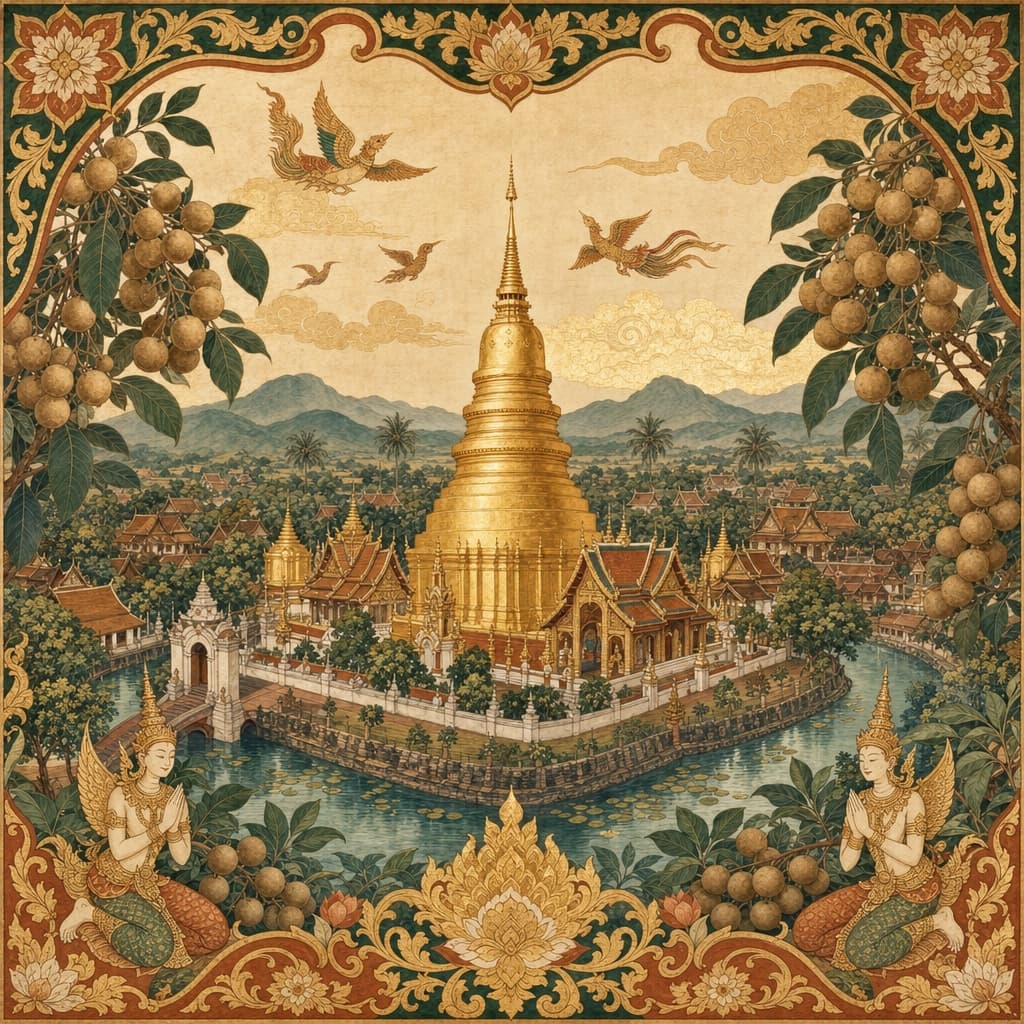
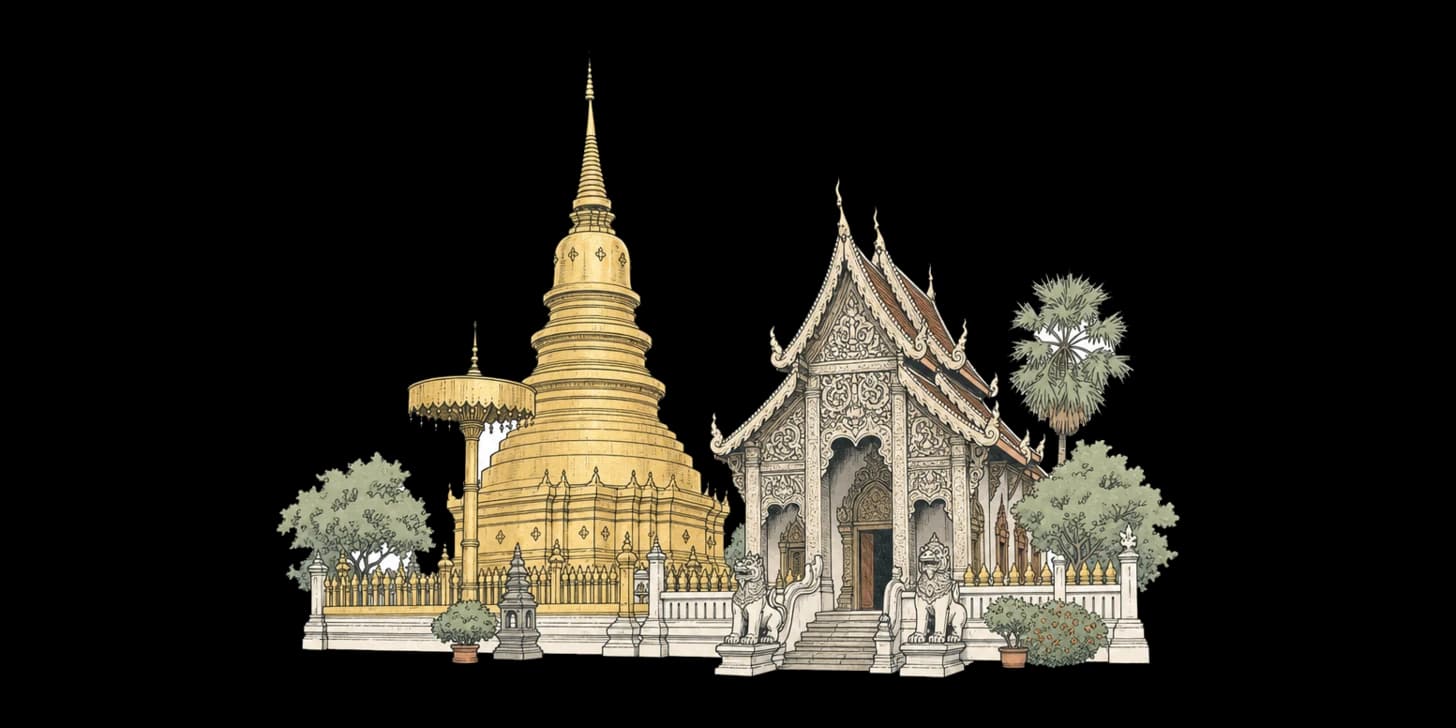
The spiritual heart of the town is Wat Phra That Hariphunchai, built on the site of Queen Chamthewi's old palace. Its great gold-topped Lanna chedi rises above the rooftops, ringed by tiered umbrellas that catch the light; you'll hear temple bells and smell incense before you reach the gates. It's one of the most revered temples in the North, and far calmer than anything you'll find among the old city temples of Chiang Mai.
A short ride away, Wat Chamthewi — also called Suwan Chang Kot, or Wat Ku Kut — is something different entirely. Its weathered, stepped brick chedi is studded with rows of standing Buddha images, a Mon-style design that predates Lanna and that you simply won't see elsewhere in the region. Local belief holds that the queen's ashes rest here, and a second, smaller chedi nearby is said to honour her war elephant. There are rarely more than a handful of visitors, and the silence does most of the talking.
Wandering the moated old town
Lamphun is small enough to feel in an afternoon. A square moat still traces the old town, and inside it the streets are low-rise and shaded, with the Kuang River drifting along one edge. You'll find a modest morning market, a few wooden shophouses, monks crossing on bicycles, and almost no one trying to sell you anything. Sit on a bench by the river for a while and you'll notice the quiet has a texture to it — birds, a distant motorbike, the soft clack of the temple's tiered umbrellas in the breeze. It's the kind of unhurried Thai town that's increasingly hard to find — sleepy in the best sense, and a gentle reminder of how the whole region once felt.
Longan country
Lamphun is also Thailand's longan capital. The Thai name is lamyai, and the orchards heavy with these small, sweet, lychee-like fruits stretch across the surrounding countryside. If you visit in August, the town throws its Lamyai Festival — fruit-laden parade floats, a "Lamyai Queen" contest, and stalls piled high with the harvest. Even outside the season, a bag of fresh longan from a roadside seller is the perfect thing to eat on the journey back; it's one of the stars of our wider Thai fruit guide.
Getting there
Half the pleasure is the journey. The most charming approach is the old Chiang Mai–Lamphun road (Highway 106), lined for several kilometres with hundreds of towering yang-na trees, some over 150 years old, their trunks rising like pillars. You can drive it by scooter, or take a cheap blue songthaew from near Warorot Market. Better still, hop on the train — Lamphun is the first proper stop south of Chiang Mai, a gentle 20-to-30-minute ride, and a lovely low-effort outing if you've already read up on the train station. Whichever you choose, our notes on getting around Chiang Mai will help you plan the hop.
You can see the best of Lamphun in half a day and be back for dinner — but don't rush it. The whole point is to slow down. And if this taste of the region's deep past leaves you wanting more, Wiang Kum Kam, the lost city just south of Chiang Mai, makes another easy, atmospheric outing in the same unhurried spirit.
Go gently, and say a quiet hello to Queen Chamthewi for us.
— The Ada House team
Frequently asked questions
How far is Lamphun and how do I get there?
Lamphun sits just 30 km south of Chiang Mai. The most charming approach is the old Chiang Mai to Lamphun road, Highway 106, lined for several kilometres with hundreds of towering yang-na trees. You can drive it by scooter, take a cheap blue songthaew from near Warorot Market, or better still hop on the train, as Lamphun is the first proper stop south of the city, a gentle 20 to 30 minute ride.
What are the main temples to see in Lamphun?
The spiritual heart is Wat Phra That Hariphunchai, built on the site of Queen Chamthewi's old palace, with a great gold-topped Lanna chedi ringed by tiered umbrellas. A short ride away is Wat Chamthewi, also called Suwan Chang Kot or Wat Ku Kut, whose weathered, stepped brick chedi is studded with rows of standing Buddha images in a Mon style you simply will not see elsewhere in the region.
Why is Lamphun historically special?
Long before Chiang Mai existed, there was Hariphunchai, and Lamphun was its capital. It is one of the oldest continuously inhabited towns in Thailand, a Mon city said to have been founded around the 7th century by the legendary Queen Chamthewi. That makes it centuries older than the Lanna kingdom that eventually absorbed it.
How long do I need there?
Lamphun is small enough to feel in an afternoon, and you can see the best of it in half a day and be back for dinner. But do not rush it, since the whole point is to slow down in a sleepy, unhurried town where almost no one is trying to sell you anything.
Is Lamphun worth visiting for the fruit, and when?
Lamphun is Thailand's longan capital, known locally as lamyai, with orchards of these small, sweet, lychee-like fruits across the surrounding countryside. If you visit in August, the town throws its Lamyai Festival with parade floats and stalls piled high with the harvest. Even outside the season, a bag of fresh longan from a roadside seller is the perfect thing to eat on the journey back.