
Practical tips · May 22, 2026
Chiang Mai train station & the overnight sleeper to Bangkok
By The Ada House team
There's a slower, more romantic way to arrive in or leave Chiang Mai than flying: the train. Chiang Mai Railway Station is a charming little terminus — and home to the classic overnight sleeper to Bangkok, one of Thailand's great travel experiences. Here's how it works, and why it's worth doing at least once.
Where it is
The station sits on Charoen Muang Road in Wat Ket, just east of the Ping River and about 3 km from the old city — roughly a 10-minute ride by Grab, songthaew or tuk-tuk. It's the northern terminus of the State Railway of Thailand's Northern Line, so every train heads south. For arriving by air instead, see our Chiang Mai airport guide; for getting around once you're here, our getting-around guide.
The line south: Bangkok and beyond
Chiang Mai is the end of the Northern Line, which runs about 750 km down to Bangkok (Krung Thep Aphiwat Central Terminal, the old Hua Lamphong's successor). The journey takes roughly 10.5–15 hours depending on the train, with about five direct trains a day plus shorter regional services. Along the way it threads through Lampang, Phitsanulok (the gateway to Sukhothai), and the historic ruins of Lop Buri and Ayutthaya — a scenic cross-section of the country you'll never see from a plane.
The romantic bit: the overnight sleeper
This is the reason to take the train. You watch the countryside fade at sunset, fall asleep to the rhythm of the rails, and wake to misty hills at dawn. Your options:
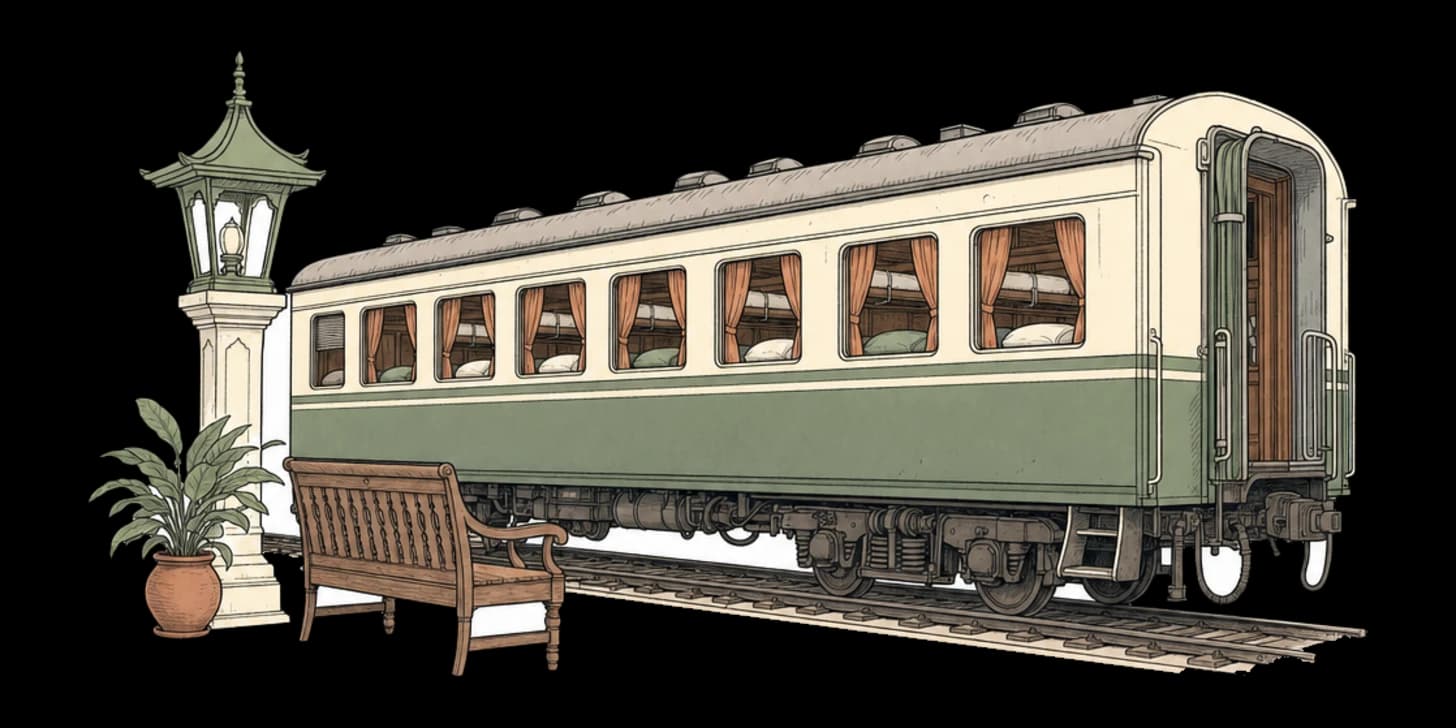
- 2nd class air-con sleeper — open-plan carriages with berths along the aisle; staff make up your bed with sheets and a blanket, curtains give privacy. The best value: comfortable, sociable, and cheaper than flying.
- 1st class sleeper — lockable two-berth private cabins on select Special Express trains; more space, more money, like your own little moving hotel room.
- 3rd class fan seats — simple padded seats with fans and windows that open; the cheapest, best for short daytime hops rather than overnight.
Our honest tip: do one direction by sleeper and the other by plane if you're short on time. You get the romance without losing two full days.
Day trains and shorter hops
Not every train goes all the way to Bangkok. Local and intercity day trains make relaxed alternatives to the bus for Lampang (lovely for a day or overnight trip), nearby Lamphun, and stops further down the line like Phitsanulok. A gentle way to explore the north at slow-travel pace.

Booking: how and when
This is one of Thailand's most popular routes, so book ahead — sleepers can sell out days or weeks in advance during the cool season (Nov–Jan) and around Songkran in April. First- and second-class berths go first.
- Online via SRT's official D-Ticket system — you get an e-ticket on your phone.
- At the station ticket office — advance or same-day if seats remain.
- Agencies also sell tickets (with a service fee), but SRT is the most direct source.
Fares change periodically, so always check current schedules and prices. As a rule, the 2nd class air-con sleeper sits in a comfortable mid-range, noticeably cheaper than flying.
At the station & a note on high-speed rail
The station is a Class 1 terminus with a nostalgic, traditional feel — open platforms, a simple hall, small stalls, and an unhurried atmosphere. Because trains start and end here, boarding is calmer than at a busy through-station. And despite years of talk, there's no high-speed line running yet — all services are conventional SRT trains.
So think of the train as both a practical link to the rest of Thailand and a gentle introduction to its slow-travel side. Tell us your dates when you book your stay and we'll help you pick the train — and the berth — that fits your budget and your taste for romance over speed.
Frequently asked questions
Where is Chiang Mai railway station?
The station sits on Charoen Muang Road in Wat Ket, just east of the Ping River and about 3 km from the old city, roughly a 10-minute ride by Grab, songthaew or tuk-tuk. It is the northern terminus of the State Railway's Northern Line, so every train heads south.
What are the sleeper class options on the overnight train to Bangkok?
The 2nd class air-con sleeper is the best value, with open-plan carriages where staff make up your bed with sheets, a blanket and privacy curtains. The 1st class sleeper offers lockable two-berth private cabins on select Special Express trains for more space at more money, while 3rd class fan seats are the cheapest and best for short daytime hops rather than overnight.
How long does the train to Bangkok take?
Chiang Mai is the end of the Northern Line, which runs about 750 km down to Bangkok, and the journey takes roughly 10.5 to 15 hours depending on the train. There are about five direct trains a day plus shorter regional services, and the route threads scenically through Lampang, Phitsanulok, Lop Buri and Ayutthaya.
How and when should I book train tickets?
This is one of Thailand's most popular routes, so book ahead, since sleepers can sell out days or weeks in advance during the cool season (Nov to Jan) and around Songkran in April. You can book online via the SRT official D-Ticket system for an e-ticket on your phone, at the station ticket office, or through agencies for a service fee. Fares change periodically, so always check current schedules and prices.
Is the train worth it if I am short on time?
Our honest tip is to do one direction by sleeper and the other by plane if time is tight, so you get the romance without losing two full days. As a rule the 2nd class air-con sleeper sits in a comfortable mid-range, noticeably cheaper than flying.
Is there a high-speed train from Chiang Mai?
Not yet. Despite years of talk, there is no high-speed line running, so all services are conventional SRT trains. The station itself is a Class 1 terminus with a nostalgic, unhurried feel, and because trains start and end here, boarding is calmer than at a busy through-station.