Things to do · June 22, 2026
Chiang Dao: caves, a limestone giant & quiet mountain air
By The Ada House team
Some escapes are about doing more; Chiang Dao is about doing less. An hour and a half north of the city, a dramatic limestone mountain rises over a valley of rice fields and small villages, with a sacred cave at its foot and air so quiet it feels like a reset button. It's the perfect antidote to a heavy week at the desk — here's what to do.
Doi Luang Chiang Dao
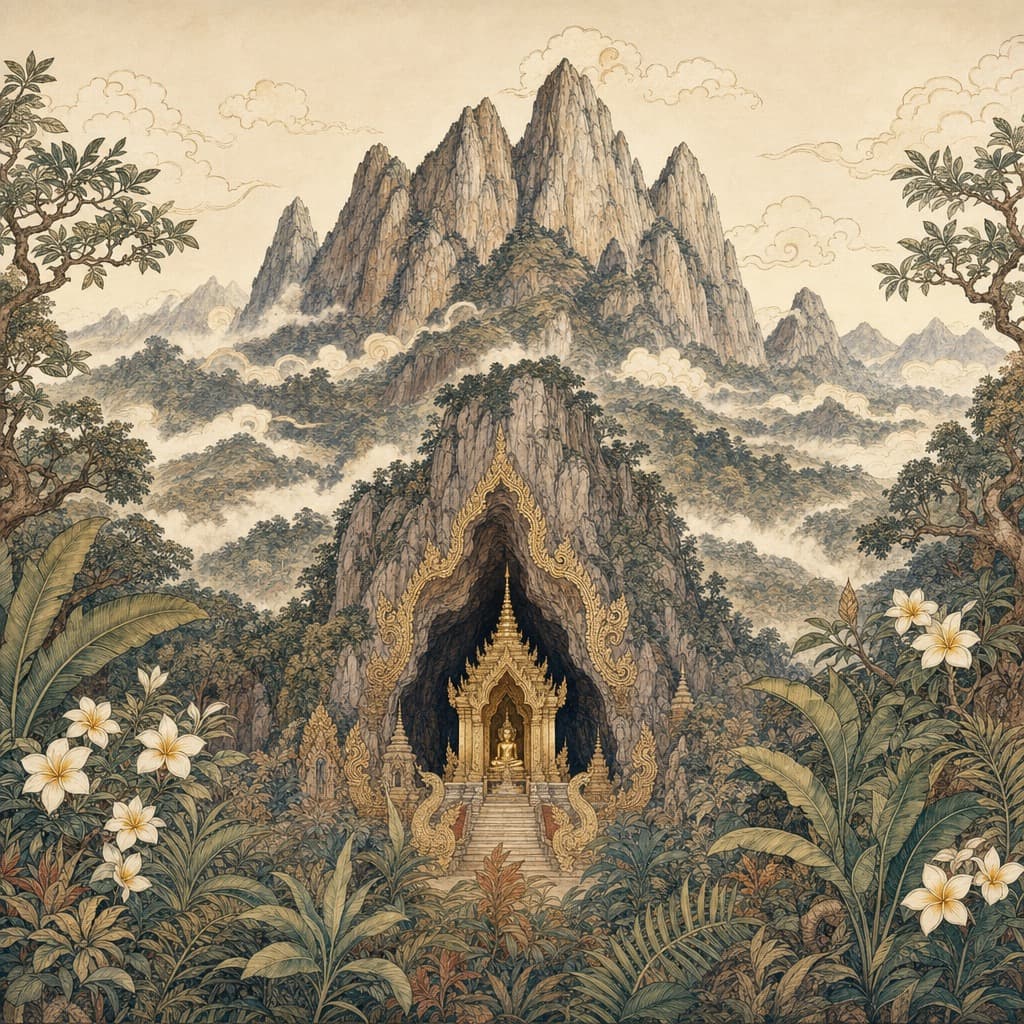
The skyline here belongs to Doi Luang Chiang Dao, often called Thailand's third-highest peak (~2,225 m) — a jagged limestone massif inside a protected wildlife sanctuary, rich with birdlife.
Climbing it takes planning. The summit is not a casual walk: it needs an advance permit and licensed guides, and access is seasonal (usually only the cool, dry months). Quotas, fees and rules change every year, so arrange it through a reputable local operator once you're in Chiang Mai, and confirm the current requirements — don't just turn up. For a gentler high-mountain day, Doi Inthanon is far easier.
Chiang Dao Cave
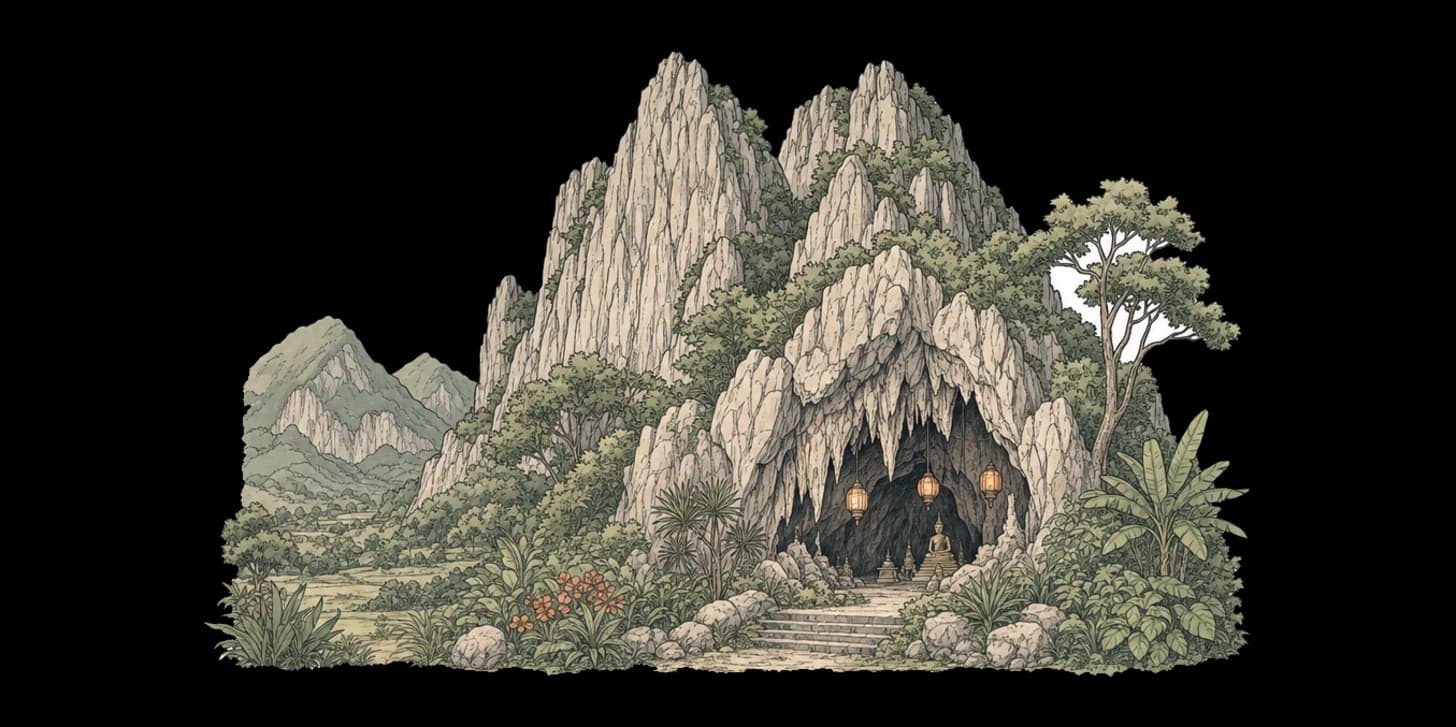
You don't need to climb the mountain to feel it. Chiang Dao Cave (Tham Chiang Dao) is a large limestone complex at its base, with a Buddhist temple at the entrance. There are two ways in:
- The lit sections — easy, paved paths past Buddha images and stalactites; fine for anyone, families included.
- The deep chambers — explored with a local lantern guide who lights the way and points out the formations and shrines. Atmospheric and a little magical.
It's a sacred space, so dress modestly, keep your voice low, and don't touch the images or the rock.
A slow nature base
The town itself is a scatter of villages, small nature resorts and cafés among the rice fields — especially around Ban Tham near the cave. The days are simple and that's the point: gentle scooter rides through karst scenery, birdwatching in the sanctuary, stargazing under skies far darker than the city's, and reading or working from a café with a mountain view. For remote workers it's a genuine reset — quiet days, cool nights, decent-enough wifi (download big files before you go).
The Tuesday hilltribe market
If you're here on a Tuesday morning (roughly 6am–noon, on Road 1359), the weekly hilltribe market is worth the early start — vendors from nearby communities selling produce, textiles and everyday goods. It's a working market, not a show: move gently, ask before photographing people, and buy directly from the stalls.
Getting there & when to go
It's about 70 km north on Highway 107, roughly 1.5–2 hours:
- Car or scooter — the most flexible (head north from Chang Phuak Gate). The highway is busy with trucks, so confident riders only; see our getting-around guide.
- Bus — from Chang Phuak Bus Station: local orange buses (~40–50 THB) or air-con minivans (~150–170 THB), every half hour or so, paid in cash. Fang/Thaton buses stop in Chiang Dao on the way.
Come in the cool season (Nov–Feb) for clear skies, mountain views and chilly, comfortable days — pack layers, nights get cold. If the quiet suits you and you fancy going higher still, Doi Ang Khang's cool highlands near the Myanmar border make a natural companion trip further up the same northern road. Avoid the burning season (roughly Mar–Apr) unless you check the air first (our when-to-visit guide has the detail), and if a summit trek is the dream, plan it properly with a trekking operator. Tell us at the house and we'll help you sort the trip — overnight is the way to really feel the quiet.
Going by bus? Our bus-station guide shows exactly where the Chang Phuak orange buses and minivans leave from — and how early to turn up.
Frequently asked questions
How far is Chiang Dao and how do I get there?
It is about 70 km north on Highway 107, roughly 1.5 to 2 hours. You can drive or scooter (head north from Chang Phuak Gate, though the highway is busy with trucks so confident riders only), or take a bus from Chang Phuak Bus Station, with local orange buses around 40 to 50 baht or air-con minivans around 150 to 170 baht, paid in cash.
Can I climb Doi Luang Chiang Dao?
Not casually. The summit of Thailand's third-highest peak needs an advance permit and licensed guides, and access is seasonal, usually only the cool, dry months. Quotas, fees and rules change every year, so arrange it through a reputable local operator and confirm the current requirements rather than just turning up. For a gentler high-mountain day, Doi Inthanon is far easier.
What is there to do at Chiang Dao Cave?
Chiang Dao Cave is a large limestone complex with a Buddhist temple at the entrance and two ways in. The lit sections are easy paved paths past Buddha images and stalactites, fine for anyone including families, while the deep chambers are explored with a local lantern guide who lights the way and points out formations and shrines. It is a sacred space, so dress modestly and keep your voice low.
What else can I do there besides the cave?
It is a slow nature base built for doing less: gentle scooter rides through karst scenery, birdwatching in the sanctuary, stargazing under skies far darker than the city's, and reading or working from a café with a mountain view. The wifi is decent enough for remote workers, though it is wise to download big files before you go.
Is the Tuesday market worth catching?
If you are there on a Tuesday morning, roughly 6am to noon on Road 1359, the weekly hilltribe market is worth the early start, with vendors from nearby communities selling produce, textiles and everyday goods. It is a working market rather than a show, so move gently, ask before photographing people, and buy directly from the stalls.
When should I go?
Come in the cool season from November to February for clear skies, mountain views and chilly, comfortable days, and pack layers as the nights get cold. Avoid the burning season, roughly March to April, unless you check the air quality first. Staying overnight is the way to really feel the quiet.