Food & coffee · July 4, 2026
Halal food in Chiang Mai: the Muslim quarter, halal khao soi and more
By The Ada House team
Guests from Malaysia, Indonesia and the Gulf often ask us the same question before they arrive: is it difficult to eat halal in Chiang Mai? The honest answer is no — in some ways it is easier here than in many Western cities. Chiang Mai has been home to a Muslim community for well over a century, the city's most famous noodle dish has halal roots, and the heart of it all sits a few minutes' walk from the Night Bazaar. Here is what we tell our guests.
A Muslim quarter older than the tourist trail
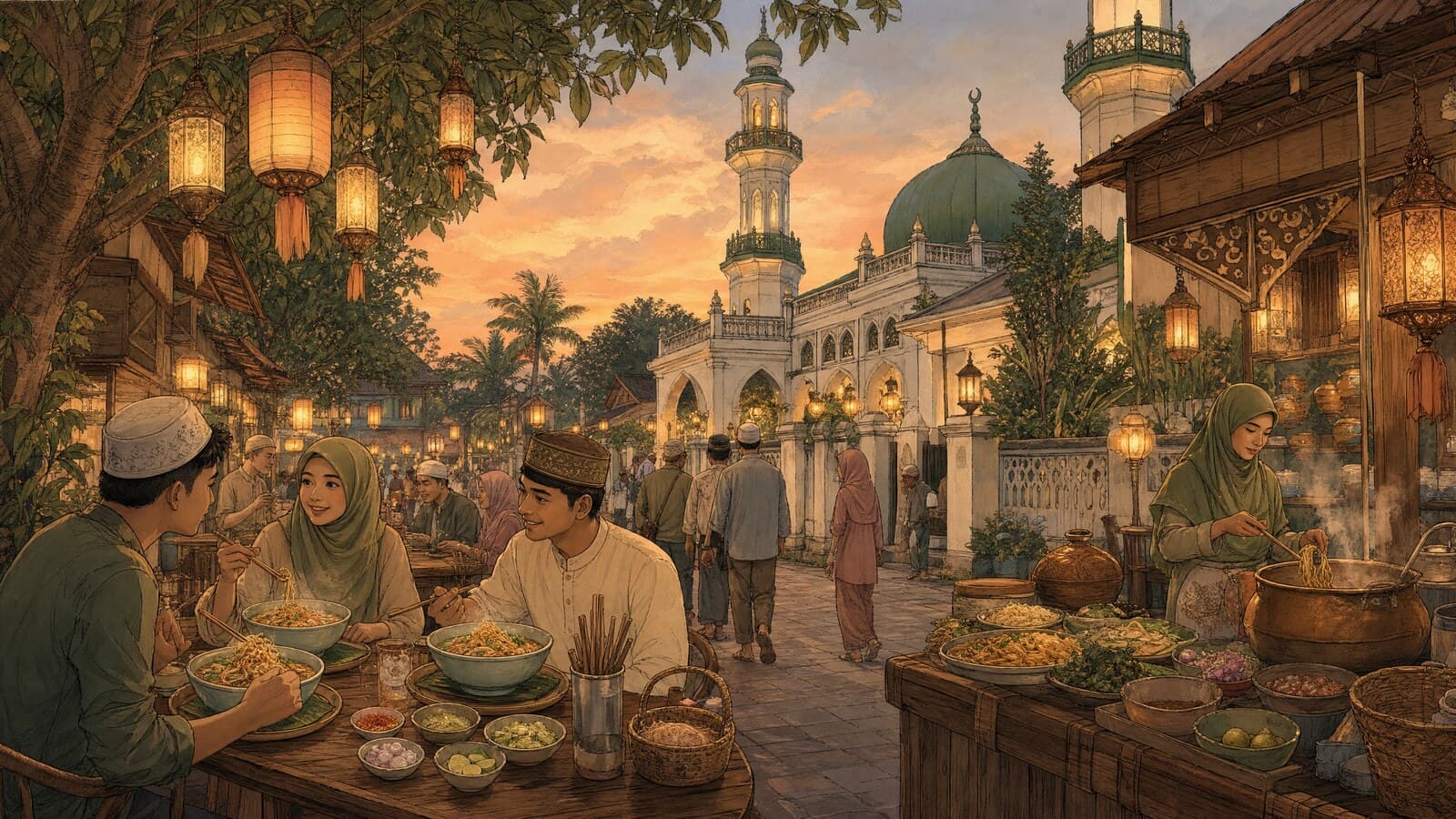
Chiang Mai's Muslim story begins with the Chin Haw — Yunnanese Chinese Muslim traders whose mule caravans linked southern China with the Lanna kingdom in the nineteenth century. Many settled near the Ping River, and their descendants still gather at Ban Haw Mosque (Masjid Hidayatul Islam), founded in the early twentieth century on Charoen Prathet Soi 1 — the small lane between Charoen Prathet and Chang Klan roads that locals and travellers alike know as Halal Street. Within a couple of hundred metres you will find halal restaurants, grocers and butchers, all just behind the Night Bazaar. The neighbourhood is also a lovely snapshot of Chiang Mai's easy pluralism: mosques, Buddhist temples, a church and a Sikh gurdwara share the same few blocks without fuss.
Khao soi the way it was first made
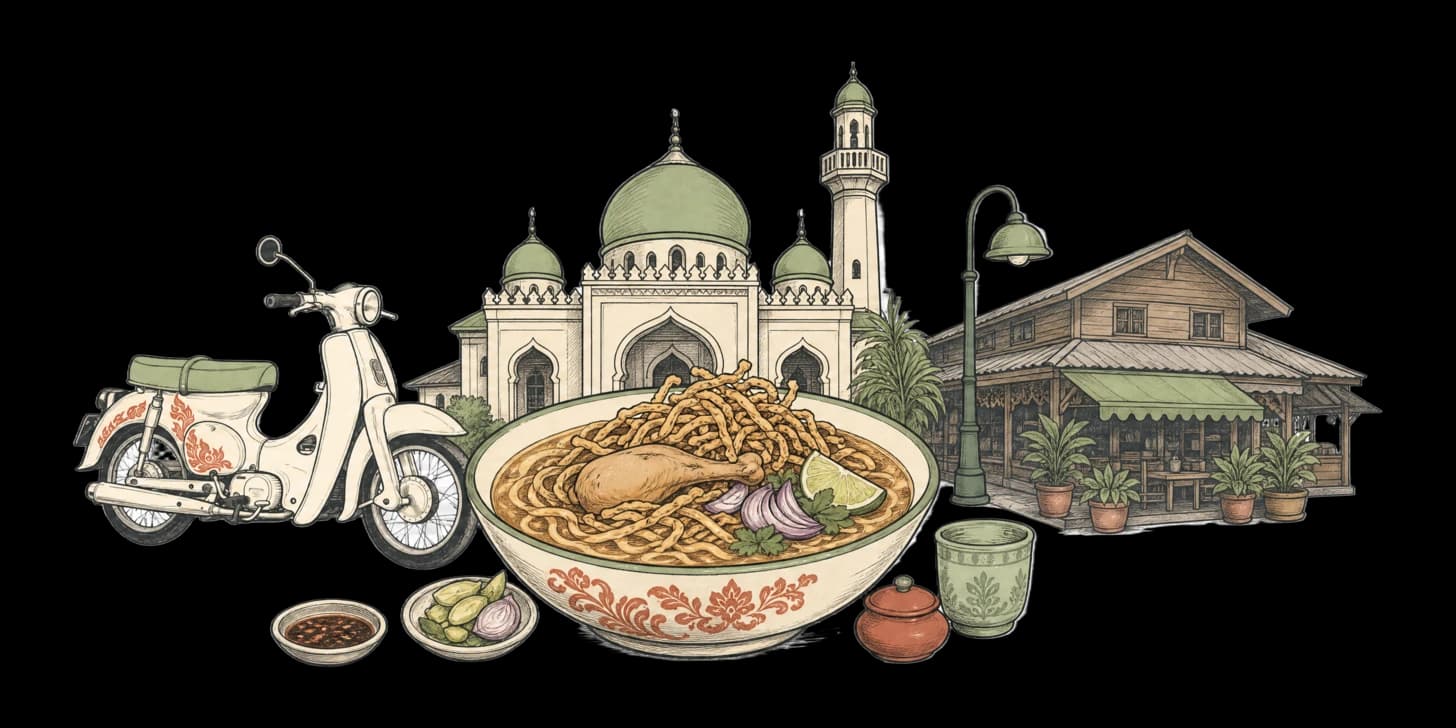
It surprises many visitors that khao soi — the coconut curry noodle dish everyone comes to Chiang Mai to try — is widely believed to have travelled here along those same Muslim caravan routes. The earliest versions were halal by default, made with chicken or beef and never pork, and the beef khao soi served in the mosque quarter today is the closest living link to that heritage. The best-known address is Khao Soi Islam, a family-run restaurant on the mosque lane that has served halal khao soi for decades, alongside khao mok gai, a fragrant Thai-style chicken biryani. It opens in the daytime only and tends to close by late afternoon, so go for lunch. If the dish is new to you, our full guide to khao soi in Chiang Mai explains what to expect, and it sits within a wider northern Thai food tradition that is well worth exploring.
How to recognise halal certification in Thailand
Thailand's official halal mark is issued by the Central Islamic Council of Thailand (CICOT): a diamond-shaped logo containing the word "halal" in Arabic script, usually with a registration number beneath it. You will see it on packaged food in 7-Eleven and the big supermarkets, and framed at the entrance of certified restaurants. That said, many small Muslim-family kitchens never apply for the paperwork, so the absence of a certificate does not mean the food is off-limits. Look for the everyday cues instead: a Muslim family running the kitchen, no pork or alcohol anywhere on the menu, a green crescent on the signboard. And when in doubt, simply ask — "halal mai?" is understood everywhere, and vendors here are well used to the question.
Eating halal at the night markets
The Night Bazaar on Chang Klan Road sits directly beside the Muslim quarter, which makes it one of the easiest night markets in Thailand for halal eating. Grilled chicken, roti, fresh fruit and juice stalls are everywhere, and the food courts around the Anusarn area at the southern end include Middle Eastern and Muslim-run Thai restaurants with clear halal signage. Elsewhere in the city — the Sunday Walking Street, for instance — halal options exist but take more hunting, so ask before you order anything with meat. Our guide to Chiang Mai's night markets covers how each one differs; for halal purposes, the Night Bazaar side of town is the safe bet.
Groceries and cooking for yourself
If you are staying a while and want to cook, the quarter has you covered. On Friday mornings a small Yunnanese Muslim market sets up opposite Ban Haw Mosque from very early until around midday, selling halal meat, herbs, noodles and home-made dishes — one of the city's quietest cultural treats. The lane's grocers sell halal staples year-round. Larger supermarkets such as Rimping, Tops and Big C stock plenty of CICOT-marked packaged goods, and Warorot Market, ten minutes' walk north, is the place for dried goods, spices and Chinese-Muslim snacks. Halal-certified fresh meat is easiest to find at the quarter's own butchers rather than the mainstream wet markets.
Ramadan in Chiang Mai
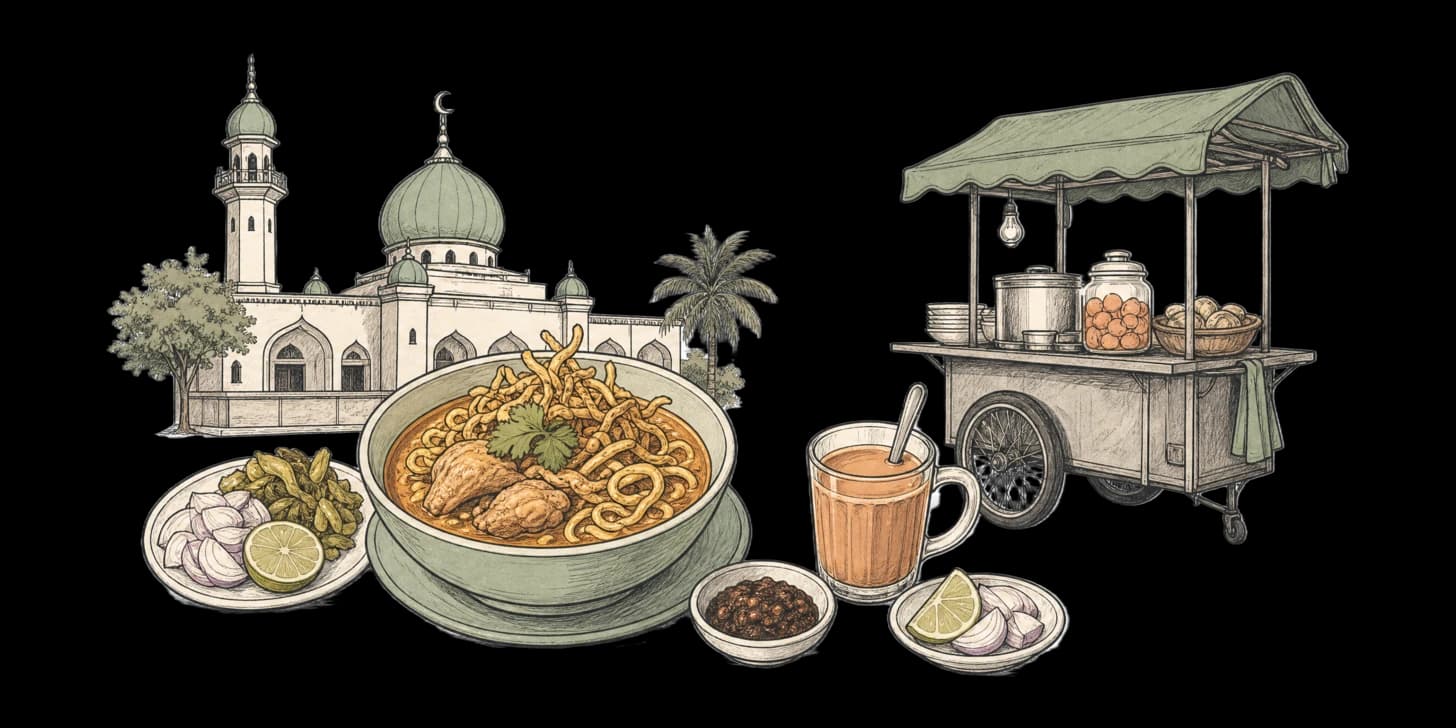
During the fasting month the quarter shifts to an evening rhythm that is genuinely special. From late afternoon, stalls appear around the mosque selling dates, roti, curries and sweets as families shop for iftar, and Ban Haw Mosque hosts communal meals at sunset. The rest of the city carries on entirely as normal — restaurants stay open and nobody expects visitors to fast — but if you are in Chiang Mai during Ramadan, an early-evening walk down the mosque lane is one of the warmest experiences the city offers, whatever your faith.
Visiting the mosques
Chiang Mai has more than a dozen mosques, so daily prayers are never far away wherever you are staying; Ban Haw is the largest and most central. Visitors are welcome outside prayer times: dress modestly, remove your shoes, and women should carry a scarf for the prayer hall. Ask before photographing worshippers, and avoid wandering through during prayers unless you are joining them. Friday midday is the busiest and liveliest time, thanks to the morning market outside. And if you need prayer times, a qibla direction or directions to the nearest mosque from Ada House — just ask us at the desk.
Frequently asked questions
Is it easy to find halal food in Chiang Mai?
Yes. Chiang Mai has had a Muslim community for well over a century, and the quarter around Ban Haw Mosque — just behind the Night Bazaar — is full of halal restaurants, grocers and butchers. Larger supermarkets also stock plenty of halal-certified packaged goods.
Where is Chiang Mai's Halal Street?
It is Charoen Prathet Soi 1, the small lane around Ban Haw Mosque between Charoen Prathet and Chang Klan roads, a few minutes' walk from the Night Bazaar. The lane is lined with halal restaurants, grocers and butchers.
Is khao soi halal?
Not everywhere, but the earliest versions were halal by default — the dish is widely believed to have arrived with Yunnanese Muslim caravan traders and was made with chicken or beef, never pork. Muslim-run restaurants in the mosque quarter, such as the long-running Khao Soi Islam, still serve halal beef and chicken khao soi today.
How do I recognise halal certification in Thailand?
Look for the official CICOT mark from the Central Islamic Council of Thailand: a diamond-shaped logo with the word 'halal' in Arabic script, usually with a registration number. Many small Muslim-family kitchens skip the paperwork, though, so also look for cues like no pork or alcohol on the menu and a green crescent on the signboard — or simply ask.
What is Ramadan like in Chiang Mai?
The mosque quarter shifts to an evening rhythm: from late afternoon, stalls around Ban Haw Mosque sell dates, roti, curries and sweets for iftar, and the mosque hosts communal meals at sunset. The rest of the city carries on as normal, and visitors are not expected to fast.
Can non-Muslim visitors go inside Chiang Mai's mosques?
Visitors are welcome outside prayer times. Dress modestly, remove your shoes, and women should carry a scarf for the prayer hall. Ask before photographing worshippers, and avoid walking through during prayers unless you are joining them.