Food & coffee · June 12, 2026
Northern Thai food: what to eat beyond khao soi
By The Ada House team
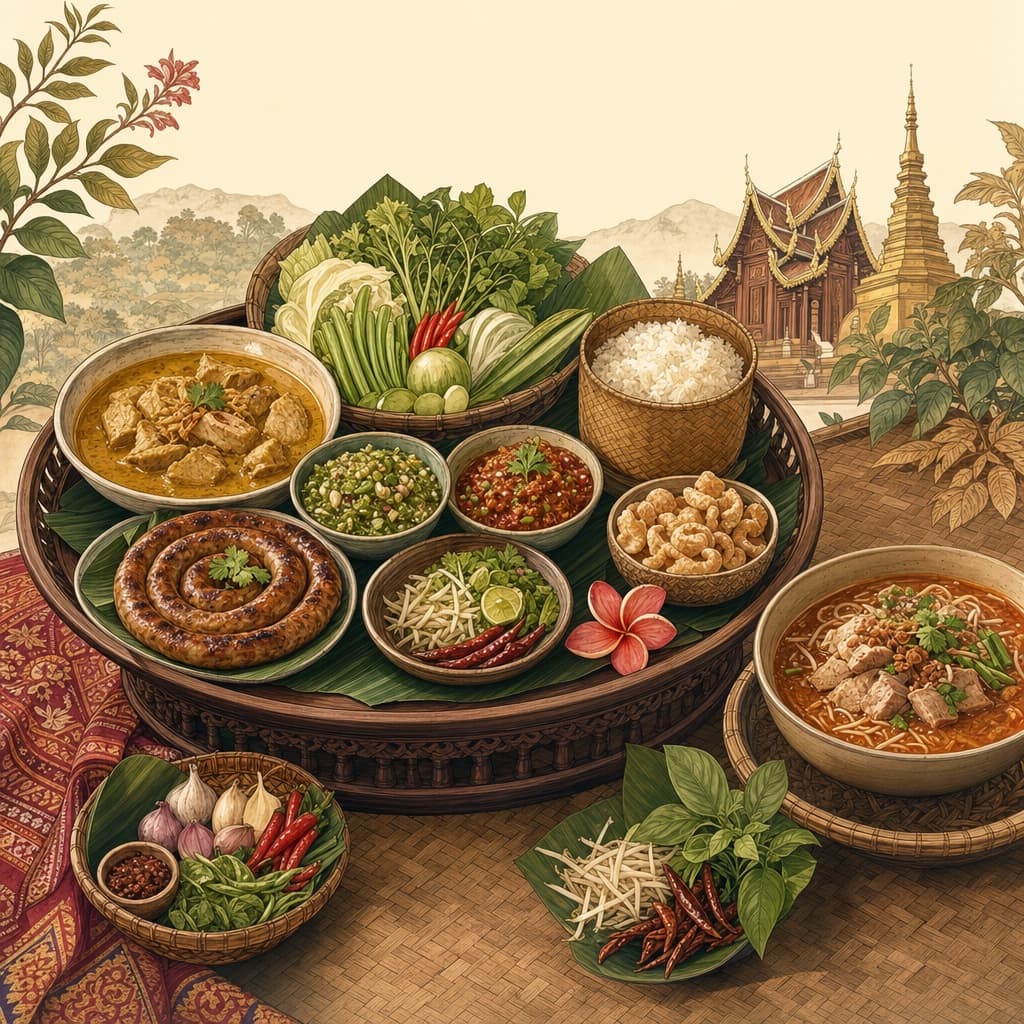
You almost certainly arrived knowing one Northern dish: khao soi. Good — but it's the doorway, not the whole house. Lanna food is its own quiet world of grilled sausages, smoky chili dips, slow pork curries and shared trays you linger over for hours. Here's what to order once you've had your khao soi.
How Northern food is different
Three things to know. Sticky rice is the staple — you eat it with your hands, rolling a little ball and dipping it into everything. The flavours are less sweet and more herbal than the Thai food you know, leaning on fresh herbs, ferments and pork. And it's made for sharing — small dishes in the middle of the table, which makes it perfect for a house dinner with your fellow guests.
The dishes to order
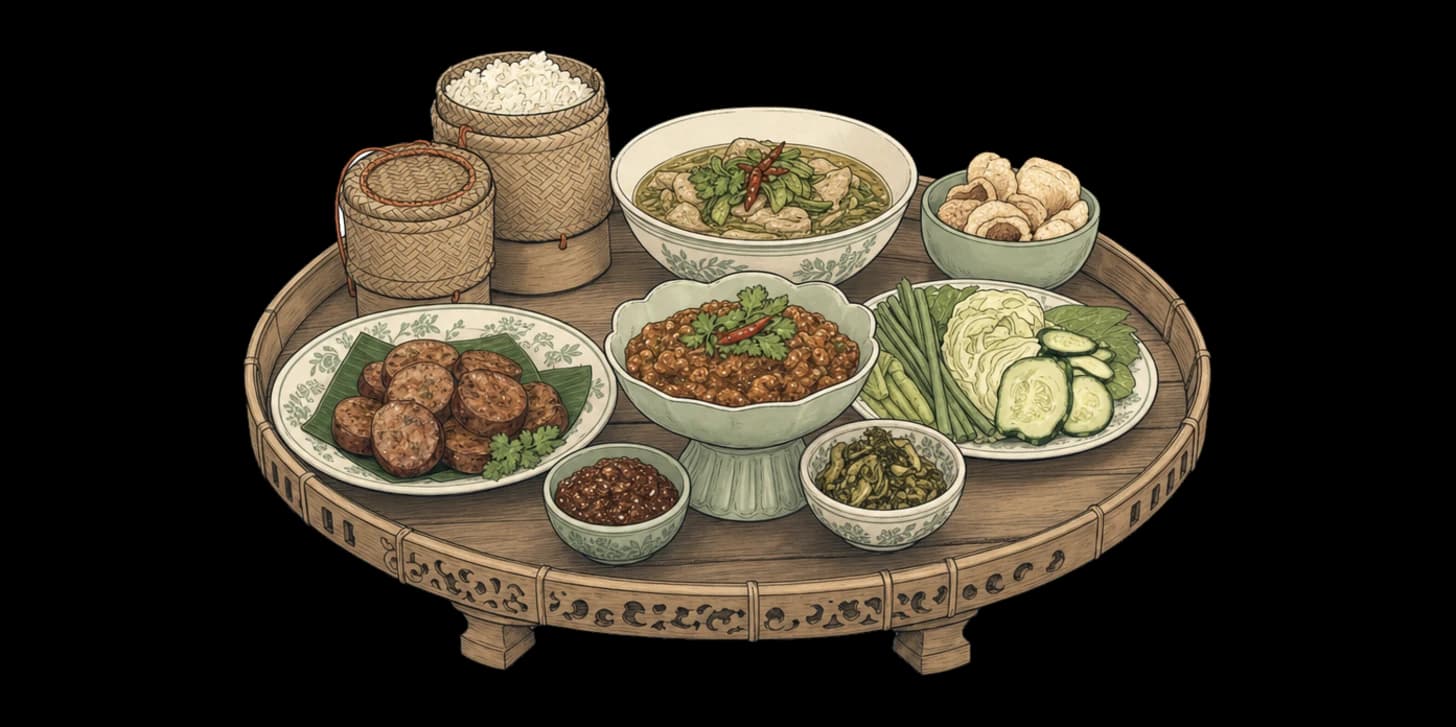
- Sai ua — the glorious grilled pork sausage, fragrant with lemongrass and kaffir lime. Slice it, eat with sticky rice. (~30–70 THB)
- Nam prik num & nam prik ong — two chili dips you'll fall for: one a smoky roasted-green-chili paste, the other a tomato-and-pork number like a Thai Bolognese. Scoop both with sticky rice, fresh veg and khaep mu (crispy pork rinds). (~30–60 THB)
- Gaeng hung lay — a rich, gingery pork-belly curry with Burmese roots, no coconut milk, deeply savoury. (~60–100 THB)
- Khanom jeen nam ngiao — soft rice noodles in a tangy tomato-pork broth; the North's other great noodle bowl. (~30–50 THB)
- Larb khua — the Northern take on the minced-meat salad: dry, earthy, spiced with toasted dried chilies rather than lime. (~50–80 THB)
- Kaeng khae — a herb-packed vegetable curry, light and very local, if you want a break from the rich stuff.
How to eat it like a local
The cheapest, best way in is a market: the Sunday Walking Street, the smaller Saturday Walking Street in the silver quarter and the day markets are all full of stalls selling sai ua, chili-dip sets and nam ngiao for pocket change. For a sit-down spread, look for a simple "Northern" or "Lanna" food restaurant with trays of dishes out front. And for a proper occasion, a khantoke dinner serves a sampler of all of the above on a traditional pedestal tray, often with music and dance (pricier, but an experience).
One rule above all: order a mix and share. That's how Lanna food is meant to be eaten — and if you really fall for it, you can learn to cook half of this list yourself at a Thai cooking class. Come hungry, eat with your hands, and you'll understand Chiang Mai a little better by the end of the meal.
Frequently asked questions
What should I order first if I'm new to Northern Thai food?
Start with sai ua, the glorious grilled pork sausage fragrant with lemongrass and kaffir lime, eaten with sticky rice. Then try the two chili dips, nam prik num and nam prik ong, scooped up with sticky rice, fresh veg and crispy pork rinds. From there, a rich gaeng hung lay pork-belly curry rounds out a perfect first table.
Is Northern Thai food very spicy or sweet?
It's actually less sweet and more herbal than the Thai food you may know, leaning on fresh herbs, ferments and pork. Some dishes like larb khua are spiced with toasted dried chilies, so heat is there but it's earthy rather than sugary. If you want a gentler break from the rich stuff, kaeng khae is a light, herb-packed vegetable curry.
How much should a Northern Thai meal cost?
It's wonderfully affordable, especially at markets. Sai ua runs around 30 to 70 THB, the chili-dip sets around 30 to 60 THB, khanom jeen nam ngiao about 30 to 50 THB, and a rich gaeng hung lay curry roughly 60 to 100 THB. Order a few dishes to share and you'll eat brilliantly for very little.
Where's the best place to try it?
The cheapest and best way in is a market — the Sunday Walking Street, the Saturday Walking Street in the silver quarter and the day markets all have stalls selling sai ua, chili-dip sets and nam ngiao. For a sit-down spread, look for a simple Northern or Lanna restaurant with trays of dishes out front. For a special occasion, a khantoke dinner serves a sampler on a traditional pedestal tray, often with music and dance.
Are there vegetarian options in Northern Thai cooking?
Yes — kaeng khae is a herb-packed vegetable curry that's light and very local, ideal if you want a break from the richer pork dishes. Much of the table is built for sharing, so you can mix in plenty of veg and sticky rice. It's a gentle, plant-leaning way into the cuisine.
How do I eat it like a local?
Sticky rice is the staple here, and you eat it with your hands — roll a little ball and dip it into everything. The golden rule is to order a mix and share, with small dishes in the middle of the table. Come hungry, eat with your hands, and you'll understand Chiang Mai a little better by the end of the meal.