
Health & wellness · July 5, 2026
Seasonal allergies, dust and air quality in Chiang Mai
By The Ada House team
If you arrive in Chiang Mai with hay fever, dust sensitivity or a nose that reacts to everything, you have probably already read some alarming things online. The reality is more nuanced, and for many people it is genuinely better news than expected. This is general information rather than medical advice — everyone's triggers differ, so treat what follows as a friendly orientation, not a prescription. With that said, here is how the air really behaves here across the year, and the small, practical habits that make a long stay comfortable.
The season everyone warns you about
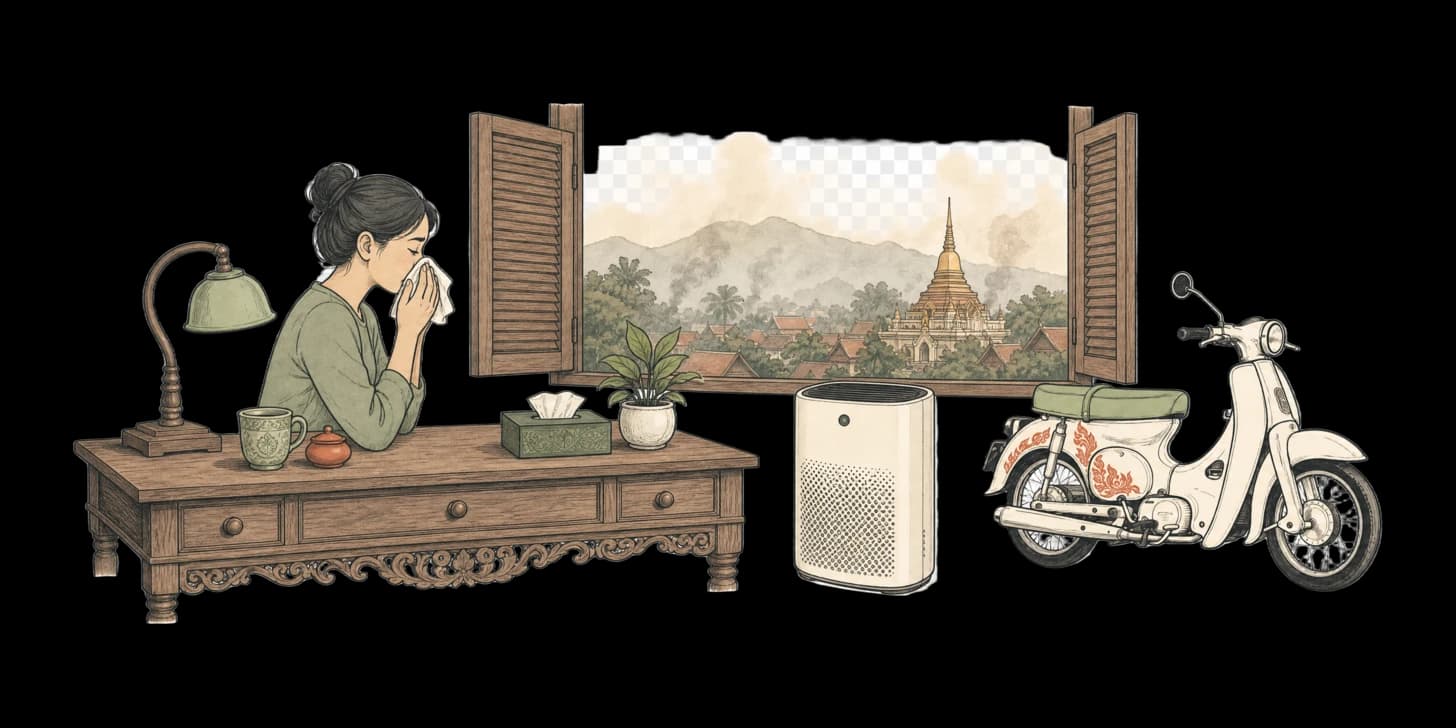
The headline problem in Chiang Mai is not classic pollen at all — it is smoke. Every year a burning season settles over the north, roughly February to April, when agricultural and forest fires combine with mountain-valley geography to trap haze over the city. Fine-particle pollution (PM2.5) can climb to many times the level the World Health Organization considers safe, and March is usually the worst of it. Strictly speaking this smoke is an irritant rather than an allergen, but that distinction won't comfort your sinuses: if you are prone to allergies or asthma, smoke is often what hits you hardest. We cover the whole phenomenon, and how residents plan around it, in our guide to Chiang Mai's burning season. The short version: it is real, it is seasonal, and it is very manageable indoors.
The quieter triggers, all year round
Outside the smoke months, the air is usually lovely — but a few gentler triggers persist. Dust is the constant one: the dry season leaves everything powdery, roadworks and unpaved sois throw up plenty of it, and it settles fast on floors and shelves. Then, when the rainy season arrives around May, the problem flips to mould. High humidity, tiled bathrooms and hard-working air-conditioning units are a perfect breeding ground, and that faint "wet towel" smell from an aircon is usually the tell-tale sign of mould in the filter or drainage. Tropical dust mites thrive in the same damp warmth. None of this is unique to Chiang Mai, but if you are sensitive, the wet-season mould and the dry-season dust are the two things worth staying ahead of.
Good news for northern-hemisphere sufferers
Here is the part people rarely expect. If your allergies at home are driven by birch, ragweed, or the classic temperate grass-and-tree pollen calendar, none of those plants grow here. Thailand's pollens come from a different cast entirely — tropical grasses such as Bermuda, para and Johnson grass, which follow their own year-round rhythm rather than a sharp spring "season". The upshot is that many northern-hemisphere hay fever sufferers report feeling noticeably better in Chiang Mai for most of the year, simply because their specific triggers are absent. We frame that as "many report", not a promise — you might turn out to react to a local grass instead — but it is a common and pleasant surprise, and it is one reason so many long-stayers settle in.
Keeping your indoor air clean
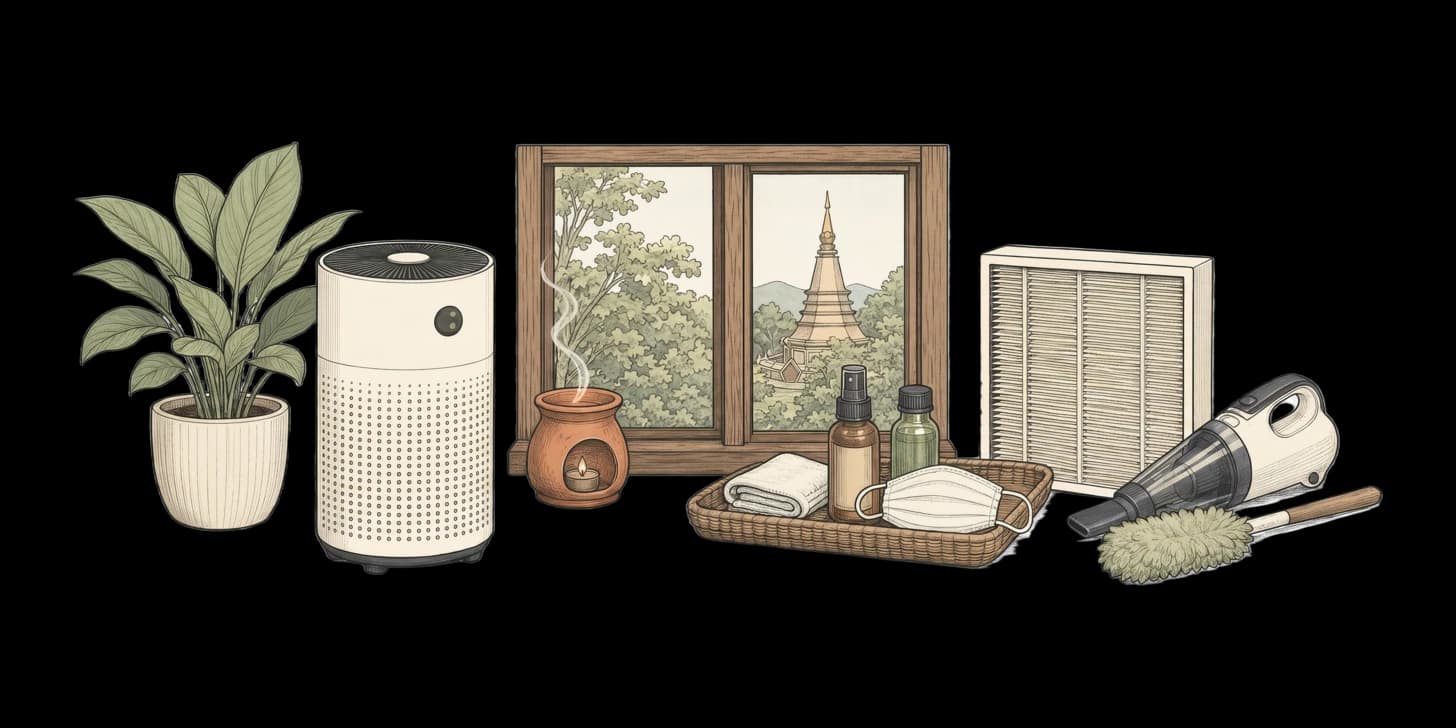
Whatever the season, your room is where you win or lose this. Servicing your air-conditioning is the single highest-value habit — a proper clean of the filters and coils clears out mould and dust, and here it is refreshingly cheap, so having it done a couple of times a year is easy. Between services you can rinse the removable filters yourself in a few minutes. For burning season, a HEPA air purifier is the local standard, not a luxury: run one in the room you sleep in, keep the windows shut when the haze is bad, and you effectively create a clean-air pocket to retreat to. Ada House rooms are kept clean and well aired, but the same principles apply wherever you stay.
A simple practical toolkit
A few small things cover most situations. First, an air-quality app: several free ones show a live AQI reading for your exact neighbourhood, and a useful rule of thumb is to start being cautious once it climbs past around 150 (the "unhealthy" band), especially for outdoor exercise. Second, a right-sized purifier: match its rated coverage to your room's floor area with a bit of headroom, rather than buying the smallest unit that technically "fits". Third, a mask that actually seals — a well-fitted N95/KN95 style filters fine particles far better than a loose surgical or cloth mask, and the fit around your nose and cheeks matters more than the label. It is worth bringing a couple you know are comfortable; our what to pack for Chiang Mai guide has more on that.
Pharmacies, and when to see a specialist
For everyday relief, Chiang Mai's pharmacies are excellent and everywhere. Common antihistamines and nasal sprays are widely stocked and inexpensive, and the pharmacist can talk you through the options — we won't name specific medicines here, since the right choice depends on you, but our guide to pharmacies in Chiang Mai explains how they work. If symptoms are persistent, disruptive, or clearly more than mild irritation, it is genuinely worth seeing a specialist: the city's private hospitals have proper allergy and ENT clinics, offering allergy testing and expert advice at a fraction of Western prices. Our overview of healthcare in Chiang Mai points you to them. Getting tested is often the thing that turns vague, year-round sniffles into a clear plan — and clarity, here, is very affordable.
Frequently asked questions
Is the air in Chiang Mai bad for allergy sufferers all year?
No, and this is general information rather than medical advice. For most of the year the air is usually lovely. The one season to plan around is the burning season, roughly February to April, when agricultural and forest fires combine with the mountain-valley geography to trap smoke over the city and fine-particle pollution climbs well above safe levels. That smoke is an irritant rather than a classic allergen, but if you are prone to allergies or asthma it is often what affects you most. Outside those months the main triggers are gentler: dry-season dust and rainy-season mould.
Will my hay fever be better or worse in Chiang Mai?
Many northern-hemisphere sufferers report feeling noticeably better here for most of the year, because the plants that trigger classic hay fever at home, such as birch and ragweed, do not grow in Thailand. Local pollens come from tropical grasses like Bermuda, para and Johnson grass, which follow their own year-round rhythm rather than a sharp spring season. We say many report this rather than promising it, since you might react to a local grass instead, but it is a common and pleasant surprise. This is general information, not a medical guarantee.
What are the year-round allergy triggers apart from smoke?
Two things persist outside the burning season. Dust is the constant one: the dry season leaves everything powdery, and roadworks and unpaved streets throw up plenty of it. When the rainy season arrives around May, the problem shifts to mould, which thrives in high humidity, tiled bathrooms and hard-working air-conditioning units. A faint wet-towel smell from an aircon usually means mould in the filter or drainage. Tropical dust mites like the same damp warmth. Staying ahead of both is mostly about keeping your indoor air clean.
How can I keep my room's air clean during burning season?
Your room is where you win or lose this. Servicing your air-conditioning, a proper clean of the filters and coils, is the single highest-value habit and is refreshingly cheap here, and you can rinse the removable filters yourself between services. During the smoke months a HEPA air purifier is the local standard rather than a luxury: run one where you sleep, keep the windows shut when the haze is bad, and you create a clean-air pocket to retreat to. Match a purifier's rated coverage to your room's floor area with some headroom rather than buying the smallest unit that fits.
Can I buy allergy medicine and masks easily in Chiang Mai?
Yes. Pharmacies are excellent and everywhere, and common antihistamines and nasal sprays are widely stocked and inexpensive. Since the right choice depends on you, the best step is to talk it through with the pharmacist rather than following a name from an article, and this is general information rather than medical advice. For smoke and dust, a well-fitted N95 or KN95 style mask filters fine particles far better than a loose surgical or cloth mask, and the seal around your nose and cheeks matters more than the label, so it is worth bringing a couple you know are comfortable.
When should I see a doctor about my allergies here?
If your symptoms are persistent, disruptive, or clearly more than mild irritation, it is genuinely worth seeing a specialist rather than managing alone, though this is general information and not medical advice. Chiang Mai's private hospitals have proper allergy and ENT clinics offering allergy testing and expert guidance at a fraction of Western prices. Getting tested is often what turns vague, year-round sniffles into a clear plan, and here that clarity is very affordable.