Things to do · June 25, 2026
A Chiang Mai coffee farm day trip: up into the hills
By The Ada House team
You've spent a few mornings working through the flat whites of Nimman, and somewhere along the way you noticed the menus kept saying single-origin, northern Thailand, 1,200 metres. That coffee doesn't come from far away. It grows in the hills you can see from the city on a clear day — and you can go and stand in them.
How coffee climbed the mountains
Northern Thai arabica is a young story with deep roots. Up at 1,000 to 1,600 metres, the cool nights and morning mist do for coffee what they do for wine: slow the cherries, sweeten the bean. But these slopes weren't always growing coffee. Through the 1970s and 80s, the same highlands were planted with opium poppies, and it was the late King's royal projects — and later the Doi Tung development work — that introduced coffee as a legal, lasting alternative crop. Whole valleys were replanted.
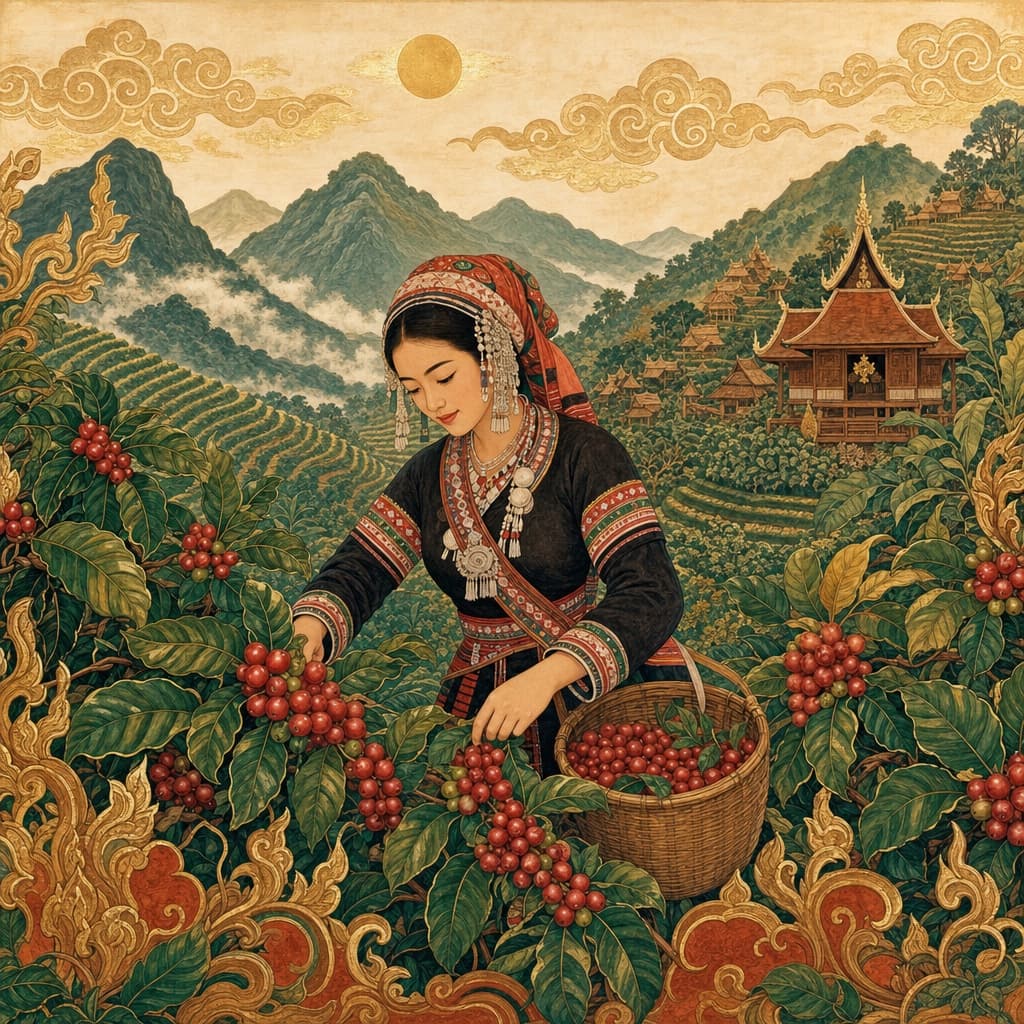
Today much of that coffee is grown by hill-tribe communities, especially the Akha and Lisu, on small family plots threaded through the forest rather than cleared plantations. If you've read our piece on the hill tribes of Northern Thailand, this is the same world, seen through a coffee cherry — and it's worth approaching with the same care and curiosity.
Where to go
The good news is that the growing country starts close to the city. Doi Saket, less than two hours out toward the Thep Sadet valley, is the easiest introduction, with organic farms like Suan Lahu that welcome visitors. Push north toward Mae Taeng or out past Chiang Dao and the elevation climbs, the air thins, and the scenery alone justifies the drive — pair a farm with a day around Chiang Dao's caves and peak for a full, satisfying loop. West, the highland villages above the Samoeng and Mon Jam roads are dotted with small plots; the coffee is reason enough to slow down on the Samoeng Loop.
For named experiences to research, Akha Ama runs a much-loved community journey to its growers' village near Maejantai, founded by an Akha son who came home to connect the coffee to its source. Doi Chang, over the Chiang Rai line, is the original Thai specialty estate. Roaster-led operations such as Hillkoff, Lanna Coffee and Monsoon also trace clear lines back to the farms they buy from.
What a visit actually involves
You'll walk the terraces first, between waist-high coffee bushes shaded by taller trees, while someone explains why the elevation matters. In harvest season — roughly November to February — you can pick the ripe red cherries yourself, a fiddly, oddly addictive job that gives you new respect for every cup. Then you follow the bean through its whole life: the washing and pulping, the slow drying on raised beds, the roasting, until the smell takes over completely.
Most visits end the right way, with a cupping — a proper side-by-side tasting where you slurp, compare, and start to taste the difference between a washed and a honey-processed lot. It's the same ritual the serious work-friendly cafés back in town perform over their laptops, only here you're tasting it where it was grown.
Going the ethical way
This is the part that matters. Buying a bag at the farm, or booking a tour the community itself runs, puts money straight into the growers' hands rather than a long chain of middlemen — the same direct, fair-minded thinking behind our ethical elephant sanctuaries. Ask who picked it, ask what they're paid, and buy from the people who can answer.
Getting there
A scooter works for the nearer farms if you're a confident rider; for the higher villages, a car or a hired driver is kinder on both you and the mountain roads. The simplest route is an organised day tour, transport and lunch included, which spares you the navigating. Whichever you choose, go on a clear morning, dress in layers — it's genuinely cold up there at dawn — and leave room in your bag for beans.
Back at the house that evening, brew a cup from the farm you stood in. It tastes, we promise, completely different.
Warmly, the Ada House team.
Frequently asked questions
When is the best time to visit a coffee farm, and can I pick the cherries myself?
Harvest season runs roughly from November to February, and that is when you can pick the ripe red cherries yourself. It is a fiddly, oddly addictive job that gives you fresh respect for every cup. Outside harvest you can still walk the terraces and follow the bean through washing, drying, roasting and a cupping.
Which farms are easiest to reach from the city?
Doi Saket, less than two hours out towards the Thep Sadet valley, is the gentlest introduction, with welcoming organic farms like Suan Lahu. Push north towards Mae Taeng or past Chiang Dao and the elevation climbs along with the scenery. West, the highland villages above the Samoeng and Mon Jam roads are dotted with small plots too.
How do I actually get up to the farms?
A scooter works for the nearer farms if you are a confident rider, but for the higher villages a car or a hired driver is kinder on both you and the mountain roads. The simplest option is an organised day tour with transport and lunch included, which spares you the navigating. Go on a clear morning and dress in layers, as it is genuinely cold up there at dawn.
What happens during a visit?
You walk the terraces first, between waist-high coffee bushes shaded by taller trees, while someone explains why the elevation matters. Then you follow the bean through its whole life, from washing and pulping to slow drying on raised beds and roasting. Most visits end with a cupping, a side-by-side tasting where you slurp, compare and start to taste the difference between a washed and a honey-processed lot.
How can I make sure my visit genuinely supports the growers?
Buying a bag at the farm, or booking a tour the community itself runs, puts money straight into the growers' hands rather than a long chain of middlemen. Much of this coffee is grown by hill-tribe communities, especially the Akha and Lisu, on small family plots. Ask who picked it, ask what they are paid, and buy from the people who can answer.
Why is northern Thai coffee grown so high in the hills?
Up at 1,000 to 1,600 metres, the cool nights and morning mist do for coffee what they do for wine, slowing the cherries and sweetening the bean. These same slopes once grew opium poppies through the 1970s and 80s, until the late King's royal projects and the Doi Tung work introduced coffee as a lasting legal crop. Whole valleys were replanted.