Local culture · June 24, 2026
The hill tribes of northern Thailand: who they are, and how to visit with respect
By The Ada House team
The mountains north and west of Chiang Mai are home to peoples who arrived over centuries, each with their own language, dress, faith and story. They are often grouped together as "hill tribes" — a convenient label, but a contested one that flattens real differences and can carry a whiff of the exotic. We prefer to think of them as highland communities and ethnic minority peoples, neighbours rather than attractions, and to name them as they name themselves.
Who they are
The Karen are the largest group, perhaps a million people across Thailand, speaking Tibeto-Burman languages and divided mainly into Sgaw and Pwo. Many are skilled weavers and farmers; you'll find Karen communities on the slopes of Doi Inthanon, Thailand's highest peak. A small Karenni subgroup, the Kayan (often called Padaung), are the women known abroad as "long-neck" for the brass coils they wear from girlhood — and they sit at the centre of a controversy we'll come to.
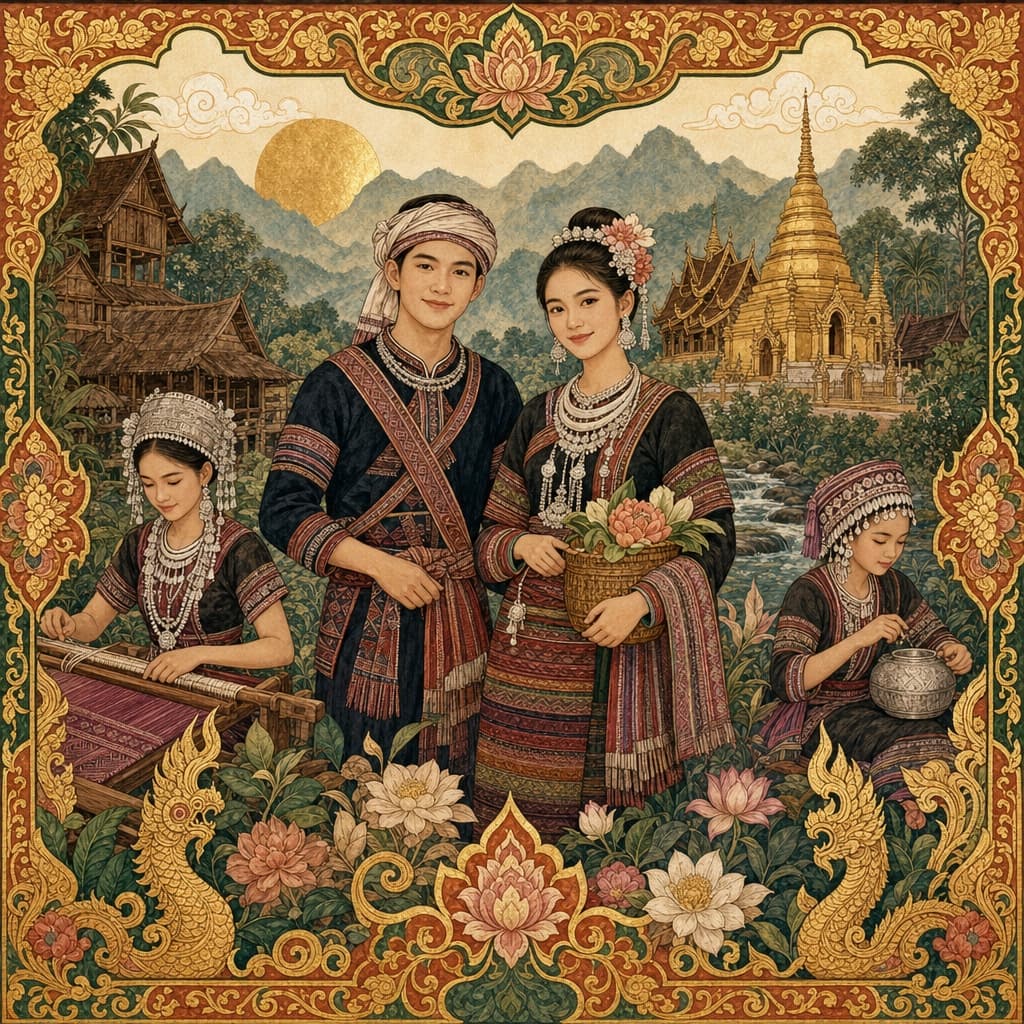
The Hmong trace their roots to the Yellow River region of China and speak a Hmong-Mien language; they are famous for vivid batik and embroidery. The Mien, or Yao, are their linguistic cousins, recognisable by red-collared jackets, turbans and fine silver. The Akha, who migrated from Yunnan in the last century, speak a Loloish tongue and are celebrated for elaborate beaded and silver headdresses — and, increasingly, for the highland coffee they grow. The Lahu and Lisu, both with Tibetan and Yunnanese origins, round out the picture: the Lahu in black and red jackets, the Lisu in bright multi-coloured tunics. Most now speak Thai alongside their own languages, and many farm the high slopes — rice, vegetables and, more and more, the arabica that fills the cafés around town.
Visiting with respect
The most important thing to understand before you go is the difference between meeting people and consuming them. The staged "long-neck villages" near Mae Hong Son and on day-trip circuits are the clearest cautionary tale. Many are fenced compounds with an entry fee, where Kayan women — refugees from Myanmar's long civil war — are effectively required to wear their brass coils and full traditional dress to keep their right to stay and earn. Human-rights observers have called them "human zoos", and the women themselves have described the shame of being photographed like animals. The revenue rarely reaches them fairly. Whatever the brochures promise, this is not a cultural exchange; it is display, and we'd ask you to skip it.
There are far better ways to meet highland communities. Choose community-based and fair-trade tourism, where villagers design and lead the experience and keep the income — homestays, craft workshops, guided walks. Pick ethical trekking operators who work with a village rather than parading through it; our notes on hiking and trekking around Chiang Mai can help you tell them apart, and the same instincts that guide our advice on seeing elephants ethically apply here. The quiet hills around Chiang Dao, or the cool highland slopes of Doi Ang Khang near the Myanmar border, hold communities living ordinary, unstaged lives.
The etiquette is simple and human. Ask before you photograph anyone, and accept no for an answer. Dress modestly, as you would visiting any home or temple. Learn a word or two of greeting — even a little Thai goes a long way, and the broader points in our guide to Thai etiquette for visitors hold in the highlands too. And buy directly from the maker.
How to support them
Money spent well does real good. Buy textiles, embroidery and silver from the people who made them, not from middlemen down in the city. Seek out Akha-grown and other highland coffee — some of the best beans in Thailand come from these slopes, and fair-trade roasters share the price properly with the farmers. It's worth knowing, too, that many of these communities remain stateless: hill-tribe people make up the bulk of Thailand's stateless population, often through border changes and tightened nationality laws rather than any choice of their own, which shuts them out of healthcare and schooling. Recent reforms have begun to speed up citizenship, but the struggle is far from over.
These highlands have been home to many peoples far longer than any modern border, woven into the older story of the Lanna kingdom. Go gently, listen more than you photograph, and let the people you meet remain the authors of their own lives.
Frequently asked questions
Who are the hill tribes of northern Thailand?
They are highland communities and ethnic minority peoples who arrived over centuries, each with their own language, dress, faith and story. The main groups are the Karen, Hmong, Mien (Yao), Akha, Lahu and Lisu. We prefer to think of them as neighbours rather than attractions, and to name them as they name themselves.
Why do you advise skipping the 'long-neck' villages?
The staged long-neck villages near Mae Hong Son are often fenced compounds with an entry fee, where Kayan women, refugees from Myanmar's long civil war, are effectively required to wear their brass coils to keep their right to stay and earn. Human-rights observers have called them human zoos, and the revenue rarely reaches the women fairly. We see it as display rather than cultural exchange, so we'd ask you to skip it.
What is a respectful way to meet highland communities?
Choose community-based and fair-trade tourism, where villagers design and lead the experience and keep the income, such as homestays, craft workshops and guided walks. Pick ethical trekking operators who work with a village rather than parading through it. The quiet hills around Chiang Dao and the slopes of Doi Ang Khang hold communities living ordinary, unstaged lives.
What is the basic etiquette when visiting?
Ask before you photograph anyone, and accept no for an answer. Dress modestly as you would visiting any home or temple, learn a word or two of greeting, and buy directly from the maker. The etiquette is simple and human.
How can I genuinely support these communities?
Buy textiles, embroidery and silver directly from the people who made them rather than from middlemen in the city, and seek out Akha-grown and other highland coffee from fair-trade roasters. Money spent well does real good and shares the price properly with the farmers.
Is it true many hill-tribe people are stateless?
Yes. Hill-tribe people make up the bulk of Thailand's stateless population, often through border changes and tightened nationality laws rather than any choice of their own, which can shut them out of healthcare and schooling. Recent reforms have begun to speed up citizenship, but the struggle is far from over.