Food & coffee · June 21, 2026
The best specialty coffee around Nimman
By The Ada House team
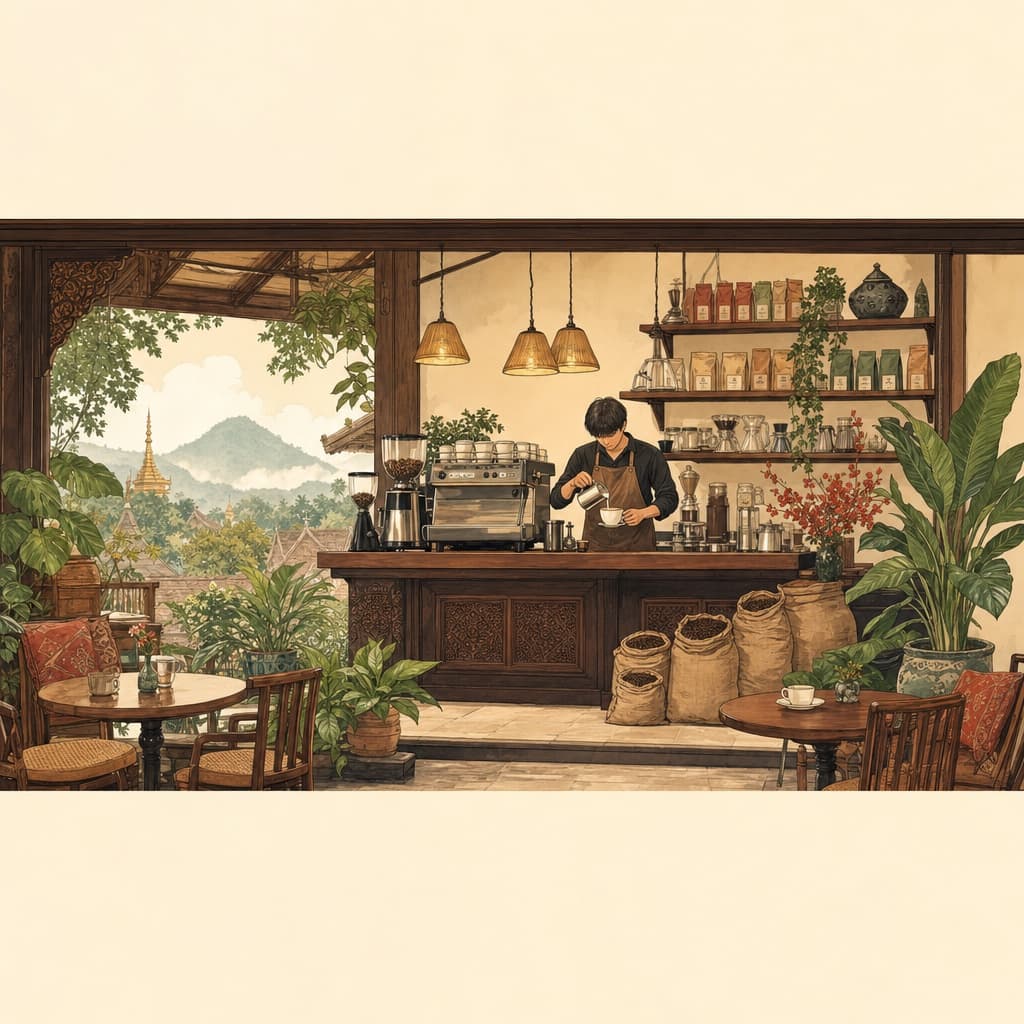
Here's something that surprises a lot of guests: Chiang Mai is one of the best coffee cities in Asia. Not "good for Thailand" — genuinely good. The mountains all around grow excellent Arabica, the city is packed with small roasters, and the famous café cluster in Nimman is a short hop south. If you're here for a while, you're going to drink a lot of very good coffee. Let us point you at the best of it — starting with the one right outside our door.
Start on your doorstep
Before you go anywhere, walk two minutes up the road to Street Coffee Crew. It's a small, laid-back spot with proper street style — a DJ on the decks, vinyl on the walls, good music and genuinely good, fair-priced coffee (think 50–100 THB). It's a daytime place, open from the morning, and it's the easiest, friendliest first cup of your whole stay. We send guests there constantly; you'll probably end up a regular.
Why the coffee's so good here
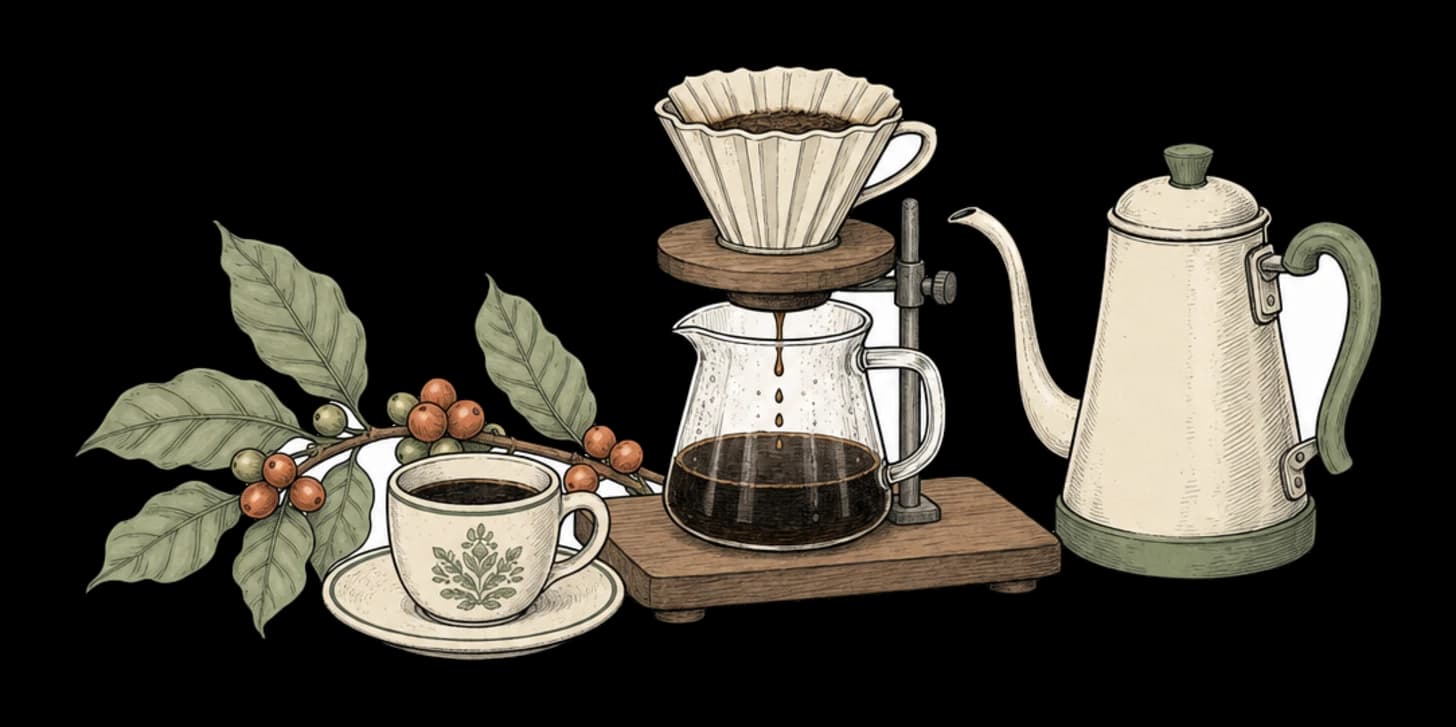
The short version: altitude and hills. Just north and east of the city, farms at 1,000–1,800 m grow specialty-grade Arabica — names you'll see on menus like Doi Chang, Doi Saket and Doi Tung. Much of it traces back to royal projects that helped highland communities swap opium for coffee decades ago, and to social enterprises like Akha Ama, which works directly with Akha hill-tribe farmers. So when you order a single-origin pour-over here, it probably grew on a mountain you can almost see. Ask for a Doi Chang or Doi Saket filter at any serious roaster — it's the taste of the region, unmasked by milk.
For the coffee itself
When you're ready to go deeper, head to Nimman, where a few places have earned their reputation:
- Ristr8to — the icon. The owner is a world latte-art champion, and there's a whole menu of espresso-to-milk ratios. Order a flat white and watch the pour; it's a little show.
- Graph (One Nimman) — playful, experimental drinks: coffee tonics, citrus and herb infusions, things that read more like cocktails. Get a signature creation, not a plain latte.
- Akha Ama — the one to visit for the story as much as the cup: hill-tribe single origins, direct trade, clear provenance.
For a work morning
When you want a change of scene from the coworking room at the house, Nimman is full of laptop-friendly spots:
- Rustic & Blue (Nimman Soi 7) — relaxed garden seating, brunch and good espresso, long a favourite of the nomad crowd.
- The Barn (near the university) — leafy, social, popular with students for long study sessions.
- The Sirimangkalajarn sois just off Nimman are wall-to-wall work cafés.
One honest heads-up: the scene moves fast, and a lot of cafés now post 2-hour laptop limits or "no laptops" during the busy mid-morning stretch. Don't take it personally — buy a second coffee, or come a little earlier. And because places open, move and close constantly here, it's always worth a quick glance at a café's socials before you make the trip.
How to order (and what it costs)
Specialty coffee here is a bargain by Western standards: a latte or flat white runs about 80–120 THB, and a single-origin pour-over 90–150 THB. If you're new to the nerdier end of it, two phrases get you a long way: "single origin, please" (beans from one farm, so you taste the place) and "what's on the slow bar today?" (whatever they're hand-brewing). Baristas here genuinely love talking you through it.
So pace yourself — that's weeks of cafés to work through. Grab a flat white at Street Coffee Crew to wake up, then point the scooter at a weekend up Doi Suthep when the caffeine kicks in. And if it's a Saturday or Sunday, swing by Jing Jai Market, where some of the city's best small roasters set up stalls in the loveliest weekend-morning setting in town. We'll see you in the garden after.
Frequently asked questions
Where should I get my first coffee?
Walk two minutes up the road to Street Coffee Crew, a small, laid-back spot with proper street style — a DJ on the decks, vinyl on the walls and genuinely good, fair-priced coffee at around 50 to 100 THB. It's a daytime place open from the morning, and it's the easiest, friendliest first cup of your whole stay. We send guests there constantly.
Why is the coffee in Chiang Mai so good?
It comes down to altitude and hills. Just north and east of the city, farms at 1,000 to 1,800 m grow specialty-grade Arabica — names you'll see on menus like Doi Chang, Doi Saket and Doi Tung. Much of it traces back to royal projects and social enterprises like Akha Ama, which works directly with Akha hill-tribe farmers.
Which cafés are best for the coffee itself?
Head to Nimman for the icons. Ristr8to is run by a world latte-art champion and has a whole menu of espresso-to-milk ratios. Graph at One Nimman does playful, experimental drinks that read more like cocktails, while Akha Ama is the one to visit for the story — hill-tribe single origins with clear provenance.
How much does specialty coffee cost?
It's a bargain by Western standards: a latte or flat white runs about 80 to 120 THB, and a single-origin pour-over 90 to 150 THB. If you're new to the nerdier end, two phrases get you a long way — single origin, please, and what's on the slow bar today? Baristas here genuinely love talking you through it.
Are the cafés laptop-friendly for working?
Nimman is full of laptop-friendly spots — Rustic & Blue on Soi 7 has relaxed garden seating and brunch, The Barn near the university is leafy and social, and the Sirimangkalajarn sois are wall-to-wall work cafés. One honest heads-up: many cafés now post 2-hour laptop limits or no-laptops rules during the busy mid-morning stretch, so buy a second coffee or come a little earlier.
What should I order to taste the local beans?
Ask for a Doi Chang or Doi Saket filter at any serious roaster — it's the taste of the region, unmasked by milk. A single-origin pour-over likely grew on a mountain you can almost see. On a Saturday or Sunday, swing by Jing Jai Market, where some of the city's best small roasters set up stalls.