Things to do · June 17, 2026
A weekend at Doi Suthep
By The Ada House team
There's a moment, on a clear morning, when you can stand on the terrace at Doi Suthep and pick out the whole city laid below you — the old square, the airport runway, the green sprawl all the way to the hills. It's the kind of view that makes you stop talking for a minute. And the best part? It's barely half an hour from your room.
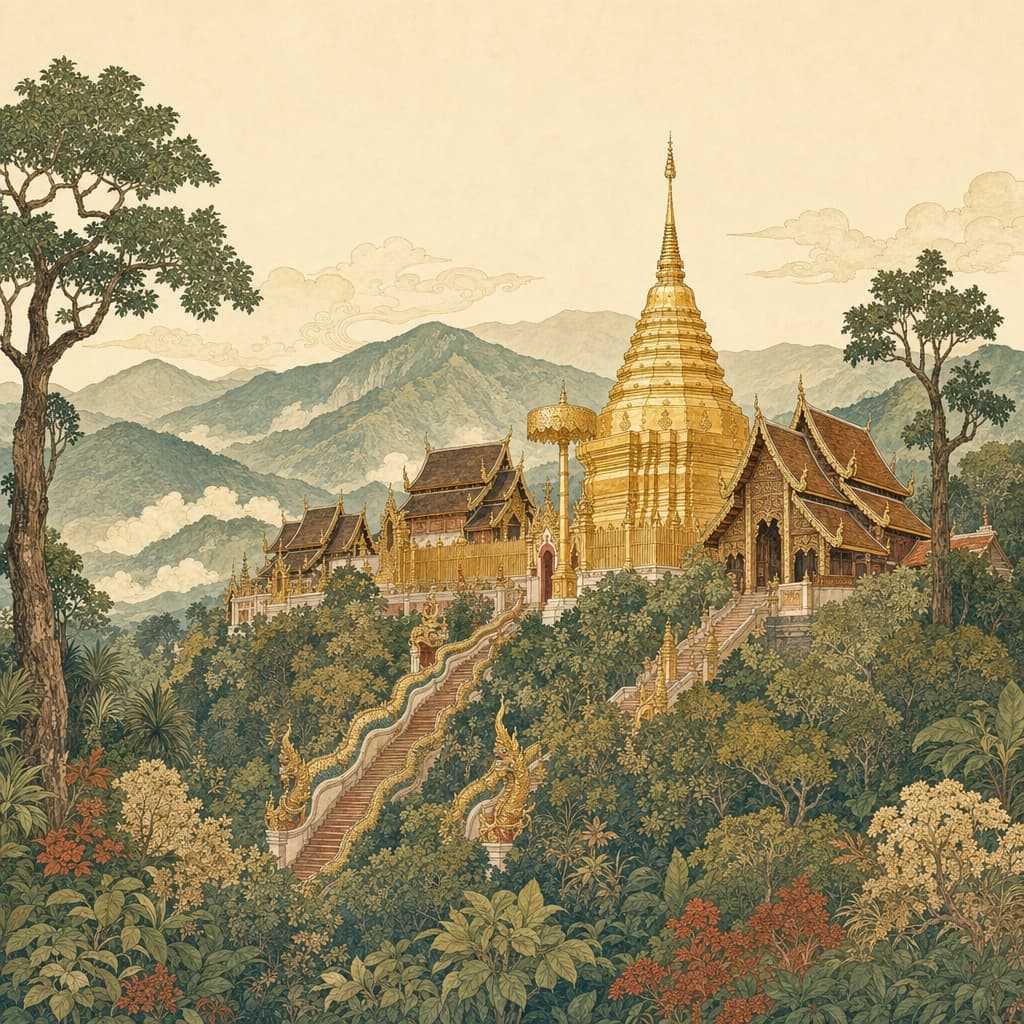
Wat Phra That Doi Suthep is the temple that watches over Chiang Mai, perched on the mountain to the west. Legend says a white elephant carrying a holy relic climbed the slope, trumpeted three times, and lay down right here — so this is where they built the temple, back in 1383. Locals will tell you that you haven't really visited Chiang Mai until you've been up. We agree. Here's how we'd spend the morning.
Getting up the mountain
The road up is a beautiful, winding climb through forest, and you've got a few ways to do it:
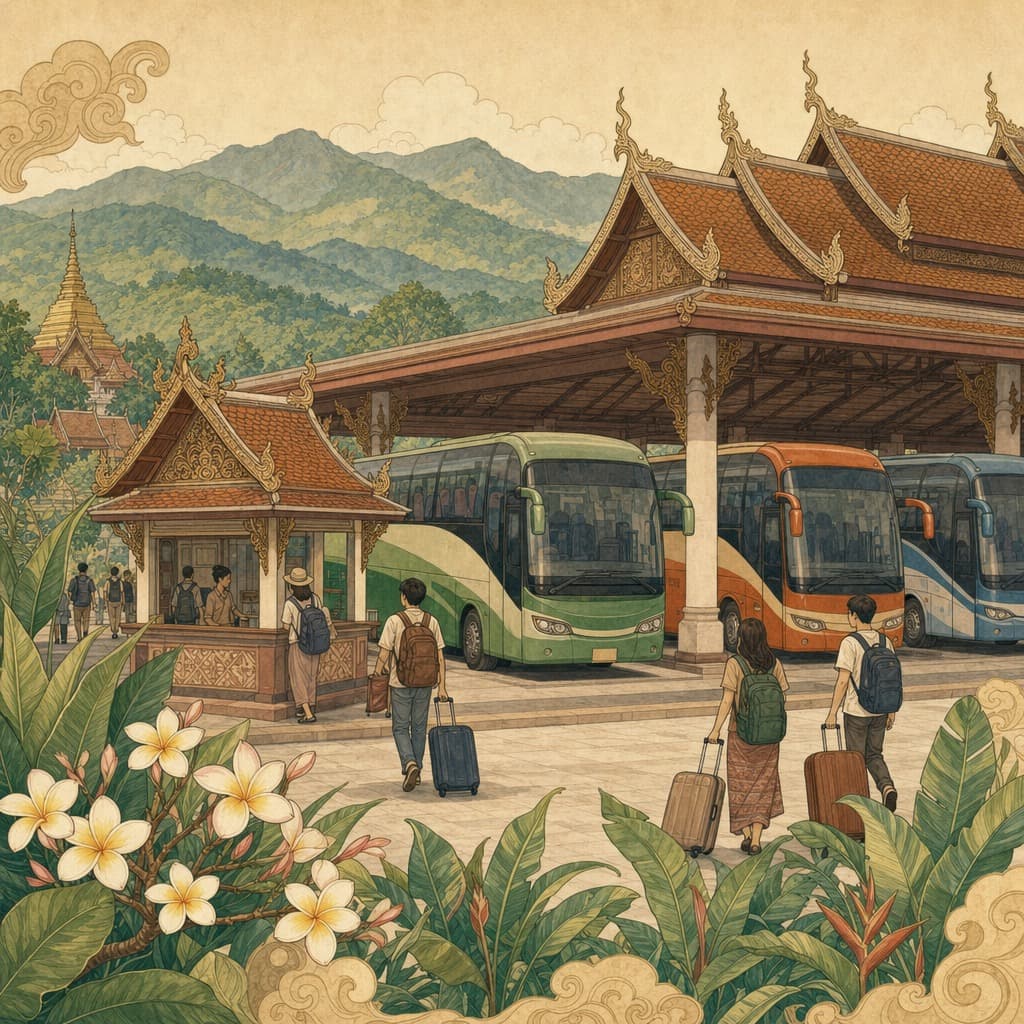
- Red songthaew (the shared red trucks): the classic option. Expect around 50–60 THB per person each way if you share, a little more if the truck isn't full. You'll find them near the zoo at the foot of the mountain, or you can flag one in town and agree a price first.
- Grab or a private car: easiest if there are a few of you — roughly 700–1,000 THB for a half-day with stops. Comfortable, and the driver waits for you.
- Scooter: the most fun if you're confident on two wheels (100–300 THB/day to rent). The bends are smooth but steady — take it slow and enjoy the trees.
A little tip from us: leave early. Go up for 8 or 9 in the morning and you'll beat both the heat and the tour buses, and the light on the chedi is at its softest.
The climb, and what to wear
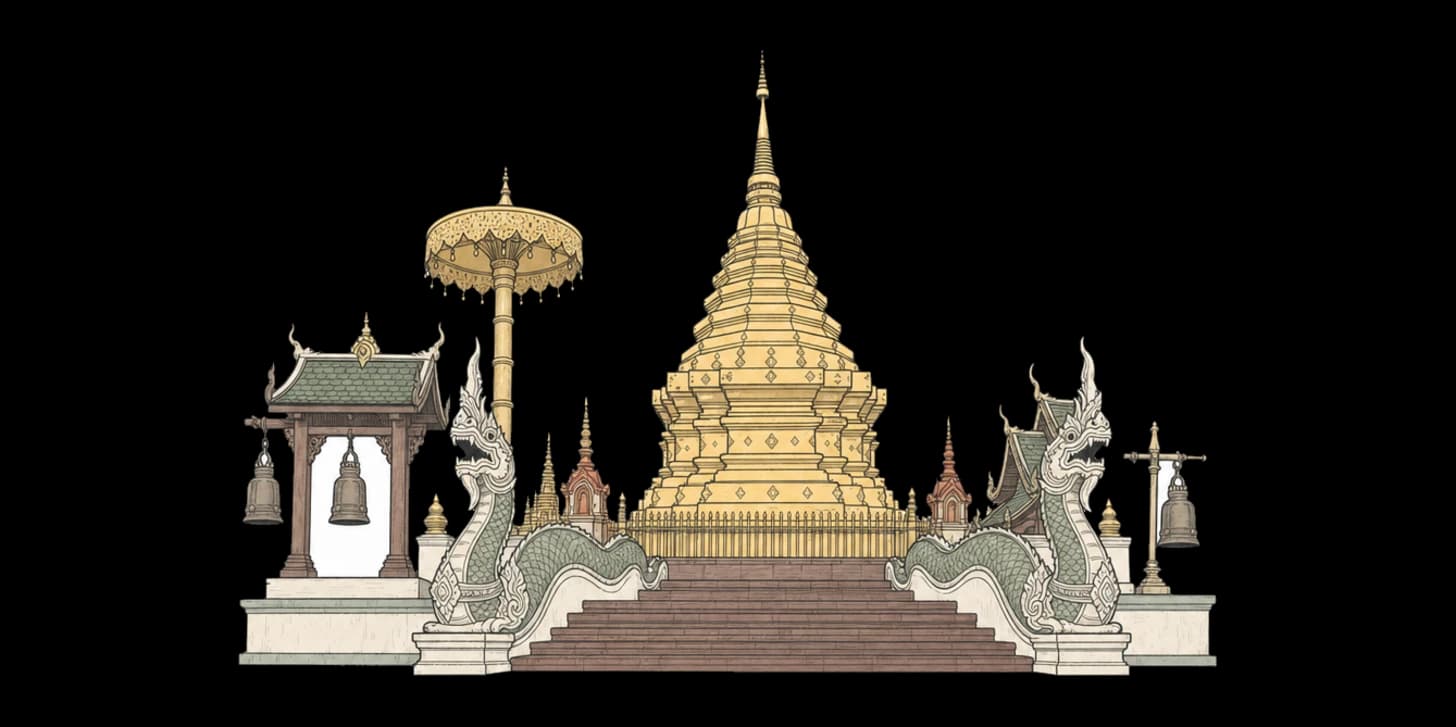
At the top you've got a choice: the famous naga staircase — about 306 steps flanked by long, scaly serpent balustrades — or the little cable car beside it (around 50 THB) if knees aren't cooperating. Honestly, the stairs are part of the ritual, and they're over before you know it.
One thing worth knowing before you go: it's an active, sacred temple, so cover your shoulders and knees — no vests or short shorts. If you forget, there are wraps for sale at the bottom for a few baht. You'll slip your shoes off before stepping onto the inner terrace around the chedi. Entrance for visitors is a modest 30 THB.
At the top
The heart of it is the golden chedi, glinting in the sun and circled all day by people walking clockwise, often with a lotus and a candle in hand. Take your time — find the viewing terrace for that city panorama, run your hand along the row of bronze bells (giving them a gentle ring is said to bring good luck), and just sit for a while in the quiet of the prayer halls. Mornings often have monks chanting, and you can receive a blessing and a white string bracelet if you'd like one.
Make a morning of it
If you've got the energy, the same road carries on higher to a couple more stops worth combining:
- Bhubing Palace, the royal winter residence, with cool, manicured gardens (do check it's open the day you go — it closes for official visits). It's a working royal property, so a quick read of how to show respect for the Thai monarchy before you visit won't go amiss.
- Doi Pui, a Hmong village further up, with viewpoints, little gardens, and locally grown coffee to round things off.
Then it's back down the mountain for a late lunch in town. By early afternoon you'll be home with your feet up, a bit of temple calm still with you, and a phone full of photos you'll actually keep.
A small reminder: prices on the mountain shift with the season and the price of fuel, so treat our numbers as friendly ballparks rather than gospel — and always agree a songthaew fare before you climb in.
Doi Suthep is one of those rare things that's both a postcard sight and genuinely moving when you're standing in it. Go early, go slowly, and let it set the tone for the rest of your week with us.
Frequently asked questions
How do I get up the mountain?
You have a few options. Shared red songthaews are the classic choice at around 50 to 60 baht per person each way, a Grab or private car runs roughly 700 to 1,000 baht for a half-day with stops, and renting a scooter costs about 100 to 300 baht a day if you are confident on the bends. Always agree a songthaew fare before you climb in.
When is the best time to go?
Leave early. Heading up for 8 or 9 in the morning lets you beat both the heat and the tour buses, and the light on the golden chedi is at its softest. The temple is barely half an hour from the house, so it makes an easy, unforgettable morning.
Do I have to climb the famous staircase?
Not if your knees would rather not. At the top you can take the naga staircase of about 306 steps flanked by serpent balustrades, or use the little cable car beside it for around 50 baht. The stairs are part of the ritual and over before you know it, but the cable car is there if you need it.
What does it cost to enter, and is there a dress code?
Entrance for visitors is a modest 30 baht. As it is an active, sacred temple, cover your shoulders and knees, with no vests or short shorts; if you forget, wraps are sold at the bottom for a few baht. You will also slip your shoes off before stepping onto the inner terrace around the chedi.
Can I combine Doi Suthep with anything else?
Yes. The same road carries on higher to Bhubing Palace, the royal winter residence with cool manicured gardens, and to Doi Pui, a Hmong village with viewpoints, little gardens and locally grown coffee. Do check Bhubing Palace is open the day you go, as it closes for official visits, then head back down for a late lunch in town.
Are the prices you quote fixed?
Treat our numbers as friendly ballparks rather than gospel. Prices on the mountain shift with the season and the price of fuel, so always agree a songthaew fare before you climb in and carry a little cash for entry and the cable car.