Local culture · June 24, 2026
Lanna handicrafts: meaningful Chiang Mai souvenirs
By The Ada House team
Chiang Mai was a craft capital of the Lanna kingdom, and seven centuries later it still is. That matters when you're shopping, because the souvenirs here can actually mean something — a parasol painted by hand, a bowl of silver hammered out by a smith you watched at work. You just need to know what the region makes, and where to find the real thing.
The crafts worth knowing
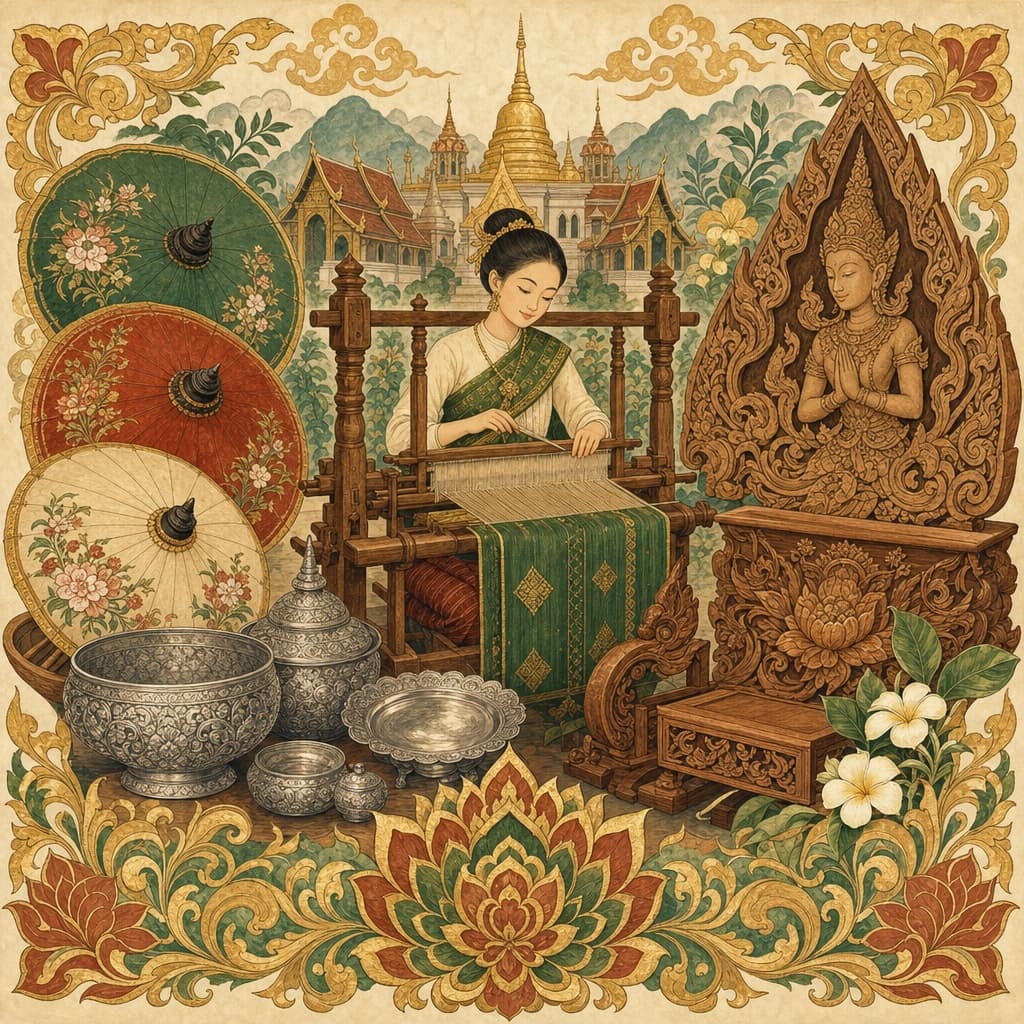
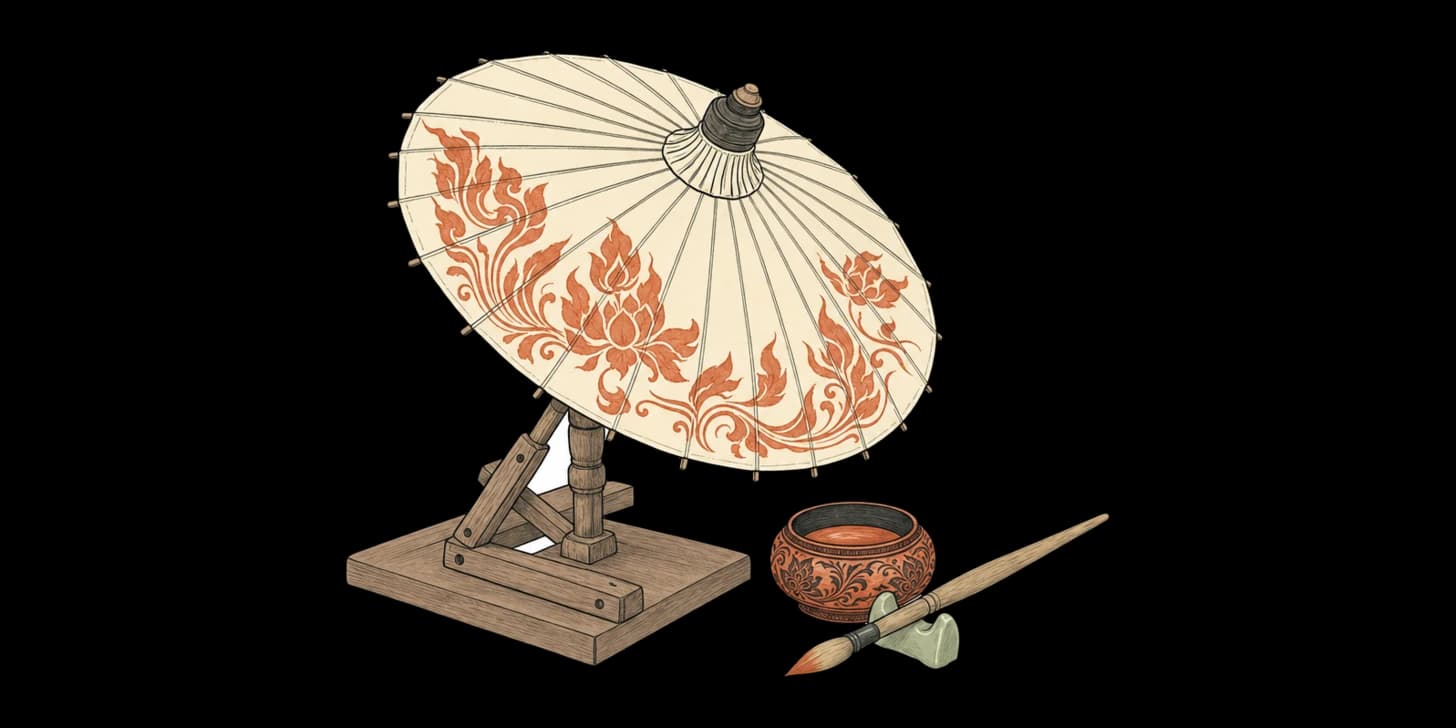
Start with the most photographed: the Bo Sang umbrella. In Bo Sang village, on the San Kamphaeng "handicraft highway" east of the city, families have made hand-painted paper and silk parasols for over a century, ever since a wandering monk brought the technique back from Burma. The frames are split bamboo, the canopy is sa (mulberry) paper, and the flowers and birds are brushed on by hand — you can watch a painter add a peacock to your bag or your camera for a few baht. If you're here in the third week of January, the Bo Sang Umbrella Festival turns the whole village into a riot of colour.
Then there's silver. Wualai Road, just south of the old city wall, has been the silversmiths' quarter since King Kawila resettled Burmese-Shan craftsmen here around 1800. The signature work is repoussé — bowls and panels hammered into relief from behind — and you'll still hear the tapping from open workshops. San Kamphaeng is the place for handwoven silk and cotton, sold by the metre or made up into scarves and cushion covers. Out in Hang Dong, the woodcarving village of Ban Tawai is street after street of carved teak, from teaspoons to temple doors. Add celadon — that pale jade-green stoneware with its fine crackle glaze — plus glossy layered lacquerware and the indigo-dyed, cross-stitched hill-tribe textiles of the Hmong, Karen and Lahu, and you have a region that genuinely still makes things.
Where to buy, and from whom
The easy answer is the Walking Streets. The Saturday Walking Street runs right down Wualai Road, so you're buying silver in the silversmiths' own neighbourhood, often from the maker's stall. The Sunday street through the old city is bigger and broader — umbrellas, paper lamps, woodwork, textiles — and doubles as one of the city's best night markets for a wander with a snack in hand.
For the makers themselves, drive the San Kamphaeng road: Bo Sang for umbrellas, the weaving and celadon workshops strung along the highway, Ban Tawai for wood. Many let you watch production, and prices at source are usually kinder than in town. It pairs naturally with a soak at the San Kamphaeng hot springs at the end of the road. Back in the city, Warorot Market (Kad Luang) is the unglamorous, brilliant option — a century-old market where bolts of hill-tribe textile and Hmong fabric remnants sell for a fraction of tourist-strip prices. And if you want your money to reach the village directly, fair-trade shops like Thai Tribal Crafts label each piece with the community that made it. For ceramics in particular, it's worth a day trip to Lampang for its famous rooster bowls, horse carts and teak temples — the painted chicken bowl is one of Northern Thailand's most recognisable pieces of pottery.
Buying well
A few honest tips. Handmade has small imperfections — a slightly uneven weave, a brush line that wobbles, a hammer mark — while mass-produced pieces are flawless and identical down the shelf. For silver, look for a "925" stamp on sterling; much of the cheap "silver" is alpaca alloy, which is fine if you know that's what you're paying for. Real celadon has that faint glaze crackle and a satisfying weight. And sa paper should feel fibrous and slightly irregular, never plasticky.
On price, expect roughly 150–400 THB for a small painted umbrella, a few hundred for a decent silk scarf, and more for serious silver or carved teak. Gentle bargaining is normal at markets and villages — ask the price, offer a little under, settle somewhere in the middle, and keep it friendly. A smile does most of the work; pushing hard for the last twenty baht reads as rude, and our etiquette guide is worth a glance before you start. Food and fixed-price fair-trade shops aren't haggled.
Whatever you carry home — a parasol, a hammered cup, a length of indigo cotton — you'll have something made by a pair of hands in this valley, not a factory across the world. That's the souvenir worth the suitcase space.
Frequently asked questions
What is a Bo Sang umbrella?
It is the most photographed Lanna craft: a hand-painted paper or silk parasol from Bo Sang village on the San Kamphaeng handicraft highway east of the city. The frames are split bamboo, the canopy is sa (mulberry) paper, and the flowers and birds are brushed on by hand. You can watch a painter add a peacock to your bag or camera for a few baht, and the Bo Sang Umbrella Festival fills the village with colour in the third week of January.
Where is the silversmiths' quarter?
Wualai Road, just south of the old city wall, has been the silversmiths' quarter since King Kawila resettled Burmese-Shan craftsmen here around 1800. The signature work is repousse, bowls and panels hammered into relief from behind, and you will still hear the tapping from open workshops. The Saturday Walking Street runs right down Wualai Road, so you can buy silver in the makers' own neighbourhood.
Where is the best place to buy from the makers themselves?
Drive the San Kamphaeng road: Bo Sang for umbrellas, weaving and celadon workshops strung along the highway, and Ban Tawai in Hang Dong for carved teak. Many places let you watch production, and prices at source are usually kinder than in town. Back in the city, Warorot Market (Kad Luang) is the unglamorous, brilliant option for textiles at a fraction of tourist-strip prices.
How can I tell genuine handmade from mass-produced?
Handmade pieces have small imperfections, such as a slightly uneven weave, a wobbling brush line or a hammer mark, while mass-produced pieces are flawless and identical down the shelf. For silver, look for a 925 stamp on sterling, since much of the cheap silver is alpaca alloy. Real celadon has a faint glaze crackle and a satisfying weight, and sa paper should feel fibrous and slightly irregular, never plasticky.
What should I expect to pay, and is bargaining okay?
Expect roughly 150 to 400 THB for a small painted umbrella, a few hundred for a decent silk scarf, and more for serious silver or carved teak. Gentle bargaining is normal at markets and villages: ask the price, offer a little under, and settle somewhere in the middle while keeping it friendly. Food and fixed-price fair-trade shops are not haggled.