Things to do · June 25, 2026
Lampang day trip: horse carts, teak temples and chicken bowls
By The Ada House team
Some days you want to leave the city without really leaving the north. Lampang sits about 100 km south-east of Chiang Mai, close enough for a long day out, calm enough to feel like a different decade. It is the rare place in Thailand where a horse cart might still pass you on the street, and almost nobody seems to be in a hurry.
The city of horse carts
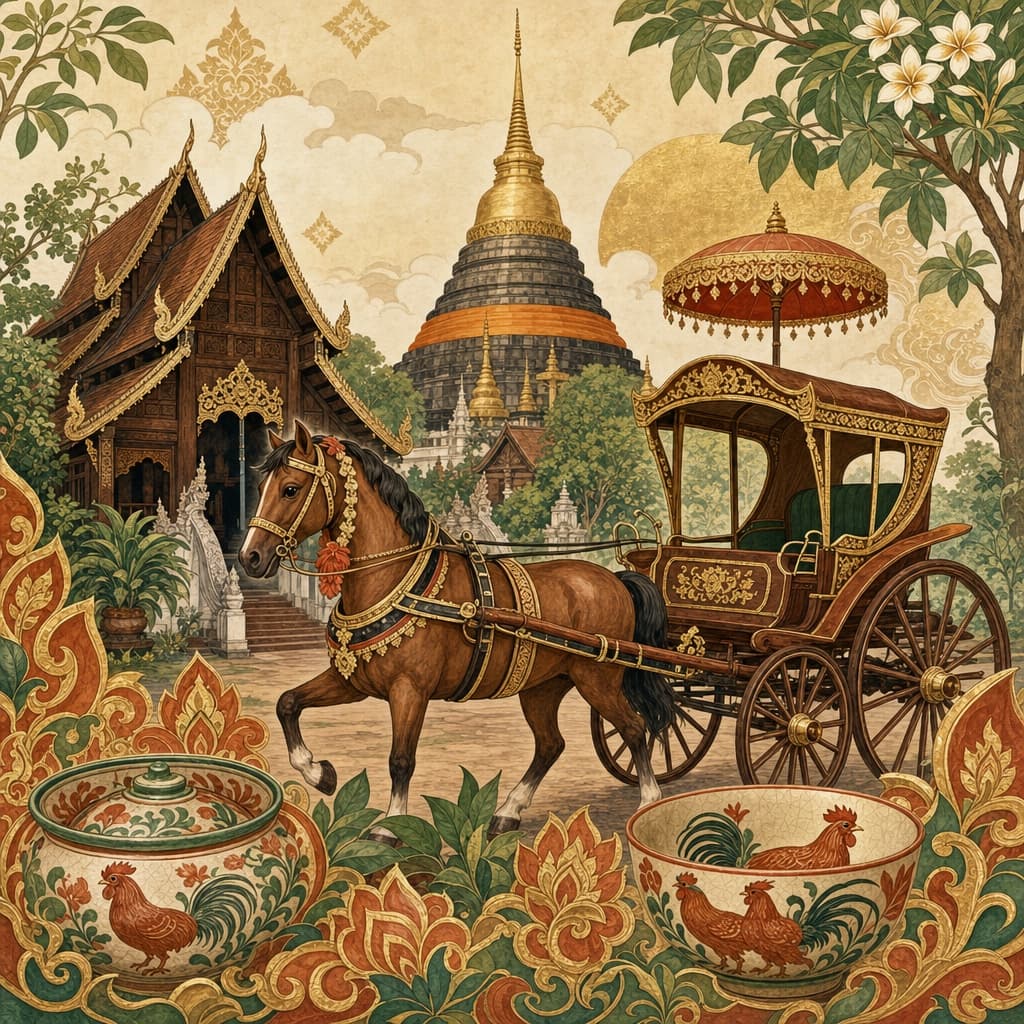
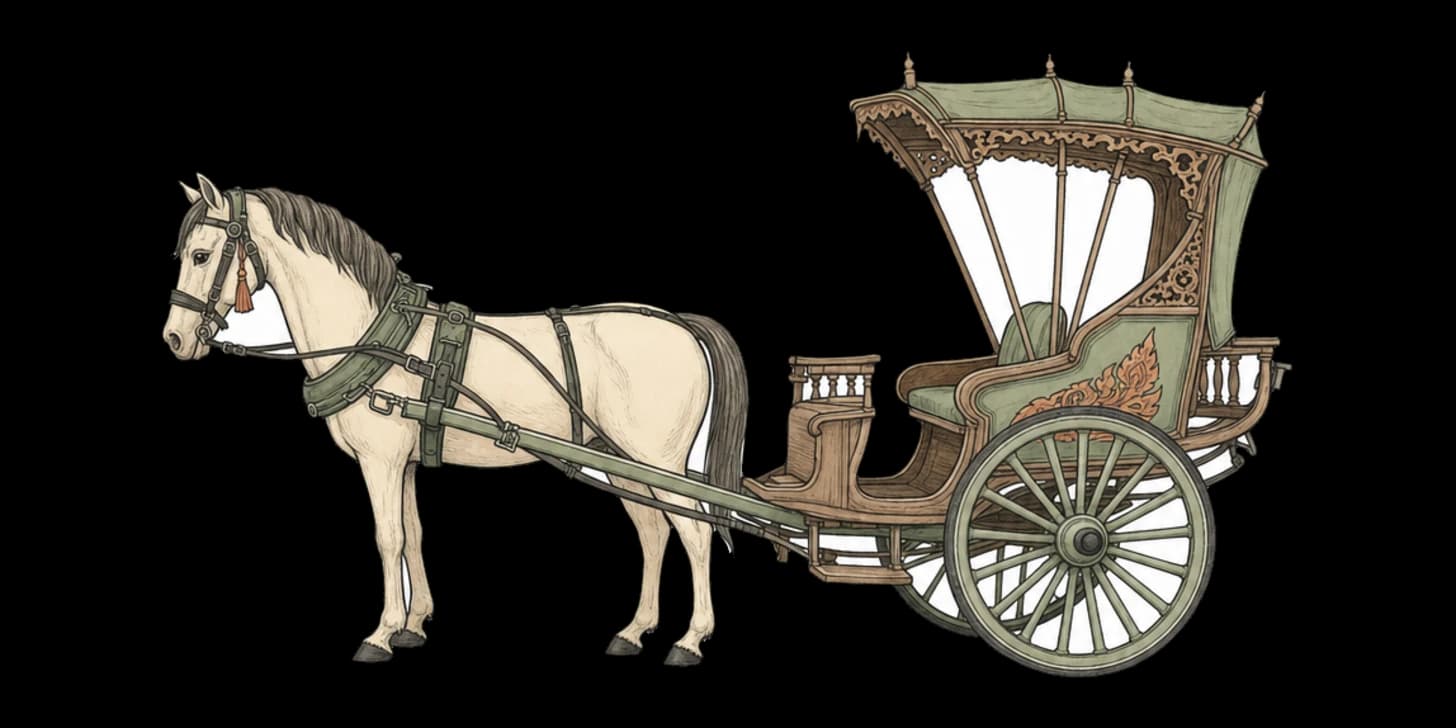
Lampang's nickname is mueang rot ma — "the horse-carriage city" — and it earned it honestly. The first carriages arrived in 1916, brought by teak merchants from neighbouring Burma at the same moment the railway reached town. Most northern cities eventually let them go; Lampang never quite did, and it remains the last place in Thailand where horse carts (rot ma) still clip-clop along as part of everyday life.
Today around a hundred of them work the streets, the drivers in cowboy hats, the harnesses jingling. A loop along the Wang River and past the old temples is touristy in the gentlest way — more local ritual than theme-park ride. Hear the hooves on the tarmac and you understand why people call Lampang unhurried; the whole town seems to keep that pace. It's a different rhythm entirely from the scooters and songthaews you get used to when getting around Chiang Mai.
Wat Phra That Lampang Luang
If you do only one thing here, make it this. Wat Phra That Lampang Luang stands about 15 km outside town, a fortified hilltop compound ringed by thick brick walls — a wiang, built for defence as much as worship. Climb the central staircase and you step into one of the most beautiful and best-preserved wooden Lanna temples in the north.
The open-sided Viharn Luang, with its triple-tiered roof, dates to the fifteenth century and shelters timber that has darkened to honey and char over the centuries. Behind it, a gilded chedi rises some 45 metres. There's history in the brickwork too: in the early 1700s the temple was held by Burmese occupiers before local fighters retook it. To stand here is to feel the weight of the Lanna kingdom in a way few sites manage — well worth reading up on the Lanna kingdom history before you go, and a fine companion to the old city temples of Chiang Mai.
Old teak houses and the chicken bowl
Back in town, wander Talat Gao (the Old Market street, also called Kad Kong Ta) along the riverbank. A century ago Thai, Burmese, Chinese and British traders raised shophouses here in a happy muddle of styles, and many of the old teak homes still stand — lacy "gingerbread" fretwork, shuttered windows, slow afternoons. Come on a weekend evening and the lane fills with a relaxed walking-street market.
Then there's the clay. Lampang is Thailand's pottery capital, home to more than two thousand ceramic workshops, and its emblem is the humble chicken bowl (gai chon) — a white bowl hand-painted with a rooster, a peony and a banana leaf. Chinese artisans brought the craft north in the late 1950s, drawn by the local kaolin clay, and you'll spot the design in noodle shops across the country once you know it. Factory outlets and the small Dhanabadee Ceramic Museum make a satisfying stop; a stack of bowls is the kind of souvenir you'll actually use, and a natural extension of the Lanna handicrafts you'll have admired closer to home — see our guide to Lanna handicrafts in Chiang Mai.
Getting there, and whether to stay the night
The loveliest way in is the train. Lampang is a scenic stop on the northern line, the morning express covering the run in around two hours through hills and rice fields — book a seat at the Chiang Mai train station and let the scenery do the work. Buses and minivans leave roughly every couple of hours and take about ninety minutes; driving yourself is straightforward too.
You can do Lampang as a long day. But the town rewards lingering — an evening on a quiet teak balcony, a slow morning before the heat — so consider an overnight. Either way, you'll come home a little calmer than you left.
Safe travels, and say hello to the horses for us.
— The Ada House team
Frequently asked questions
How far is Lampang from Chiang Mai and how do I get there?
Lampang sits about 100 km south-east of Chiang Mai, close enough for a long day out. The loveliest way in is the train, with the morning express covering the run in around two hours through hills and rice fields. Buses and minivans leave roughly every couple of hours and take about ninety minutes, and driving yourself is straightforward too.
What is Lampang best known for?
Its nickname is mueang rot ma, the horse-carriage city, and it is the last place in Thailand where horse carts still clip-clop along as part of everyday life. The first carriages arrived in 1916, brought by teak merchants from neighbouring Burma, and today around a hundred of them work the streets. A loop along the Wang River past the old temples is touristy in the gentlest way.
What is the one sight I should not miss?
If you do only one thing, make it Wat Phra That Lampang Luang, about 15 km outside town. It is a fortified hilltop compound ringed by thick brick walls and one of the most beautiful and best-preserved wooden Lanna temples in the north. The open-sided Viharn Luang dates to the fifteenth century, and behind it a gilded chedi rises some 45 metres.
What can I buy or bring home from Lampang?
Lampang is Thailand's pottery capital, home to more than two thousand ceramic workshops, and its emblem is the humble chicken bowl, a white bowl hand-painted with a rooster, a peony and a banana leaf. Factory outlets and the small Dhanabadee Ceramic Museum make a satisfying stop, and a stack of bowls is the kind of souvenir you will actually use.
Can I do Lampang as a day trip or should I stay over?
You can do Lampang as a long day. But the town rewards lingering, with an evening on a quiet teak balcony and a slow morning before the heat, so consider an overnight. Either way, you will come home a little calmer than you left.