Local culture · June 25, 2026
Understanding Thai Buddhism: a gentle primer
By The Ada House team
You'll see it within hours of arriving: a monk in saffron robes, a tiny shrine wreathed in marigolds, someone pressing gold leaf onto a Buddha. None of it is staged for you. It's a living faith going about its morning — and once you understand a little of the belief beneath it, the whole city reads differently.
The faith of the country
Thailand is overwhelmingly Theravada Buddhist — the "teaching of the elders", considered the oldest surviving school and closest to how the Buddha is thought to have taught some 2,500 years ago. At its heart sits the Triple Gem, the three things a Buddhist takes refuge in: the Buddha (Siddhartha Gautama, the prince who gave up his palace to understand suffering), the Dhamma (his teachings, and the law of cause and effect), and the Sangha (the community of monks who carry it forward).
The thread running through all of it is karma. Actions ripple — kindness and cruelty alike shape what comes next, across this life and, Buddhists believe, future ones in a cycle of rebirth. The far horizon is the easing of suffering and, ultimately, release from that cycle altogether. You don't need to share the belief to feel its gentle logic: be good, and good tends to follow.
Making merit, every single day
Most of what you'll witness is making merit — tham bun — the everyday practice of doing good to nudge your karma kindly. It takes wonderfully tangible forms.
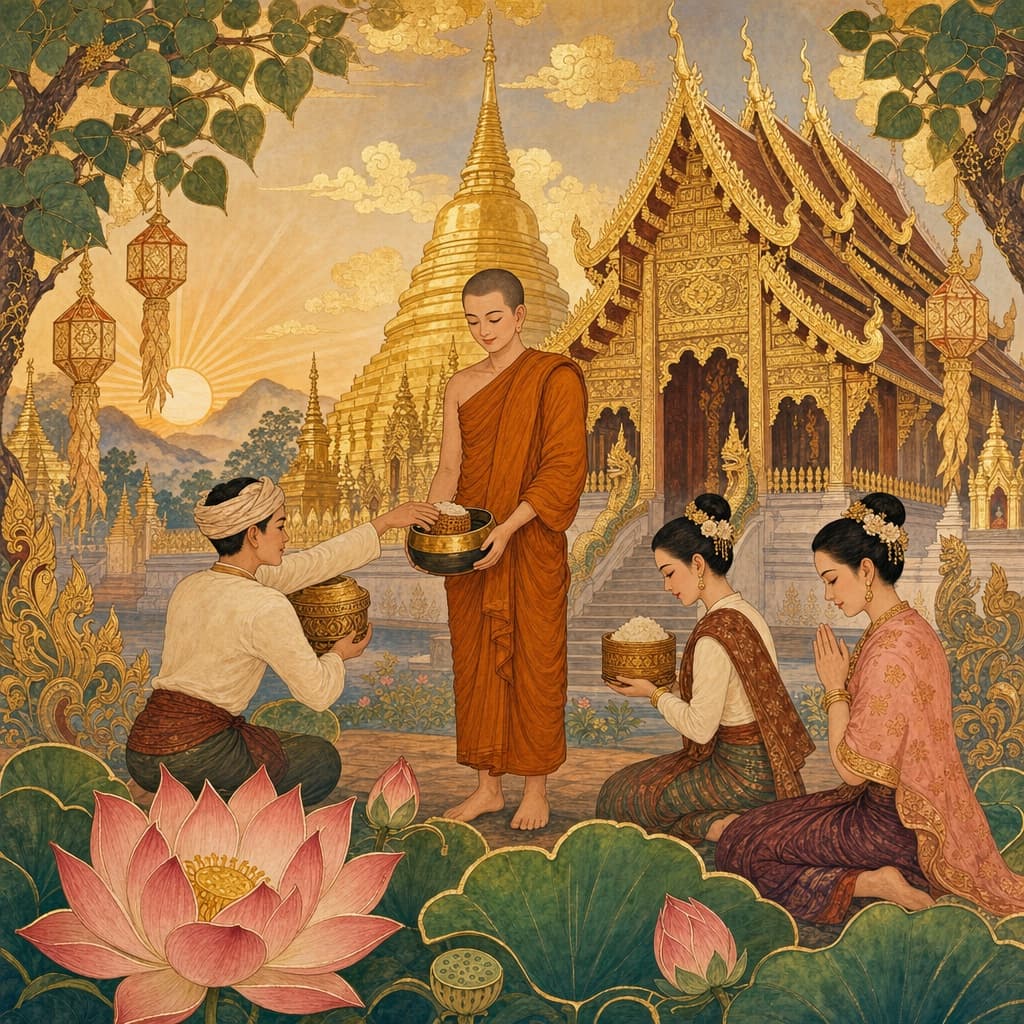
At dawn, monks walk barefoot through the streets on their alms round (tak bat), bowls in hand, eyes lowered. People kneel to offer rice, fruit and curries — not charity, but an exchange: the giver earns merit, the monk receives his only meal of the day. You'll also see Thais pressing fragile squares of gold leaf onto Buddha images, releasing caged birds or fish back to freedom, dropping coins in a donation box, or ringing a row of temple bells. Each is a small, hopeful act of generosity. If you wander the old city's temples, you'll catch all of it before breakfast.
The orange robes
Those monks are central, and the Sangha is woven through Thai life more than you might expect. Most Thai men ordain at least once — often briefly, sometimes for just a rainy season — wearing the saffron robes and living by a long set of monastic precepts: no harming life, no eating after midday, no money, simplicity in all things. It's seen as a profound gift of merit, especially to one's mother. A son in robes honours the family. If you're curious to ask a monk about any of this yourself, Chiang Mai's Monk Chat sessions exist for exactly that — relaxed, free, and genuinely welcoming.
Where the spirits come in
Here's the part that surprises newcomers. Buddhism in Thailand has never stood alone. It blends easily with older animism — the belief that spirits, phi, dwell in trees, rivers and land — and with Brahmanism inherited from India. That's why a devout Buddhist will also feed the spirit house in their garden, wear a sacred sak yant tattoo or a blessed amulet for protection, and consult an astrologer for an auspicious date. To a Thai mind there's no contradiction: Buddhism tends the soul's long journey, while the spirits handle the here and now. This layering runs deep into the region's Lanna heritage, the old northern kingdom whose own gods never fully left.
How it shapes the everyday
Spend time here and you'll feel the worldview more than you'll see it — in the unhurried calm, the reluctance to lose one's temper, the patience extended even to the city's stray dogs and cats. Compassion isn't a grand gesture; it's the water everything swims in.
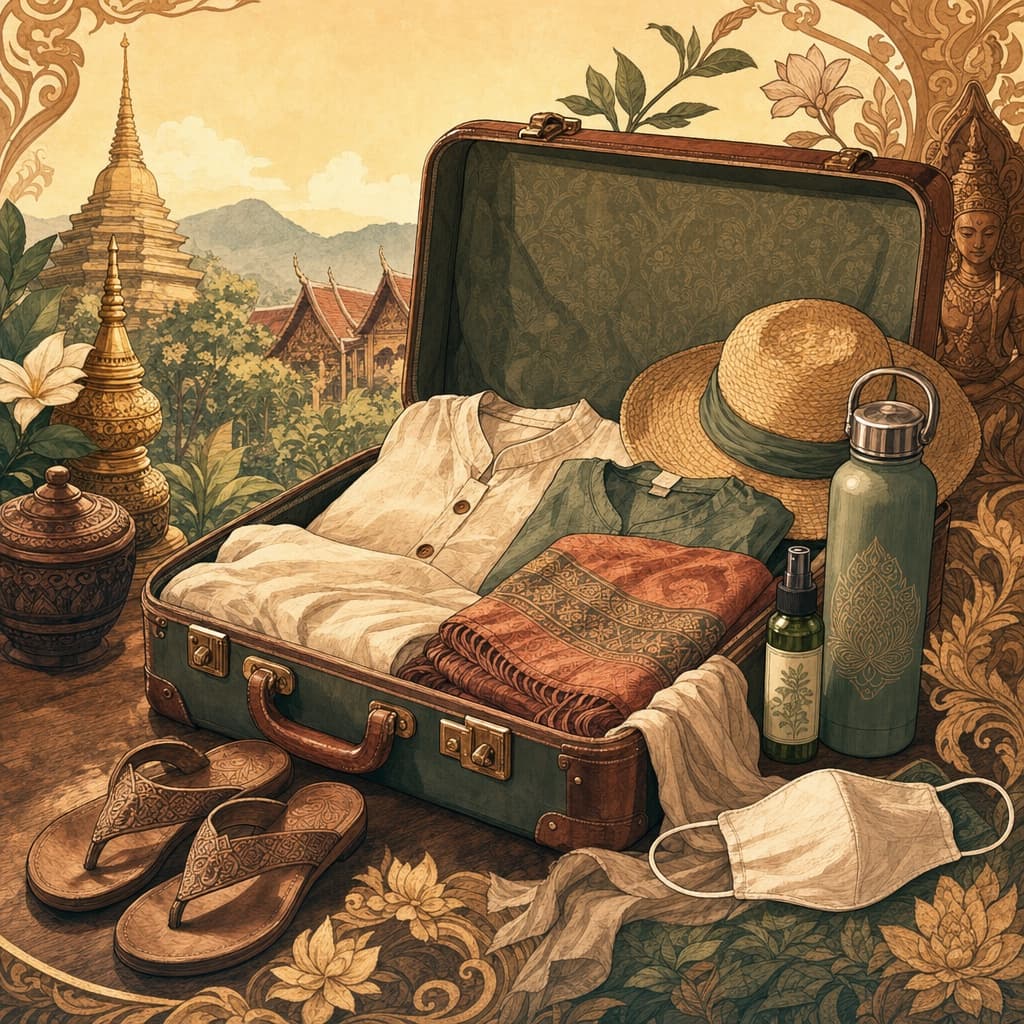
To engage respectfully, the rules are few and kind: dress modestly at temples (shoulders and knees covered, shoes off inside), keep your feet from pointing at Buddha images, and ask before photographing anyone at prayer. For the fuller picture, our note on Thai etiquette covers the small courtesies. And if you'd like to go deeper still, the forest temple of Wat Umong, with its tunnels and quiet, is a lovely place to simply sit and let it sink in.
Come curious rather than certain. That open, gentle spirit is, in a way, the most Buddhist thing you can bring.
Warmly, the Ada House team
Frequently asked questions
What kind of Buddhism is practised in Thailand?
Thailand is overwhelmingly Theravada Buddhist, the teaching of the elders, considered the oldest surviving school and closest to how the Buddha is thought to have taught some 2,500 years ago. At its heart sits the Triple Gem, the three things a Buddhist takes refuge in: the Buddha, the Dhamma (his teachings and the law of cause and effect), and the Sangha (the community of monks).
What is making merit, and what does it look like?
Making merit (tham bun) is the everyday practice of doing good to nudge your karma kindly, and it takes wonderfully tangible forms. You will see people offering food to monks at dawn, pressing fragile squares of gold leaf onto Buddha images, releasing caged birds or fish back to freedom, dropping coins in a donation box, or ringing a row of temple bells. Each is a small, hopeful act of generosity.
What is the dawn alms round I keep seeing?
At dawn, monks walk barefoot through the streets on their alms round (tak bat), bowls in hand and eyes lowered. People kneel to offer rice, fruit and curries. It is not charity but an exchange: the giver earns merit, and the monk receives his only meal of the day.
Why do devout Buddhists also keep spirit houses and wear amulets?
Buddhism in Thailand has never stood alone. It blends easily with older animism, the belief that spirits (phi) dwell in trees, rivers and land, and with Brahmanism inherited from India. To a Thai mind there is no contradiction: Buddhism tends the soul's long journey, while the spirits handle the here and now.
Do most Thai men become monks?
Most Thai men ordain at least once, often briefly, sometimes for just a rainy season, wearing the saffron robes and living by monastic precepts such as no harming life, no eating after midday, no money and simplicity in all things. It is seen as a profound gift of merit, especially to one's mother, and a son in robes honours the whole family.
How can I engage respectfully at temples?
The rules are few and kind. Dress modestly with shoulders and knees covered and shoes off inside, keep your feet from pointing at Buddha images, and ask before photographing anyone at prayer. Above all, come curious rather than certain, which in a way is the most Buddhist thing you can bring.