Local culture · June 27, 2026
The Inthakhin: Chiang Mai's sacred city pillar and the spirits who guard it
By The Ada House team
Most cities keep their secrets in plain sight. In Chiang Mai, one of the oldest sits inside a small, ornate shrine within a temple courtyard, easy to walk straight past. It is the Inthakhin — the city pillar — and for more than seven centuries, the people here have believed that the whole fortune of the city rests upon it. We find ourselves returning to it again and again, because once you know the story, Chiang Mai never looks quite the same.
What a city pillar actually is
Across old Siam, every proper city was founded around a lak mueang, a city pillar driven into the ground at its sacred heart. Think of it as the navel of the city — the fixed point from which everything else takes its bearings, and the seat of the guardian spirit who watches over the place and its people. To found a city was, quite literally, to raise its pillar first. Without one, a settlement was just a cluster of houses; with one, it had a soul, a centre and a protector.
Chiang Mai's pillar carries a grander name than most. Inthakhin means "the pillar of Indra" — and that name is the doorway into a beautiful legend.
Indra's gift, and a promise kept
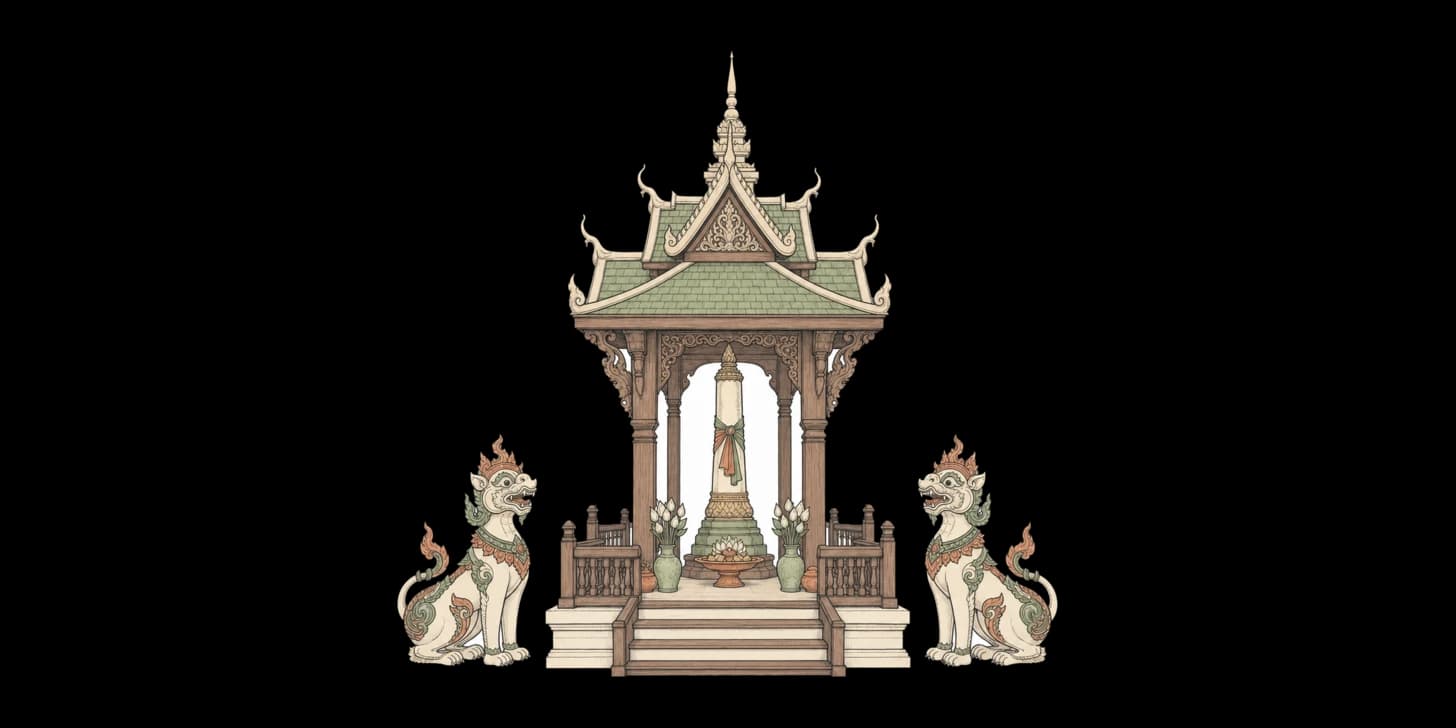
Long before King Mangrai laid out the city in 1296, the legend tells of the Lua people (the Lawa) who lived in this valley and suffered no end of misfortune. Taking pity on them, the god Indra sent down a sacred pillar to shelter the land from disaster, carried and guarded, in some tellings, by spirits and a pair of great kumbhanda giants dispatched from the heavens.
There was a condition. So long as the pillar was honoured and the people lived virtuous lives, the city would prosper and be kept safe from harm. When the original was eventually withdrawn, the Lua were instructed to set a replica in its place and keep up its veneration — and so the pact has been quietly renewed ever since. It is a remarkably gentle bargain: care for the city's spiritual heart, and it will care for you.
How it found a home at Wat Chedi Luang
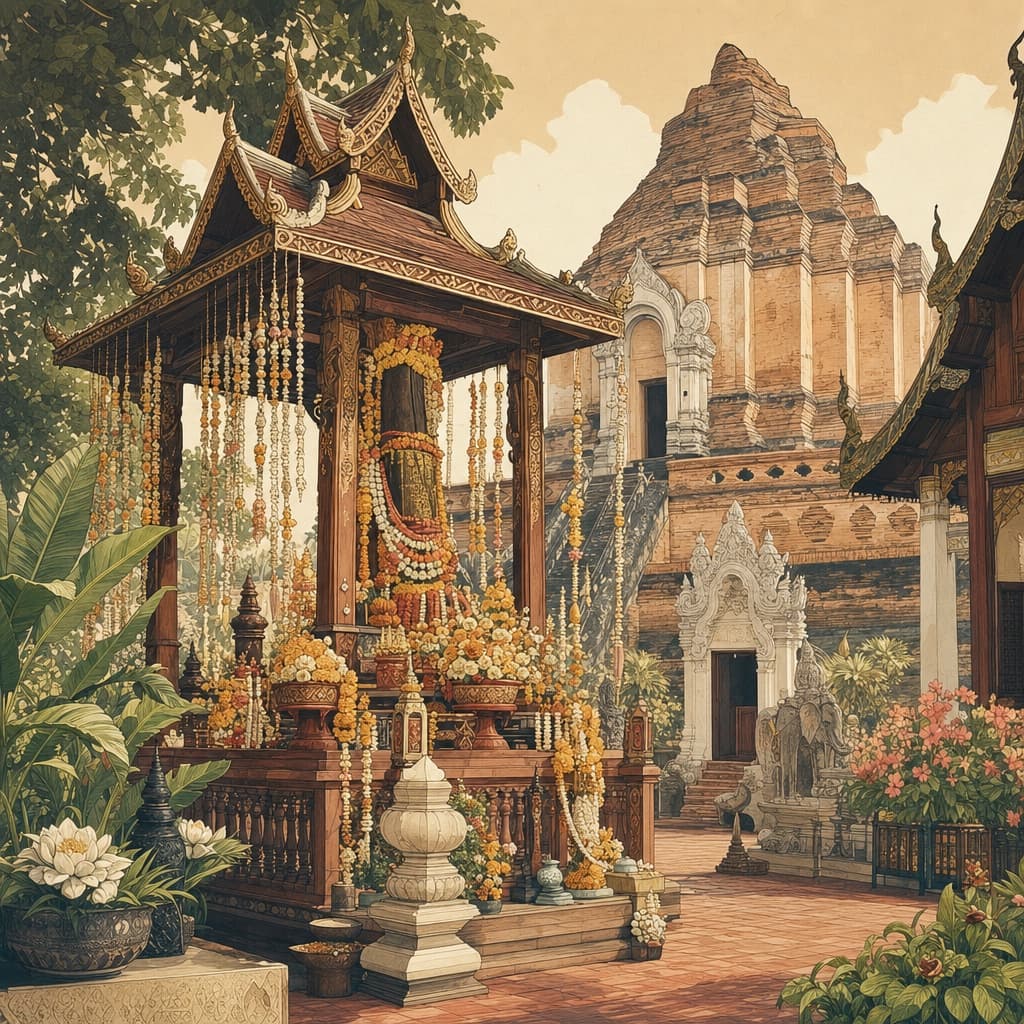
The pillar's own history mirrors the city's. It was first enshrined at the founding of Chiang Mai during the golden age of the Lanna kingdom, at a temple once known as the Navel of the City. Centuries later, after a long period of decline and abandonment, it was the reviver-king Kawila who, around 1800, moved the Inthakhin to its present resting place: a graceful shrine in the grounds of Wat Chedi Luang, beside the great ruined stupa that still dominates the old town.
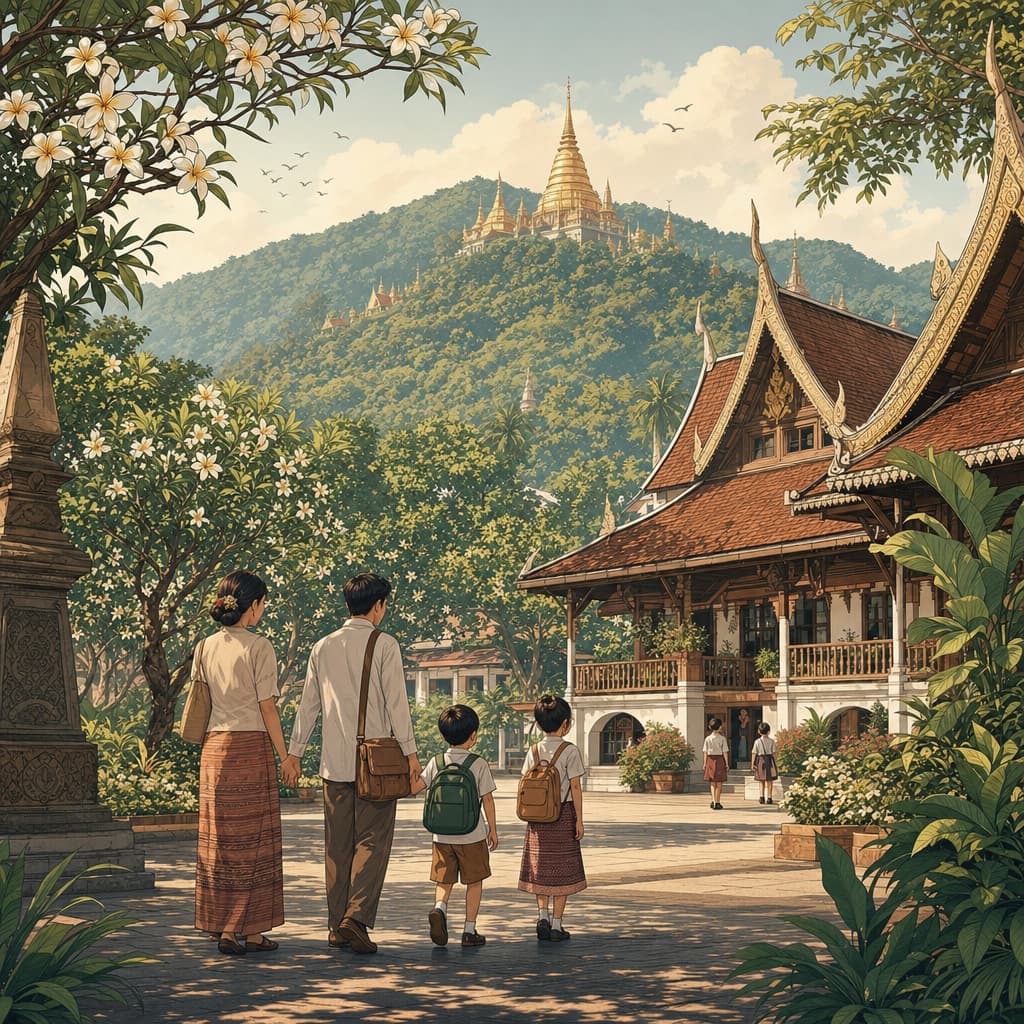
If you go looking, you will find it tucked among frangipani trees, often draped with garlands. It is one of the quiet wonders of the old-city temples, and the kind of place that rewards a slow, respectful pause more than a quick photograph.
The spirits who stand guard
The Inthakhin is not thought to protect the city by itself. It is the dwelling of guardian spirits, and tradition holds that their goodwill must be kept up — much like the everyday animism you can read in Chiang Mai's countless spirit houses, only scaled up to watch over an entire city rather than a single plot of land. The giants who first carried the pillar are said to linger near it still. Neglect the pact, the old belief warns, and protection thins; honour it, and the rains come on time and the city thrives.
Sai Khan Dok, the festival of flowers
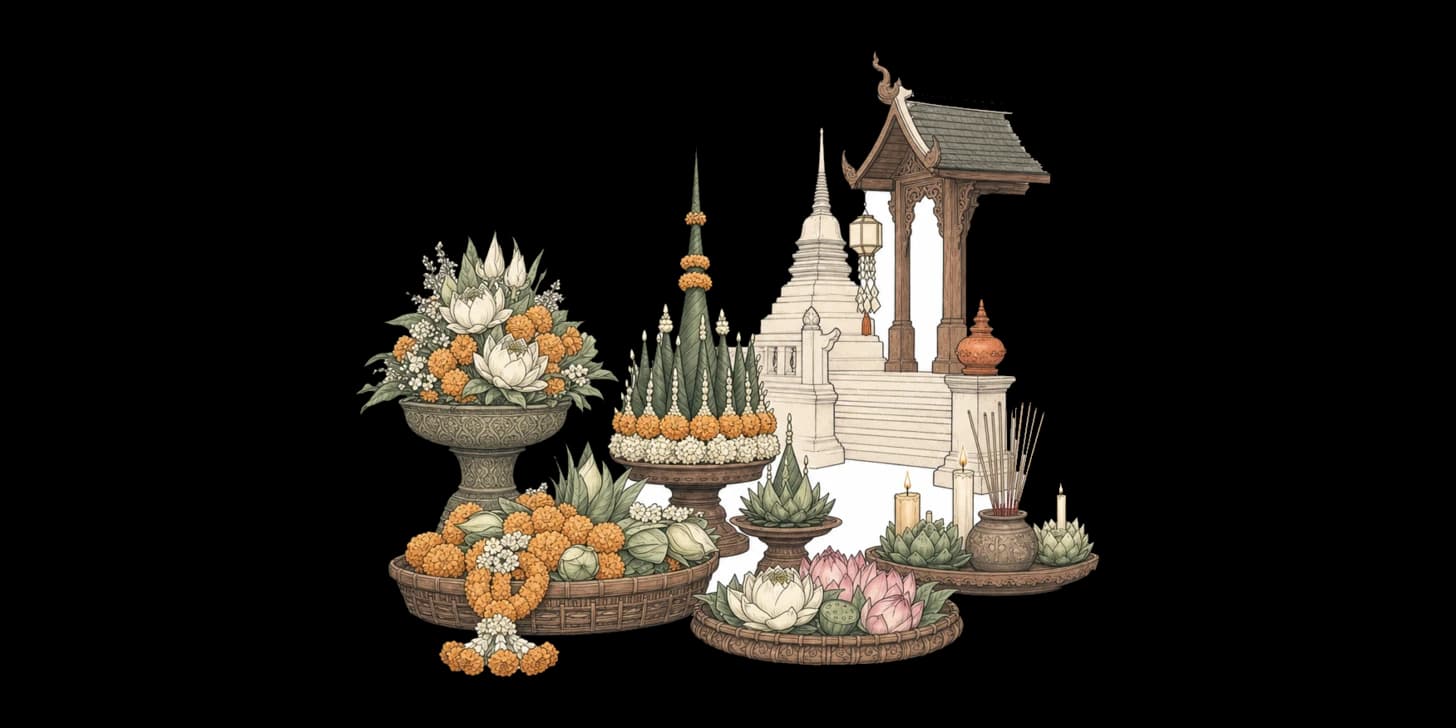
Once a year, that renewal becomes wonderfully visible. The Inthakhin festival — known as Sai Khan Dok, the offering of flowers in bowls — unfolds over eight days at Wat Chedi Luang, beginning on the waning moon of the sixth lunar month, usually in late May or June, right at the threshold of the rainy season. Locals stream in carrying little bowls and trays of jasmine, marigold and lotus, lining up to lay them before the pillar along with candles and incense.
To stand in that slow, fragrant river of people is one of the most moving things we have witnessed here. It is not a show for visitors; it is a whole city, generation after generation, paying its dues to keep the coming year safe and the rains kind.
The city's quiet operating system
What we love about the Inthakhin is how unseen it is, and how completely it still works. Beneath the cafés, the night markets and the digital-nomad coworking desks, an older logic hums along — a spiritual operating system, founded on a god's gift and a promise, running quietly under everything. You needn't share the belief to feel its weight. Pause at that shrine, and you are standing at the exact spot where the people of Chiang Mai have, for over 700 years, kept faith with their city.
May your own time here feel just as protected.
Warmly, the Ada House team
Frequently asked questions
What is the Inthakhin?
It is Chiang Mai's sacred city pillar, the lak mueang or navel of the city, believed for more than seven centuries to hold the whole fortune of the place. Its name means the pillar of Indra, after the god said in legend to have sent it down to shelter the valley from disaster.
Where can I see it?
It is kept in a graceful shrine in the grounds of Wat Chedi Luang, beside the great ruined stupa that still dominates the old town. You will find it tucked among frangipani trees, often draped with garlands, and it rewards a slow, respectful pause more than a quick photograph.
How did it end up at Wat Chedi Luang?
It was first enshrined at the founding of Chiang Mai at a temple once known as the Navel of the City. Around 1800, after a long period of decline, the reviver-king Kawila moved the Inthakhin to its present resting place at Wat Chedi Luang.
What is the Inthakhin festival and when is it?
Known as Sai Khan Dok, the offering of flowers in bowls, it unfolds over eight days at Wat Chedi Luang. It begins on the waning moon of the sixth lunar month, usually in late May or June, right at the threshold of the rainy season.
What happens during the festival?
Locals stream in carrying little bowls and trays of jasmine, marigold and lotus, lining up to lay them before the pillar along with candles and incense. It is a deeply local, devotional occasion rather than a show for visitors, so a quiet, respectful presence suits it best.