Health & wellness · June 28, 2026
Day Spas in Chiang Mai: Where to Get a Great Massage at Any Budget
By The Ada House team
Chiang Mai might be the easiest place on earth to fold a great massage into an ordinary day. There is a shop on practically every soi, prices that would make a London spa blush, and a depth of skill that comes from generations of practice. The only real challenge is choosing, because the city offers everything from a plastic-stool foot rub on a market lane to a half-day journey through a teak-pavilion destination spa. This is the where-to-go companion to our deeper look at the practice of Thai massage itself — here we are simply helping you pick the right room for your mood and your wallet.
Know your three tiers
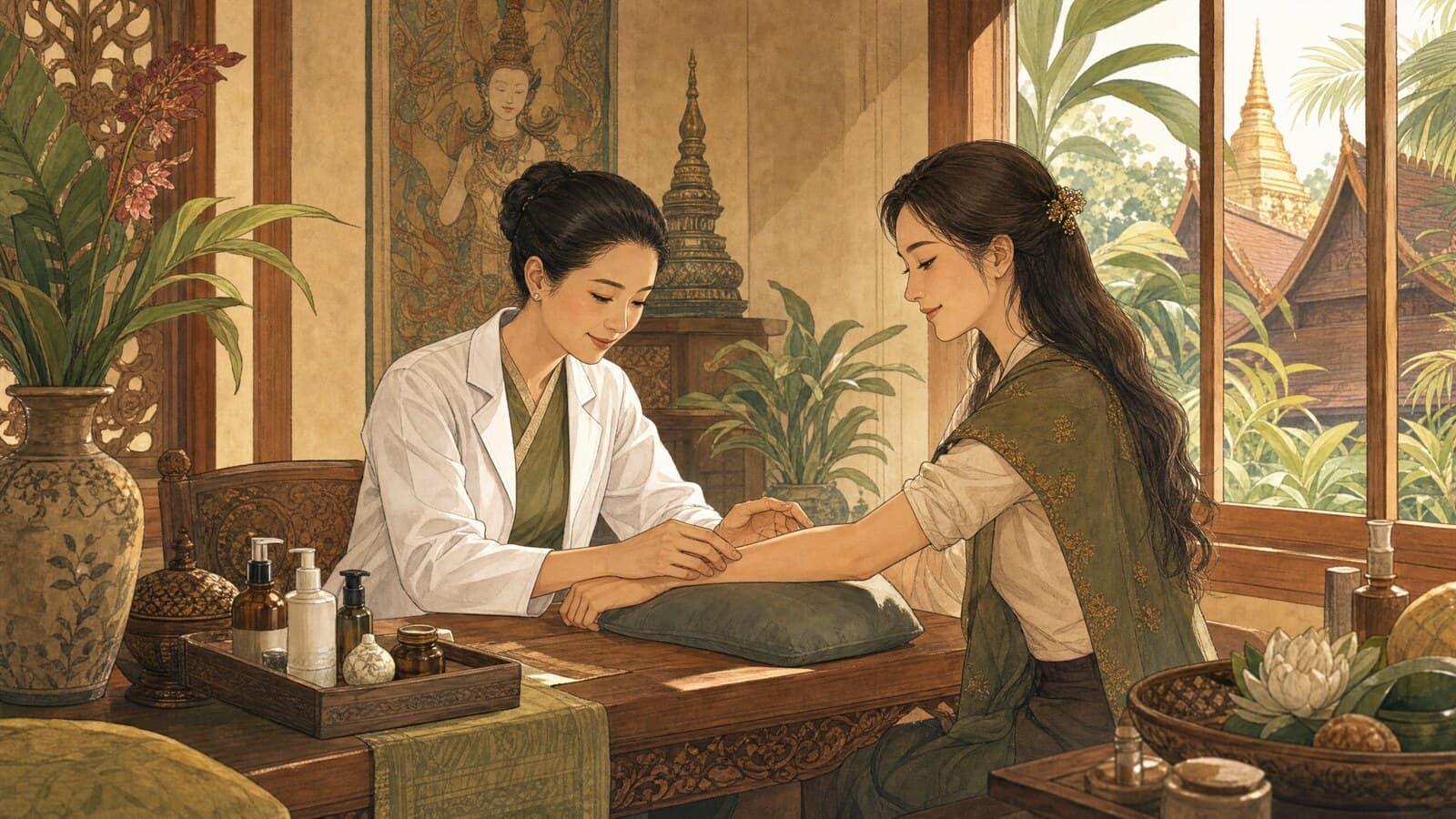
Think of Chiang Mai's massage scene as three loose tiers, and you can navigate almost any situation. At the bottom, and we mean that only on price, are the neighbourhood massage shops: open-fronted rooms with reclining chairs and curtained mats, often staffed by genuinely excellent therapists. Lila Thai Massage is the standard-bearer here, a social enterprise founded by a former director of the Chiang Mai Women's Prison to employ trained ex-inmates; it has several branches around the Old City and Tha Phae area and is a reliable, feel-good first stop. The middle tier is the proper day spa — private rooms, a shower, herbal tea, a garden — with Fah Lanna Spa (Old Town and Nimman) the much-loved benchmark. At the top sit luxury and resort spas such as Oasis Spa, with its several mansion-and-garden locations, where a treatment becomes a two- or three-hour ritual.
| Tier | What you get | Rough price (1 hr) |
|---|---|---|
| Neighbourhood shop | Reclining chairs, skilled therapists, walk-in | 200–350฿ |
| Day spa | Private room, shower, herbal tea, garden | 600–900฿ |
| Luxury / resort spa | Multi-hour ritual, hotel pick-up | 1,500฿+ |
The treatments worth knowing
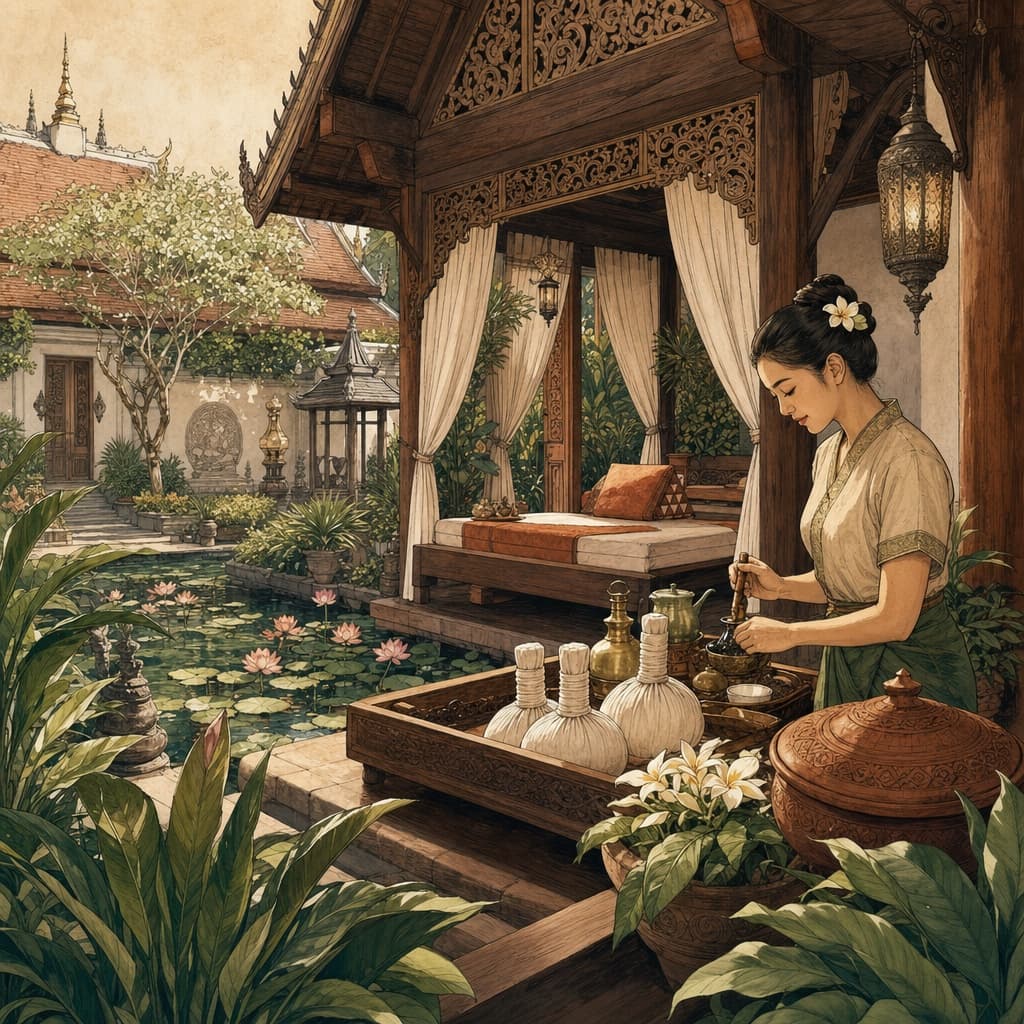
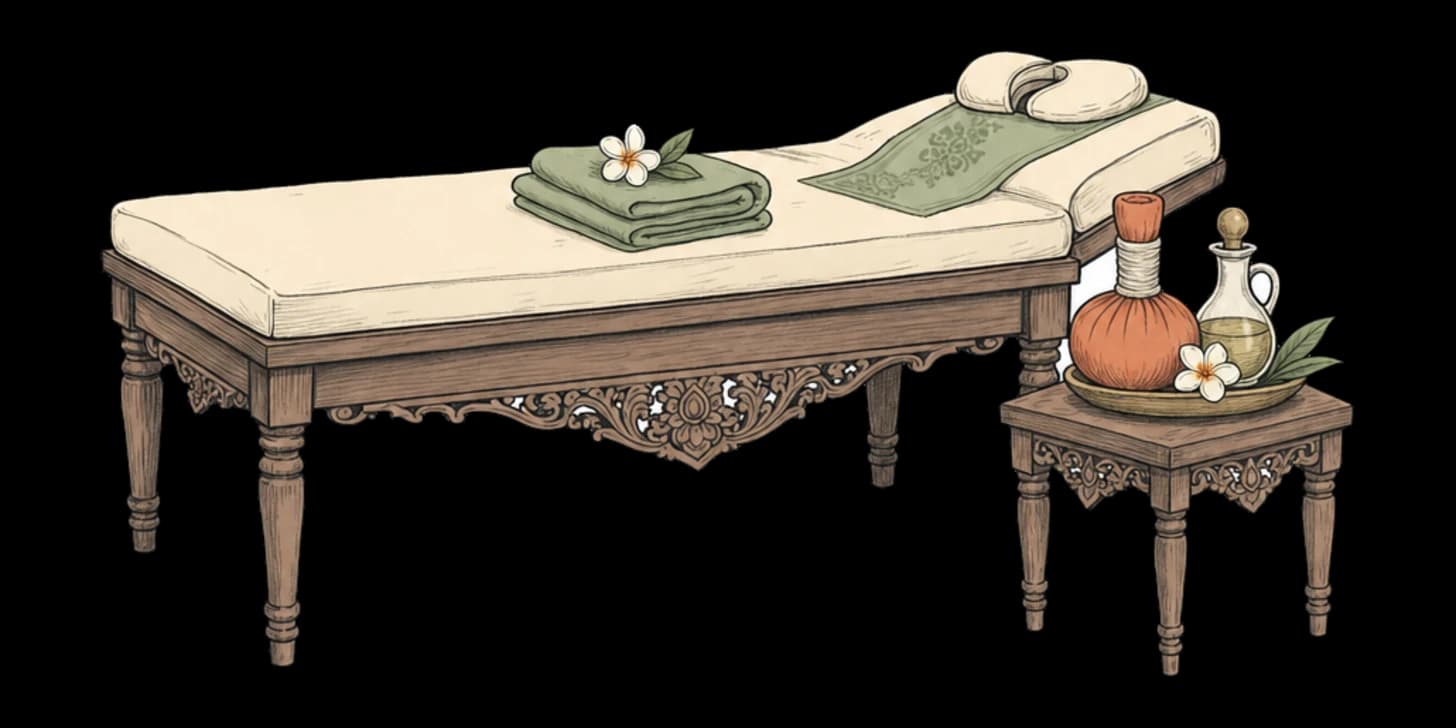
A menu can be bewildering, so here is the shortlist. Traditional Thai massage is the deep, fully-clothed, no-oil stretching-and-pressing work the region is famous for. Oil or aromatherapy massage is gentler and more familiar to Western spa-goers, worked on bare skin with scented oils. The herbal compress, or luk pra kob, uses a steamed muslin ball packed with lemongrass, turmeric and kaffir lime pressed warm against tired muscles — a Lanna speciality with roots in northern traditional medicine. A simple foot massage is the perfect 30 to 60 minutes after a day on your feet, and body scrubs and herbal steam rooms round out the longer spa packages. If you have just survived a Muay Thai class or a long trek, a Thai massage with compress is the classic recovery.
What it costs
This is the happy part. At a neighbourhood shop, expect roughly 200 to 350 baht for a one-hour Thai or foot massage — a little more right around Tha Phae Gate, a little less as you walk away from the tourist core. A mid-range day spa typically runs 600 to 900 baht an hour, and a luxury spa package will start higher again, often well past 1,500 baht once you factor in the longer rituals, the garden, and the hotel pick-up. Even at the very top it remains a fraction of what you would pay back home, so do treat yourself at least once. For a sense of how this fits a wider budget, see our cost-of-living rundown.
How to spot a good place
A few honest signals. A busy shop with locals in the chairs is almost always a good sign. Look for clean linens and a fresh set of clothes offered for Thai massage, a price list posted plainly, and therapists who ask about injuries or pressure preference before they start. Be a little wary of any "massage" shop with neon lights and women calling from the doorway late at night — that is a different trade, and the common-scams guide is worth a glance. Otherwise, trust your eyes: calm, tidy and unhurried beats glossy every time.
What to wear and how to behave
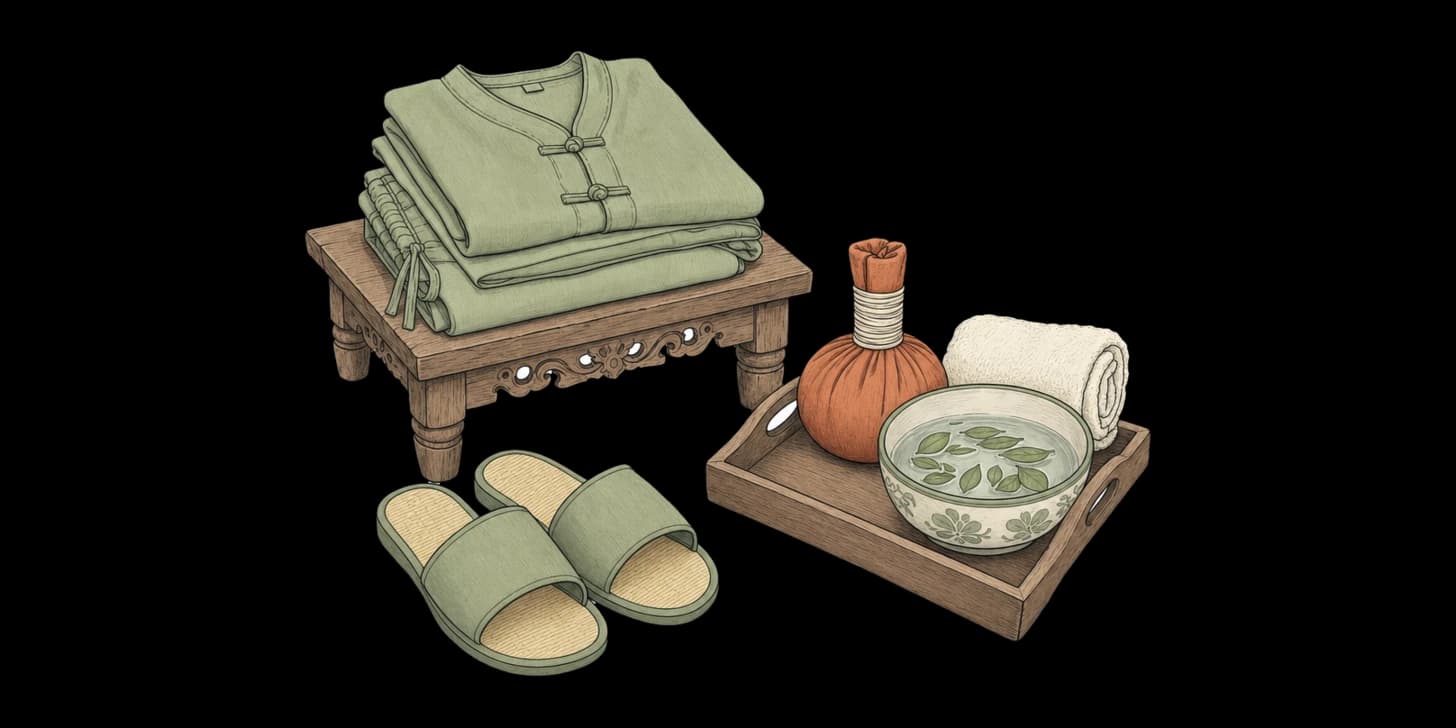
Wear something loose and comfortable; for Thai and herbal-compress work you will usually be given soft pyjama-style clothes to change into, while oil treatments are done on bare skin under a towel or sarong, with disposable underwear provided. Shoes come off at the door, always. Speak softly, switch your phone to silent, and arrive ten to fifteen minutes early for spa appointments so there is time to consult. A quick read of our etiquette notes for visitors never hurts. And do say if the pressure is too strong — bao bao means "gently".
Booking, tipping and a couple of last tips
Walk-ins are completely normal at neighbourhood shops, but for a popular day spa on a weekend, or a couples' room, book a day ahead. Tipping is appreciated rather than obligatory; 20 to 100 baht for a good neighbourhood massage, or a little more at a spa, is the local norm — our tipping and bargaining guide has the full picture. Finally, if you have caught the wellness bug, Chiang Mai pairs massage beautifully with its yoga and meditation retreats. Our standing advice to guests: book one good massage for your first evening to shake off the flight, and let the city's gentle hands do the rest.
Frequently asked questions
How do I choose between all the massage options?
Think of the scene as three loose tiers. Neighbourhood shops offer skilled therapists in open-fronted rooms, day spas add private rooms, a shower, herbal tea and a garden, and luxury or resort spas turn a treatment into a multi-hour ritual. Pick by your mood and your wallet.
What does a massage actually cost here?
At a neighbourhood shop expect roughly 200 to 350 baht for a one-hour Thai or foot massage, a mid-range day spa runs about 600 to 900 baht an hour, and luxury spa packages often start well past 1,500 baht. Even at the very top it remains a fraction of Western prices.
Which treatment should I pick?
Traditional Thai massage is the deep, fully-clothed, no-oil stretching and pressing work the region is famous for, while oil or aromatherapy massage is gentler on bare skin. The herbal compress, or luk pra kob, presses a warm steamed muslin ball of lemongrass, turmeric and kaffir lime against tired muscles, and a foot massage is perfect after a day on your feet.
What should I wear, and how do I behave?
Wear something loose; for Thai and herbal-compress work you are usually given soft pyjama-style clothes, while oil treatments are done on bare skin under a towel or sarong with disposable underwear provided. Shoes come off at the door, speak softly, and arrive ten to fifteen minutes early for spa appointments. Say bao bao if you would like the pressure gentler.
Do I need to book, and should I tip?
Walk-ins are completely normal at neighbourhood shops, but for a popular day spa on a weekend or a couples' room, book a day ahead. Tipping is appreciated rather than obligatory; around 20 to 100 baht for a good neighbourhood massage, or a little more at a spa, is the local norm.
How can I tell a good place from a dubious one?
A busy shop with locals in the chairs is almost always a good sign, along with clean linens, a posted price list, and therapists who ask about injuries or pressure first. Be wary of any 'massage' shop with neon lights and women calling from the doorway late at night, as that is a different trade entirely.