
Practical tips · June 28, 2026
Tipping and Bargaining in Chiang Mai: How It Actually Works
By The Ada House team
Two small money customs tend to worry visitors more than they should: whether you're meant to tip, and whether you're meant to haggle. The honest answer to both is "sometimes, and never anxiously." Thailand has no rigid tipping rules to memorise and no obligation to bargain over everything, so you can relax. Get a feel for a handful of situations and you'll move through Chiang Mai's restaurants, spas and markets like someone who has lived here a while — generous where it counts, easy-going everywhere else.
First, take a breath — neither is high-stakes
Unlike some countries, Thailand doesn't run on tips, and most Thai people don't tip much in daily life. At the same time, bargaining is woven into market culture but limited to certain places. The whole thing is far gentler than the reputation suggests. The golden thread through both customs is the same one that runs through all Thai etiquette for visitors: keep things warm, keep your cool, and never let anyone lose face over a few baht. Do that and you can't really go wrong.
Tipping: not a duty, but a kindness
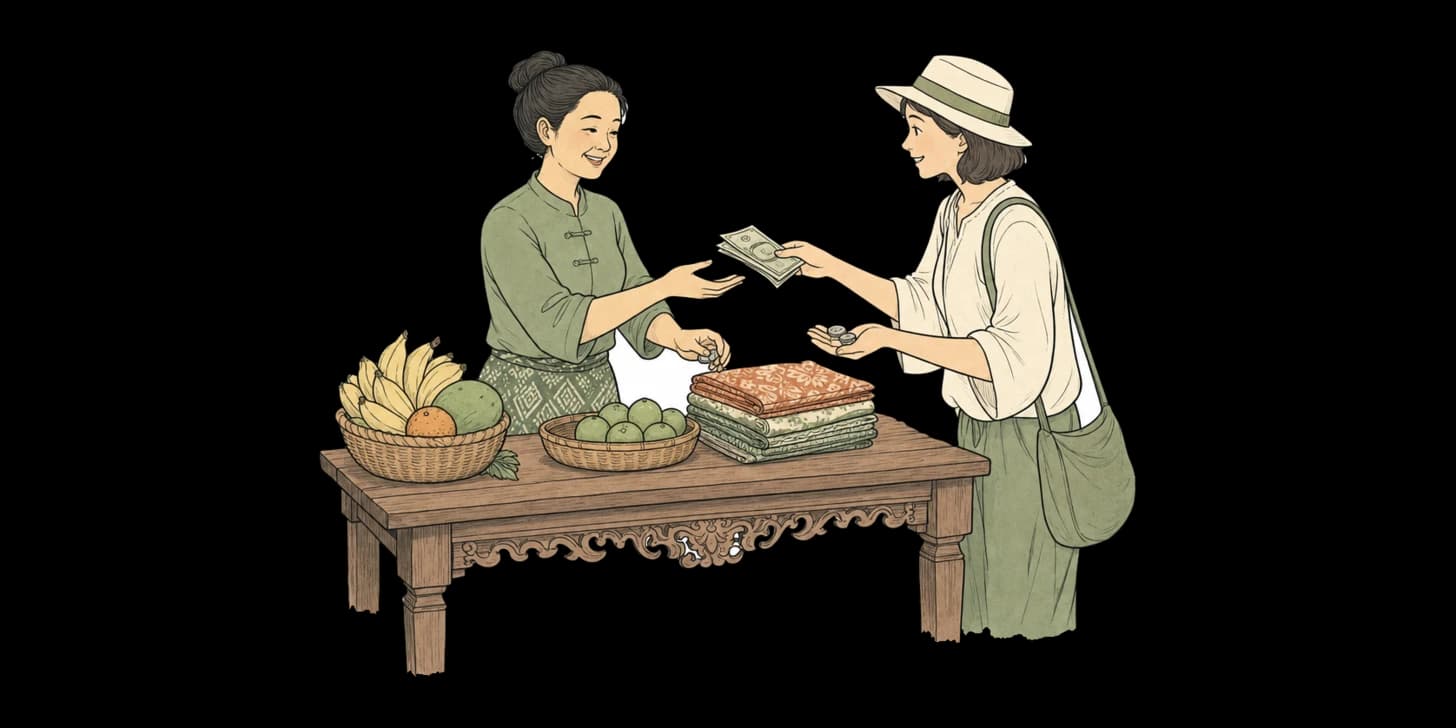
Tipping in Thailand is genuinely optional, but it's increasingly appreciated — and a small gesture goes a long way. The easiest habit is simply rounding up. When a songthaew or taxi fare comes to an odd number, leaving the small change is normal and friendly; for more on local transport and how fares work, see our guide to getting around Chiang Mai. At a casual restaurant or street food stall, rounding up the bill or leaving the coins is plenty — nobody expects a percentage on a 60-baht bowl of noodles.
If you'd like to leave a little more for good service, a modest sum in the 5–10% range is generous by local standards. Cash placed directly in the person's hand is the surest way to reach the individual who looked after you, rather than disappearing into a till.
Decoding the "++" on your bill
At smarter restaurants and hotels you'll often see prices followed by "++", or a line on the bill for a 10% service charge plus 7% VAT. That's the "plus plus" — service and tax added on top of the listed price, which works out to roughly 17% more than the menu number. The important thing to know is that when a service charge is already included, you've effectively tipped already, and nothing further is expected. If you had a lovely evening at one of the city's best restaurants and want to add a little extra for an outstanding server, that's a warm gesture — but never an obligation. Always glance at the bill first so you're not doubling up.
Where a tip lands well — and how much
A few settings are where tipping feels most natural in Chiang Mai. After a treatment at one of the city's day spas or a session of Thai massage, a small tip for your therapist is kind and increasingly common — they often rely on it. The same goes for tour guides and drivers on a full-day trip, hotel porters and housekeeping, and friendly café or bar staff. In every case the amount is modest: this is a thank-you, not a calculation. There's no shame in giving nothing where service was ordinary, and no need to agonise over the maths.
Where a tip is welcome (modestly):
- Spa and massage therapists
- Tour guides and drivers on day trips
- Hotel porters and housekeeping
- Rounding up a taxi or songthaew fare
Haggle: markets, street stalls, souvenir shops, tuk-tuk and chartered-songthaew fares. Don't: malls, supermarkets, convenience stores, and menu-priced restaurants.
Bargaining: where it's expected, and where it really isn't
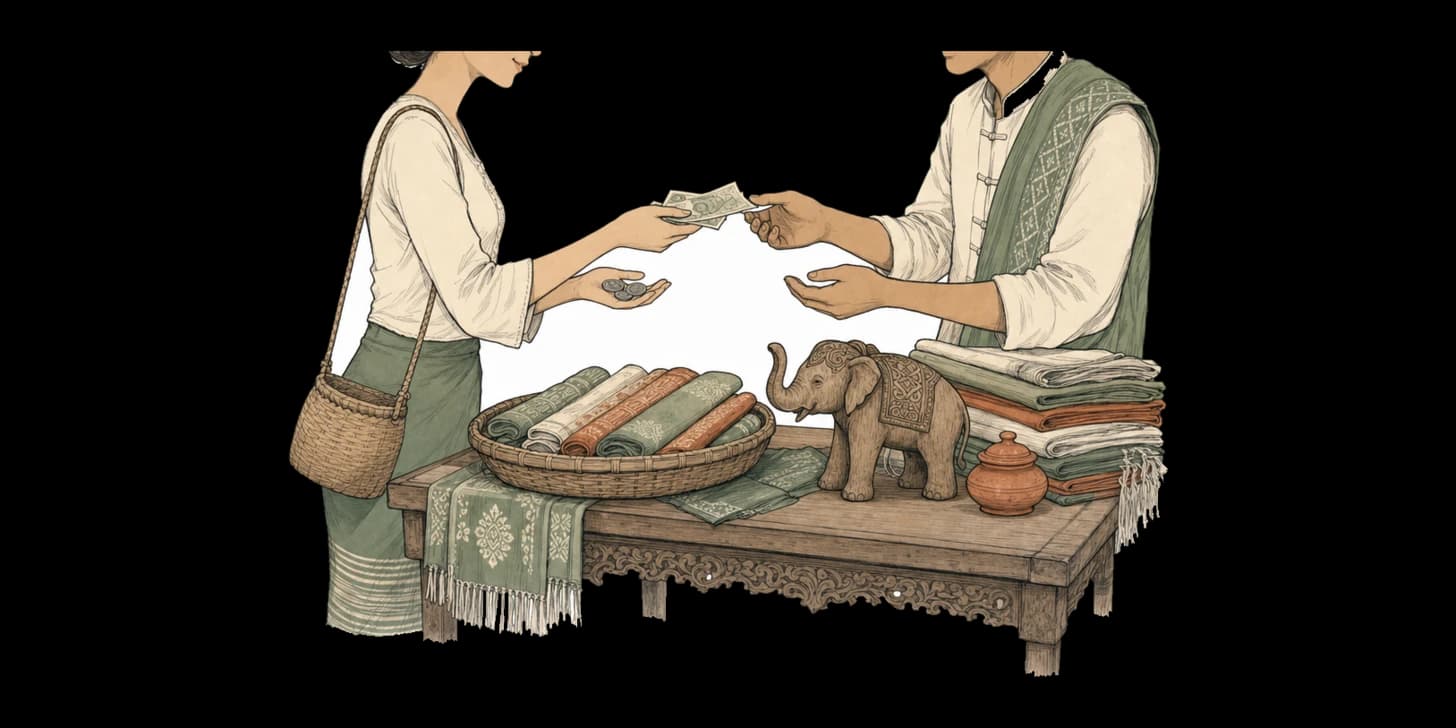
Haggling has its place, and knowing the boundary saves a lot of awkwardness. It's expected at fresh and souvenir markets, street stalls, and many independent handicraft and clothing shops — the buzzing night markets, the weekend Sunday Walking Street, and the lanes of Warorot Market are all fair game. It's also normal to agree a price up front for a tuk-tuk or chartered songthaew, and sometimes for a longer scooter rental, before you set off — settling the number in advance is one of the simplest ways to sidestep the common misunderstandings and scams visitors run into.
What you should not haggle over: malls, supermarkets, convenience stores, fixed-price boutiques, and any restaurant with printed menu prices. There the marked price is the price, and trying to knock it down only causes confusion.
How to haggle gracefully
The art of it is friendliness, not toughness. Smile, say hello, show genuine interest, and ask lightly: "lod noi dai mai" (ลดหน่อยได้ไหม) — "could you lower it a little?" Add khrap if you're a man or kha if you're a woman and you'll get a smile back; it's one of the most useful lines to pick up if you're starting to learn a little Thai. Start with a counter-offer that's reasonable rather than insulting — somewhere in the region of 10–30% below the asking price is a fair opening, depending on the item. Meet in the middle, and if the price won't move, the gentle walk-away sometimes brings a better offer; if it doesn't, smile and let it go.
Above all, remember the cultural heart of it: never bargain hard over a tiny sum, never raise your voice, and never make a vendor lose face to save yourself ten baht. A handful of baht means far more to the day than to your wallet. Treat both tipping and bargaining as small, good-natured exchanges, and they become part of the pleasure of being here — not something to fret over at all.
Frequently asked questions
Do you have to tip in Thailand?
No. Tipping is genuinely optional and not a strong local custom, but small gestures are increasingly appreciated. Rounding up a fare or leaving the loose change at a casual restaurant is plenty.
How much should you tip in Chiang Mai?
Keep it modest. Round up taxi and songthaew fares, leave small change at street-food stalls, and for good service at a sit-down restaurant a tip of around 5–10% is generous by local standards.
What does '++' mean on a Thai bill?
It is a 10% service charge plus 7% VAT added to the listed prices — roughly 17% more than the menu number. When a service charge is already included, you have effectively tipped, so nothing further is expected.
Where can you bargain in Chiang Mai, and where can't you?
Haggling is expected at markets, street stalls and souvenir shops, and for tuk-tuk or chartered-songthaew fares agreed up front. It is not done at malls, supermarkets, convenience stores or restaurants with printed prices.
How do you haggle politely?
Smile, stay friendly, and ask 'lod noi dai mai' (could you lower it a little?). Open around 10–30% below the asking price, meet in the middle, and never push hard over a tiny sum or make a vendor lose face.