Local culture · June 27, 2026
Thai ghosts and spirits: a friendly guide to the spookier side
By The Ada House team
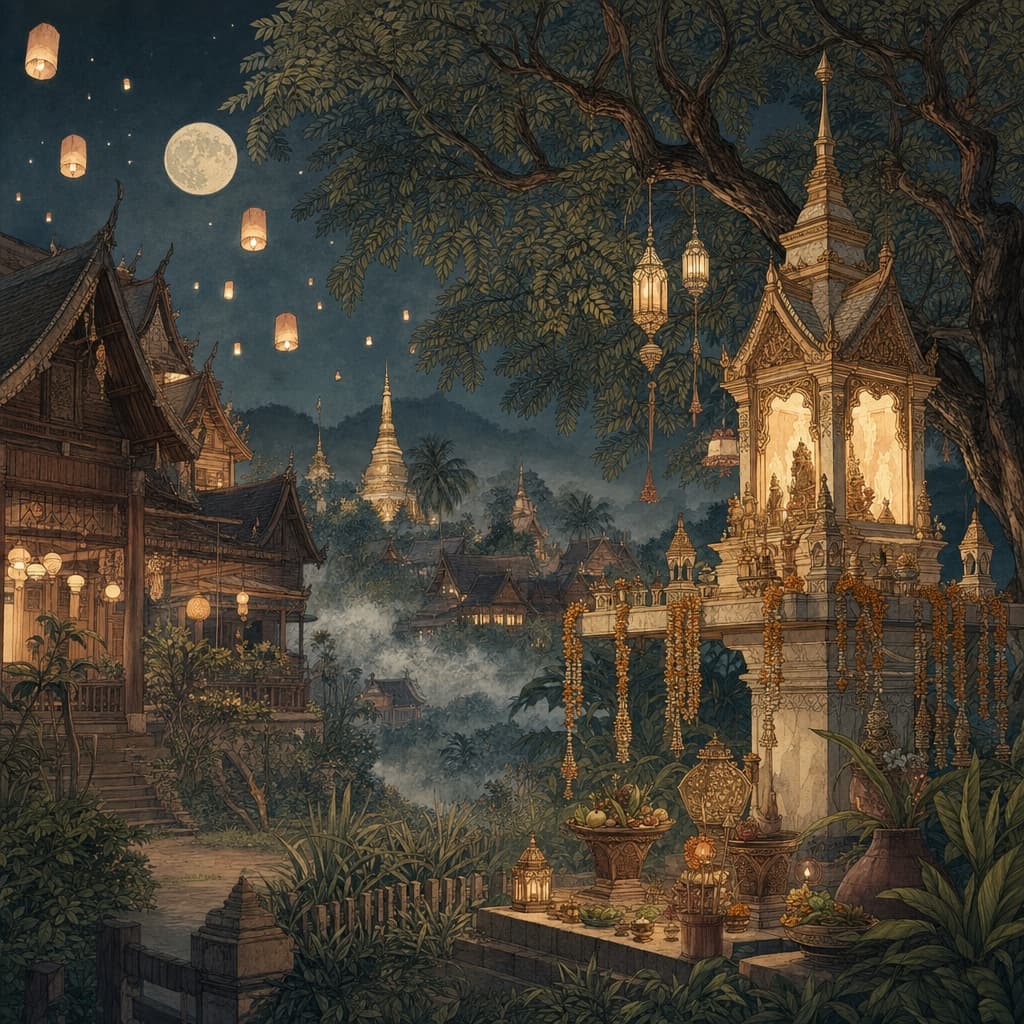
Spend an evening in Chiang Mai and you'll feel it before anyone explains it: the spirit world is simply part of the furniture here. A taxi driver taps his amulet at a tricky junction. An auntie won't let you whistle after dark. A brand-new condo tower has a little shrine glowing at its gate. To Thai eyes none of this is spooky — it's neighbourly. So pour a tea, dim the lights, and let the Ada House team walk you through the friendlier corners of Thailand's ghost world.
Why ghosts feel so at home here
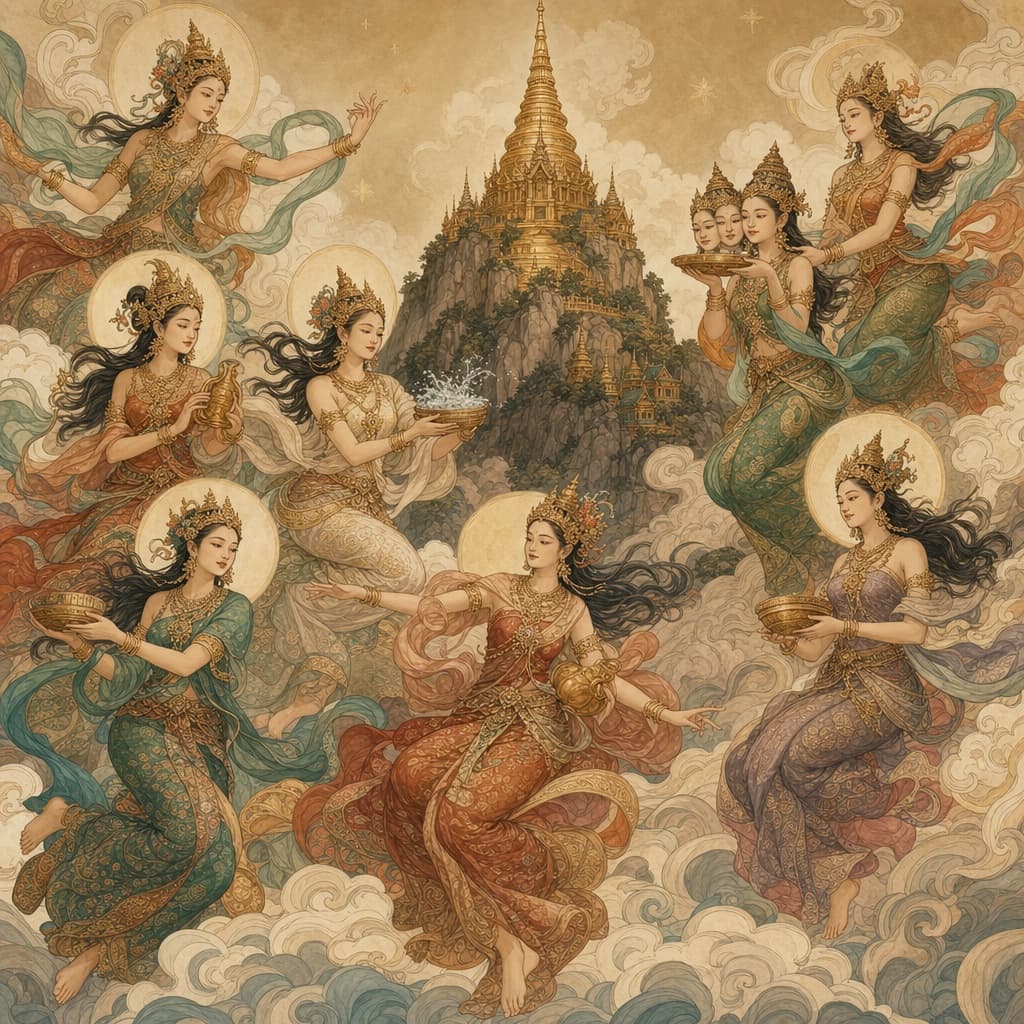
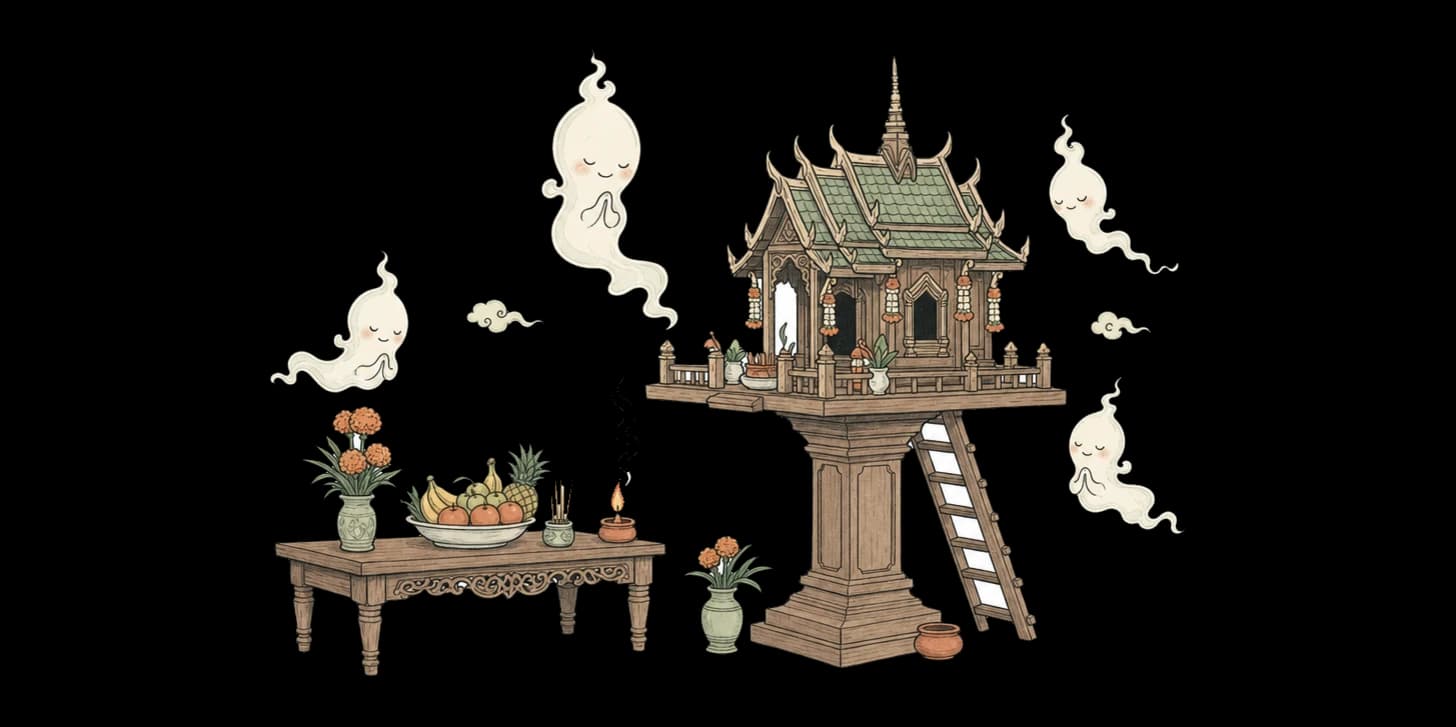
The catch-all word is phi — spirits, plural, of every temperament. Some are guardians, some are mischief, a few are genuinely to be avoided, and most simply share the world alongside the living. This isn't a fringe belief tucked away in villages; it sits comfortably next to Buddhism, part of the same warm, layered worldview we explore in our piece on the everyday rhythm of Thai Buddhism. One does not cancel the other.
It also fuels one of Asia's great pop-culture engines. Thailand adores a ghost film, and the genre swings from genuinely terrifying to laugh-out-loud comedy. Ghosts here are characters, not just frights: heartbroken, funny, vengeful, lonely. Once you grasp that, half the country's TV and night-market chatter suddenly makes sense.
Mae Nak, the ghost who loved too much
If Thailand has a national ghost, it is Mae Nak Phra Khanong — and tellingly, she's a love story. In the Bangkok district of Phra Khanong, the tale goes, young Nak waved her husband Mak off to war while heavily pregnant. She died in childbirth while he was away. When Mak returned, Nak and their baby were waiting at home, exactly as he'd left them — and he had no idea they were no longer of this world.
For a blissful while he lived happily with his ghost-wife, until a slip gave her away — in the famous version, her arm stretches impossibly long to retrieve a dropped lime through the floorboards. The heart of the tale isn't horror at all; it's devotion so fierce it outlasts death. Thais don't fear Mae Nak so much as love her, and her shrine still draws visitors leaving flowers and asking small favours.
The night creatures: Krasue and Phi Pop
Now for the deliciously eerie ones. The Krasue is pure midnight nightmare fuel: a beautiful woman's floating head, trailing her glowing entrails beneath her, drifting through the dark in search of things best not described over tea. Village lore says you'll spot her as a faint reddish light bobbing across the paddy fields. She is gruesome, yes — but also one of the most beloved monsters in Thai cinema.
Her cousin in dread is the Phi Pop, a spirit that possesses a living host and feeds, unseen, on their insides. Where the Krasue is a creature you might glimpse, the Phi Pop is the more unsettling idea of a spirit that hides inside someone ordinary — which is precisely why rural communities once held elaborate rituals to coax it out and send it on its way.
Phi Tai Hong and Phi Am: the unlucky and the unsettling
Not every spirit is a film star. The Phi Tai Hong are those who died suddenly, violently or far too young — tragedies that left a life unfinished. Believed to be restless, they're treated with real care: it's why you'll see roadside shrines at notorious accident spots, and why monks are often called to bless a place where someone has died.
Gentler, and oddly relatable, is Phi Am — the spirit blamed for sleep paralysis. You wake unable to move, a heavy weight pressing on your chest, certain something is sitting on you. Science calls it a quirk of waking mid-sleep-cycle; Thai tradition calls it Phi Am, and the name is so apt that doctors and grandmothers use it alike.
How belief shows up by daylight
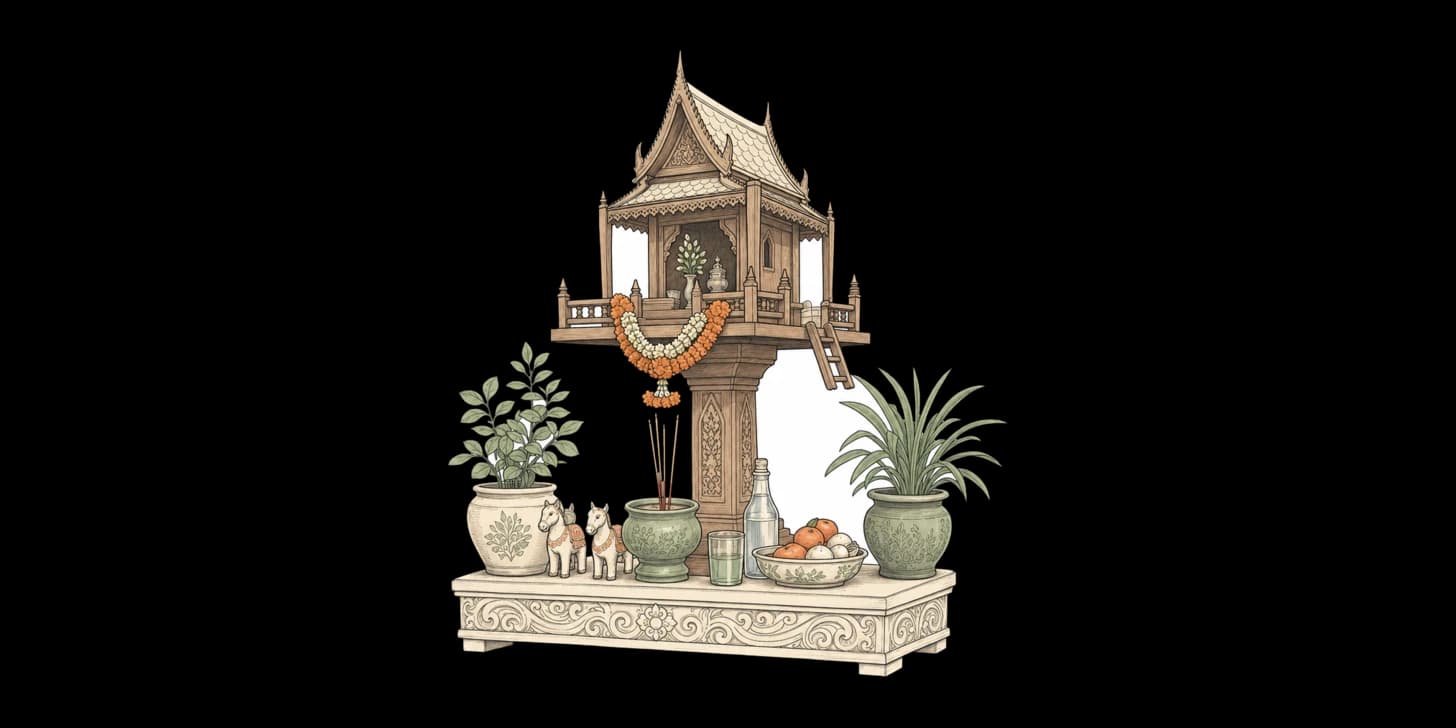
What we love is how lightly all this is carried. Belief here is practical and woven into ordinary days. Those ornate little shrines outside every shop are guardian homes — we wrote a whole love letter to Thailand's spirit houses — kept sweet with daily offerings of rice, marigolds and the famous red Fanta. Many people carry a blessed amulet from a Chiang Mai temple for protection and luck, tucked close or worn on a chain.
And then the everyday etiquette. Don't whistle at night — it's said to call spirits to you. Don't sleep with your feet pointing out of a door. Move into a new home and you might invite monks to chant a blessing and sprinkle holy water. None of it is heavy or fearful; it's simply good manners towards unseen neighbours.
A gentle word for the curious
You don't have to believe a word of it to enjoy it — but please treat it kindly, because plenty of people around you do, sincerely. Don't mock the shrines, don't pose disrespectfully for photos, and if a Thai friend tells you not to whistle on a dark soi, just smile and humour them. The spirit world here isn't a thing to fear so much as a thing to be on good terms with.
Come stay with us, and we'll happily point you to the best ghost films and the spookiest temple legends — torch optional.
Frequently asked questions
What does the word phi mean?
Phi is the catch-all Thai word for spirits, of every temperament. Some are guardians, some are mischief, a few are genuinely to be avoided, and most simply share the world alongside the living. It sits comfortably next to Buddhism rather than competing with it.
Who is Mae Nak?
Mae Nak Phra Khanong is arguably Thailand's national ghost, and tellingly her tale is a love story. She died in childbirth while her husband was away at war, and when he returned she and their baby were waiting at home as if nothing had changed, with no idea they were no longer of this world. Thais tend to love her rather than fear her, and her shrine still draws visitors leaving flowers.
What are the Krasue and Phi Pop?
They are two of the eerier figures in Thai lore. The Krasue is a floating woman's head trailing her glowing entrails, often spotted as a faint reddish light over the paddy fields, and a beloved monster of Thai cinema. The Phi Pop is a spirit that possesses a living host and feeds unseen on their insides, the unsettling idea of a spirit hiding inside someone ordinary.
What is Phi Am?
Phi Am is the spirit blamed for sleep paralysis, when you wake unable to move with a heavy weight pressing on your chest. Science calls it a quirk of waking mid-sleep-cycle, but the Thai name is so apt that doctors and grandmothers use it alike.
Are there everyday customs tied to the spirit world?
Yes, and they're carried lightly. Don't whistle at night, as it's said to call spirits to you, and don't sleep with your feet pointing out of a door. Moving into a new home, you might invite monks to chant a blessing and sprinkle holy water. It's simply good manners towards unseen neighbours.
How should a curious visitor treat all this?
You don't have to believe a word of it to enjoy it, but please treat it kindly, because plenty of people around you do, sincerely. Don't mock the shrines or pose disrespectfully for photos, and if a Thai friend tells you not to whistle on a dark soi, just smile and humour them.