Local culture · June 27, 2026
The monk who built the road up Doi Suthep
By The Ada House team
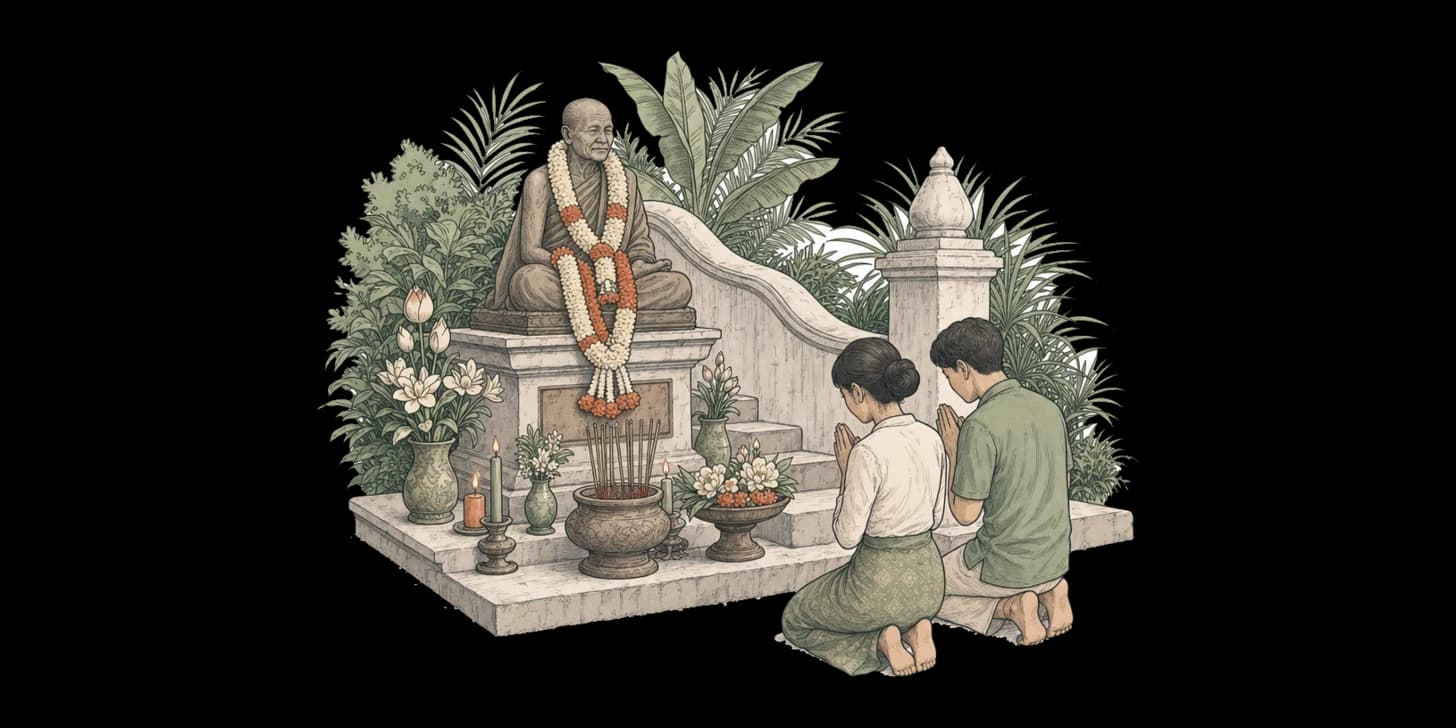
There's a small shrine at the foot of the mountain that most visitors drive straight past on their way up to the temple. A robed figure sits with palms together, draped in fresh jasmine and marigold, watched over by a steady trickle of people who stop, kneel, and press incense into the sand. They aren't honouring a king or a general. They're paying respects to the monk who, within living memory, gave them the very road beneath their wheels — Khruba Srivichai, the saint of Lanna.
A monk the North claimed as its own
Khruba Srivichai was born in 1878 in a village in what is now Lamphun province, into the world of the old Lanna kingdom — a culture with its own language, script, and Buddhist traditions, distinct from the Siam ruled out of Bangkok. If you've read our piece on the history of the Lanna kingdom, you'll understand why a Northern holy man could become something close to a folk hero.
Ordained as a young man, he soon earned a reputation for unusual discipline, simplicity and gentleness. People began to call him a ton bun — a person of accumulated merit, almost a living saint. He was a monk not of rank or title but of the people, and the people loved him for it.
The road that shouldn't have been possible
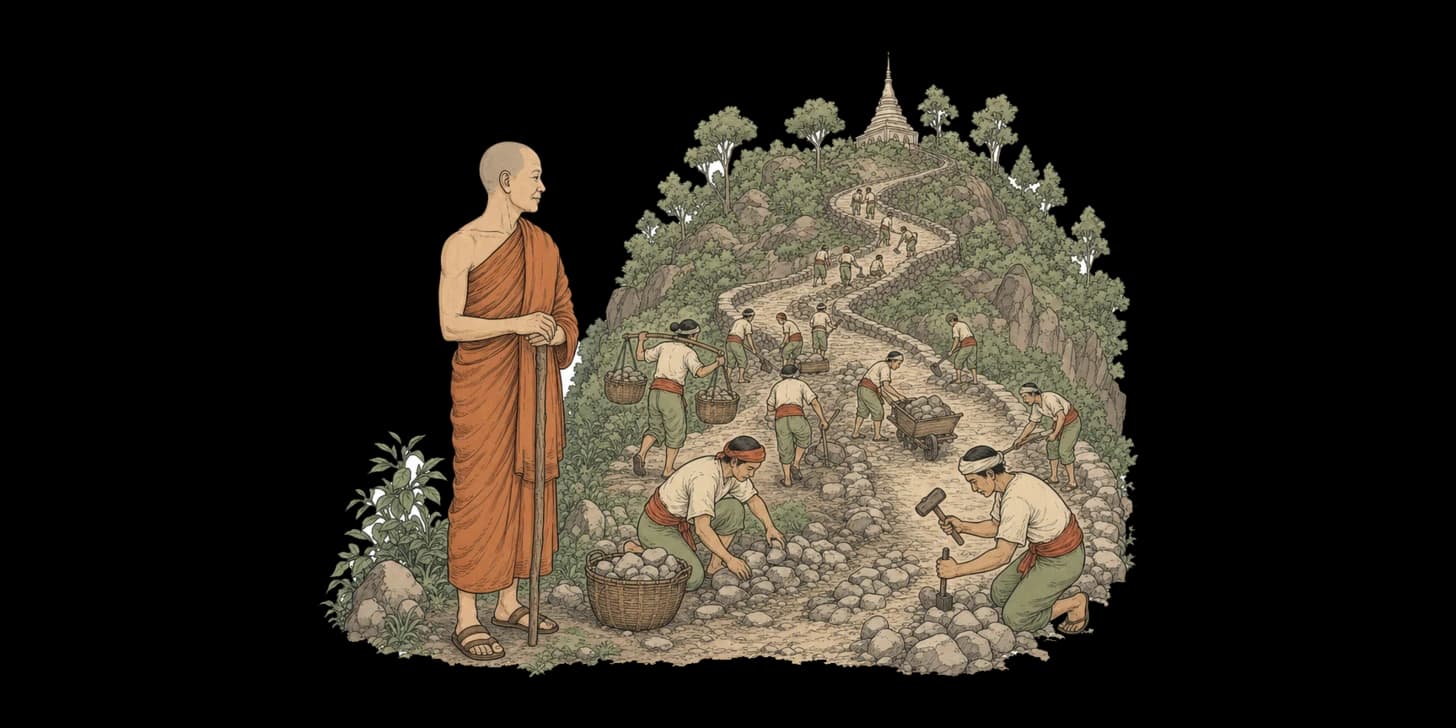
The feat that sealed his legend is the one you can still drive today. In the early 1930s, reaching Wat Phra That Doi Suthep meant a hard climb of several hours on foot up the forested mountain. Khruba Srivichai resolved to change that, and the response to his call still beggars belief.
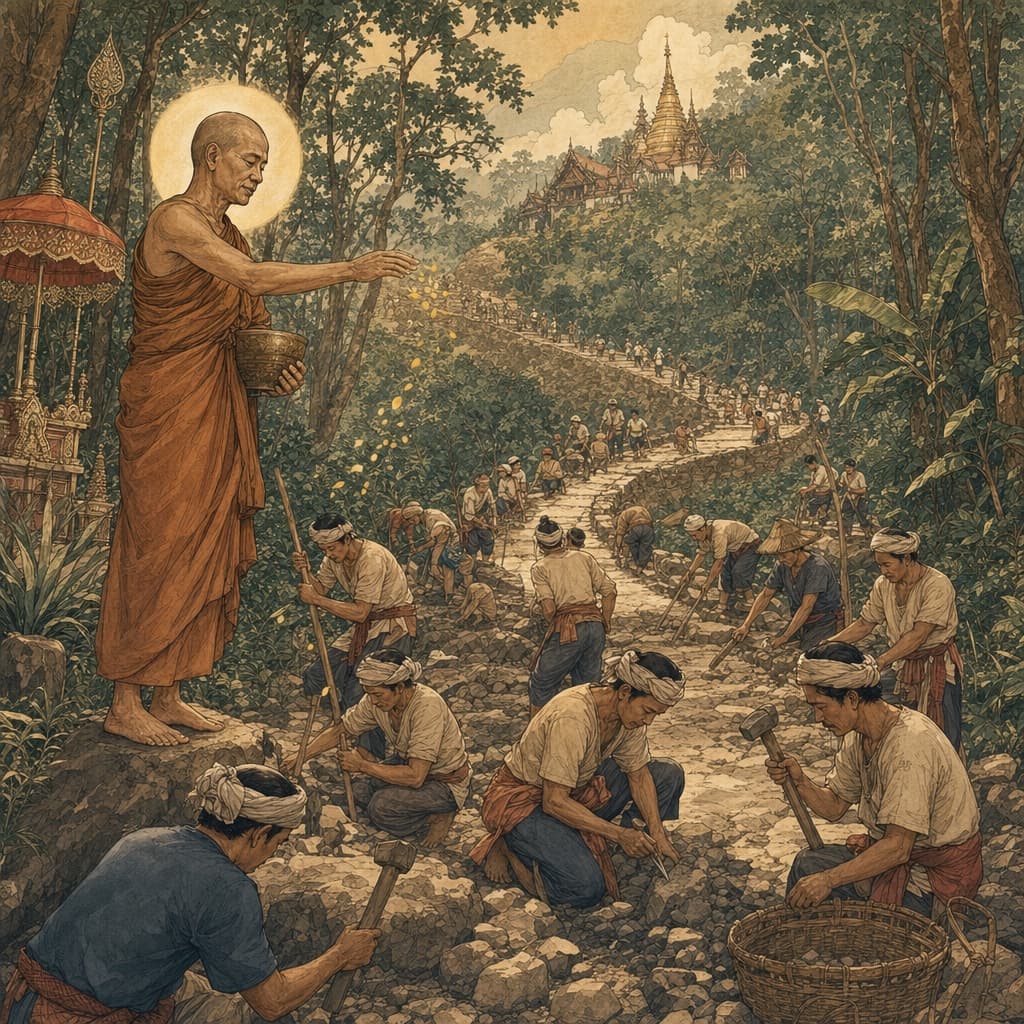
Work began on 9 November 1934, at the start of the dry season. Tens of thousands of volunteers streamed in from across the North — whole villages arriving with their own tools, food and oxen, asking only to take part. There were no bulldozers, no machinery of any kind; the roughly 11.5-kilometre road was cut, levelled and laid by hand. Communities organised themselves to take turns on assigned stretches, one village handing its section to the next, so the work never stopped. The road opened on 30 April 1935 — barely five to six months later, just before the rains. People still speak of it as a small miracle of devotion rather than engineering, and when you next plan a weekend up at Doi Suthep, it's worth remembering that every bend was shaped by a stranger's hands.
A hundred temples brought back to life
The road is only the most famous of his projects. Across his life, Khruba Srivichai and his disciples are credited with building or restoring well over a hundred temples throughout Northern Thailand — among them the great Wat Suan Dok and Wat Phra Singh in Chiang Mai. His method was always the same: he didn't command, he inspired. He would arrive at a crumbling temple, set up quietly, and let his presence draw the volunteers, the donations and the labour that the work needed. Faith did the rest.
Friction with Bangkok
Such enormous, freely-given popularity was not without its dangers. Khruba Srivichai ordained monks, led restorations and moved tens of thousands of people without waiting for permission from the central sangha authorities, who by then were tightening Bangkok's control over Buddhism across the kingdom. To better appreciate why that mattered, our guide to understanding Thai Buddhism is a gentle place to start.
More than once he was summoned, investigated and temporarily restricted from his religious duties. He bore it, by every account, with patience and without bitterness — which, to the people of the North, only confirmed what they already believed about him.
Miracles, devotion and a saint who never quite left
Around a figure so loved, stories naturally gathered. Devotees tell of rains that held off until the road was finished, of his blessings bringing protection and good fortune, of amulets bearing his image keeping their wearers safe. We share these the way they're told — as a beloved, living tradition rather than documented fact — because the devotion itself is real and worth honouring. When Khruba Srivichai passed away in 1939, the grief across the North was immense, and his veneration has only deepened in the decades since.
Paying your respects today
You'll meet him before you even start the climb. At the foot of the road up the mountain stands the Khruba Srivichai monument, where locals stop to make an offering and ask for a safe journey before driving up. It takes only a few minutes — a garland, a stick of incense, a quiet moment — and it turns the trip up Doi Suthep into something more than sightseeing.
From all of us at the Ada House team: when you head up the mountain, pause at the foot of it first, and say thank you to the gentle monk who made the way.
Frequently asked questions
Who was Khruba Srivichai?
He was a revered monk born in 1878 in a village in what is now Lamphun province, in the world of the old Lanna kingdom. Known for his discipline, simplicity and gentleness, people called him a ton bun, a person of accumulated merit, almost a living saint. He was a monk of the people, and the North came to love him as a folk hero.
What is he most famous for?
He inspired the building of the road up Doi Suthep. In the early 1930s, reaching Wat Phra That Doi Suthep meant a hard climb of several hours on foot up the forested mountain, and his call to build a road drew a response that still beggars belief.
How was the Doi Suthep road built?
Work began on 9 November 1934, and tens of thousands of volunteers streamed in from across the North with their own tools, food and oxen. There were no bulldozers or machinery of any kind; the roughly 11.5-kilometre road was cut, levelled and laid by hand, with villages taking turns on assigned stretches so the work never stopped. It opened on 30 April 1935, barely five to six months later.
Did he build anything besides the road?
Yes. Across his life, Khruba Srivichai and his disciples are credited with building or restoring well over a hundred temples throughout Northern Thailand, among them the great Wat Suan Dok and Wat Phra Singh in Chiang Mai. His method was always to inspire rather than command, letting his presence draw the volunteers and donations.
Why did he have friction with Bangkok?
He ordained monks, led restorations and moved tens of thousands of people without waiting for permission from the central sangha authorities, who were tightening Bangkok's control over Buddhism. More than once he was summoned, investigated and temporarily restricted from his religious duties, which by every account he bore with patience and without bitterness.
Where can I pay my respects today?
At the foot of the road up the mountain stands the Khruba Srivichai monument, where locals stop to make an offering and ask for a safe journey before driving up. It takes only a few minutes, a garland, a stick of incense, a quiet moment, and it turns the trip up Doi Suthep into something more than sightseeing.