Things to do · June 28, 2026
Royal Park Rajapruek: Chiang Mai's Garden of Gold and Flowers
By The Ada House team
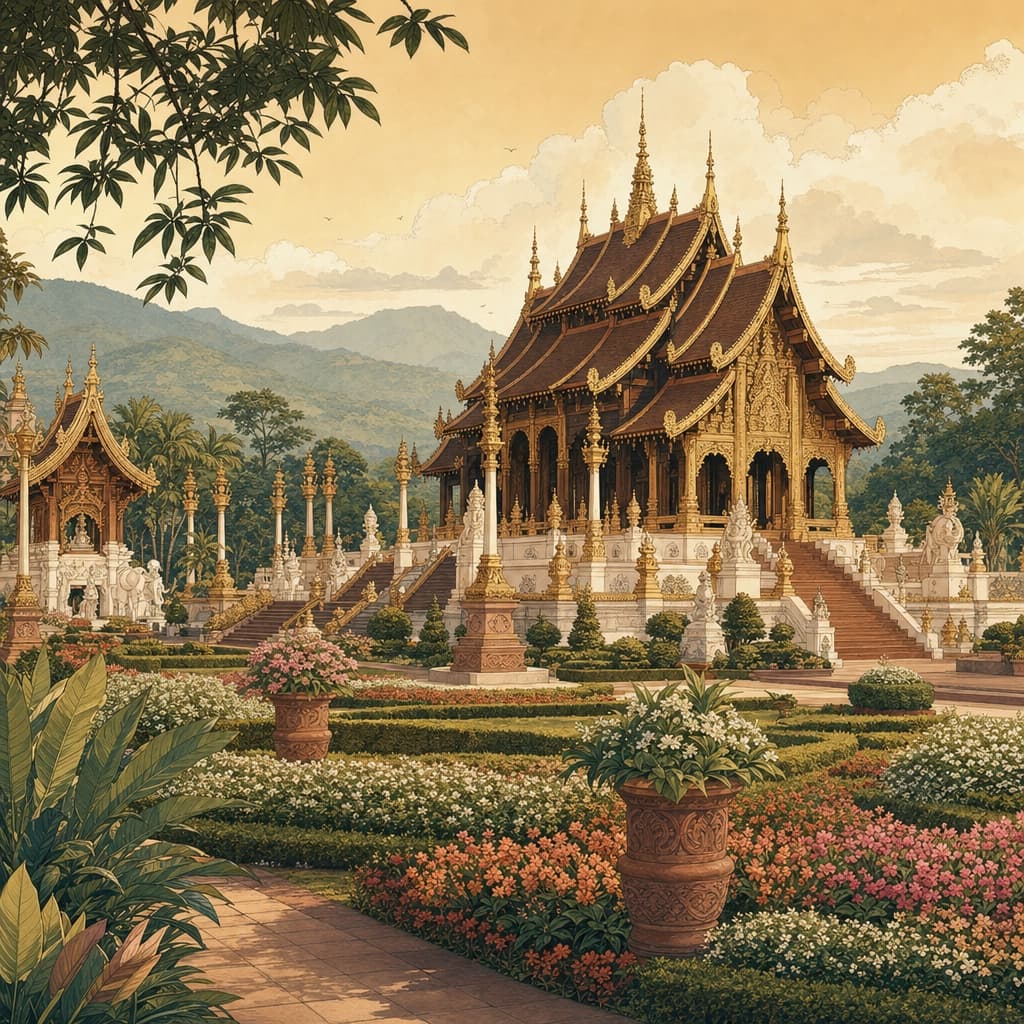
Out on Chiang Mai's south-western edge, in the quiet farming district of Mae Hia, there's a green expanse where a golden Lanna pavilion rises above formal flower beds and gardens themed after a dozen different countries. This is Royal Park Rajapruek (you'll also see it spelled Ratchaphruek), and it's one of those places that locals send first-time visitors to and then quietly enjoy themselves. It's calm, photogenic and easy to love, especially in the cool months. Here's what it is, what it isn't, and how to make a good half-day of it.
A park born from a royal celebration
Rajapruek didn't start life as a park at all. It was built to host the Royal Flora Ratchaphruek, a vast international horticultural exposition held from November 2006 into early 2007 to honour King Bhumibol Adulyadej on the 60th anniversary of his accession to the throne. Dozens of countries sent garden designs, millions of people came through the gates, and when the expo closed the grounds were simply too lovely to dismantle. So the site was kept on as a permanent public garden. That royal-agricultural DNA runs all the way through it, in the same spirit as the King's celebrated highland development work that we cover in our piece on the Royal Project and where to buy its produce.
Not the Queen Sirikit Botanic Garden
This trips people up constantly, so let's clear it up. Rajapruek is not the Queen Sirikit Botanic Garden. The two get muddled because both are large, both are green and both carry royal names, but they are very different days out. The Queen Sirikit garden is a genuine scientific botanic garden up in the hills of Mae Rim, north of the city, with forested trails and a famous treetop canopy walkway. Rajapruek is a landscaped exposition park on flat ground much closer to town. Think manicured beds, ornamental pavilions and a stroll, rather than research glasshouses and a mountainside hike. If you only have time for one, choose by mood: Rajapruek for gentle, pretty and easy; Mae Rim for wilder and more immersive.
The Ho Kham Royal Pavilion
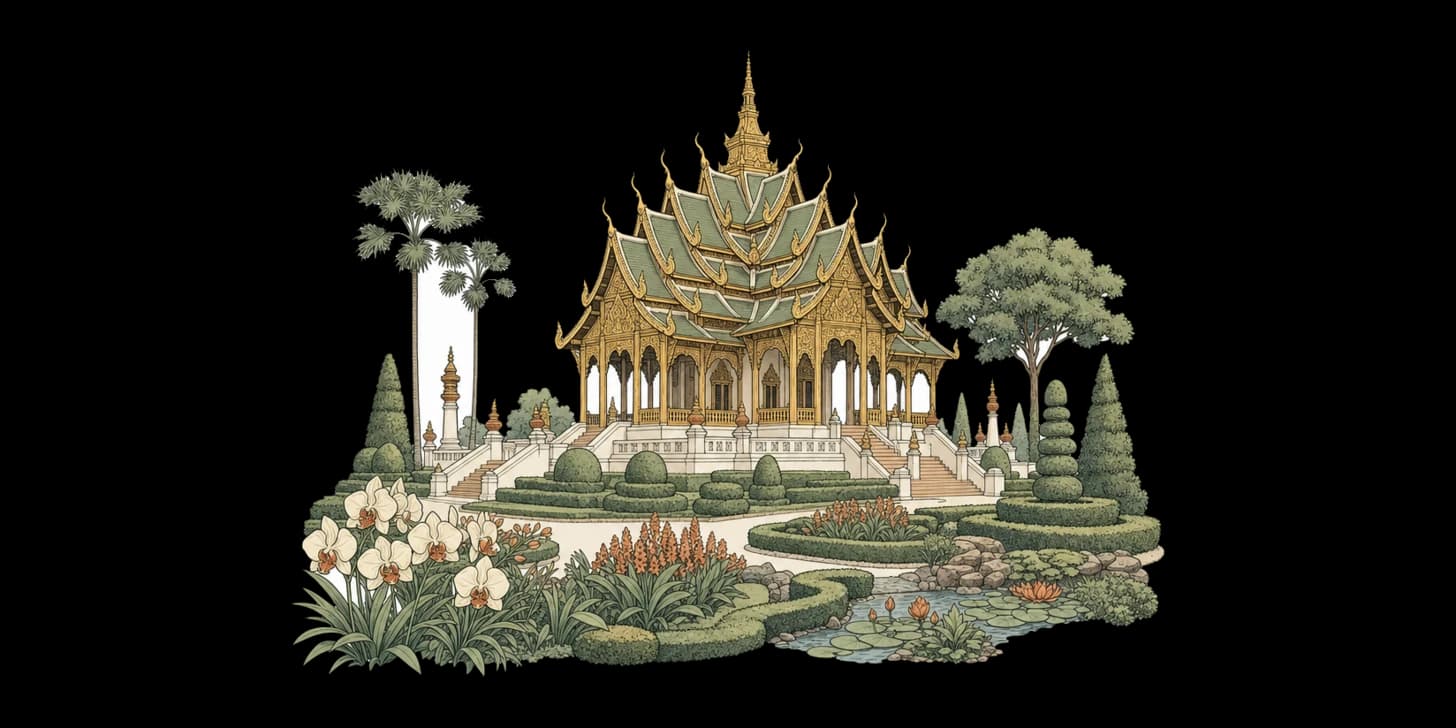
The undisputed centrepiece is the Ho Kham Royal Pavilion (Ho Kham Luang), a soaring teak-and-gilt hall built in the grand style of the old Lanna court. Tiered, gleaming roofs, carved gables and a long reflecting approach make it the photo everyone takes home. Inside you'll find displays honouring King Bhumibol's life and work, so it's worth a moment to slow down and observe the quiet respect Thai visitors show here. If you're unsure of the etiquette around royal imagery and sacred spaces, our guide to Thai royal etiquette is a good primer; the short version is dress modestly and follow everyone else's lead.
Gardens from around the world
Beyond the pavilion, the grounds open into a patchwork of themed gardens that's genuinely fun to wander. There are international gardens designed by countries that took part in the original expo, so you can drift from a Japanese garden to a Chinese one to a Korean one in the space of a few minutes. Closer to the heart of the park you'll find a Thai garden, a rose garden, a cactus and succulent collection, and an orchid house that's a highlight in its own right when the blooms are out. It's a tidy, well-kept kind of beauty, more about colour and composition than wild nature, and it photographs beautifully.
Riding the tram and taking it slow
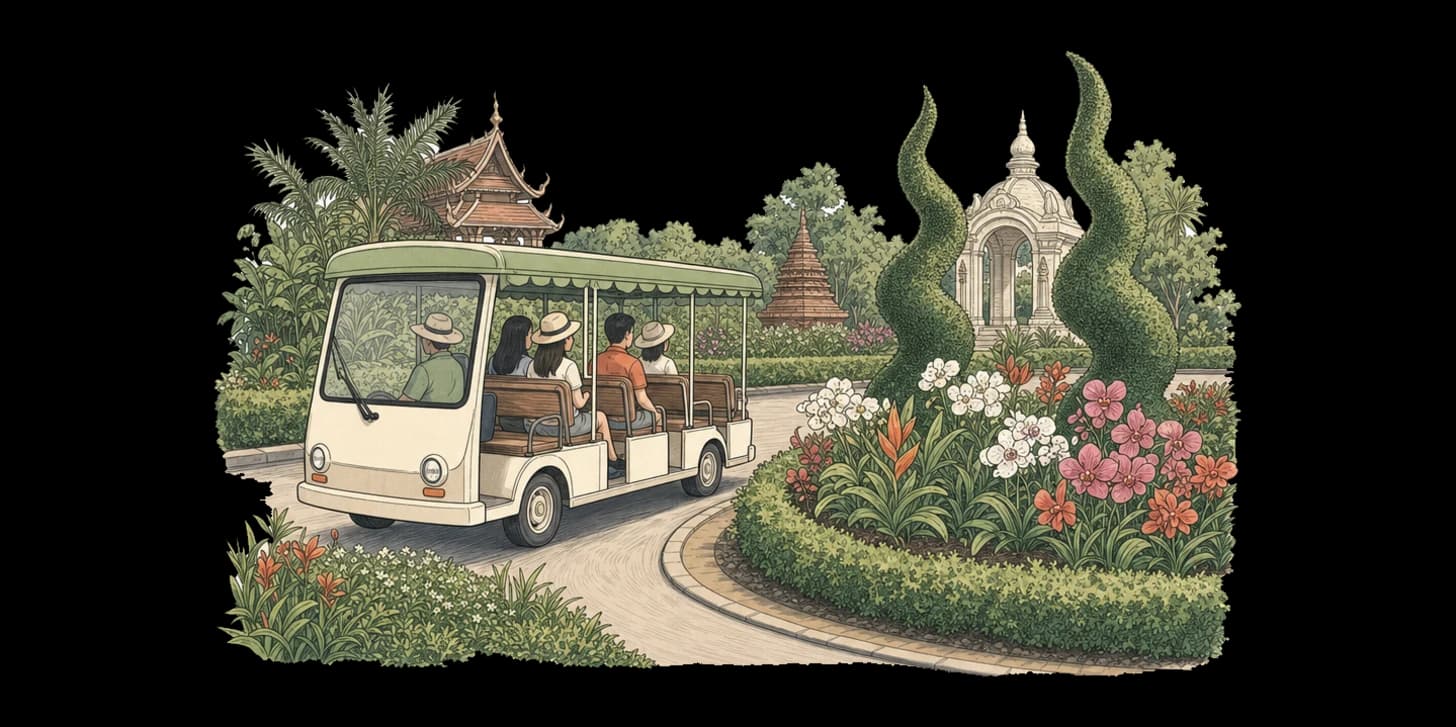
The grounds are large, so an open-sided tram loops the main stops, and it's the easy way to cover ground without wilting in the midday heat. You can hop off at the pavilion or the gardens, look around, and catch the next one along. That gentle pace is exactly what makes Rajapruek such a good spot with little ones, and it earns its place in our round-up of Chiang Mai with kids. It's also a short drive from the Night Safari and zoo, so families often pair the two into a single outing on this side of town.
The winter Flora Festival
If you can time it, come in the cool season. Each year from roughly mid-November through February the park stages its Flora Festival, when the beds are planted out at full tilt and there are seasonal displays, orchid weeks and evening light shows. It's a lovely complement to the city's own famous Chiang Mai Flower Festival in February, and the two together make this the prettiest stretch of the year for garden lovers. The cool months are simply the best time to be outdoors here anyway, as you'll see in our guide to when to visit Chiang Mai.
Practical notes for your visit
Rajapruek sits about 10 to 15 km from the old city, an easy 20 to 30 minutes by car. The simplest option is to take a Grab or a red songthaew towards Mae Hia and Hang Dong; if you'd rather understand all your options first, our overview of getting around Chiang Mai lays them out. The park is open daily, with a modest entry fee (foreign adults paid around 200 baht at the time of writing, less for children), and prices do change, so treat that as a guide rather than gospel. Give yourself two to three hours, bring water, a hat and sunscreen, and aim for the cooler late afternoon if you can. It's an unhurried, photogenic half-day, and a gentle reminder that some of Chiang Mai's loveliest places sit just beyond the moat.
Frequently asked questions
Is Royal Park Rajapruek the same as the Queen Sirikit Botanic Garden?
No, and this trips people up constantly. The Queen Sirikit garden is a genuine scientific botanic garden up in the hills of Mae Rim, with forested trails and a treetop canopy walkway. Rajapruek is a landscaped exposition park on flat ground much closer to town, all about manicured beds, ornamental pavilions and a gentle stroll.
How did the park come to exist?
It was built to host the Royal Flora Ratchaphruek, a vast international horticultural exposition held from November 2006 into early 2007 to honour King Bhumibol Adulyadej on the 60th anniversary of his accession. Dozens of countries sent garden designs and millions came through the gates. When the expo closed, the grounds were simply too lovely to dismantle, so the site was kept as a permanent public garden.
What is the Ho Kham Royal Pavilion?
The Ho Kham Royal Pavilion (Ho Kham Luang) is the undisputed centrepiece, a soaring teak-and-gilt hall built in the grand style of the old Lanna court, with tiered gleaming roofs and a long reflecting approach. Inside you will find displays honouring King Bhumibol's life and work. It is worth slowing down to observe the quiet respect Thai visitors show here, and to dress modestly and follow everyone else's lead.
How do I get around such a large park?
An open-sided tram loops the main stops, and it is the easy way to cover ground without wilting in the midday heat. You can hop off at the pavilion or the gardens, look around, and catch the next one along. That gentle pace makes it a particularly good spot with little ones.
When is the best time to visit, and what is the Flora Festival?
Come in the cool season if you can. Each year from roughly mid-November through February the park stages its Flora Festival, when the beds are planted out at full tilt with seasonal displays, orchid weeks and evening light shows. The cool months are simply the best time to be outdoors here anyway.
How long should I allow, and what does it cost?
Rajapruek sits about 10 to 15 km from the old city, an easy 20 to 30 minutes by car, and we would give yourself two to three hours. The park is open daily with a modest entry fee; foreign adults paid around 200 baht at the time of writing, less for children, though prices do change so treat that as a guide. Bring water, a hat and sunscreen, and aim for the cooler late afternoon if you can.