Things to do · July 5, 2026
A year in Chiang Mai, month by month
By The Ada House team
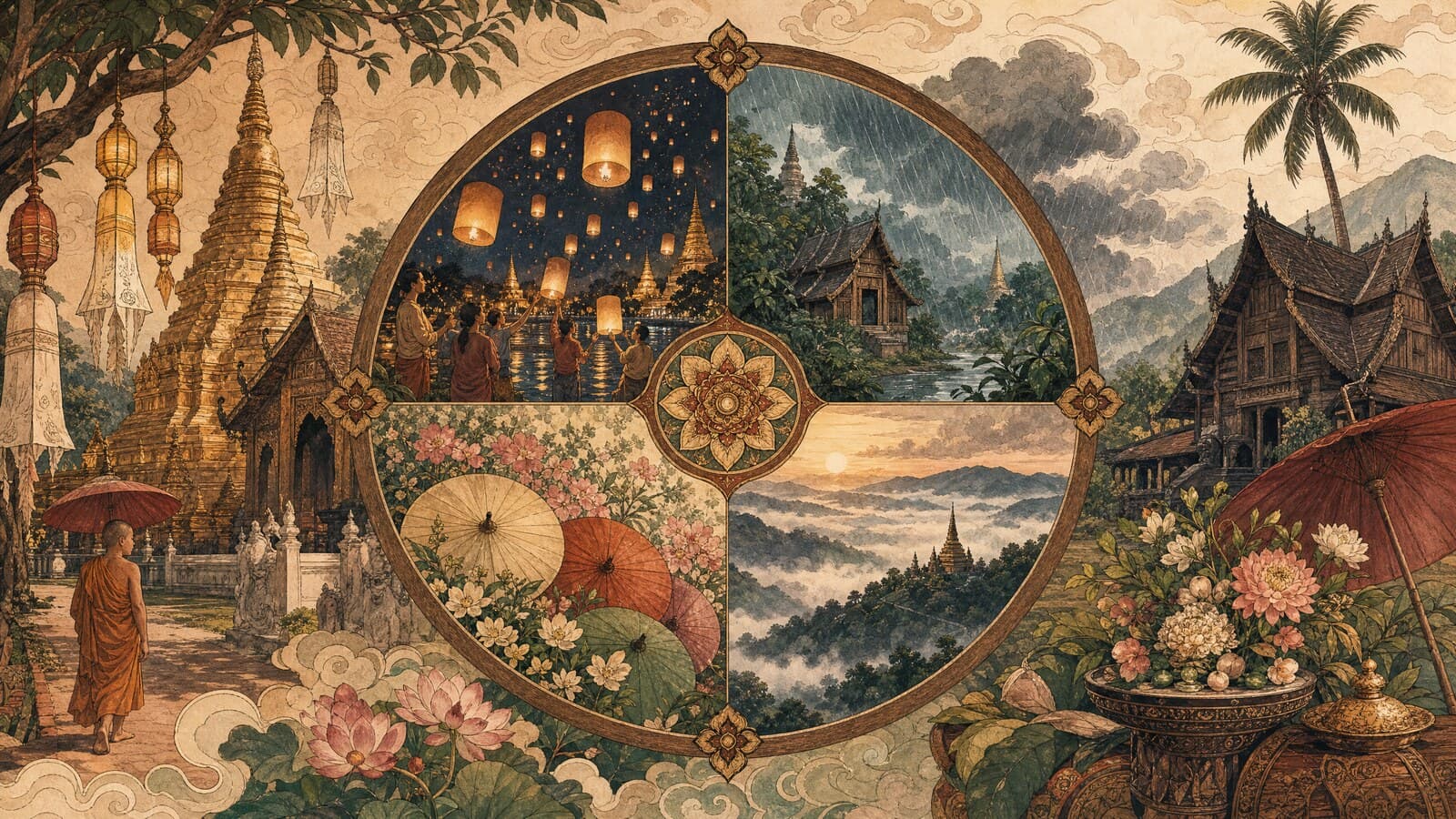
People often ask us to name the best month in Chiang Mai, and after years of watching the seasons turn from our courtyard, we have stopped giving a one-word answer. This is not one city but twelve. The Chiang Mai of January — woodsmoke-sweet, jumper-cold at dawn — has almost nothing in common with the drowned green city of September, or the sweltering, jubilant one of mid-April. So instead of a verdict, here is an almanac: how each month feels on your skin, what blooms and ripens, the festival that defines it, and the one thing we would do without fail. For dates and logistics, our festivals calendar keeps the running tally; this is the year as we actually live it.
January & February — the golden cool
January is the year at its kindest. Mornings arrive cold enough for a proper jumper, the moat steams faintly at seven, and up on Doi Inthanon the meadows crust with near-frost before a sunrise you will not forget. The light is low and golden all day. On the third weekend of January, the umbrella-making village of Bo Sang throws its festival, and cycling out to a street canopied in hand-painted paper is our January ritual. February softens into warmth and bloom: the Chiang Mai Flower Festival fills Suan Buak Hat park for three days, usually early in the month, with a Saturday parade of floats built entirely of petals. It is also strawberry season in the hills — a morning run to the farms at Mon Cham is the thing of the month. Be honest with yourself about timing, though: by late February the first haze often creeps in.
March & April — smoke, then water
We will not dress this up: March is usually the hardest month. Agricultural burning across the north tends to make it the worst air of the year, and on bad weeks the mountain disappears from view. We wrote a frank guide to the burning season — filters, apps, escape routes — because pretending it away helps nobody. April turns the dial to heat instead, the hottest days of the year, and then the city answers with its great cleansing: Songkran, the Thai New Year, officially 13–15 April, when the whole moat becomes a water fight and strangers bless you with a bucket of it. The thing of the month is simply to surrender — buy the water pistol, guard your phone in a dry bag, and let the old year get washed off you.
May & June — the first rains and the city pillar
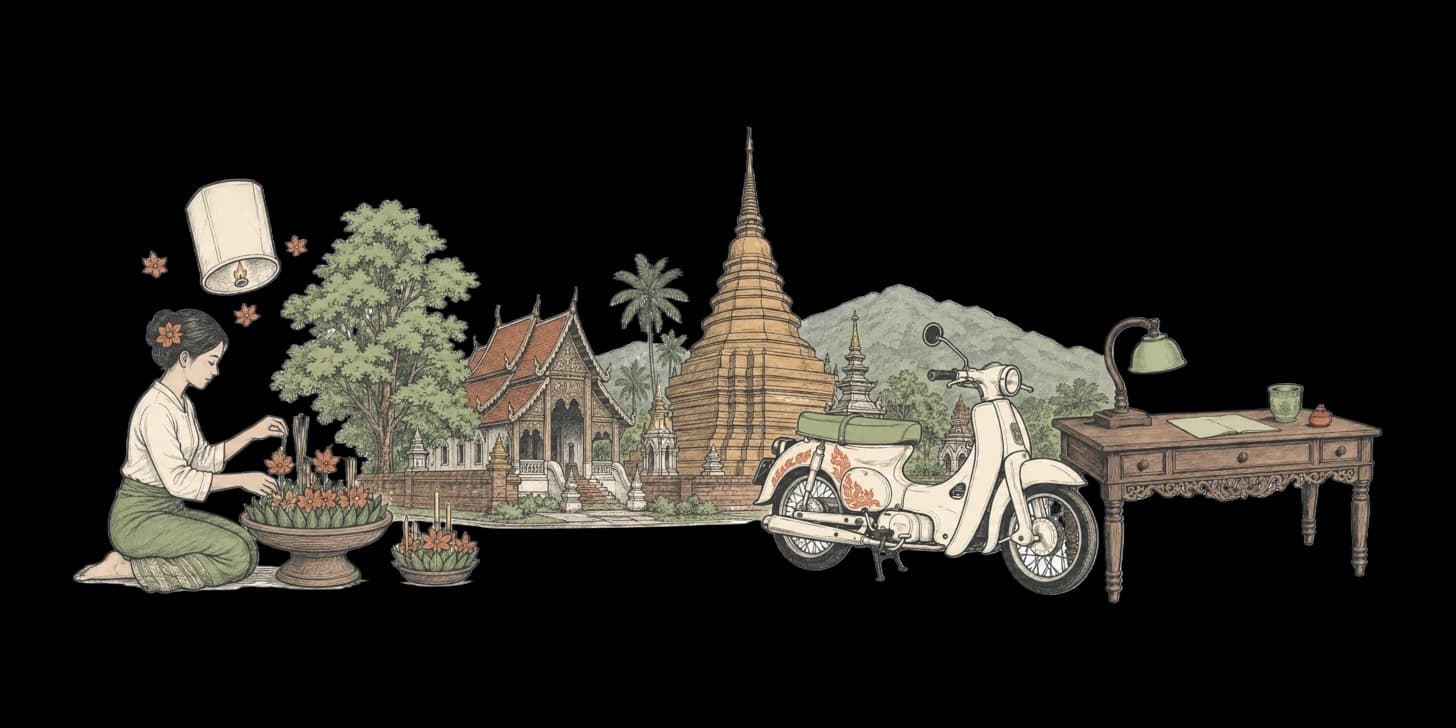
The first real storm of May is an event we celebrate like a festival in its own right: the smell of rain on hot brick, the temperature dropping ten degrees in an hour. This is mango season at its sweetest, and the markets turn gold with them. It is also when the city renews its oldest promise — the Inthakhin festival at Wat Chedi Luang, held to the lunar calendar (usually late May or early June), when thousands come for around eight evenings to lay flowers at the city pillar and ask for rain and protection, as Chiang Mai has done for centuries. Join them one evening with a tray of blossoms; it is the quietest, most local-feeling ritual of the year. June settles into a green rhythm — brief afternoon downpours, rice paddies being planted, the tourist crowds long gone.
July & August — deep green
By July the monsoon has found its manners: most days follow the same score of bright mornings, a theatrical hour of afternoon rain, and rinsed, cool evenings. It is nothing like the washout newcomers fear, and our guide to the rainy season exists mostly to say so. July usually brings Khao Phansa, the start of Buddhist Lent, which begins the day after the full moon of the eighth lunar month — monks withdraw to their temples for the three-month rains retreat, and candles are carried in procession to light their study. The mountains, meanwhile, are waking up: this is when the waterfalls around Chiang Mai go from trickle to thunder. August is the deepest green of the year, jungle-thick and glorious, and with the city at its quietest it is honestly the best-value stretch of the calendar. Thing of the month: a waterfall day, any waterfall, immediately after rain.
September & October — the last downpours
September is usually the wettest month, and we owe you the honest version: the rain comes heavier and longer now, and in a bad year the Ping can rise until a few low-lying riverside streets flood for some days. The city shrugs, sweeps, and carries on — but pack patience with your poncho. Then October performs one of the great mood-swings in weather: the downpours space out, the sky scrubs itself a deep blue, and the countryside is greener than it will be all year. Ok Phansa, on the full moon usually falling in October, releases the monks from their retreat and fills the temples with candlelight. This is the perfect window for the Bua Tong sticky waterfalls, where you walk straight up the limestone cascade barefoot — at their brilliant, grippy best with the rains just ended.
November & December — lanterns and cold mornings
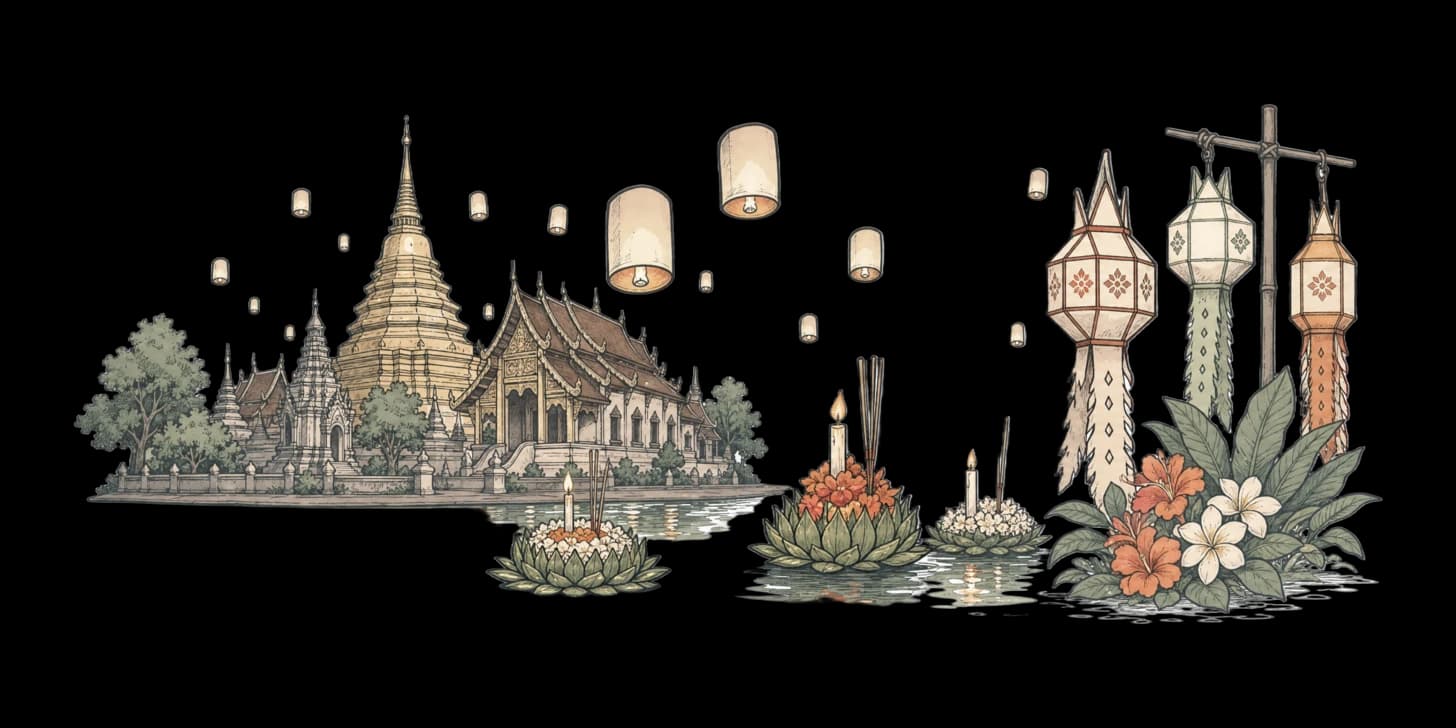
November is the month people cross the world for, and it earns it. On the full moon of the twelfth Thai lunar month — usually in November — Loi Krathong and the Lanna festival of Yi Peng arrive together: krathongs of banana leaf and marigold set drifting on the Ping, and thousands of paper lanterns rising over the Old City in the most quietly astonishing sight this town produces. The cool season follows on its heels. December mornings turn crisp again, the light goes gold, and the city laces up — the Chiang Mai Marathon sets off from Tha Phae Gate before dawn on a December Sunday each year, and running here is suddenly a pleasure rather than a penance. New Year's Eve ends the almanac the way it should: lanterns lifting off from Tha Phae Gate into the cold, clear dark.
How to choose your month
Here is the honest answer we give at our own breakfast table. Come November to early February for the classic postcard — cool, golden, festive. Come July to October if you want the green, generous, uncrowded city we privately love most. Avoid March if clean air matters to you, and embrace April only if you are ready to get wet. Our when-to-visit guide breaks down the practicalities, but the real conclusion after years of living all twelve months is this: there is no bad month in Chiang Mai. There are only twelve different cities, and the pleasure of discovering which one is yours.
Frequently asked questions
What is the best month to visit Chiang Mai overall?
There is no single best month — only twelve different cities. For the classic postcard of cool, golden weather and festivals, come between November and early February. For the green, uncrowded Chiang Mai locals privately love most, come July to October.
When is Chiang Mai cheapest and quietest?
The deep green months of July and August are the best-value stretch of the calendar: the monsoon settles into bright mornings with a short afternoon downpour, the crowds are long gone, and the city is at its quietest.
Which month has the worst air quality in Chiang Mai?
March is usually the hardest month. Agricultural burning across the north tends to make it the worst air of the year, with the first haze often creeping in from late February. If clean air matters to you, avoid March.
When is the Yi Peng lantern festival in Chiang Mai?
Yi Peng and Loi Krathong arrive together on the full moon of the twelfth Thai lunar month, which usually falls in November. Exact dates shift each year with the lunar calendar, so check the current year before booking.
How bad is the rainy season in Chiang Mai really?
Less than newcomers fear. From July the pattern is bright mornings, a theatrical hour of afternoon rain, and cool rinsed evenings. September is usually the wettest month, and in a bad year the Ping river can flood a few low-lying riverside streets for some days.
Do I need warm clothes for Chiang Mai's cool season?
Yes — pack a proper jumper. December and January mornings turn genuinely crisp in the city, and on Doi Inthanon the meadows can crust with near-frost before sunrise, so bring an extra layer for mountain trips.