Things to do · June 28, 2026
Mon Cham: Strawberry Farms and Ridge-Top Views Above Mae Rim
By The Ada House team
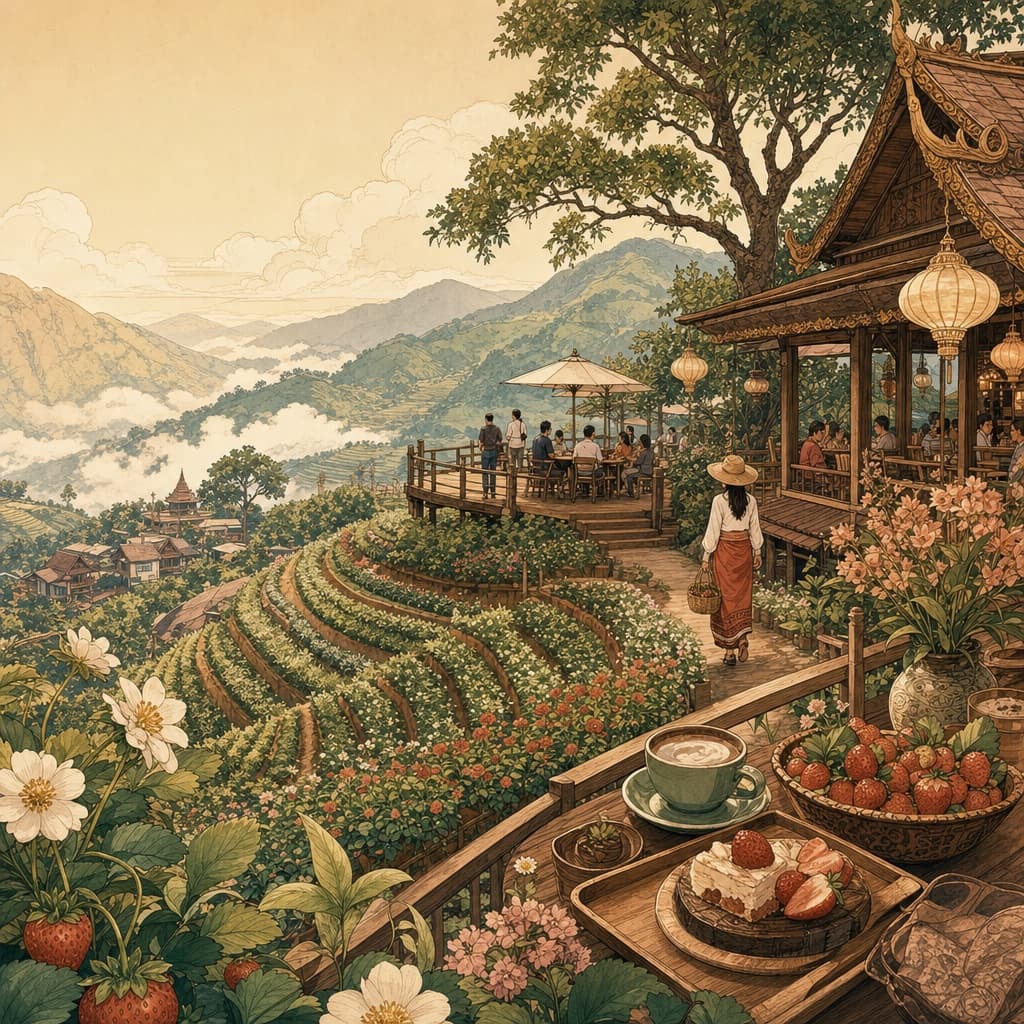
Some Chiang Mai day trips are built around a single temple or a single waterfall. Mon Cham is built around a whole hillside. Perched on the spine of Doi Mon Jam in the Mae Rim hills, an hour or so north-west of the old city, it is a ridge of neatly terraced flower beds and strawberry rows that tumbles away into a sea of green folds and, on a good cool-season morning, an actual sea of cloud. You will see it written as Mon Jam, Mon Cham or Mon Jaem depending on who romanised it — they are all the same place, and all of it sits inside one of Thailand's quietly remarkable farming stories.
From opium fields to strawberry rows
A century ago these slopes grew opium. The community here is largely Hmong, and like many of the highland villages we write about in our guide to the hill tribes of northern Thailand, they once depended on a crop the country was trying to leave behind. The turning point came in 1969, when King Bhumibol first visited the area; the Nong Hoi Royal Development Project that grew out of those visits was formally set up in the 1970s to replace opium with temperate crops that thrive at altitude — strawberries, winter vegetables, herbs and flowers. Today the project lands climb from around 780 to over 1,400 metres, and the old poppy fields are rows of lettuce and berries. If that arc interests you, it is the same one we trace across the whole Royal Project network.
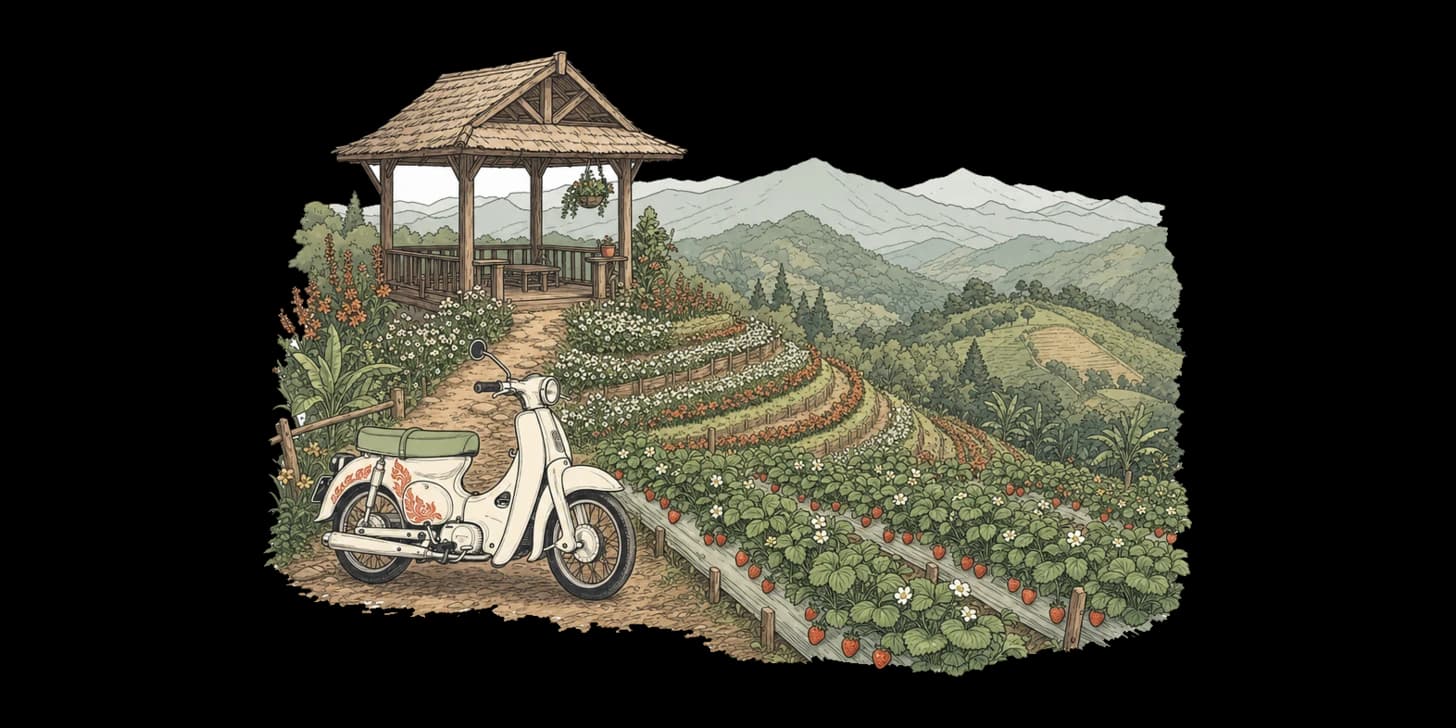
The view from the ridge
The reason most people make the climb is the viewpoint itself. From the top of Mon Cham the land drops away on almost every side, giving you a near-360-degree sweep over ridge after ridge of forested mountain. In the cool months a low mist often pools in the valleys at dawn, so the first hour after sunrise can feel like standing above the clouds. It photographs beautifully — there is a scattering of swings, wooden decks and flower borders set up precisely for that — but it is just as good simply to find a quiet patch of grass, order a coffee, and watch the fog burn off.
Strawberries, flowers and the farm shops
The farming is not a backdrop; it is the main event. In the cool season, roughly November to February and sometimes lingering into March, the strawberries come in — including the Prarachatarn variety developed through the Royal Project — and small farm shops along the road sell them fresh by the punnet, often with the plants right behind the till. It is the most local way to enjoy them; for the wider cast of fruit you will meet down in the markets, our Thai fruit guide is a good companion. The same cool weather brings the flower fields into bloom, with sunflowers, lavender beds and daisies timed across the season — a smaller, year-round cousin to the city's big flower festival.
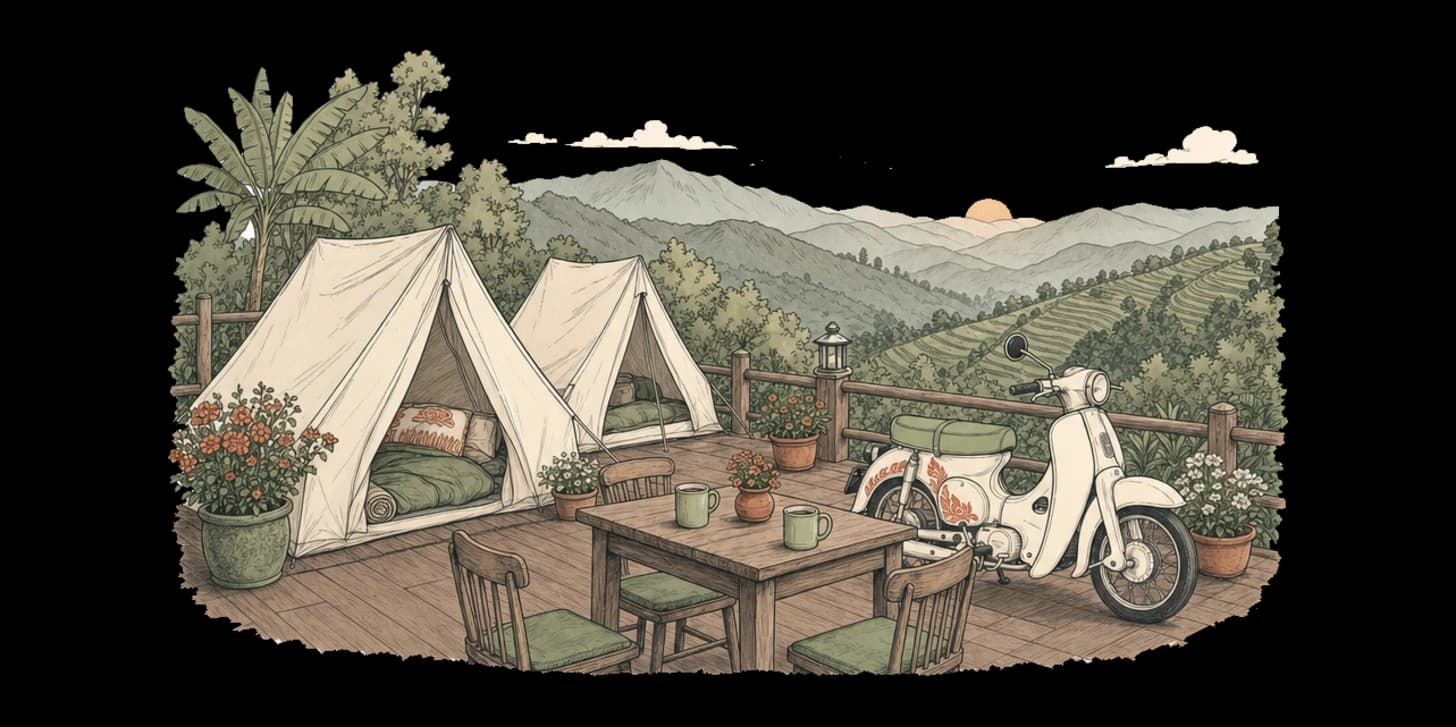
Cafes, camping and waking up on the ridge
Mon Cham has quietly become cafe country. A cluster of viewpoint cafes and simple Thai eateries line the top of the ridge, most of them angled at the panorama, serving coffee, sweet strawberry drinks and honest plates of northern food at very fair prices. If a few hours is not enough, you can stay: the hill is dotted with camping pitches and glamping tents, from bare-bones canvas to kitted-out bell tents with proper beds. Waking up to the mist and walking out to the viewpoint before the day-trippers arrive is, for our money, the best way to experience the place.
Getting there: the winding road from Mae Rim
Mon Cham is genuinely a mountain road. You head north out of the city on Highway 107 to Mae Rim town, then turn up into the hills on Route 1096 — the same valley that holds the Queen Sirikit Botanic Garden — before the final few kilometres steepen sharply into tight hairpins. A car handles it comfortably. On two wheels it is doable but demands a confident rider and a healthy machine; if you are still finding your feet, read our notes on renting a scooter first, and treat this as a step up from a gentle run like the Samoeng Loop. If you would rather not drive at all, plenty of half-day tours fold Mon Cham in.
Choosing your season
Timing makes or breaks this trip. The window to aim for is the cool season, November to February, when the air is clear, the strawberries are ripe and the morning fog is at its best — broadly the same advice we give for when to visit Chiang Mai generally. Avoid the burning season of roughly March and April, when smoke haze flattens the view that is the whole point of coming; our burning season guide explains why. Whenever you come, come early — for the parking, for the mist, and to have the ridge to yourself before the weekend crowds drive up from the city.
Frequently asked questions
How do I get to Mon Cham?
Mon Cham is genuinely a mountain road. You head north out of the city on Highway 107 to Mae Rim town, then turn up into the hills on Route 1096 before the final few kilometres steepen sharply into tight hairpins. A car handles it comfortably, while on two wheels it demands a confident rider and a healthy machine. If you would rather not drive at all, plenty of half-day tours fold Mon Cham in.
Why are there different spellings for the place?
You will see it written as Mon Jam, Mon Cham or Mon Jaem depending on who romanised it. They are all the same place, a Hmong farming ridge on the spine of Doi Mon Jam in the Mae Rim hills, about an hour north-west of the old city.
What is the main reason to visit?
The reason most people make the climb is the viewpoint itself. From the top the land drops away on almost every side, giving a near-360-degree sweep over ridge after ridge of forested mountain. In the cool months a low mist often pools in the valleys at dawn, so the first hour after sunrise can feel like standing above the clouds.
When can I see strawberries and flowers, and what is the best season?
Aim for the cool season, roughly November to February and sometimes lingering into March, when the strawberries come in, including the Prarachatarn variety developed through the Royal Project, sold fresh by the punnet at small farm shops. The same cool weather brings the flower fields into bloom. Avoid the burning season of roughly March and April, when smoke haze flattens the view that is the whole point of coming.
Can I stay overnight on the ridge?
Yes, the hill is dotted with camping pitches and glamping tents, from bare-bones canvas to kitted-out bell tents with proper beds. Waking up to the mist and walking out to the viewpoint before the day-trippers arrive is, for our money, the best way to experience the place. There is also a cluster of viewpoint cafes and simple Thai eateries along the top of the ridge.
What is the story behind the farms?
A century ago these slopes grew opium, farmed by the largely Hmong community here. The turning point came in 1969 when King Bhumibol first visited, and the Nong Hoi Royal Development Project that grew from those visits was set up in the 1970s to replace opium with temperate crops like strawberries, winter vegetables, herbs and flowers. Today the old poppy fields are rows of lettuce and berries.