Food & coffee · June 17, 2026
A guide to Thai fruit: what to try in Chiang Mai
By The Ada House team
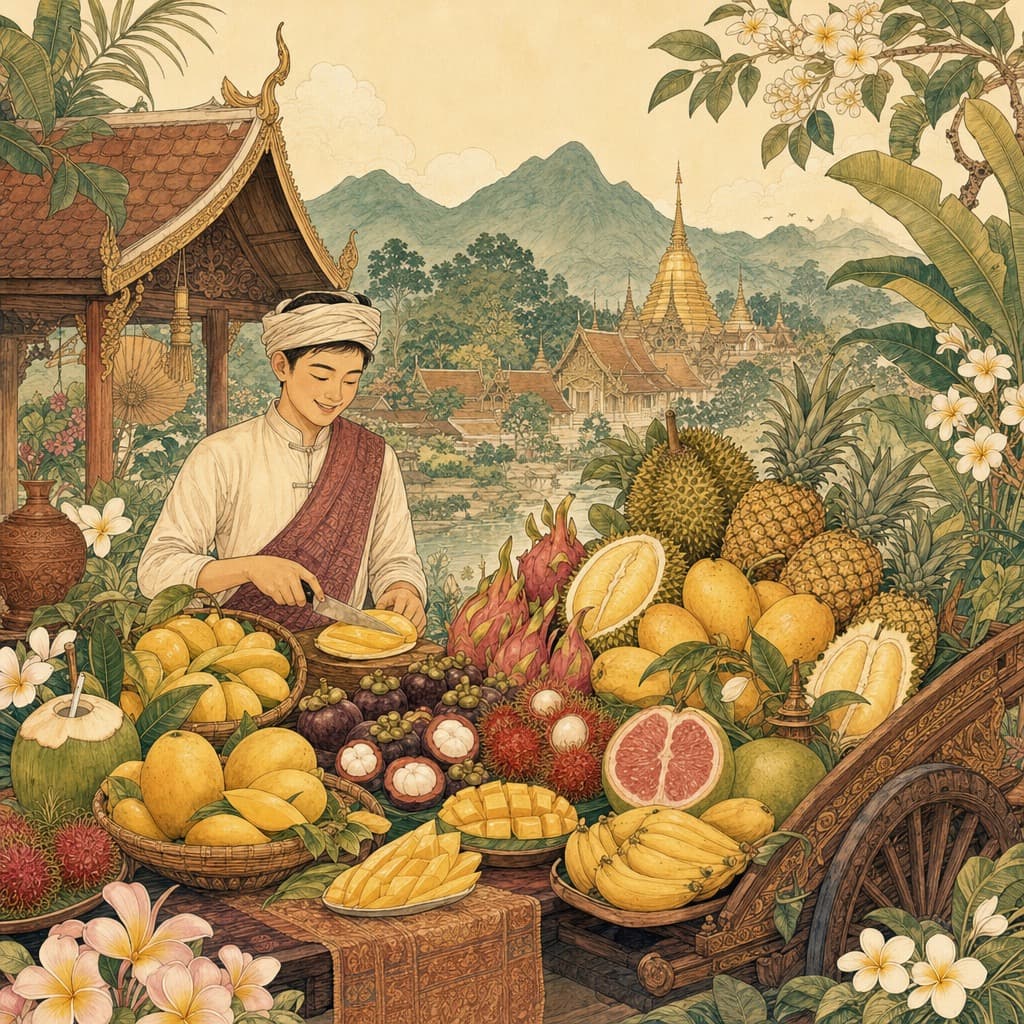
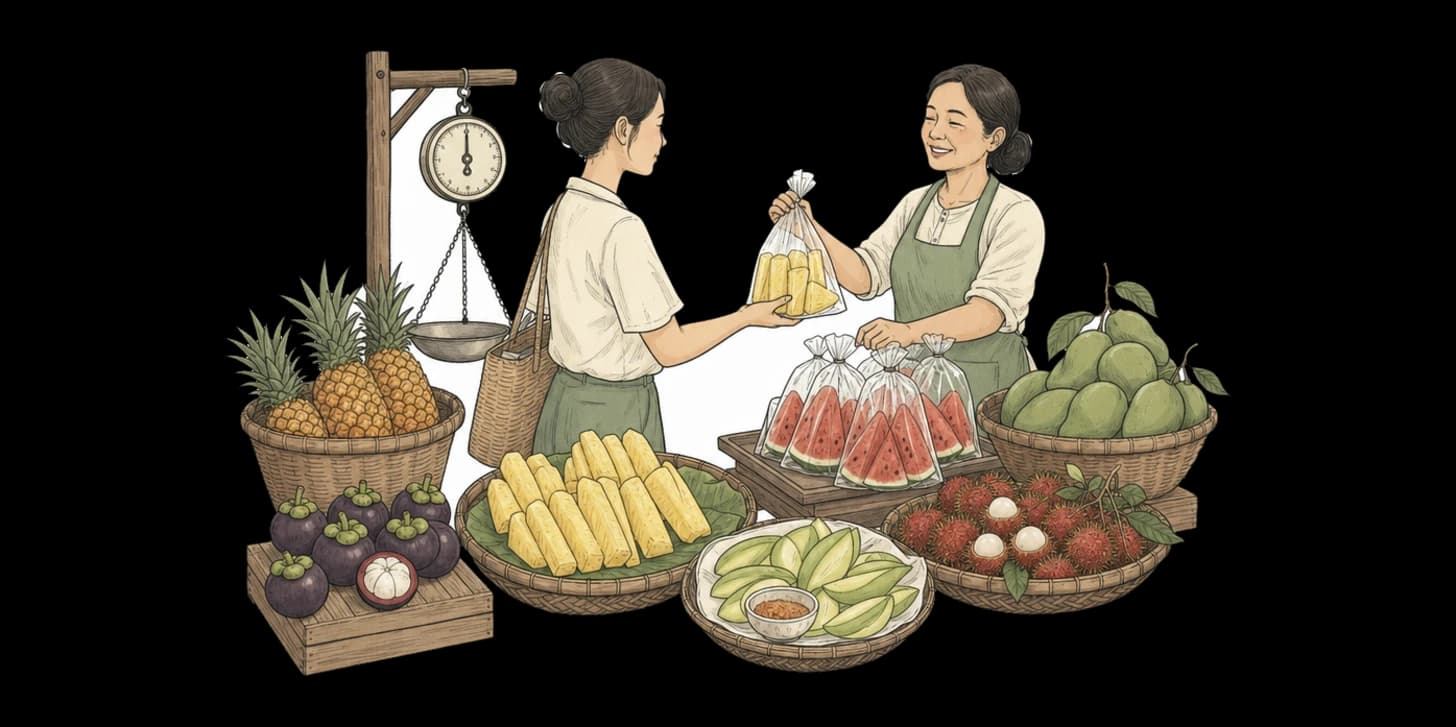
One of the simplest daily pleasures of life in Chiang Mai is the fruit: cheap, ridiculously good, and sold on every corner — whole at the markets, or peeled and cut from a cart for 15–20 THB with a little bag of chili-salt to dip. Here's your friendly guide to what to try, when, and how to eat it like a local.
The royalty
- Durian — the "king of fruits." Famous (infamous?) for its powerful smell and rich, custardy flesh. People either swoon or recoil. It's pricier, sold whole by the kilo or as pre-cut pods — beginners should grab a small portion to taste. One rule: it's banned indoors at most hotels and guesthouses (ours included — that smell lingers), so enjoy it out at the market. Peaks roughly May–August.
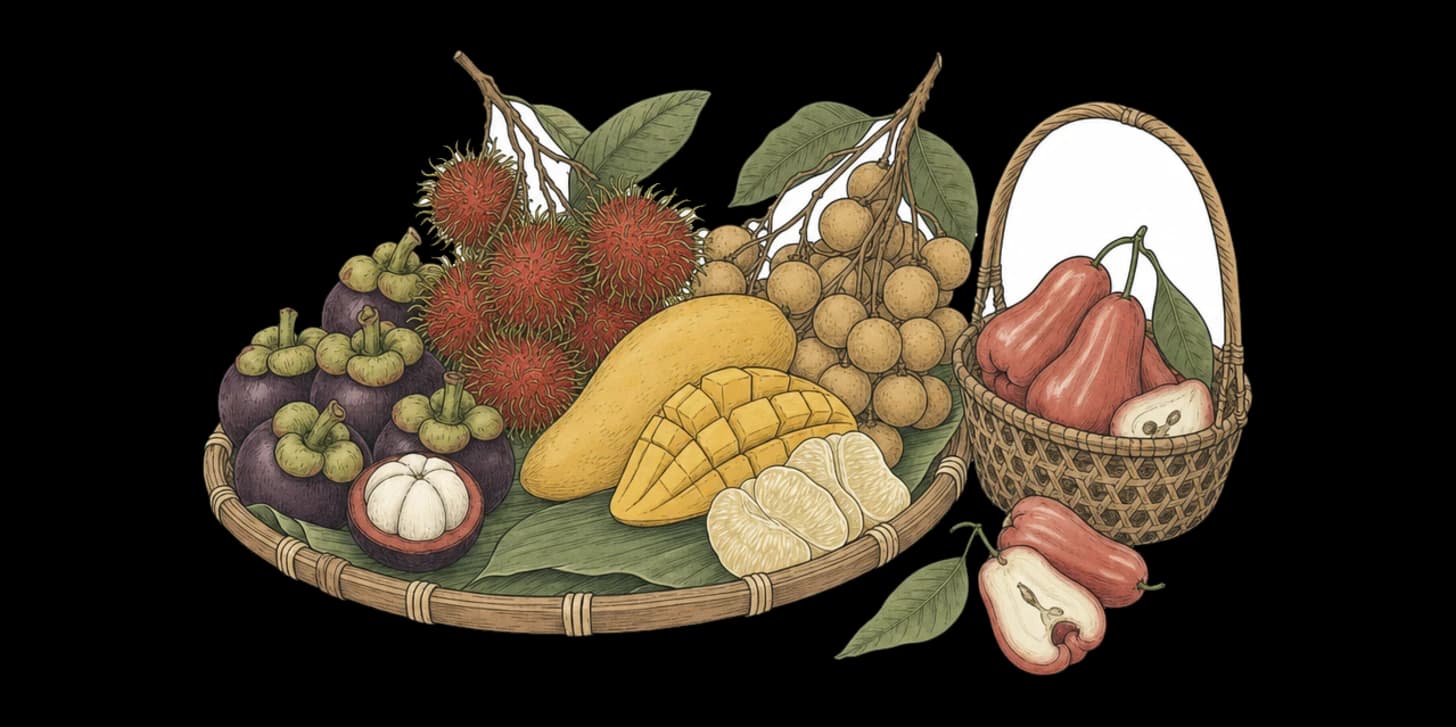
- Mangosteen — the "queen." A thick purple rind cracks open to reveal sweet-tart white segments, like lychee crossed with peach. Easy to love. Best April–September.
The crowd-pleasers
- Mango (mamuang). The star of mango sticky rice — look for fragrant, golden Nam Dok Mai when ripe; peak March–June. Firm green mango is eaten as a tangy snack with chili-sugar or nam pla wan.
- Longan (lamyai). Small brown spheres with sweet, grape-like flesh. Chiang Mai and neighbouring Lamphun, Chiang Mai's quiet ancient neighbour, are the longan country of Thailand — markets overflow with it around July–September.
- Rambutan & lychee. Rambutan's soft-spiky red shell hides juicy, floral flesh (May–Sept); lychee is the short, perfumed delicacy of mid-May to mid-June.
The everyday refreshers
Around all year, and gloriously cheap: pineapple (sweet and aromatic), watermelon, dragon fruit (mild, kiwi-like), papaya (ripe, or shredded green into som tam), pomelo (a gentler giant grapefruit, best Nov–Jan), crisp guava and rose apple, and young coconut for that perfect cold coconut water. A bag of any of these is the ideal desk-side snack on a work day.
Eat it like a local
Thais don't treat fruit as just dessert — it's an all-day snack. A few habits worth stealing:
- Crisp, less-sweet fruits (green mango, guava, rose apple) are eaten with a chili-sugar-salt dip or nam pla wan (palm sugar, fish sauce, chili) — sounds odd, tastes addictive.
- Very sweet fruits (ripe mango, papaya, watermelon) go plain, in smoothies, or in desserts.
- The icons to try: mango sticky rice and som tam (green papaya salad) — more in our Northern Thai food guide.
When to find what
There's something good year-round, but the April–August window is the big show — mango giving way to durian, mangosteen, longan, rambutan and lychee. The cool season (Nov–Feb) brings pomelo, custard apple, tamarind and even northern strawberries. Right now in June, you're in mango-and-early-rainy-season heaven. Exact timing shifts year to year with the weather, so treat any calendar as a guide.
Where to buy
For the best mix of price and fun, skip the supermarket and head to a fresh market — Muang Mai is Chiang Mai's big fruit hub, and vendors will happily peel and cut a whole pineapple or pomelo for you on the spot. Buy pre-cut bags from busy carts (high turnover = fresher), and grab the chili-salt. The night markets and your local morning market are perfect for grazing — and our grocery guide has the full lay of the land.
Our advice: try one new fruit a week, be brave with the durian (just not in your room!), and you'll discover that "exotic fruit" in Chiang Mai simply means "Tuesday." Ask us what's in season when you arrive — we'll point you to the best cart nearby.
Frequently asked questions
Which Thai fruits should I try first?
The royalty are durian, the rich, custardy king of fruits, and mangosteen, the queen, whose thick purple rind cracks open to sweet-tart white segments. Among the crowd-pleasers, mango is the star of mango sticky rice, while longan is a Chiang Mai speciality — the city and neighbouring Lamphun are the longan country of Thailand. Rambutan and lychee round out the seasonal treats.
Why can't I eat durian in my room?
Durian is banned indoors at most hotels and guesthouses — ours included — because that powerful smell really lingers. Enjoy it out at the market instead, where it's sold whole by the kilo or as pre-cut pods. Beginners should grab a small portion to taste, since people either swoon or recoil.
When is fruit in season?
There's something good year-round, but the April to August window is the big show — mango giving way to durian, mangosteen, longan, rambutan and lychee. The cool season from November to February brings pomelo, custard apple, tamarind and even northern strawberries. Exact timing shifts year to year with the weather, so treat any calendar as a guide.
How do locals eat their fruit?
Thais treat fruit as an all-day snack, not just dessert. Crisp, less-sweet fruits like green mango, guava and rose apple are eaten with a chili-sugar-salt dip or nam pla wan (palm sugar, fish sauce, chili) — it sounds odd but tastes addictive. Very sweet fruits like ripe mango, papaya and watermelon go plain, in smoothies or in desserts.
Where should I buy fruit, and how much does it cost?
Skip the supermarket and head to a fresh market — Muang Mai is Chiang Mai's big fruit hub, where vendors will happily peel and cut a whole pineapple or pomelo for you on the spot. A cart will sell you fruit peeled and cut for about 15 to 20 THB with a little bag of chili-salt. Buy from busy carts, since high turnover means fresher fruit.