Local culture · June 27, 2026
Chinese New Year in Chiang Mai: lions, lanterns and the Warorot streets
By The Ada House team
There's a moment every year, somewhere in the cool weeks after the festive season, when the lanes around Warorot Market turn red overnight. Lanterns appear in their hundreds, shopfronts fill with oranges and gold, and a current of excitement runs through the riverside. Chinese New Year has arrived in Chiang Mai — and for those of us who live here, it's one of the most joyful, least touristy festivals on the calendar. Here's what happens, and how to throw yourself into it.
A city with Chinese roots in its bones
People sometimes forget that Chiang Mai has a deep Chinese-Thai community, woven into the city for well over a century. Traders from southern China settled along the Ping River, built shrines, opened shophouses, and turned the area around Kad Luang ("the big market") into a thriving commercial heart. That heritage never went anywhere — it's there in the family-run gold shops, the Teochew and Hokkinen surnames above doorways, and two beloved Chinese shrines, Guan Yu just behind Warorot and Pung Tao Gong by the riverside park. Chinese New Year is simply the moment all of that steps out into the street.
Where it all happens: Warorot and the riverside Chinatown
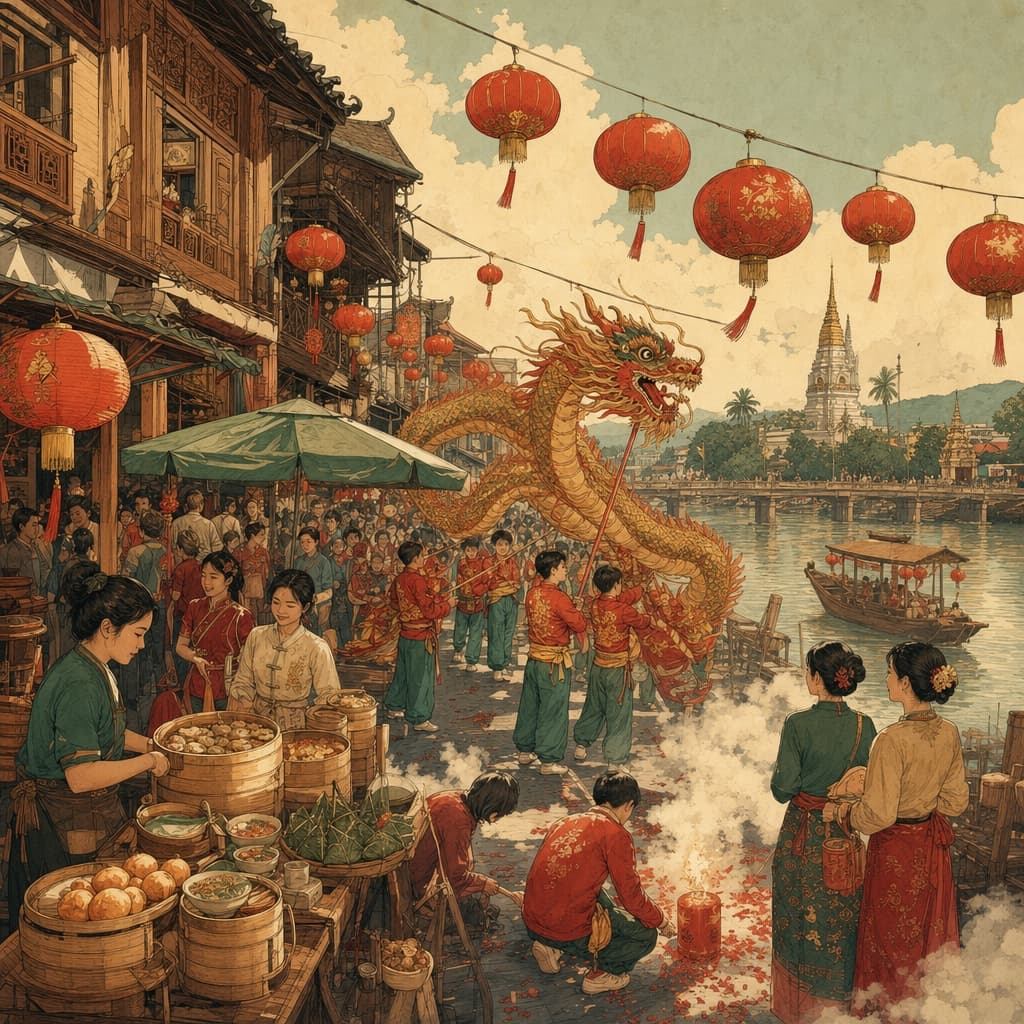
If you want to find the festival, follow the river. The celebrations cluster around Warorot and Ton Lam Yai markets and the warren of lanes that make up Chiang Mai's compact Chinatown. For the two days of festivities the road is closed to traffic and given over to people — a pedestrian haven strung with those iconic red lanterns. If you've never explored this corner of town, our full guide to Warorot Market is the perfect primer, because the New Year crowd flows through exactly the alleys the grandmothers shop in every other day of the year.
Lions, dragons and a sky full of red
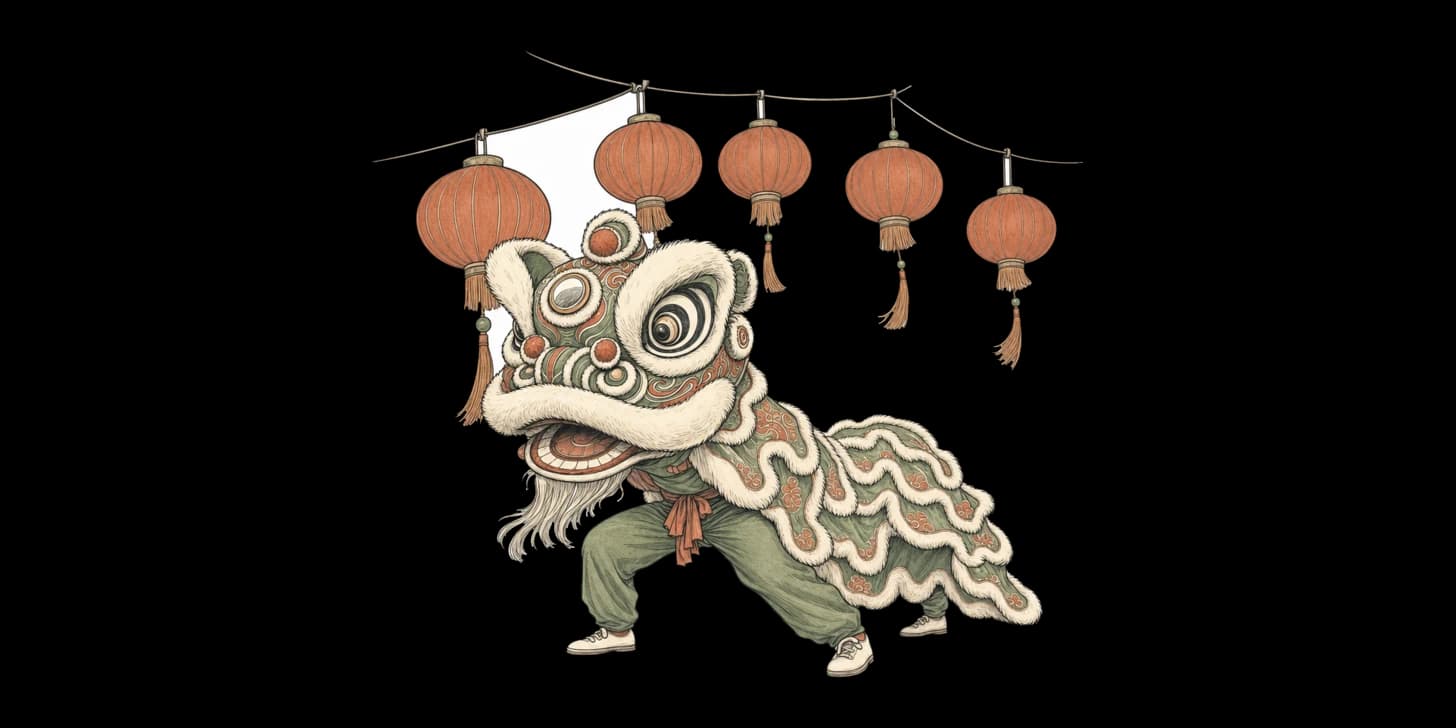
The spectacle is gloriously loud. A grand parade typically sets off from Tha Pae Gate in the morning, winds through Warorot and finishes near the Guan Yu shrine — dragon and lion dancers leaping and weaving, drummers, costumed performers and decorated floats in between. Firecrackers crack and smoke to chase off bad luck; the lion dances pause at shop doorways to bless the year ahead. Come evening, around seven, the stages light up again with dragon shows, dance routines and music that blends Chinese and Lanna traditions. Children dart about clutching lucky-money red envelopes, and the whole quarter hums until late.
The flavours of the New Year
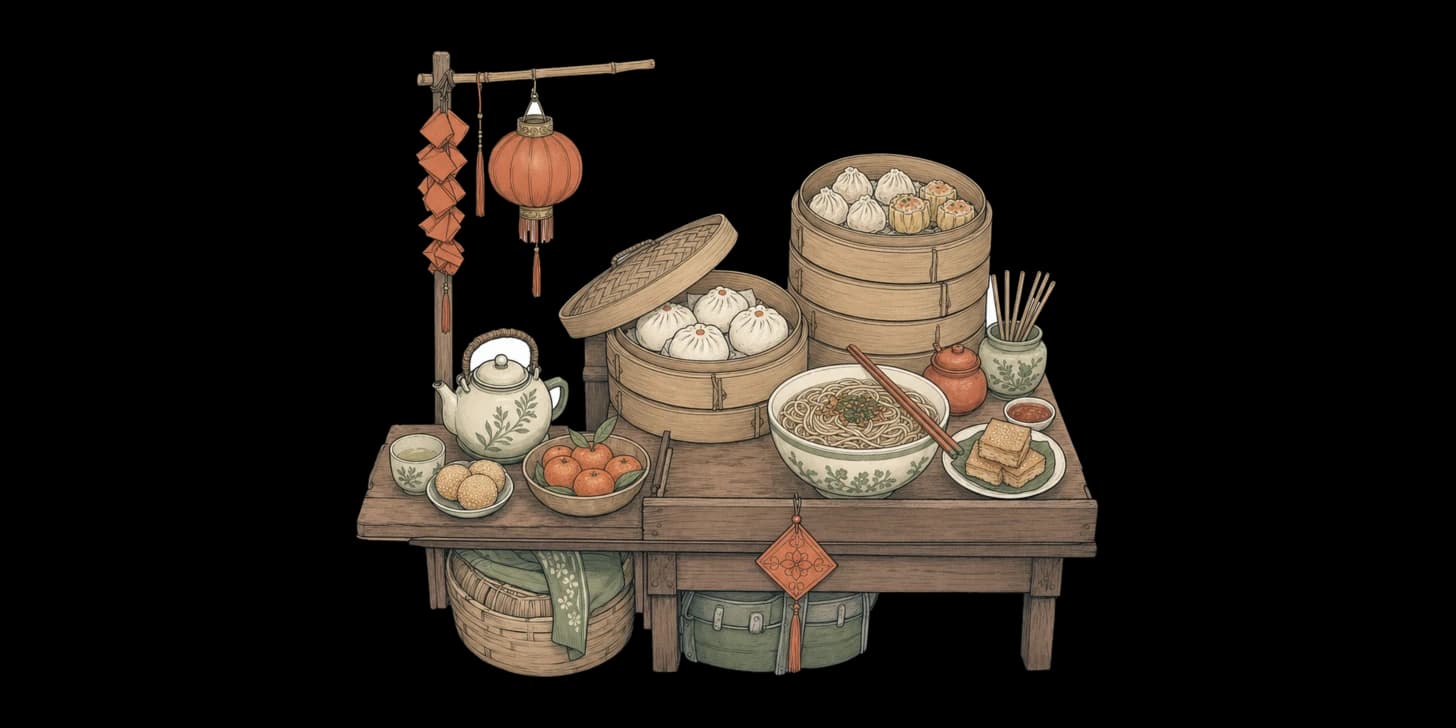
Food is half the festival. More than a hundred stalls line the streets, and the special New Year dishes and sweets come out in force — golden dumplings, steamed cakes, sticky nian gao, oranges by the basket for prosperity, and endless small auspicious bites meant to bring luck and togetherness. Wander with no plan and a little appetite; pointing and smiling works beautifully here. It's some of the best grazing in the city, and the prices stay refreshingly local.
Timing: the lunar calendar and the loveliest season
Chinese New Year doesn't sit on a fixed date — it follows the lunar calendar, falling in late January or February depending on the year. The lucky part for visitors is that it lands squarely in Chiang Mai's cool, dry season, the most pleasant stretch of the whole year for wandering markets after dark. It slots neatly into a packed winter of celebrations, and if you're mapping out a trip you'll find it alongside everything else in our year of Chiang Mai festivals. For the bigger picture on weather and crowds, our guide on when to visit Chiang Mai is worth a read too.
How to join in, respectfully
The wonderful thing about Chinese New Year here is that everyone's welcome. Watch the lion and dragon dances, applaud, and feel free to take photos — though a quiet, respectful moment is appreciated around the shrines, where families come to make merit and light incense. Don't touch the performers or props mid-dance, mind small children near the firecrackers, and if someone wishes you "Sawatdee pee mai jeen" or "Gong xi gong xi," a warm smile back is all that's needed. Come hungry, come curious, and let the crowd carry you.
The wider Chinese thread in Chiang Mai's kitchens
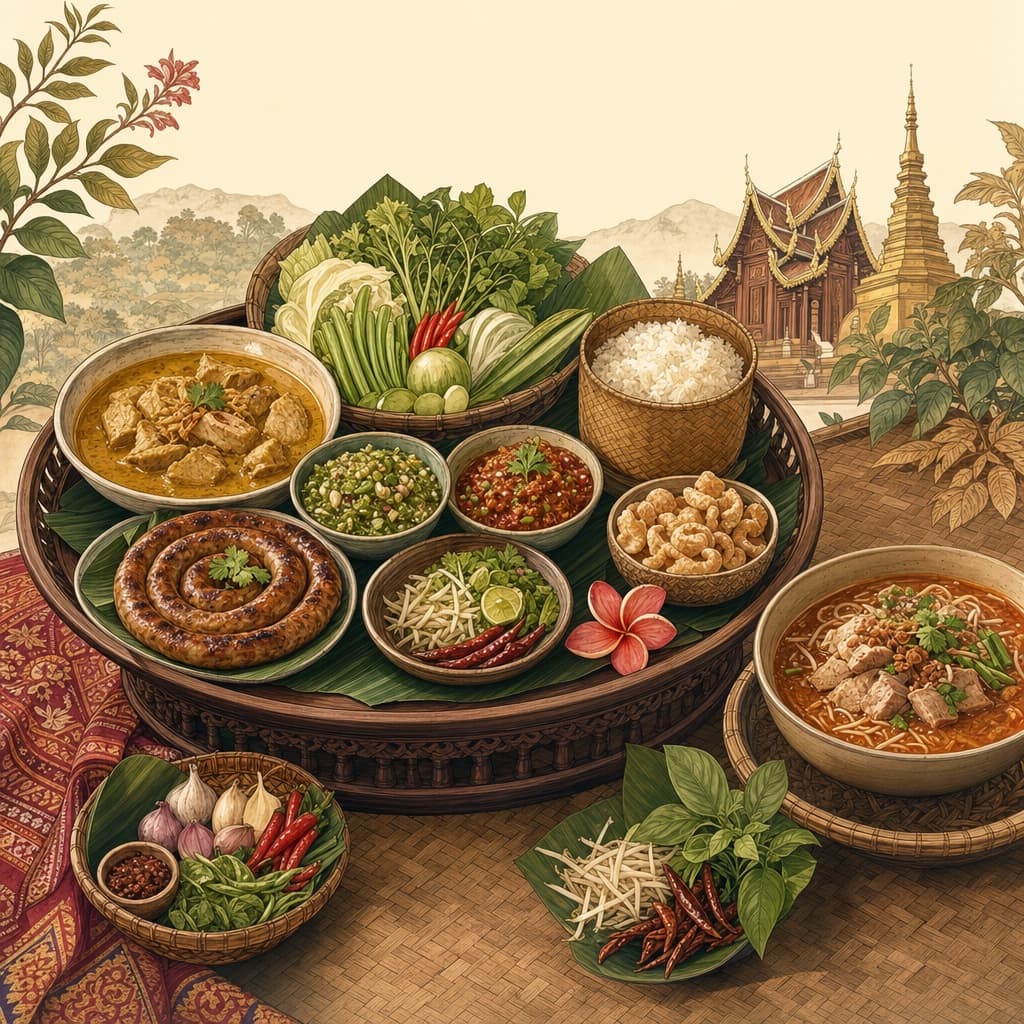
Look closely and you'll notice the Chinese influence lingers long after the lanterns come down. It's in the khao soi noodles, the roast pork hanging in Warorot's stalls, the herbal soups and the very rhythm of the markets themselves. Chinese New Year just turns the volume up on a flavour that's quietly present all year round — one more reason this old riverside quarter is our favourite corner of the city.
Whenever the lanterns go up, the Ada House team will be down by the river, oranges in hand — come find us.
Frequently asked questions
When is Chinese New Year in Chiang Mai?
It follows the lunar calendar, falling in late January or February depending on the year. Happily for visitors, that lands squarely in Chiang Mai's cool, dry season, the most pleasant stretch of the whole year for wandering markets after dark.
Where do the celebrations happen?
They cluster around Warorot and Ton Lam Yai markets and the lanes that make up Chiang Mai's compact Chinatown by the Ping River. For the two days of festivities the road is closed to traffic and given over to people, strung with iconic red lanterns.
What can I expect to see?
A grand parade typically sets off from Tha Pae Gate in the morning, winding through Warorot with dragon and lion dancers, drummers and floats, and firecrackers cracking to chase off bad luck. Come evening, around seven, the stages light up with dragon shows, dance and music that blends Chinese and Lanna traditions.
What food should I look out for?
More than a hundred stalls serve special New Year dishes and sweets: golden dumplings, steamed cakes, sticky nian gao, and oranges by the basket for prosperity. It is some of the best grazing in the city, and the prices stay refreshingly local.
How do I join in respectfully?
Watch the dances, applaud and take photos, but keep a quiet, respectful moment around the shrines, where families come to make merit and light incense. Do not touch the performers or props mid-dance, and mind small children near the firecrackers.