Local culture · June 24, 2026
A year of Chiang Mai festivals: when to visit for the best ones
By The Ada House team
Chiang Mai throws some of Thailand's best parties. The old Lanna kingdom kept its own calendar of water, fire and flowers, and the city still marks it with a procession or a parade most months of the year. Get your timing right and you'll catch the place at its most alive — but the headline festivals also fill every bed in town, so a little planning goes a long way.
Most dates follow the lunar calendar, so they shift each year. Here's roughly when to look, season by season.
January–February: flowers, umbrellas and lions
The cool, dry start of the year is the prettiest window to visit, and the festivals match the weather.
The Bo Sang Umbrella Festival lands in January (usually the third weekend) out in Bo Sang, the umbrella-making village along San Kamphaeng Road east of the city. The streets fill with hand-painted paper parasols, a parade of locals in full Lanna dress, music and craft stalls. It's free, low-key and a lovely way to see the region's traditional handicrafts being made by the people who make them.
Then comes the headliner: the Chiang Mai Flower Festival, held over the first weekend of February. More than twenty floats buried under fresh orchids, roses and chrysanthemums roll from the Nawarat Bridge through the old town to Nong Buak Haad park, trailed by dancers and marching bands. It's free to watch — get there early for a kerb spot.
Chinese New Year usually overlaps, falling somewhere between late January and mid-February. The action centres on the Warorot district, the city's Chinatown, with lion and dragon dances, red lanterns strung across the lanes and food stalls running late. If you're nearby, Warorot market is worth a wander any day, but it's electric during the new year.
April: Songkran, the water festival
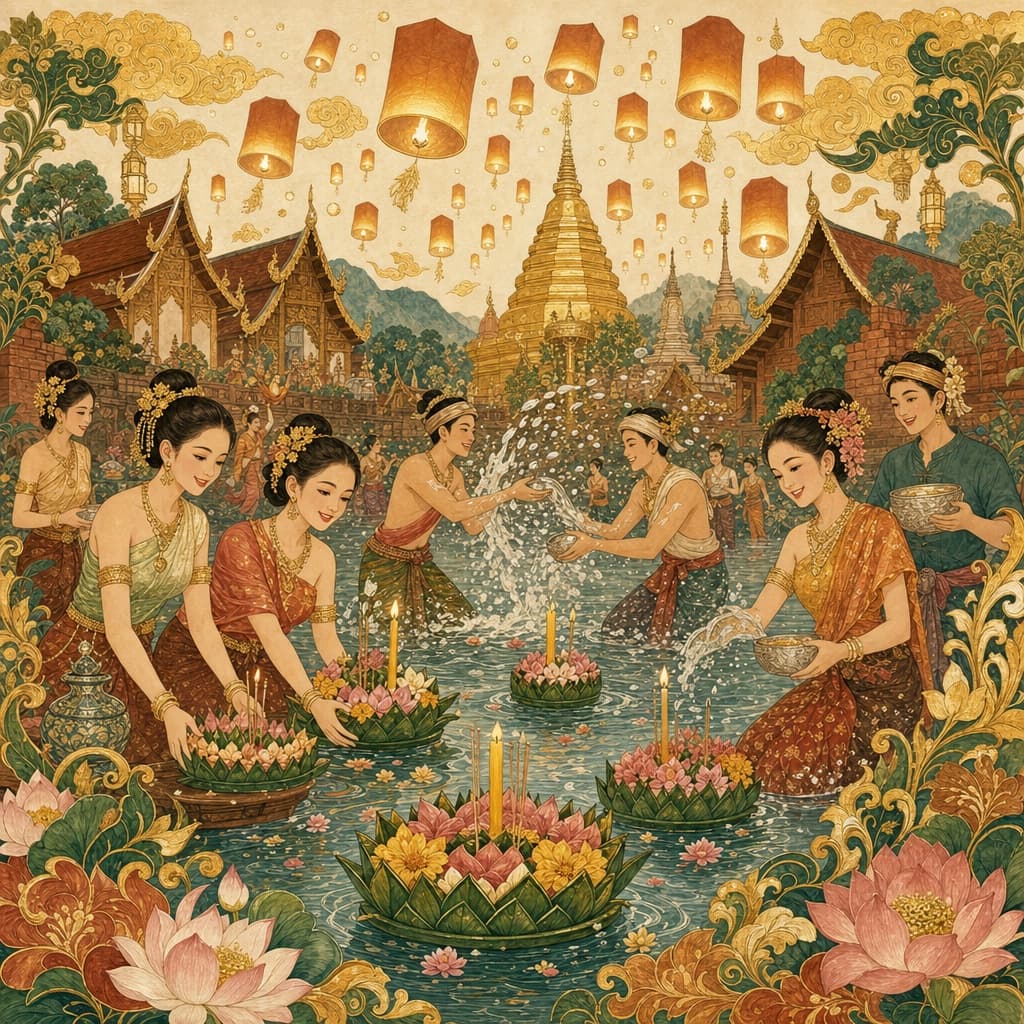
If you only plan one trip around a festival, make it this. Songkran, the Thai New Year, runs 13–15 April and turns the entire moat into a three-day water fight. Behind the soakings sits a gentler tradition — pouring water over Buddha images and the hands of elders for blessings. It's joyous, exhausting and unmissable, and we've written a full survival guide to Songkran in Chiang Mai so you arrive ready. April is peak heat and peak demand, so this is the one to book furthest ahead.
May–June: the city pillar
Quieter but deeply local, the Inthakin festival (also called Sai Khan Dok) honours Chiang Mai's sacred city pillar, usually across late May into June. For several days, thousands of residents file into Wat Chedi Luang to lay flowers, candles and incense at the pillar that's guarded the city for seven centuries. Buy a small flower offering for a few baht and join in — it's free, devotional and a world away from the water fights. A little Lanna history makes the ritual land all the more.
September–October: the Vegetarian Festival
For nine days around late September or early October, the Vegetarian Festival (Tesagan Gin Je) sweeps through Chinatown. Devotees wear white, eat strictly vegan and visit the Chinese shrines around Warorot, where yellow flags mark the stalls keeping the rules. There's no big parade here as there is in Phuket — the draw is the food. It's a glorious week to eat your way through the vegetarian and vegan scene, with dishes you won't find the rest of the year; our full guide to the Vegetarian Festival and its nine days of going jay explains the rituals behind the yellow flags.
November: lanterns and floating lights
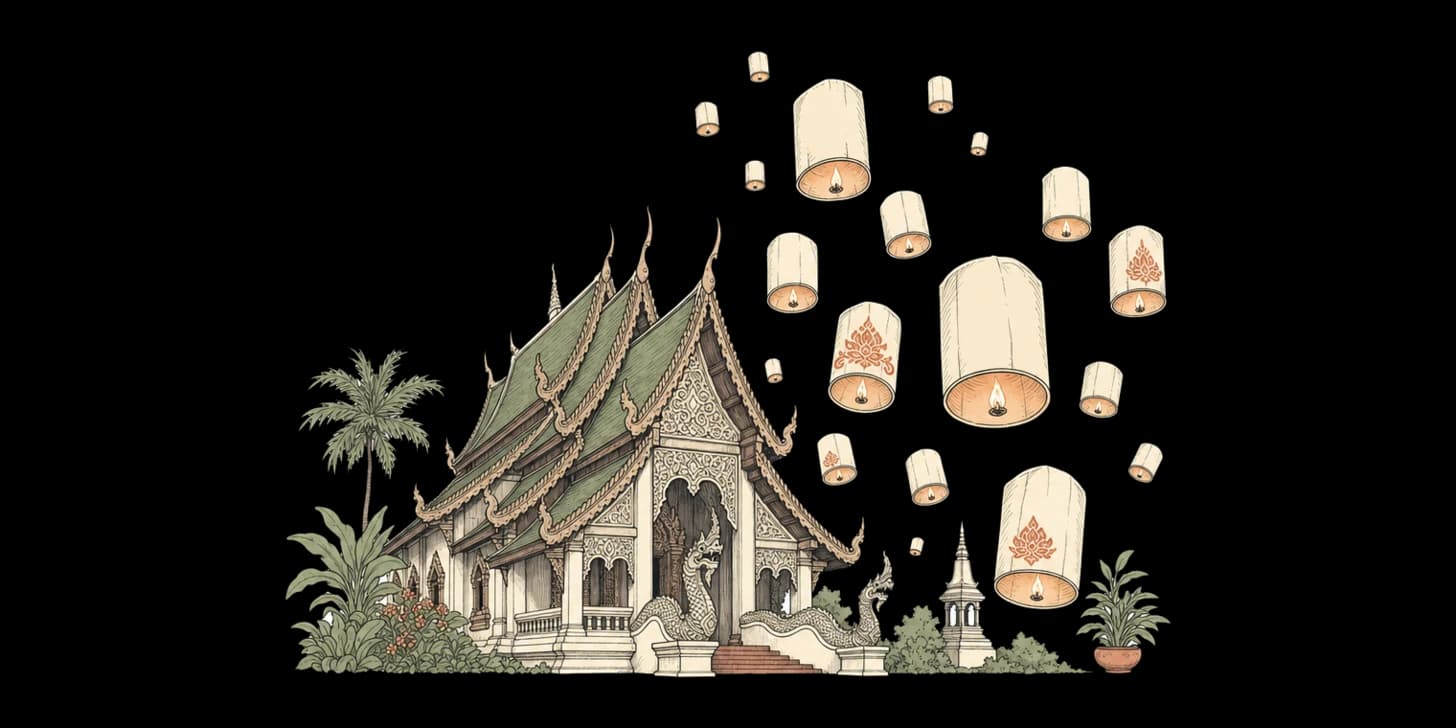
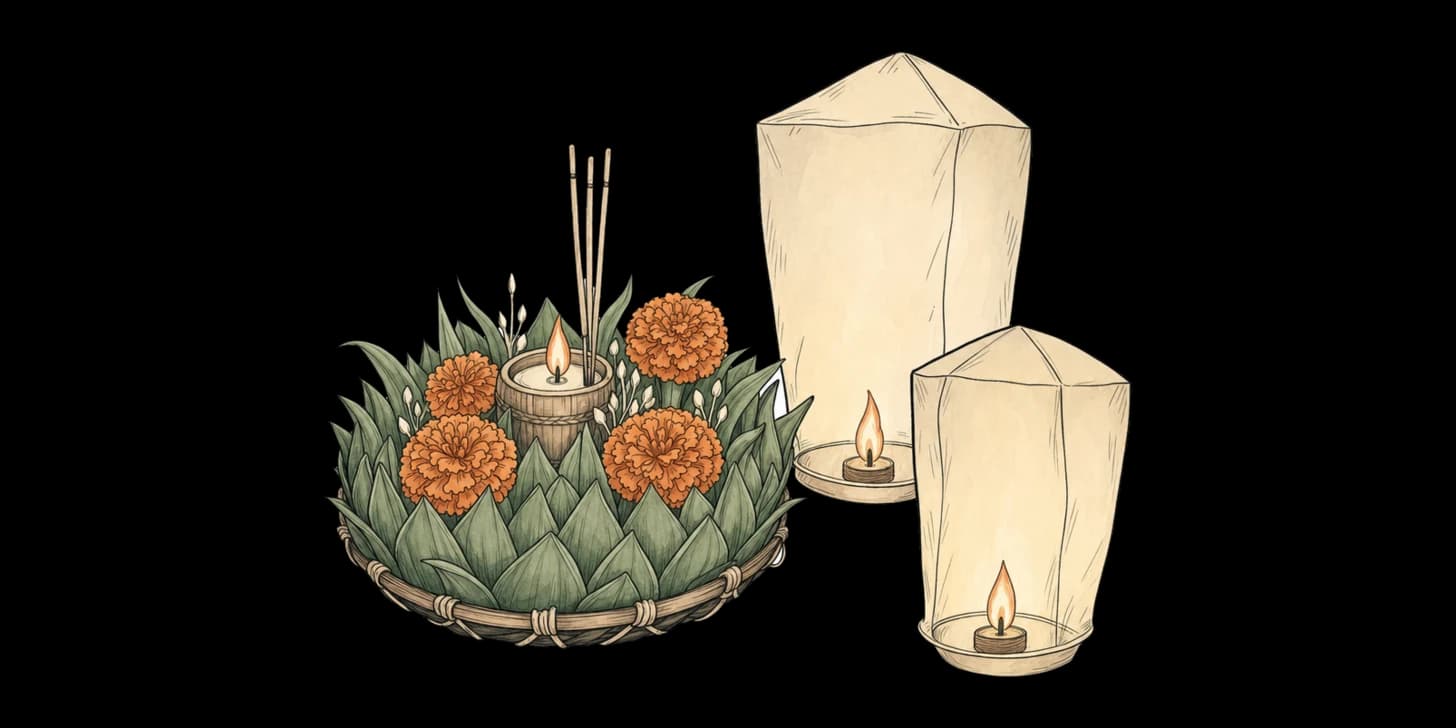
The year's most photographed festival arrives on the full moon of the twelfth lunar month, usually November. Two celebrations happen at once and people often confuse them. Loy Krathong is the nationwide one: you float a small candle-lit basket on the river to thank the water goddess and let go of the past year — free, and beautiful along the Ping. Yi Peng is the Lanna sky-lantern tradition unique to the north, where glowing paper lanterns drift up into the dark.
A word of warning on the lanterns: aviation rules mean you can't legally release them anywhere in the city. The famous mass releases happen only at official, ticketed venues outside town, and those tickets are expensive and sell out months ahead. Our Yi Peng lantern festival guide untangles the free riverside celebrations from the paid events so you can choose well.
Plan around one — and book early
The festivals are the best argument for timing your visit to Chiang Mai deliberately rather than just turning up. The big four — Songkran, Yi Peng and Loy Krathong, the Flower Festival — empty the city's rooms fast, so decide which one you're chasing and reserve your stay well in advance. Settle in for a week or two and you'll catch a smaller celebration you never planned for, which is half the joy of being here in the first place.
Frequently asked questions
Which months have the prettiest festivals?
The cool, dry start of the year, January and February, is the prettiest window to visit. It brings the Bo Sang Umbrella Festival, the Chiang Mai Flower Festival and Chinese New Year, all matched to bright, comfortable weather.
When and where is the Bo Sang Umbrella Festival?
It lands in January, usually the third weekend, out in Bo Sang, the umbrella-making village along San Kamphaeng Road east of the city. It is free and low-key, with streets full of hand-painted paper parasols, a parade in full Lanna dress and craft stalls.
Which festival should I plan a whole trip around?
If you only plan one trip around a festival, make it Songkran, the Thai New Year on 13 to 15 April, when the entire moat becomes a three-day water fight. April is peak heat and peak demand, so it is the one to book furthest ahead.
When is the lantern festival?
It arrives on the full moon of the twelfth lunar month, usually November. Two celebrations happen at once: Loy Krathong, the nationwide floating of candle-lit baskets on the river, and Yi Peng, the Lanna sky-lantern tradition unique to the north.
Can I release a sky lantern in the city?
No. Aviation rules mean you cannot legally release sky lanterns anywhere in the city. The famous mass releases happen only at official, ticketed venues outside town, and those tickets are expensive and sell out months ahead.
Why should I book early for the big festivals?
The big four, Songkran, Yi Peng and Loy Krathong, and the Flower Festival, empty the city's rooms fast. Decide which one you are chasing and reserve well in advance; settle in for a week or two and you will also catch a smaller celebration you never planned for.