Local culture · June 25, 2026
The Vegetarian Festival in Chiang Mai: nine days of going jay
By The Ada House team
For a few days each autumn, you'll notice the city change colour. Little yellow flags with a red character sprout from food stalls and shopfronts, kitchens drop the garlic, and meat quietly disappears from menu after menu. This is Tesagan Gin Je, the Vegetarian Festival — nine days when a good slice of Chiang Mai goes vegan together.
What it is, and when it happens
Despite the English name, "vegetarian" undersells it. The festival is a nine-day period of purification and merit-making rooted in Chinese-Taoist tradition, honouring the Nine Emperor Gods. Thai-Chinese communities have kept it for generations, and it has spread well beyond them — these days plenty of Chiang Mai locals with no Chinese ancestry join in, if only for the food.
The timing follows the lunar calendar, falling over the ninth Chinese lunar month — in practice, late September or early October. Like Yi Peng and the city's other moveable feasts, the exact dates shift each year, so it's worth checking ahead; our wider festivals calendar is a good place to start when you're planning a trip around them.
The practice behind the plate
To "gin je" (กินเจ) is to eat jay — and jay is stricter than ordinary vegetarian. Devotees give up all meat, seafood, egg and dairy, which makes the diet fully vegan. They also avoid the pungent vegetables — garlic, onion, chives, leeks — believed to inflame the passions and cloud the mind. Alcohol goes too, along with other indulgences, for the duration.
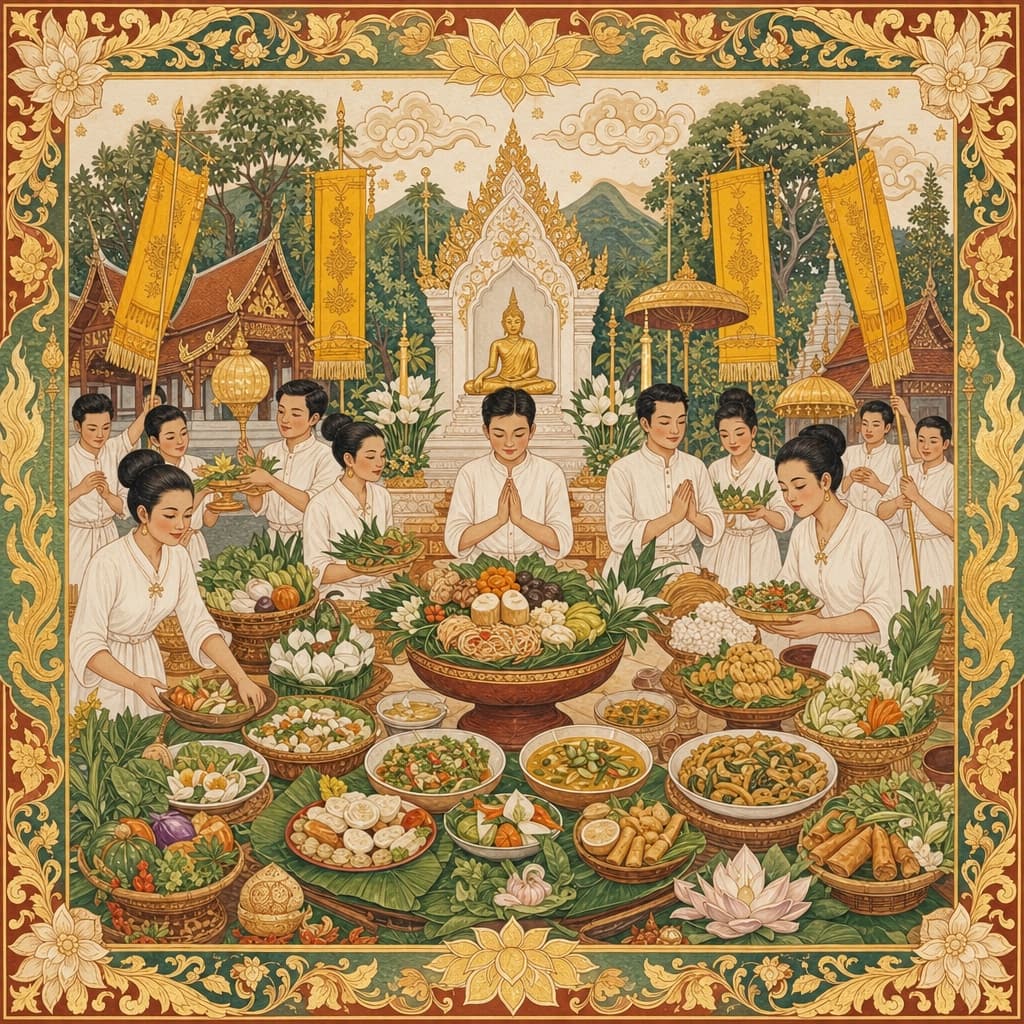
The deeper point is purification. Many observers dress head to toe in white as a sign of inner cleanliness, keep their thoughts and language gentle, and treat the nine days as a reset for body and spirit. If you've ever sat in on a monk chat or looked into Thai Buddhism, the logic will feel familiar: what you put in your body and your mind are part of the same practice.
Where it centres in Chiang Mai
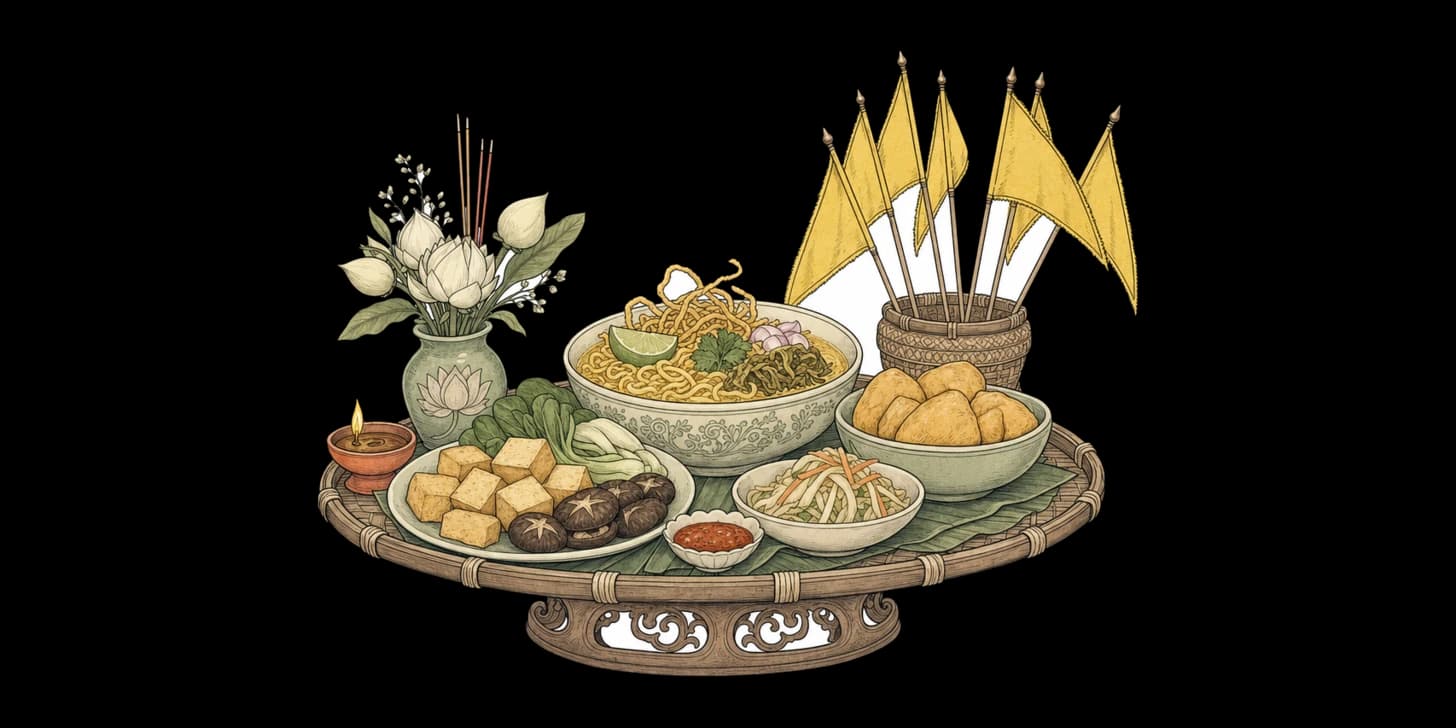
The heart of it all is the city's Chinatown, around Warorot Market — locals call it Kad Luang — and the Chinese shrines tucked into the lanes nearby. During the festival the old market dresses itself in yellow, the temples hold ceremonies and offerings, and temporary stalls spill out along the streets, each one flying that red "เจ" (jay) flag to show its food meets the rules.
It's a gentler affair than the famous Phuket version, where devotees pierce their cheeks and walk on coals. Here the spectacle is quieter — incense smoke, chanting, a slow procession, tables of food laid out as offerings. Come in the morning when the shrines are busiest and the cooking is fresh, wander the riverside lanes, and let the crowds carry you.
The best week of the year to eat vegan
Here's the happy secret: Chiang Mai is already one of Asia's easiest cities to eat plant-based, and the festival turns that up to eleven. For nine days, stalls and restaurants that never normally cook jay switch their whole menu over, and dishes appear that you simply won't find the rest of the year.
Look for the yellow flags and graze with abandon: mock-meat khao soi and curries built on tofu and mushroom, point-and-pick rice buffets for a handful of baht, deep-fried taro and pumpkin, fresh soy milk, sticky black-rice puddings. Even if you usually eat meat, it's a glorious excuse to discover how good vegan Northern Thai food can be — and a reminder that Lanna cooking has always leaned on its vegetables and herbs.
A small kindness goes a long way: if you're eating at a jay stall, keep it strictly plant-based on your plate — no fish sauce on the side, no sneaking your own snacks — out of respect for the people fasting around you. A smile and a quiet "gin je" will tell a vendor exactly what you're after.
Watch for the first yellow flags, follow them down to the river, and eat well. We'll see you there.
— The Ada House team
Frequently asked questions
What is the Vegetarian Festival?
Known as Tesagan Gin Je, it is a nine-day period of purification and merit-making rooted in Chinese-Taoist tradition, honouring the Nine Emperor Gods. For nine days a good slice of Chiang Mai goes vegan together.
When does it happen?
The timing follows the lunar calendar, falling over the ninth Chinese lunar month, in practice late September or early October. The exact dates shift each year, so it is worth checking ahead when planning a trip around it.
What does eating 'jay' actually involve?
To gin je is to eat jay, which is stricter than ordinary vegetarian: devotees give up all meat, seafood, egg and dairy, making the diet fully vegan. They also avoid the pungent vegetables, garlic, onion, chives and leeks, along with alcohol, for the duration.
Where is the festival centred in Chiang Mai?
The heart of it is the city's Chinatown around Warorot Market, which locals call Kad Luang, and the Chinese shrines tucked into the nearby lanes. The old market dresses itself in yellow, the temples hold ceremonies, and stalls fly a red jay flag to show their food meets the rules.
How do I spot the festival food?
Look for the little yellow flags with a red character, which mark the stalls and restaurants serving jay. They sprout from food stalls and shopfronts across the city for the nine days, and a smile and a quiet 'gin je' will tell a vendor what you are after.
Is it dramatic like the Phuket festival?
No, it is a gentler affair than the famous Phuket version, where devotees pierce their cheeks and walk on coals. Here the spectacle is quieter, with incense smoke, chanting, a slow procession and tables of food laid out as offerings; come in the morning when the shrines are busiest and the cooking is fresh.