Food & coffee · June 24, 2026
Warorot Market (Kad Luang): Chiang Mai's most local market
By The Ada House team
Everyone tells you to do the night markets. Fewer people send you to Warorot — and that's exactly why you should go. Known to locals as Kad Luang, "the big market," it's Chiang Mai's oldest and most local marketplace: a sprawling Chinese-Thai institution near the Ping River where shopkeepers, monks and grandmothers do their real shopping. No light shows, no souvenir T-shirts in your face. Just the city, fed.
What Kad Luang actually is
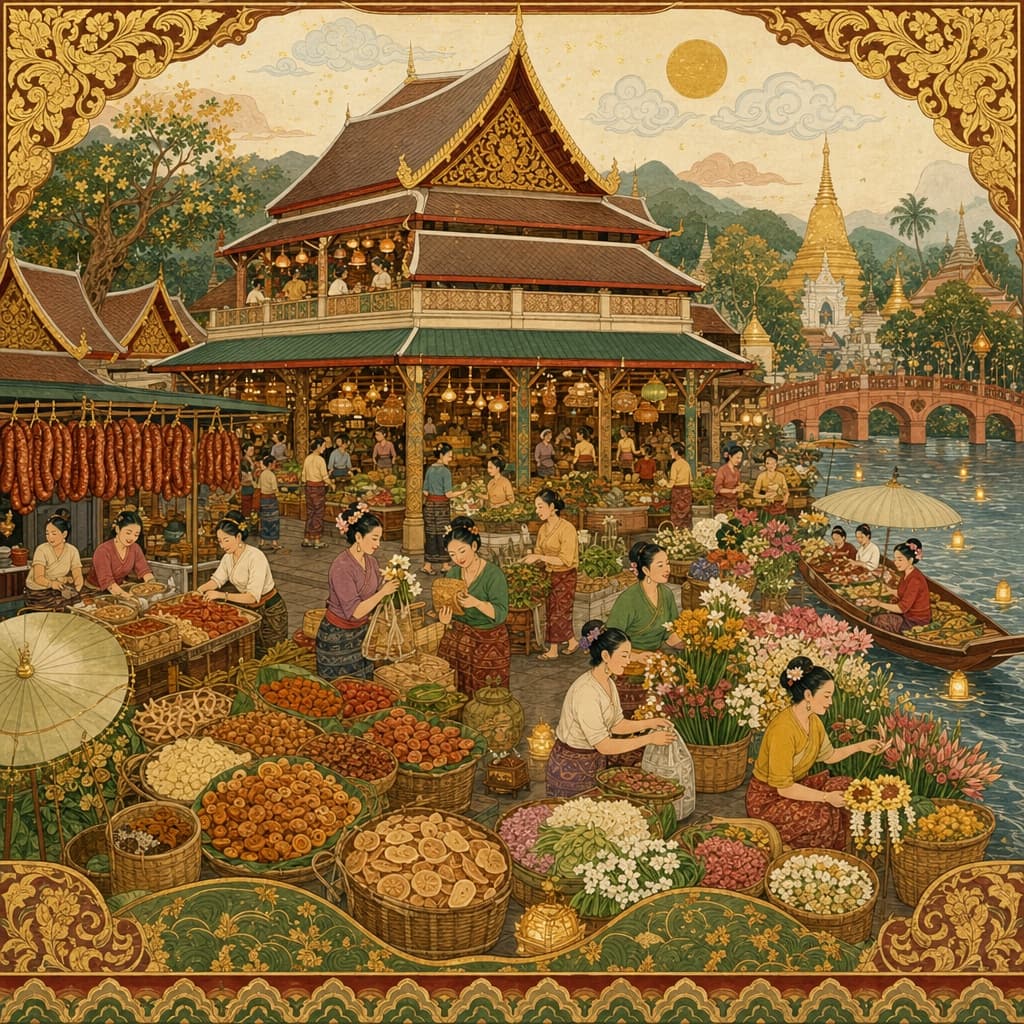
Warorot sits on the edge of Chiang Mai's Chinatown, and that heritage is the whole flavour of the place. Chinese merchants settled along the river generations ago, moving goods by boat between here and Bangkok, and their descendants still run many of the stalls. You'll hear it called the city's Chinatown, and in the maze of lanes behind the main building you'll find Chinese herbalists, gold shops, vendors poring over trays of sacred Thai amulets, and roasted chestnuts turning in great wok-sized pans.
The heart of it is a multi-storey concrete building, open daily from early morning until early evening. Learn the layout and you've cracked it: the ground floor is all food — fresh produce, dried goods, a glorious deli counter, snacks and sweets — while the upper floors turn to fabric, clothing, shoes and everyday household goods. Around the outside, street stalls and vendors spill into the lanes, and by evening a small night market wakes up alongside.
What to eat and buy
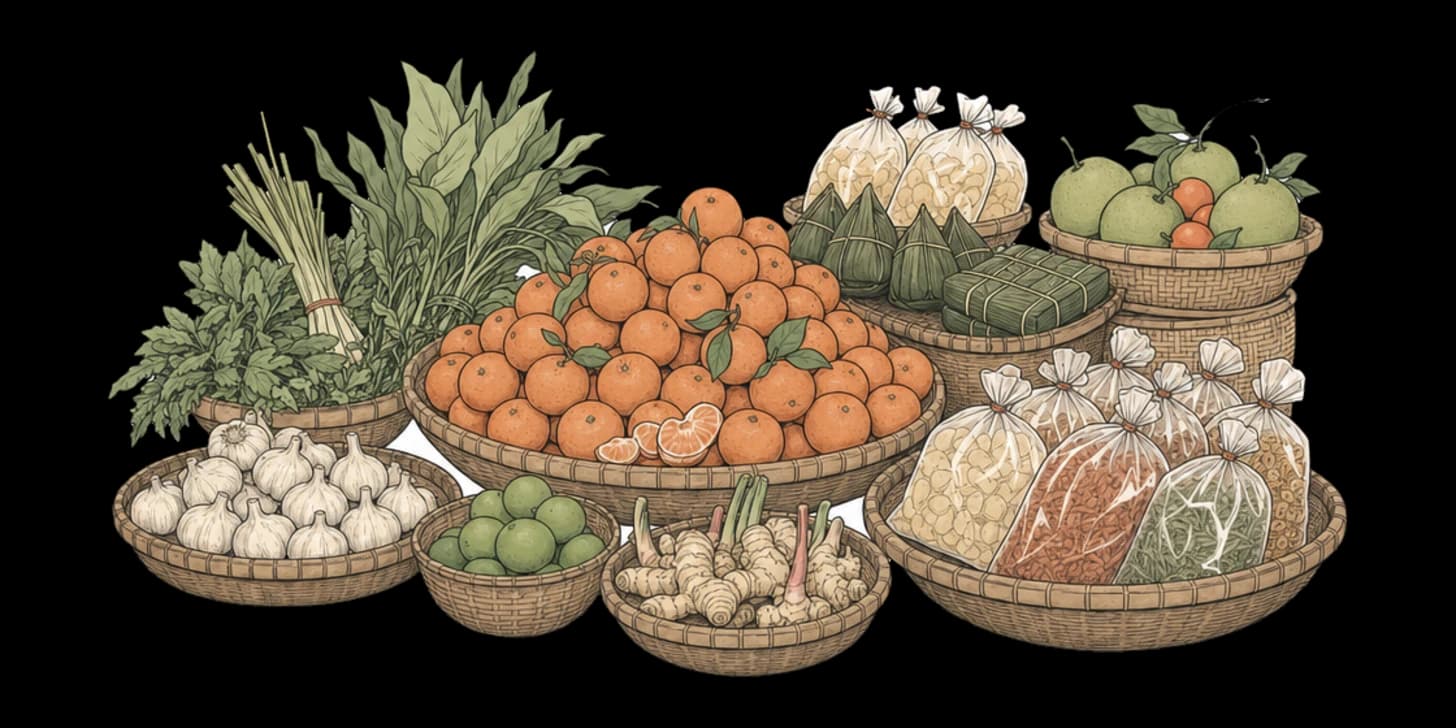
Come hungry. The ground-floor deli is the reason food lovers make the trip — glass cases of ready-made Northern Thai specialities you'd otherwise chase across the city. Look for coils of sai ua, the lemongrass-and-kaffir-lime pork sausage; tubs of nam prik num and nam prik ong, the smoky and tomatoey chilli dips of the North; and bags of crisp khaep mu, the pork rinds you scoop them with. A few hundred baht buys a feast to carry back and lay out on a shared table at the house.
Then the sweets. Vendors stack pastel khanom, sticky-rice parcels and coconut custards beside Chinese pastries, sesame balls and dense little cakes — a proper rabbit-hole if you've a sweet tooth, and a good primer before you go deeper into Thai desserts. Add dried fruit by the scoopful, fresh mango and mangosteen in season (handy once you know your way around Thai fruit), plus spices, loose tea and bags of Northern coffee. For the cheapest eats, follow the locals to the basement-level stalls slinging khao soi and Shan noodles for a handful of baht.
The flower market next door
Walk through the back of Warorot, toward the river, and you hit Ton Lamyai — the flower market, and one of the loveliest free things to do in Chiang Mai. It runs partly around the clock, but it's most magical in the cool of the evening, when pickup trucks roll in heaped with blooms cut hours earlier on the farms. Stalls overflow with marigold garlands, roses and improbably cheap orchids, and the whole place smells like a temple offering. Even if you buy nothing, walk it slowly.
How to do it right
A few honest tips. Go in the morning — the food is freshest, the deli fullest, and the lanes cooler before the midday heat. Bring cash in small notes; this is a working market, not a card-friendly tourist stop, and that's the charm. It's wonderfully cheap, so it's also a smart spot to stock the house kitchen on a budget.
Getting there is easy: Warorot sits a short walk from the Night Bazaar on the eastern side of the old city, so a red songthaew or a Grab drops you right at the door. And time your visit around Chinese New Year if you can — the Chinatown lanes erupt with lanterns, firecrackers and festive stalls, the most alive you'll ever see the place.
Kad Luang isn't polished, and it isn't trying to be — it's Chiang Mai with its apron on, and an hour wandering its aisles teaches you more about the city than any guidebook. Go early, eat as you walk, and bring a snack haul back to share. You'll have tasted the real thing.
Frequently asked questions
What exactly is Warorot Market?
Known to locals as Kad Luang, meaning 'the big market', it is Chiang Mai's oldest and most local marketplace, a sprawling Chinese-Thai institution near the Ping River on the edge of Chinatown. There are no light shows or souvenir T-shirts, just the city doing its real shopping, which is exactly why it is worth a visit.
When is the best time to visit Warorot?
Go in the morning, when the food is freshest, the deli is fullest and the lanes are cooler before the midday heat. The heart of it is a multi-storey concrete building open daily from early morning until early evening, with street stalls spilling into the surrounding lanes and a small night market waking up alongside by evening.
What should I eat and buy at Warorot?
The ground-floor deli is the draw, with glass cases of Northern Thai specialities like coils of sai ua sausage, tubs of nam prik num and nam prik ong, and bags of crisp khaep mu pork rinds. Add pastel khanom sweets, dried fruit by the scoopful, seasonal mango and mangosteen, spices, loose tea and Northern coffee, and a few hundred baht buys a feast to carry home.
Is there really a flower market next door?
Yes, walk through the back of Warorot toward the river and you reach Ton Lamyai, the flower market and one of the loveliest free things to do in Chiang Mai. It runs partly around the clock but is most magical in the cool of the evening, when pickup trucks roll in heaped with blooms and the whole place smells like a temple offering.
How do I get to Warorot, and should I bring cash?
Warorot sits a short walk from the Night Bazaar on the eastern side of the old city, so a red songthaew or a Grab drops you right at the door. Bring cash in small notes, because this is a working market rather than a card-friendly tourist stop, and that is part of the charm.