Food & coffee · July 4, 2026
Food courts in Chiang Mai: eat brilliantly for pocket change
By The Ada House team
Somewhere between the night bazaar skewers and the tasting menus of Nimman sits the most underrated way to eat in Chiang Mai: the food court. Locals eat in them daily and tourists walk straight past them, which is a shame, because this is where you get a proper cooked-to-order plate for roughly 40–80 baht — about £1–£2 — in air conditioning, with a seat, and nobody hovering for the table. If you're watching your budget on a long stay, food courts will quietly do more for your cost of living than any other single habit.
How the coupon and card system works
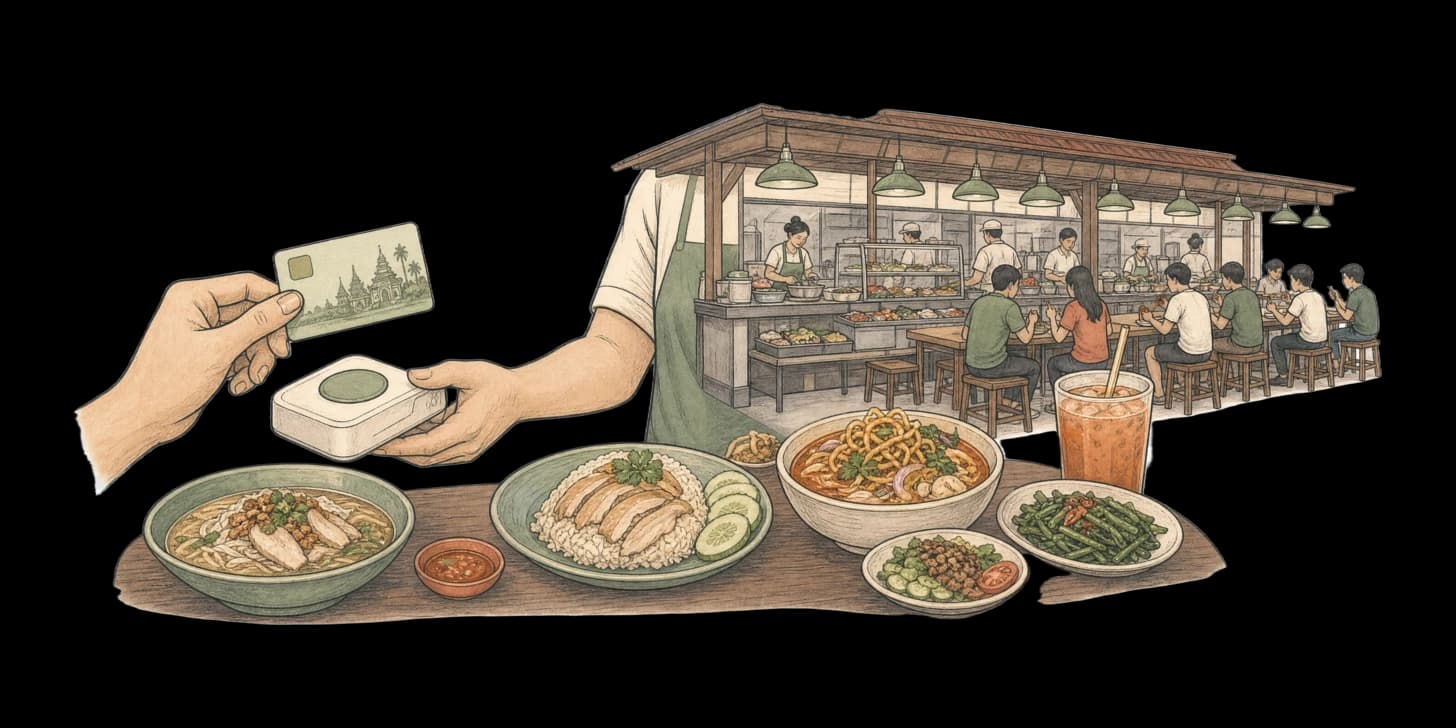
Thai mall food courts run on a prepaid system that confuses everyone exactly once. Instead of paying each stall in cash, you go to a counter near the entrance, hand over some money — 200 baht is plenty for one person — and receive a card or a strip of coupons. You then wander the stalls, order whatever you fancy, and pay by card at each one. When you're done, take the card back to the counter and they refund whatever you didn't spend, usually same-day, so don't wander off with it.
Why the faff? It means the cooks never handle money, the stalls don't need tills, and you can graze from four different vendors without producing change each time. Once you've done it once, you'll be mildly annoyed all food everywhere doesn't work this way.
The mall tier: MAYA, One Nimman and the Centrals
Every big mall in Chiang Mai has at least one food court, and they're all good in slightly different ways.
MAYA, at the top of Nimman, has a card-system food court on the 4th floor plus more food stalls in the basement — khao soi, noodles, grilled things, smoothies, all at prices that feel like a clerical error given the postcode. One Nimman, across the road, is the fashionable one: an indoor food court on the ground floor plus stalls dotted around the courtyard, thirty-odd dishes at close to street prices, often with live music at night. You pay a little more than at a local shophouse, but for Nimman it's a bargain.
The two Central malls are the heavyweights. Central Festival (north-east of town) has its Food Park on the 4th floor — recently done up, average plate around 60 baht. Central Chiangmai Airport has a Food Park up top and, better still, the Northern Village zone in the basement, which is stuffed with northern Thai specialities and packed with locals — always the review that matters.
The market tier: Warorot and friends
Mall food courts are the polished version; market food halls are the soulful one. The best known hides in plain sight at Warorot Market (Kad Luang): along the market's eastern edge there's a short staircase leading down to a subterranean food court where tiny tables sit in front of khao soi and noodle stalls. Plates run about 30–50 baht, the khao soi is the real thing, and you'll likely be the only foreigner down there. No card system here — it's honest cash, handed over with a smile.
The student secret: eating around the university
Universities have to feed thousands of people cheaply every day, and Chiang Mai University does it very well. The campus food centre — open roughly 7am to 7pm — gathers dozens of vendors under one roof, and nobody's checking for a student card; in practice visitors wander in and eat alongside everyone else. If that feels cheeky, the area around CMU's front gate does the same job after dark: Kad Na Mor, the student night market opposite the university, is cheaper than the famous night markets in town and arguably tastier, because its customers eat there every single night and would riot at a bad noodle.
What to order where
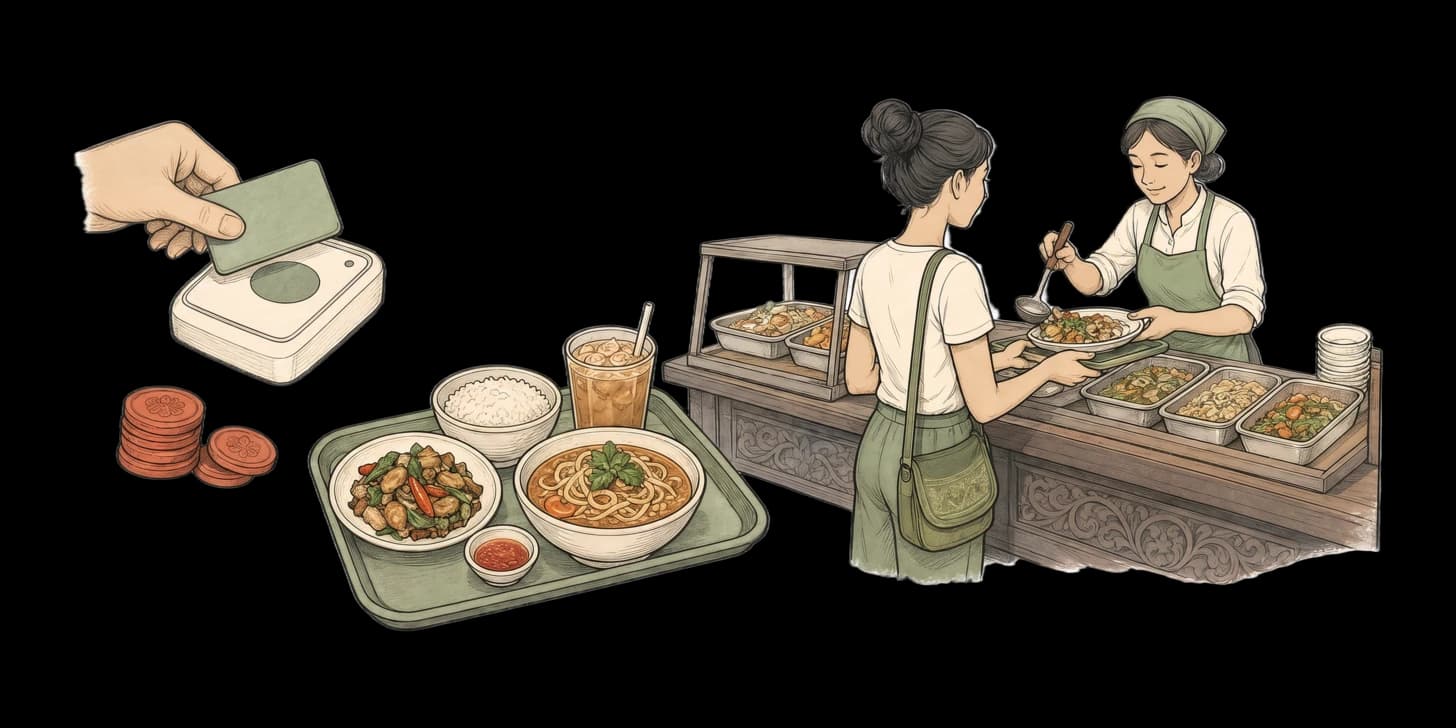
A quick rule: food court stalls come in two types. Made-to-order stalls cook your dish from scratch — look for a wok, a flame, and a small queue. This is where you order pad krapow, fried rice, or noodle soups. Pre-cooked tray stalls (khao rat kaeng, "curry over rice") display a dozen curries and stir-fries in metal trays; you point at one or two, they go over rice, and you're eating in thirty seconds. Trays are cheaper and faster; made-to-order is hotter and fresher. In the north, always scan for khao soi and nam ngiao — if you're still getting your bearings, our guide to northern Thai food will tell you what you're pointing at.
A gift for solo diners and nervous first-timers
Food courts are the gentlest possible on-ramp to Thai food. Menus have pictures and English (or you can simply point), portions are single-serving by design, and eating alone is completely normal — half the room is doing it. There's no waiter to flag down, no bill to decode, no pressure to order "enough". For your first forty-eight hours in Thailand, they're close to unbeatable.
An honest word on cleanliness
Are food courts spotless? The mall ones, genuinely yes. The market ones are scruffier — but here's the thing that matters more than shiny surfaces: turnover. A stall selling two hundred plates a day has ingredients that arrived this morning and food that never sits around. Pick the busy stall, eat where the locals queue, and your stomach will almost certainly be fine. We'd take a heaving market food hall over a quiet "tourist-safe" restaurant every time — and after a few years of eating this way, so would our guests.
Frequently asked questions
How does the prepaid card system work in Chiang Mai mall food courts?
At the counter near the entrance you hand over cash (around 200 baht is plenty for one person) and receive a prepaid card or coupons. You pay each stall with the card, then return it to the counter before you leave and the unspent balance is refunded, usually the same day.
How much does a meal cost at a Chiang Mai food court?
A proper cooked plate generally costs roughly 40 to 80 baht in mall food courts — around 60 baht on average at Central Festival's Food Park — while market food halls like the one under Warorot Market run about 30 to 50 baht a plate.
Which Chiang Mai malls have good food courts?
MAYA has a card-system food court on the 4th floor plus basement food stalls; One Nimman has an indoor ground-floor food court and courtyard stalls; Central Festival's Food Park is on the 4th floor; and Central Chiangmai Airport has a Food Park plus the Northern Village basement zone full of northern Thai specialities.
Where is the food court at Warorot Market?
Along the eastern edge of Warorot Market a short staircase leads down to a subterranean food court, where small tables sit in front of khao soi and noodle stalls. It's cash only, with plates around 30 to 50 baht.
Can non-students eat at Chiang Mai University's food centre?
In practice, yes — visitors wander in and eat alongside students, and nobody checks for a student card. It's open roughly 7am to 7pm. Alternatively, Kad Na Mor, the student night market opposite CMU's front gate, offers similarly cheap food after dark.
Are Chiang Mai food courts safe and clean to eat at?
Mall food courts are genuinely clean, and market food halls, while scruffier, benefit from high turnover — a busy stall sells so many plates a day that ingredients arrive fresh each morning and food never sits around. Pick the stall with a queue of locals and you'll almost certainly be fine.