Food & coffee · June 24, 2026
Thai desserts in Chiang Mai: a guide to khanom and where to eat them
By The Ada House team
Thai food gets loud and spicy, then it turns around and goes soft. The sweet side of the table — khanom, the catch-all word for Thai sweets and snacks — is quieter, built on coconut, palm sugar and warm sticky rice rather than butter and chocolate. In Chiang Mai it's everywhere once you start looking: a market stall, a cart parked on a corner, a glass case in the back of a shop. Here's how to eat your way through it.
The one everyone knows: mango sticky rice
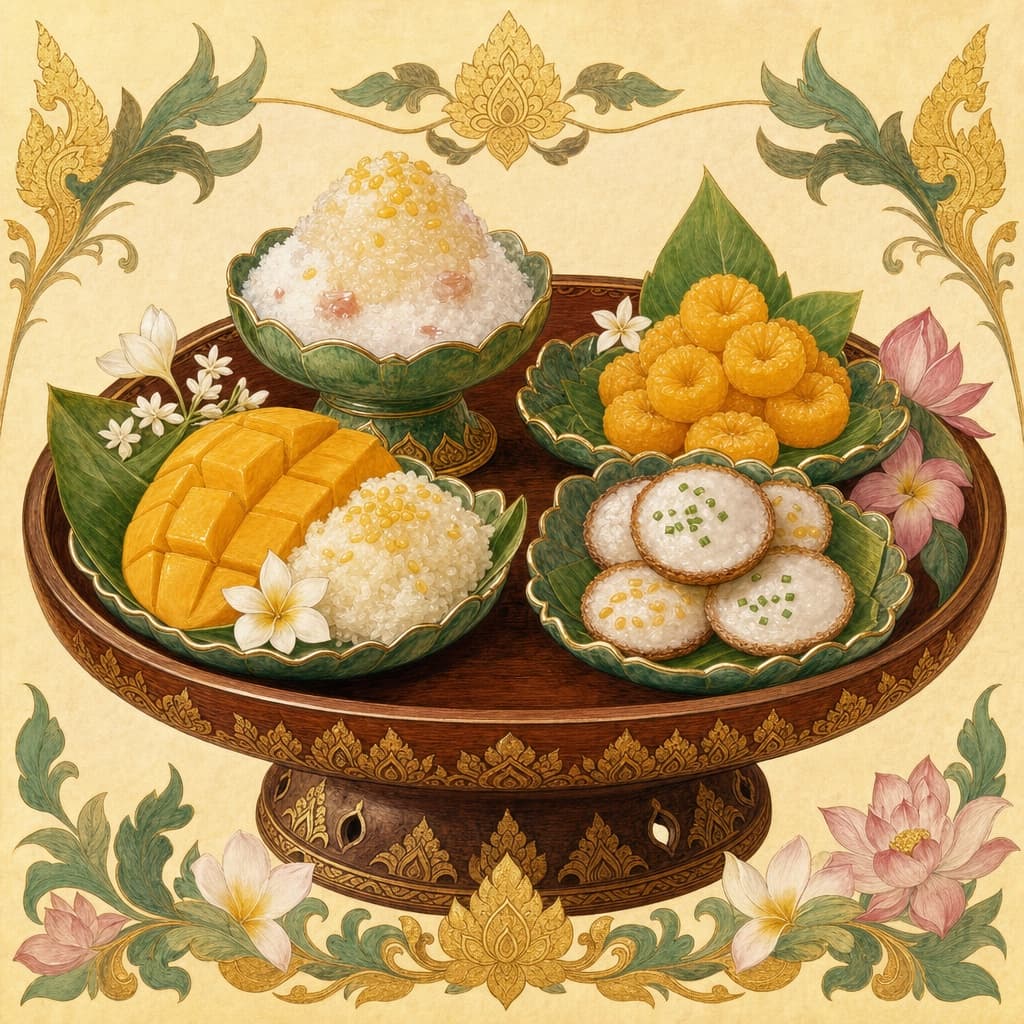
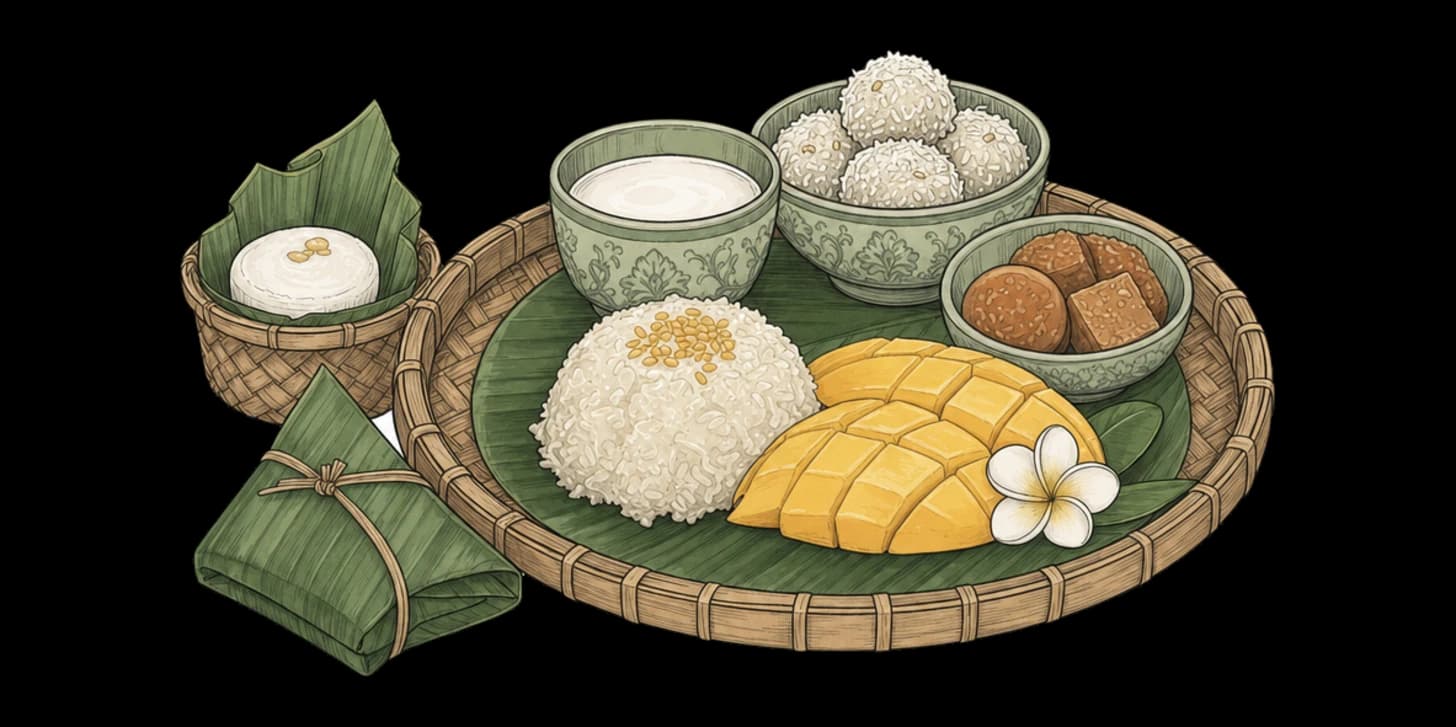
Start where you have to. Mango sticky rice (khao niao mamuang) is warm coconut-soaked glutinous rice draped with ripe yellow mango and a final pour of salted coconut cream. It's the dessert that converts people. The catch is timing: the sweetest mangoes peak in the hot season, roughly March to May, and some of the best stalls only open then. Out of season you'll still find it, but in-season it's transcendent — and it pairs beautifully with the rest of a Thai fruit haul. Reckon on 40–60 THB a portion.
Coconut, palm sugar and a hot griddle
This is the heart of khanom. Khanom krok are little coconut-rice griddle cakes — crisp shell, molten custardy middle — cooked in a dimpled iron pan and served warm in pairs; you'll smell them before you see them. Tako is a firm, two-layer jasmine-and-coconut pudding, often set in a tiny pandan-leaf cup. Bua loy are chewy rice-flour balls bobbing in warm, lightly salted coconut milk, comforting as a hug.
Then there are the showpieces. Look choup (luk chup) are tiny mung-bean marzipan fruits — glossy miniature chillies, mangoes and mangosteens, almost too pretty to eat. And the thong yip and thong yot — golden, glistening egg-yolk-and-syrup sweets with roots in old palace kitchens — are the sort of thing you buy a little box of and ration. Most of these run 20–50 THB.
Cooling down: shaved ice and sticky-rice sweets
When the afternoon heat hits, point at the ice cart. Nam kaeng sai is a mountain of fine shaved ice over a pick-your-own jumble of jellies, beans, grass jelly and syrups; order it ruam mit ("mixed together") and let the vendor build it for you with tapioca pearls, vermicelli, water chestnut and a flood of coconut milk. For something more substantial, look for sticky-rice sweets — khao niao steamed with custard or black beans, or khao lam, sticky rice and coconut grilled inside a bamboo tube and peeled open like a snack you earned. Cooling desserts land around 30–60 THB.
Where to find it (and what to drink)
The short answer: markets and night markets. Wander any of the city's night markets and you'll trip over khanom carts; the Sunday Walking Street is a sweets crawl all on its own. For the old-school stuff — boxes of thong yot, trays of look choup, fresh khanom krok from people who've made nothing else for decades — head to Warorot Market, the city's beating commercial heart. While you're in that quarter, keep an eye out for the griddled banana-and-egg roti carts that spill over from the nearby Thai-Muslim food lanes — sweet roti with condensed milk is dessert in its own right. And don't sleep on the modern dessert cafés around Nimman, where you can sit down to a plated bingsu-style shaved ice or a polished take on mango sticky rice between flat whites.
To drink: the gateway is cha yen, Thai iced tea — bright orange, sweet, creamy with condensed milk, poured over ice for around 25–40 THB. It's dessert in a cup, and it makes a fine full stop to a plate of Northern savoury food.
Half the joy of khanom is that it's unhurried — something to share on a step, on a bench, back at the house with the people you're travelling alongside. Buy a little of everything, compare notes, find your favourite. It's one of the gentlest, most delicious ways to feel at home in Chiang Mai.
Frequently asked questions
What's the one Thai dessert I have to try?
Mango sticky rice (khao niao mamuang) — warm coconut-soaked glutinous rice draped with ripe yellow mango and a final pour of salted coconut cream. It's the dessert that converts people, around 40 to 60 THB a portion. The catch is timing: the sweetest mangoes peak in the hot season, roughly March to May, when it's transcendent.
What other khanom should I look out for?
Try khanom krok, little coconut-rice griddle cakes with a crisp shell and molten custardy middle, served warm in pairs. Tako is a firm two-layer jasmine-and-coconut pudding, and bua loy are chewy rice-flour balls in warm, lightly salted coconut milk. For showpieces, look chup are tiny mung-bean marzipan fruits, and thong yip and thong yot are golden egg-yolk-and-syrup sweets. Most run 20 to 50 THB.
What's good for cooling down in the heat?
Point at the ice cart for nam kaeng sai, a mountain of fine shaved ice over a pick-your-own jumble of jellies, beans and syrups — order it ruam mit and let the vendor build it with tapioca pearls, water chestnut and coconut milk. For something more substantial, look for khao lam, sticky rice and coconut grilled inside a bamboo tube. Cooling desserts land around 30 to 60 THB.
Where do I find the best Thai sweets?
The short answer is markets and night markets, where you'll trip over khanom carts; the Sunday Walking Street is a sweets crawl all on its own. For the old-school stuff — boxes of thong yot, trays of look chup, fresh khanom krok — head to Warorot Market. The modern dessert cafés around Nimman do plated bingsu-style shaved ice too.
What should I drink with my dessert?
The gateway is cha yen, Thai iced tea — bright orange, sweet and creamy with condensed milk, poured over ice for around 25 to 40 THB. It's essentially dessert in a cup and a fine full stop to a meal. Keep an eye out for sweet banana-and-egg roti carts too, which count as dessert in their own right.