Things to do · July 5, 2026
Rock climbing in Chiang Mai: limestone, caves and first climbs
By The Ada House team
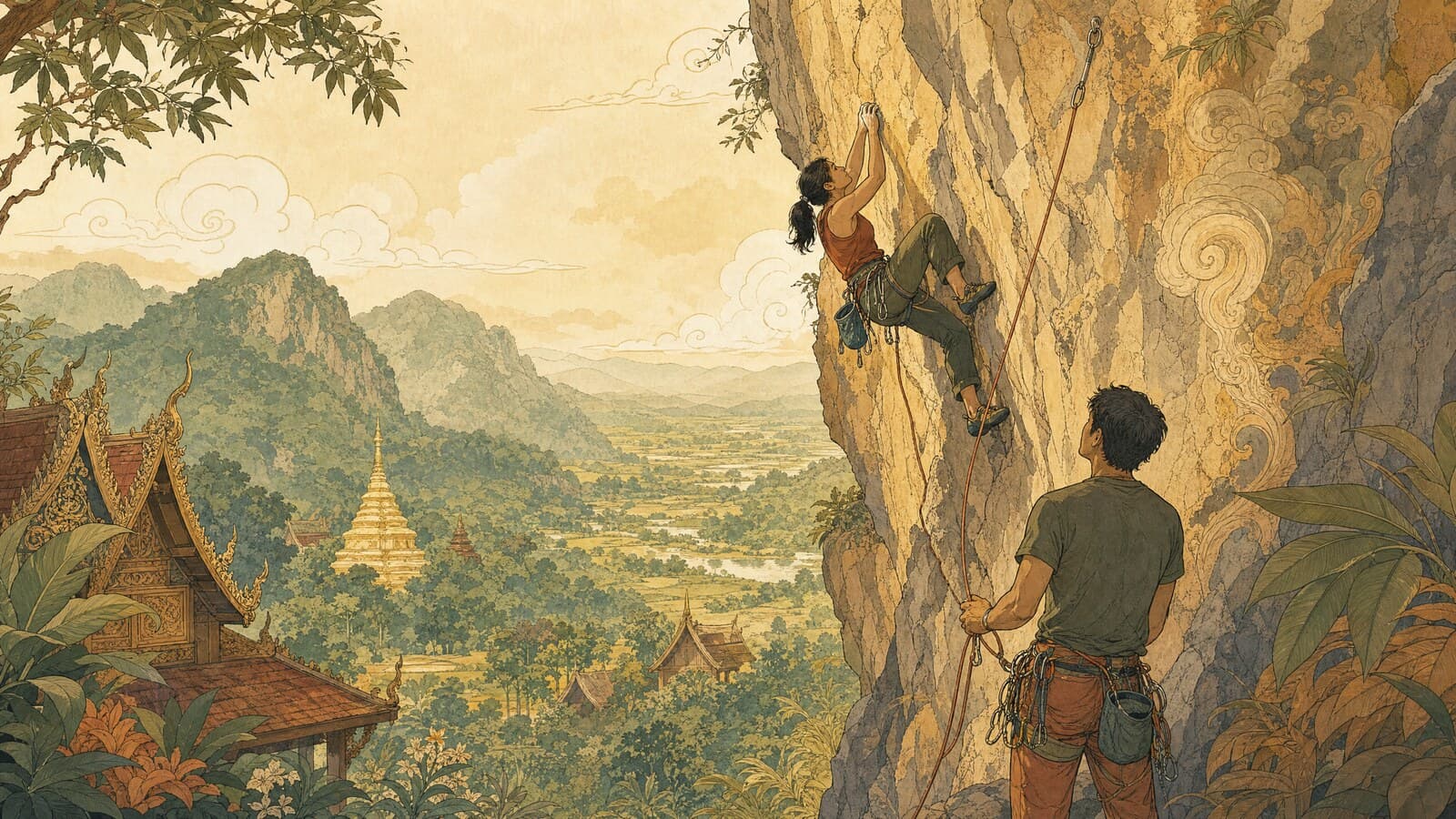
Krabi gets the climbing postcards, but northern Thailand has limestone of its own — and some of the friendliest sport climbing in the country sits about 40 minutes east of Chiang Mai. Crazy Horse Buttress, a wall of golden karst above the Mae On valley, has been drawing climbers for more than two decades, and it remains one of the best day trips you can do from the city with a harness on. Here's what to expect, whether you've climbed for years or never touched real rock.
A crag shaped like a horse's head
Crazy Horse takes its name from a pinnacle at the top of the cliff that, from the right angle, looks unmistakably like a rearing horse's head. Climbers first developed the crag in the late 1990s, next door to Tham Muang On, a show cave you can visit on the same trip, and a short drive from the San Kamphaeng hot springs. The setting is classic Mae On: rice fields, orchards and forested karst that belongs to the same limestone belt that rears up so dramatically at Chiang Dao further north. It's a genuinely lovely place to spend a day even before anyone leaves the ground.
What the climbing is actually like
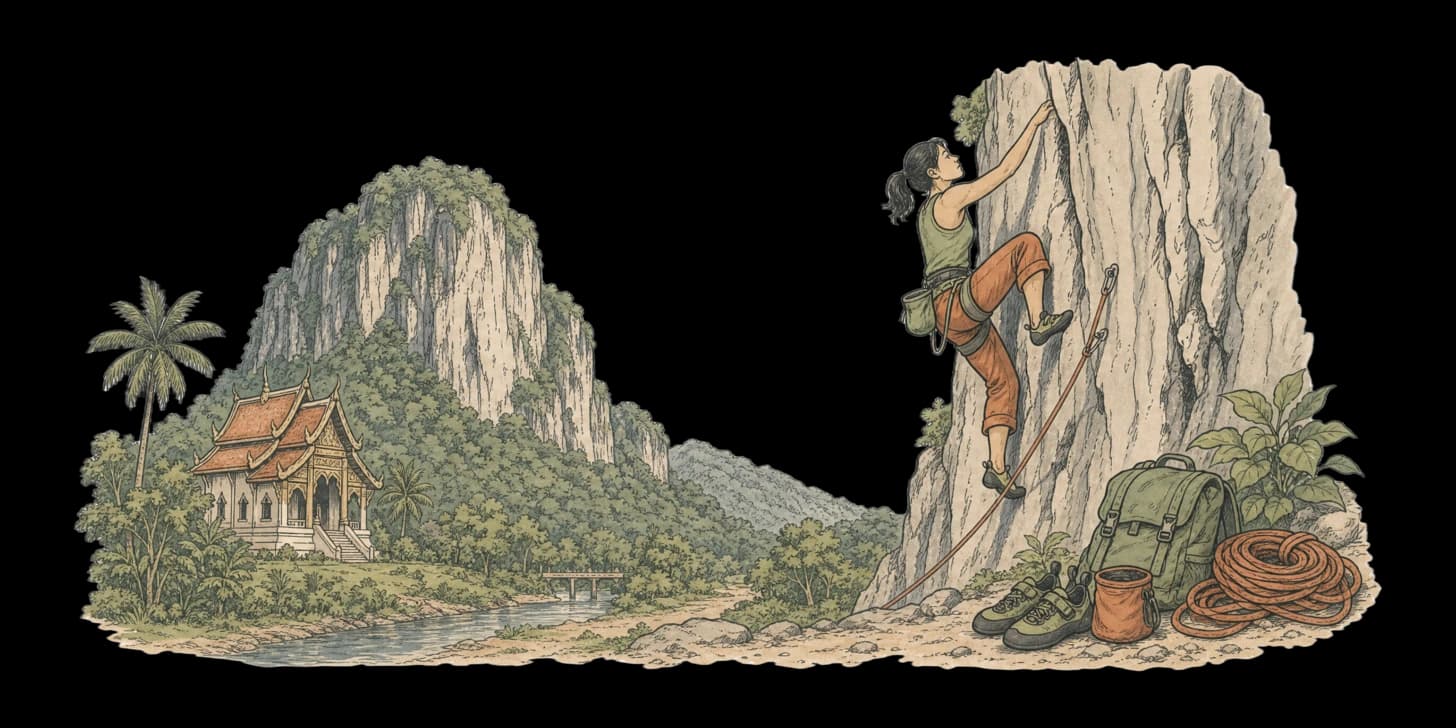
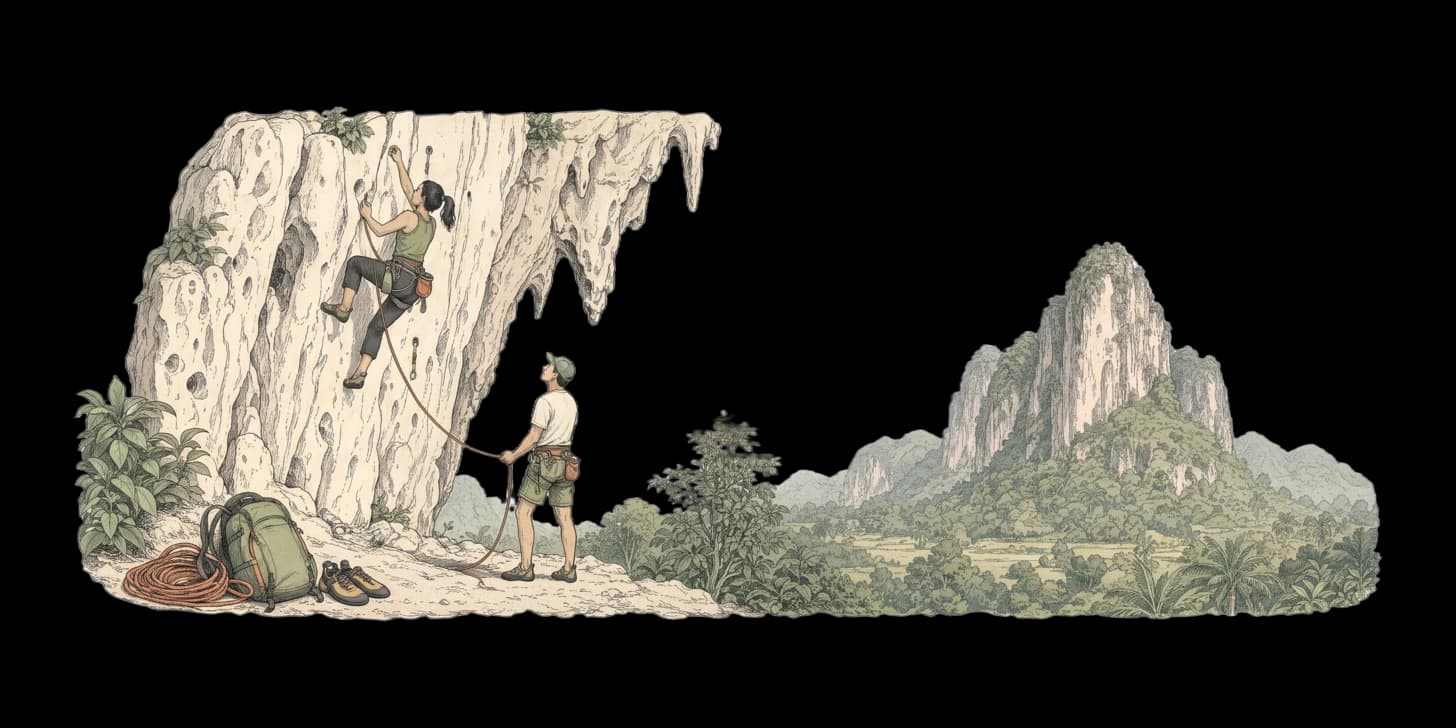
Depending on who's counting, there are somewhere between 150 and 300 bolted routes spread across roughly twenty sectors, from single-pitch slabs to short multi-pitch outings. The grade spread is unusually kind: plenty of French 5s for first-timers, a deep stock of 6s for improving climbers, and a modest set of 7s topping out around 8a for the strong. The signature experience, though, is the caves. In the sector known as Anxiety State Crisis, you can abseil into a sinkhole and climb back out past stalactites while swifts and the odd bat wheel around you — airy, atmospheric climbing you won't find at many crags anywhere.
Guides, gear and who looks after the crag
For most of its life, Crazy Horse was developed and stewarded by Chiang Mai Rock Climbing Adventures (CMRCA), the local company that bolted routes, trained guides and maintained trails. Access has had its wobbles: the crag has closed more than once while local authorities and the Mae On community worked out how the land should be managed, and stewardship has been shifting towards the community itself. At the time of writing climbing is permitted again, but the honest advice is to book through a local operator and check the latest status before you ride out. Guided intro days — with private guiding from roughly 3,000 baht — include all the gear, and climbing shoes, harnesses and ropes can be rented in town.
What a first day looks like
A typical beginner day starts with a morning pickup in the city and a drive east past San Kamphaeng. The crag sits just minutes from the parking area, so there's no epic approach — a relief if you've read our hiking and trekking guide and were bracing for hours uphill. After a safety briefing, guides rig top-ropes on easy, well-featured slabs, and you spend the morning learning to trust your feet. Lunch is a picnic at the base of the wall — sticky rice and northern sausage tend to feature — then the afternoon brings slightly steeper walls, or an abseil into the cave if the group is keen. You're back in the city by early evening, forearms humming.
Climbing walls in town
Chiang Mai's indoor scene has quietly grown into a proper little community. Main Wall, in the Old City, offers bouldering, top-rope and lead climbing across two floors; No Gravity, a longer-standing gym outside the centre, mixes rope climbing with bouldering at very gentle day-pass prices; and smaller bouldering rooms come and go, so it's worth asking around. The gyms are ideal for wet-season training, for testing whether you enjoy climbing before committing to a crag day, and for meeting partners — climbers are a chatty bunch, and the noticeboards do real work here.
When to go
The prime window is November to February, when cool, dry air makes for perfect friction and comfortable belays. March and April bring serious heat and smoky skies, so climbers start early and chase shaded sectors. In the rainy season, roughly June to October, limestone seeps and stays greasy after storms — some steeper walls dry quickly, but plan flexibly and keep a gym day in reserve. It's also the season when white-water rafting is at its best, so many people simply swap sports for a few months.
Climb it safely
Climbing is one of the safer adventure sports when it's done properly, and one of the least forgiving when it isn't. As a beginner, go with certified guides, never climb or belay without instruction, and never climb alone. Wear a helmet at all times — limestone sheds pebbles, and the cave sectors have their own overhead surprises. Check that rental gear looks well maintained, make sure your travel insurance actually covers climbing, and respect any access signs at the crag. Treat it with that small dose of seriousness and it slots beautifully into the wider menu of adventure activities the mountains around Chiang Mai serve up.
Frequently asked questions
Do I need experience to go rock climbing in Chiang Mai?
No. Crazy Horse Buttress has plenty of easy, well-featured routes in the French 5 range, and local operators run guided intro days where guides rig top-ropes, provide all the gear and teach you the basics. A reasonable head for heights is more important than prior experience.
How far is Crazy Horse Buttress from Chiang Mai?
It sits in the Mae On valley, about 40 minutes east of the city by car, past San Kamphaeng and close to the Tham Muang On show cave and the San Kamphaeng hot springs. The crag itself is only minutes from the parking area, so there is no long approach hike.
Is Crazy Horse Buttress currently open for climbing?
At the time of writing, yes — but access has closed more than once over the years while local authorities and the Mae On community worked out how the area should be managed. The safest approach is to book through a local operator and check the latest access status before heading out.
Can I rent climbing gear in Chiang Mai?
Yes. Guided days include all equipment, and climbing shoes, harnesses and ropes can be rented in town. If you go the rental route, check that the gear looks well maintained before you use it.
When is the best season for climbing near Chiang Mai?
November to February is prime: cool, dry air means good friction and comfortable belays. March and April are hot and smoky, so start early and stick to shaded sectors. In the rainy season the limestone seeps and can stay greasy after storms, so keep an indoor gym day in reserve.
Are there indoor climbing gyms in Chiang Mai?
Yes. Main Wall in the Old City offers bouldering, top-rope and lead climbing across two floors, while No Gravity, a longer-standing gym outside the centre, combines rope climbing and bouldering with inexpensive day passes. Smaller bouldering rooms open and close, so it is worth asking around.