Food & coffee · June 25, 2026
Thai-Muslim food in Chiang Mai: roti, biryani and the Ban Haw lanes
By The Ada House team
A few minutes from the Night Bazaar, the noise drops and the air turns fragrant with cumin, charcoal and frying butter. You've wandered into Chiang Mai's Thai-Muslim quarter — one of the city's most rewarding and least-visited corners. The food here arrived on horseback, and it's still some of the most soulful in town.
Who brought this food here
Long before tour buses, Chiang Mai sat on the old caravan routes linking the Lanna kingdom to Yunnan in southern China. Down those trails came the Chin Haw — Yunnanese Chinese Muslim traders whose name blends Chin (China) with Ho, the Hui Muslims of the southwest. They settled, married, opened shops, and in 1916 built the Ban Haw Mosque (Matsayit Chiang Mai), founded by the Yunnanese merchant Zheng Chong Ling on a quiet lane off Charoen Prathet Road. Over the next century the community grew to include South-Asian and Shan Muslim families, each adding to the table.
The lovely surprise is how much of Chiang Mai's most famous food traces back to these households. The city's signature dish has Chin Haw roots: the very khao soi you'll order all over town is a cousin of the curry noodles carried down those same routes, which is why some of the best, least-sweet versions are still made by Muslim cooks near the mosque.
What to seek out
Come hungry and graze. A few things to look for:
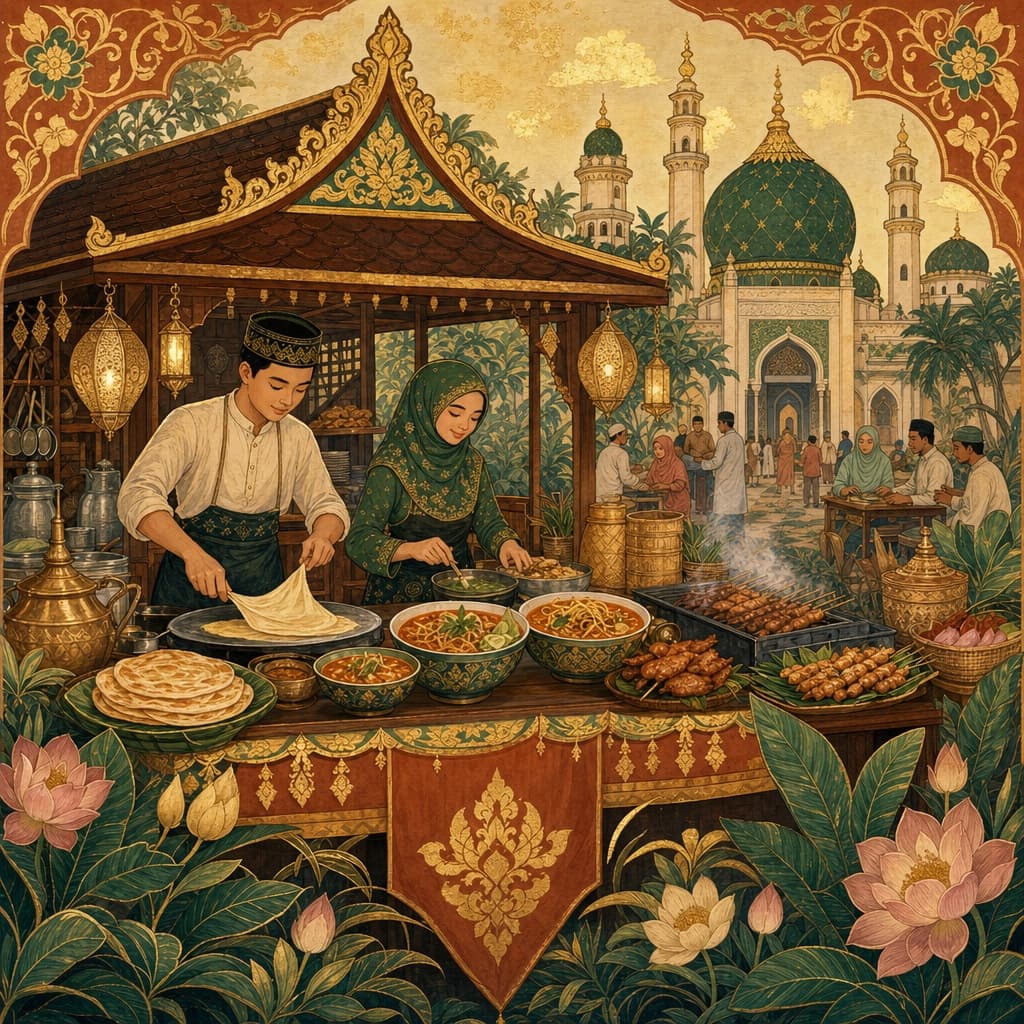
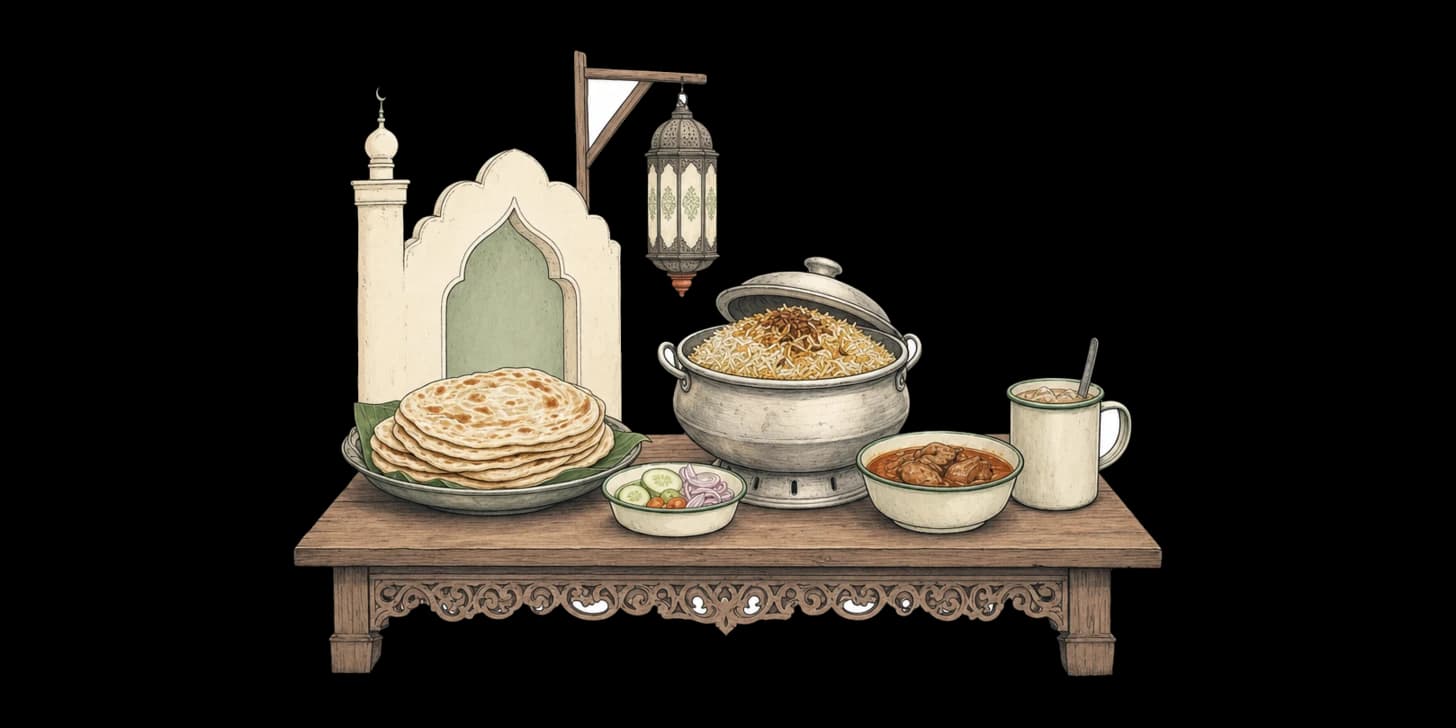
- Roti — the showstopper. A thin dough is slapped, stretched and fried on a hot griddle in butter until shatteringly crisp. Order it savoury with goat or beef curry for dipping, or sweet as roti gluay (banana roti), folded around banana and finished with condensed milk and sugar.
- Khao soi neua — the beef version of the classic bowl, deeper and more aromatic than the usual chicken, and a Muslim-quarter speciality.
- Khao mok gai — Thailand's golden chicken biryani, rice stained yellow with turmeric, served with a tangy dipping sauce and clear broth.
- Goat and beef curries — slow, spice-heavy and warming, eaten with rice or torn roti.
- Samosas and mataba — crisp fried parcels, and mataba (the Thai murtabak), a thick stuffed roti packed with spiced egg, meat and onion. Pure caravan comfort food.
You'll taste the threads here — South Asian spicing, Yunnanese technique, a little Shan and Burmese warmth — woven into something wholly Chiang Mai. If khao soi opened the door to Northern cooking for you, this is the room next door.
Where to go
The heart of it all is the lane around the Ban Haw Mosque, just behind the Night Bazaar off Charoen Prathet. In the evenings a small cluster of halal stalls fires up — grilled skewers, curries, roti carts — and it stays calm and friendly even when the night markets nearby are heaving. Khao Soi Islam, the old Chin Haw shop tucked beside the mosque, is the classic first stop: halal khao soi, biryani and curries under one roof.
For daytime, time your visit for Friday morning, when the Yunnan market opposite the mosque runs from dawn until noon — handmade noodles, Yunnanese snacks, fresh produce and a proper community buzz. A short walk north, the lanes of Warorot Market hide more Muslim-run stalls and Chinese-Thai sweets if you're still grazing. Round things off with one of the city's Thai desserts and you've eaten your way across three trade routes in an afternoon.
A note for Muslim travellers
This quarter is the most reliable place in Chiang Mai for halal Chiang Mai dining — many kitchens here are Muslim-owned, and the Ban Haw Mosque keeps prayer times and a welcoming front door for visitors who dress modestly and step in respectfully. Elsewhere in the city, look for the green halal logo or the word halal in the window, and don't be shy about asking; vendors are used to the question and happy to point you to the nearest Muslim kitchen.
Wherever you start, go on an empty stomach and follow your nose. This is Chiang Mai's quiet table — a hundred years of caravan flavours, still simmering a short walk from the river. We hope you find a favourite stall and a reason to go back.
Warmly, the Ada House team
Frequently asked questions
What should I order in the Thai-Muslim quarter?
The showstopper is roti — thin dough slapped, stretched and fried in butter until shatteringly crisp; order it savoury with goat or beef curry, or sweet as roti gluay folded around banana with condensed milk. Also seek out khao soi neua (the deeper, beef version), khao mok gai (golden chicken biryani), and slow goat and beef curries. Samosas and mataba, a thick stuffed roti packed with spiced egg and meat, are pure caravan comfort food.
Where is Chiang Mai's Thai-Muslim food area?
The heart of it is the lane around the Ban Haw Mosque, just behind the Night Bazaar off Charoen Prathet Road. In the evenings a small cluster of halal stalls fires up — grilled skewers, curries and roti carts — and it stays calm and friendly even when the nearby night markets are heaving. Khao Soi Islam, the old Chin Haw shop beside the mosque, is the classic first stop.
Is the food here halal?
Yes — this quarter is the most reliable place in Chiang Mai for halal dining, as many kitchens are Muslim-owned. Elsewhere in the city, look for the green halal logo or the word halal in the window. Vendors are used to the question and happy to point you to the nearest Muslim kitchen.
Is there a best time to visit?
For daytime, time your visit for Friday morning, when the Yunnan market opposite the mosque runs from dawn until noon — handmade noodles, Yunnanese snacks, fresh produce and a proper community buzz. In the evenings the halal stalls around the mosque come to life. A short walk north, the lanes of Warorot Market hide more Muslim-run stalls if you're still grazing.
What's the connection to khao soi?
Much of Chiang Mai's most famous food traces back to these households, including khao soi. The dish has Chin Haw roots — Yunnanese Chinese Muslim traders carried curry noodles down the old caravan routes — which is why some of the best, least-sweet versions are still made by Muslim cooks near the Ban Haw Mosque.
I'm a Muslim traveller — can I visit the mosque?
Yes — the Ban Haw Mosque, built in 1916, keeps prayer times and a welcoming front door for visitors who dress modestly and step in respectfully. The surrounding quarter is the city's quiet halal heart, with Muslim-owned kitchens all around. Go on an empty stomach and follow your nose.