Food & coffee · July 5, 2026
Eating gluten-free in Chiang Mai: rice paradise, hidden wheat
By The Ada House team
Every so often a guest arrives at Ada House with the same hopeful question: "Thai food is all rice, right?" And honestly, they're half right. Chiang Mai can be a wonderful place to eat gluten-free — but the other half of the answer lives in the sauce bottles, and it deserves an honest explanation.
Why Chiang Mai looks like a gluten-free dream
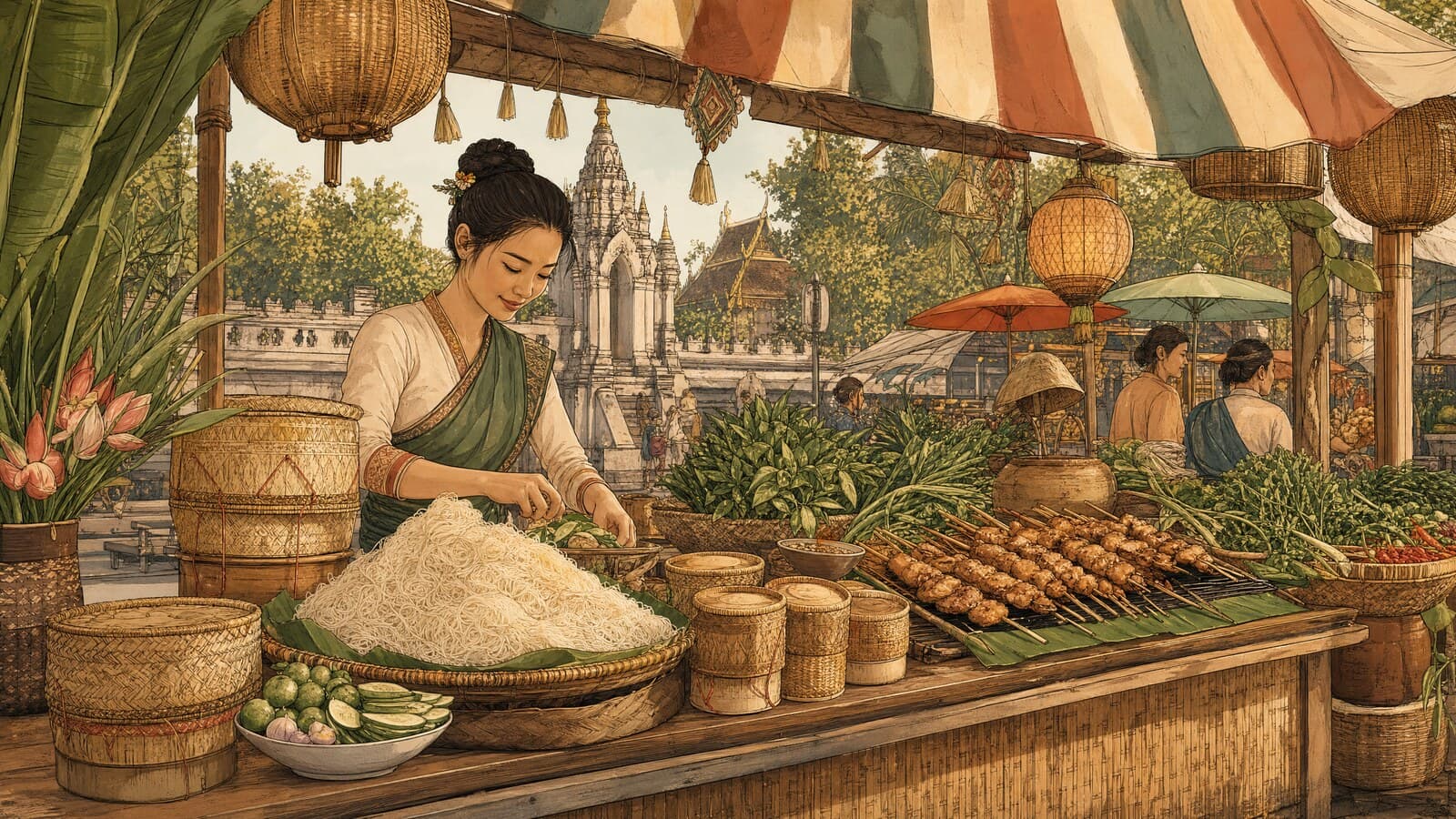
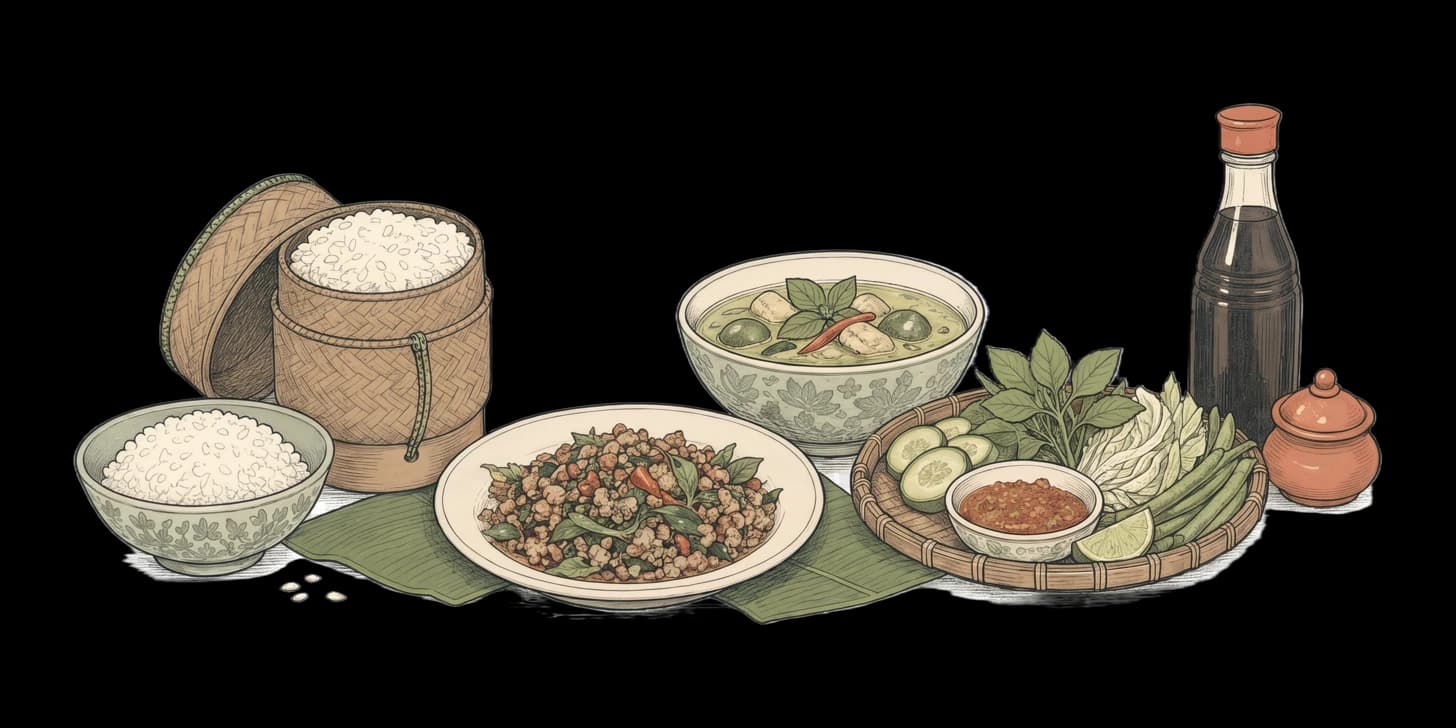
The foundations of Thai eating really are on your side. Steamed jasmine rice anchors most meals, and the north's beloved sticky rice arrives in its own woven basket. Noodle culture here leans heavily on rice noodles — wide, thin, fresh, dried — rather than wheat. Fresh rolls are wrapped in rice paper, curries are thickened with coconut milk rather than flour, and most desserts are built from rice flour, tapioca and coconut. Compared with a European café counter stacked with croissants, a Chiang Mai market can feel like a holiday for your digestion. That first impression isn't wrong — just incomplete.
The hidden wheat: soy sauce, oyster sauce and the shared fryer
Here's the catch: standard Thai soy sauce is brewed with wheat. Healthy Boy, the brand on half the kitchen shelves in the country, lists wheat flour right in its ingredients. Oyster sauce is usually no better — most versions include soy sauce or a wheat-flour thickener — and one bottle or the other goes into a huge share of stir-fries, marinades and fried rice. Fish sauce is generally the safe one of the trio, though strict coeliacs should still read labels.
Then there's the fryer. Street stalls and small kitchens typically fry everything in the same oil, so your "plain" fried chicken may share a bath with battered bananas. And outside the expat café bubble, gluten awareness is genuinely low — many cooks will sincerely tell you a dish has no wheat while reaching for the soy sauce, because nobody thinks of a sauce as something you'd need to avoid.
Coeliac or preference? Be honest with yourself first
How you eat here depends on which camp you're in. If you avoid gluten by preference, Chiang Mai is easy: choose rice-based dishes, skip the obviously soy-glazed things, and you'll be fine. If you're coeliac, the calculation changes, because cross-contamination is the real issue — the shared wok, the shared oil, the ladle that just stirred a soy-based broth. We'd love to say the right phrases make street food perfectly safe; they don't, not reliably. Some strict coeliacs eat street food here and are fine; others reasonably decide the risk isn't worth it and stick to kitchens that understand the condition. Both are valid — and this is general information from fellow eaters, not medical advice, so let your doctor's guidance set your boundaries. Our guide to managing food allergies in Chiang Mai goes deeper on communicating serious dietary needs.
Dishes that are naturally on your side
Some of the north's greatest hits need little or no modification. Grilled chicken (gai yang) with sticky rice is a classic combination — just ask about the marinade, as some include soy sauce. Som tam, the pounded papaya salad, is built on lime, chilli, palm sugar and fish sauce; order it without extra seasoning sauce and it's one of the safer things on the street. Fresh rice-paper rolls are a solid pick if you skip the mystery dipping sauce, which is often hoisin-based. Coconut curries over steamed rice and rice-noodle soups where you add your own condiments sit at the friendlier end too — with the usual coeliac caveat that "naturally wheat-free" and "guaranteed uncontaminated" are different claims.
The khao soi heartbreak
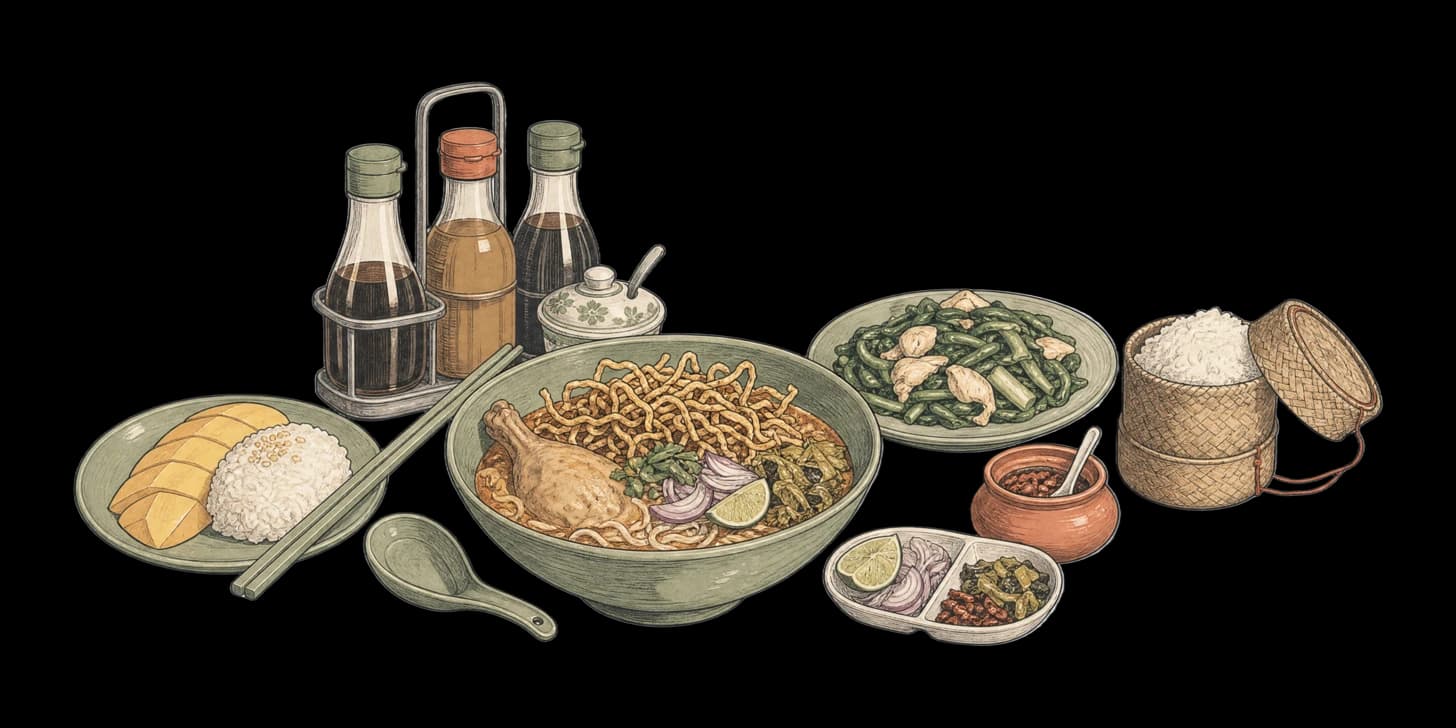
We won't sugar-coat this one. Khao soi — Chiang Mai's signature coconut curry noodle soup, the dish everyone rightly tells you to try — is made with wheat-and-egg noodles, boiled in the bowl and deep-fried for the crispy crown on top. For gluten-free eaters it's the city's great culinary heartbreak. The consolation: the curry broth itself is coconut and spice, and some restaurants will happily swap in rice noodles if you ask, which gets you remarkably close to the real experience. A strict coeliac still has questions to ask about the broth and the kitchen, but if you're gluten-free by preference, a rice-noodle khao soi is a genuine joy. Read our khao soi guide so you know exactly what you're negotiating with.
Cafés and supermarket shelves
Chiang Mai's expat café scene is where gluten-free stops being a negotiation. The health-focused brunch spots, smoothie-bowl cafés and plant-based kitchens clustered around Nimman and the Old City — the same places we point our vegetarian and vegan guests towards — routinely offer gluten-free bread and clearly labelled menus, and their staff actually know what coeliac means. For self-catering, Rimping supermarket is your best friend: its import and health-food sections stock gluten-free pasta, flours, breads, crackers and snacks, and Thai brands such as Megachef make gluten-free-labelled sauces so you can cook your own pad kra pao safely. Our grocery shopping guide covers the branches in detail.
A few Thai words that do the heavy lifting
The most useful pattern is "mai sai …" — "don't add …". Mai sai see-ew covers soy sauce; mai sai nam man hoi covers oyster sauce. "Pae" means allergic, so "pae gluten" communicates the stakes, though the concept itself is unfamiliar to many cooks. For coeliacs, honestly, a translation card in Thai that explains the condition — including the hidden sauces and shared oil — works far better than pronunciation roulette. Show it, smile, and be ready to walk away politely if the answer is hesitant — in our experience, the kitchens that read the card and nod confidently are the keepers.
Frequently asked questions
Is Thai food naturally gluten-free?
Much of it is built on rice — steamed jasmine rice, sticky rice, rice noodles, rice-paper rolls and coconut-based curries. The catch is the sauces: standard Thai soy sauce is brewed with wheat, and most oyster sauce contains soy sauce or a wheat-flour thickener, and one or the other goes into a huge share of stir-fries, marinades and fried rice.
Is khao soi gluten-free?
No — khao soi is made with wheat-and-egg noodles, boiled in the bowl and deep-fried for the crispy topping. The curry broth itself is coconut and spice, and some restaurants will swap in rice noodles on request, which suits gluten-free-by-preference eaters well. Strict coeliacs still need to ask about the broth and kitchen practices.
Can I eat Chiang Mai street food if I have coeliac disease?
Not reliably safely — shared woks, shared frying oil and wheat-based sauces make cross-contamination hard to rule out, and gluten awareness is low outside the expat café scene. Some strict coeliacs eat street food and are fine; others reasonably stick to kitchens that understand the condition. This is general information, not medical advice, so let your doctor's guidance set your boundaries.
Which Thai dishes are safer for gluten-free travellers?
Grilled chicken (gai yang) with sticky rice — after checking the marinade — som tam ordered without extra seasoning sauce, fresh rice-paper rolls without the hoisin-based dip, coconut curries over steamed rice, and rice-noodle soups where you add your own condiments. For coeliacs, naturally wheat-free is still not a guarantee against cross-contamination.
Where can I buy gluten-free products in Chiang Mai?
Rimping supermarket is the standout: its import and health-food sections stock gluten-free pasta, flours, breads, crackers and snacks. Thai brands such as Megachef also make gluten-free-labelled sauces, so you can cook safely at home. Health-focused cafés around Nimman and the Old City offer gluten-free bread and clearly labelled menus.
What Thai phrases help me avoid gluten?
The key pattern is "mai sai …" meaning "don't add …": mai sai see-ew for soy sauce, mai sai nam man hoi for oyster sauce. "Pae gluten" means allergic to gluten, though the concept is unfamiliar to many cooks. For coeliacs, a translation card in Thai explaining the condition, the hidden sauces and shared oil works better than spoken phrases alone.