
Practical tips · July 5, 2026
Travelling in Chiang Mai with food allergies
By The Ada House team
Chiang Mai is one of the best eating cities in Asia, and a food allergy — yours or your child's — should not keep you from it. It just takes more preparation than most food blogs admit. Before anything else: this is general information, not medical advice — anyone with a severe allergy should plan the trip with their doctor before travelling, and never fly without an agreed emergency plan.
The real risk map of Thai cuisine
The hardest allergy to manage in Thailand is shellfish — not because every dish contains prawns, but because its seasonings hide out of sight: shrimp paste (kapi) is pounded into curry pastes and nam prik chilli dips, oyster sauce slips into countless stir-fries, and dried shrimp garnishes som tam and noodle dishes. A curry can look entirely vegetal and still be built on kapi.
Worth knowing: fish sauce is made from fish, not shellfish. It is in virtually every savoury dish, so a fish allergy means treating almost everything as suspect; a strictly crustacean or mollusc allergy usually does not make fish sauce itself the enemy — but that is your allergist's call, not a rule to improvise on holiday. Helpfully, much of northern Thai cooking leans on pork, herbs and dry spice pastes rather than seafood — but kapi still appears, so always ask.
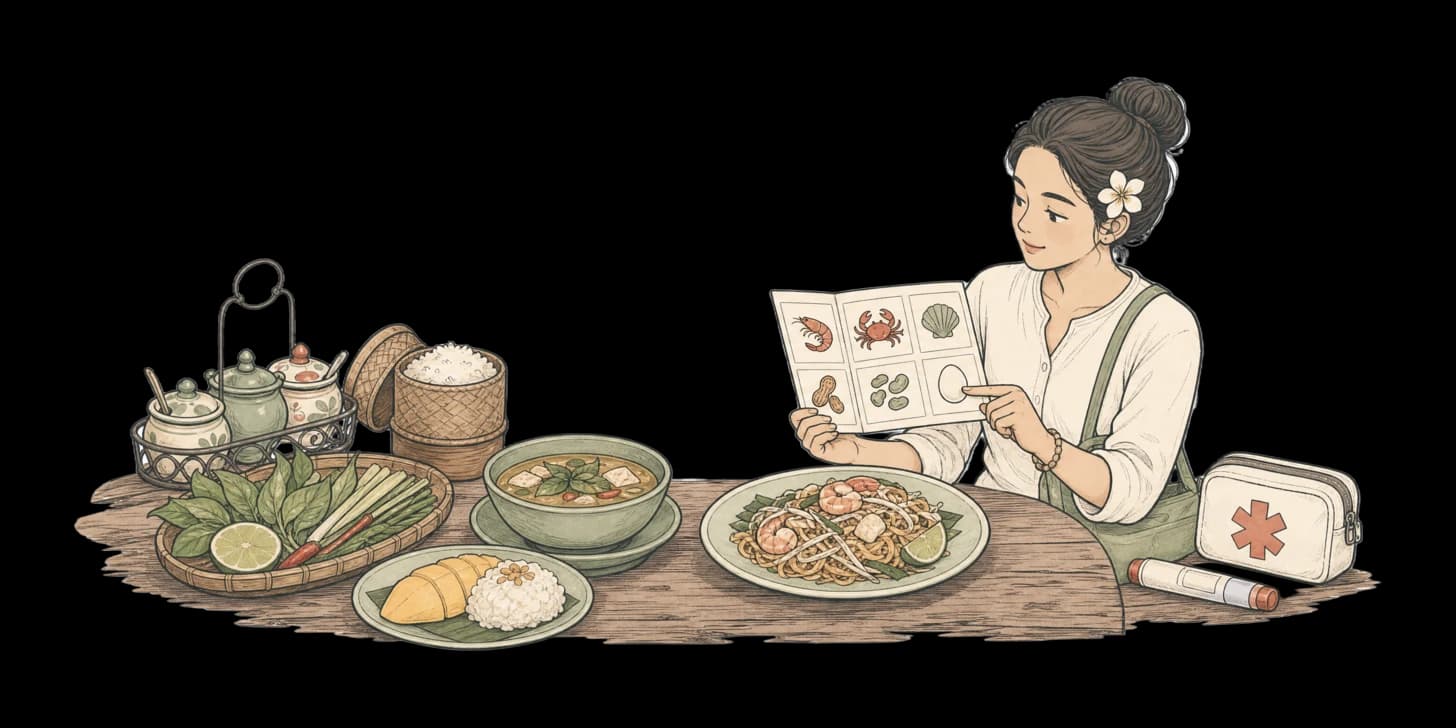
Peanuts, egg, soy and wheat — where they hide
Peanuts are less pervasive than many travellers fear — most curries and stir-fries contain none — but they are firmly present in satay sauce, massaman curry, some noodle broths, and as a crushed garnish on phat thai and papaya salad. The real risk is that last-second sprinkle added by habit: ask for it left off, every time.
Egg hides in fried rice, phat thai and omelettes. Soy is everywhere as soy sauce, tofu and soybean oil. Wheat is mixed: rice and rice noodles dominate, but soy sauce and oyster sauce typically contain wheat, and egg noodles (ba mi) and anything battered are wheat-based. Coeliac travellers should treat sauces, not noodles, as the main hazard.
The honest truth about street kitchens
We will not pretend otherwise: a street stall runs on one wok, one pair of tongs and shared oil, with no allergen-controlled prep and a dish leaving the pan every ninety seconds. For a mild intolerance that may be an acceptable risk; if you react to traces, street food is realistically off the menu, and no phrase card changes that. Chiang Mai still has hundreds of restaurants with calmer kitchens and time to take your request seriously — and made-to-order cooking, where your dish starts from raw ingredients in front of you, is always safer than pre-cooked trays seasoned hours ago.
Your allergy card is your best tool
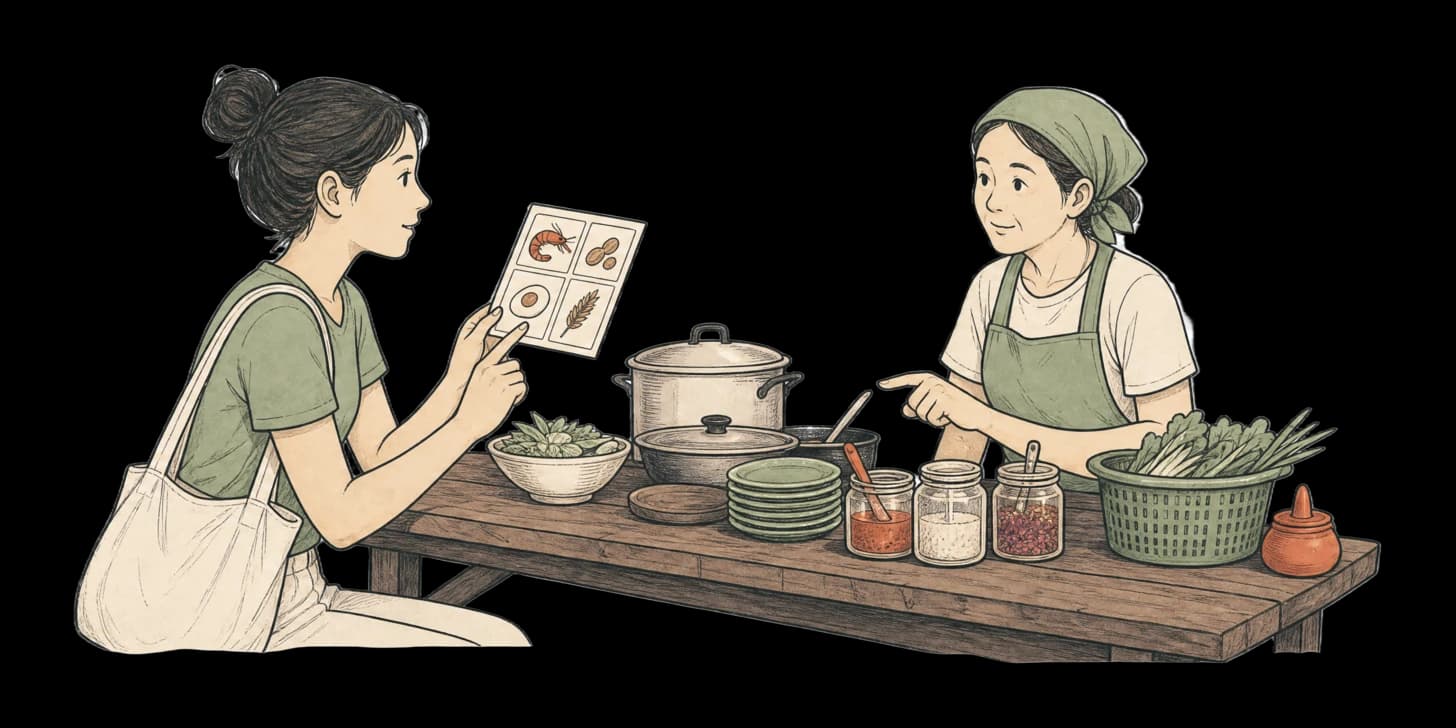
Carry a card written in Thai stating your allergy and how serious it is. A good card says, in Thai, something like: "I have a severe allergy to shrimp, crab and all shellfish. Even a very small amount will make me dangerously ill. Please do not use shrimp paste, oyster sauce or dried shrimp in my food." Naming the ingredients, not just the allergen, is what makes it work. Have it professionally translated (specialist services such as Equal Eats sell ready-made Thai cards); never trust machine translation for this. Keep it saved on your phone and printed — phones die, and a laminated card goes straight to the cook. The Thai word for allergic, pae (แพ้), is widely understood.
How to order without the polite yes
Thai service culture is warm and eager to please — which means staff may say yes just to avoid disappointing you. A quick, breezy "yes, no problem" to "is there shrimp paste in this?" deserves a second, more specific question. Stay calm and friendly, show the card, ask about one ingredient at a time, and watch whether the answer comes after genuine thought or a kitchen check. Simpler made-to-order dishes — grilled meats, plain steamed rice, clear soups — shrink the unknowns. Strictly vegan jay (เจ) food, covered in our vegetarian and vegan guide, excludes fish sauce, oyster sauce and shrimp paste by religious rule — genuinely useful for seafood allergies. And a few meals cooked in your own kitchen carry no unknowns at all.
Adrenaline, EpiPens and if things go wrong
Bring your adrenaline auto-injectors from home — ideally two, in hand luggage, with a doctor's letter naming both the device and the medicine. Brand-name auto-injectors are genuinely hard to buy in Thailand: pharmacies in Chiang Mai are excellent for most things, but they rarely stock EpiPens; sourcing one usually means ordering through a hospital and waiting days. Adrenaline itself is hospital-centred, sometimes as pre-filled syringes rather than auto-injectors. Verify current availability with a hospital or your insurer before you fly rather than assuming you can replace a lost device locally.
If a serious reaction happens, use the adrenaline without hesitation and get to a private emergency room — Chiang Mai's private hospitals run 24-hour ERs that move fast and are used to foreign patients. Do not wait to see whether it passes, and do not ride there yourself; call the hospital's ambulance or flag a car. Anaphylaxis is the one situation where minutes matter more than money.
Our honest bottom line
With a translated card, made-to-order food, your own adrenaline and a plan agreed with your doctor, most allergic travellers — and their kids — eat happily and safely here. Come prepared, ask twice, and Chiang Mai will feed you well.
Frequently asked questions
Is Thai food safe if I have a shellfish allergy?
It can be, but shellfish is the hardest allergy to manage in Thailand because shrimp paste (kapi), oyster sauce and dried shrimp hide in curries, stir-fries and salads where you cannot see them. A written Thai allergy card that names those specific ingredients, made-to-order cooking and strictly vegan jay (เจ) kitchens all help. This is general information, not medical advice — plan your trip with your doctor if your allergy is severe.
Does fish sauce contain shellfish?
Fish sauce is made from fish, not shellfish, so a strictly crustacean or mollusc allergy usually does not make fish sauce itself the problem — but that distinction is for your allergist to confirm before you travel, not something to improvise on holiday. If you are allergic to fish, however, fish sauce is in virtually every savoury Thai dish and almost everything must be treated as suspect.
Are peanuts in everything in Thailand?
No — peanuts are less pervasive in Thai food than many travellers fear, and most curries and stir-fries contain none. They do firmly appear in satay sauce, massaman curry, noodle broths and as a crushed garnish on phat thai and papaya salad, often sprinkled on at the end by habit, so ask for dishes without the garnish and confirm with a Thai-language allergy card.
Can I eat street food in Chiang Mai with a severe food allergy?
Honestly, probably not if you react to traces: street stalls run on one wok, shared oil and no allergen-controlled prep, and no phrase card changes that. Made-to-order dishes in proper restaurants, where cooking starts from raw ingredients in front of you, are a safer choice than pre-cooked trays. People with severe allergies should agree an emergency plan with their doctor before travelling.
Can I buy an EpiPen in Chiang Mai?
Do not count on it. Brand-name adrenaline auto-injectors are rarely stocked in Thai pharmacies, and sourcing one usually means ordering through a hospital, which can take days. Bring your own from home — ideally two, in hand luggage, with a doctor's letter naming the device and the medicine — and verify current availability with a hospital or your travel insurer before you fly.
What should I do if I have an allergic reaction in Chiang Mai?
Use your adrenaline without hesitation and go straight to a private hospital emergency room — Chiang Mai's private ERs run 24 hours, move fast and are used to foreign patients. Do not wait to see whether the reaction passes and do not drive yourself; call the hospital's ambulance or flag a car. This is general guidance, not medical advice — follow the emergency plan agreed with your doctor.