Health & wellness · July 4, 2026
Pharmacies in Chiang Mai: how they work and what to know
By The Ada House team
Sooner or later, every stay in Chiang Mai includes a pharmacy run — a grumbling stomach after an over-ambitious night market, a scooter graze, the cough that arrives with burning season. The good news: pharmacies here are plentiful, professional and refreshingly easy to use. The system just works a little differently from what many visitors expect, and ten minutes of orientation saves a lot of counter-side confusion.
One thing before we start: this is general information, not medical advice — please talk to a pharmacist or doctor about your own situation, especially if you take regular medication or have an ongoing condition.
The pharmacy landscape at a glance
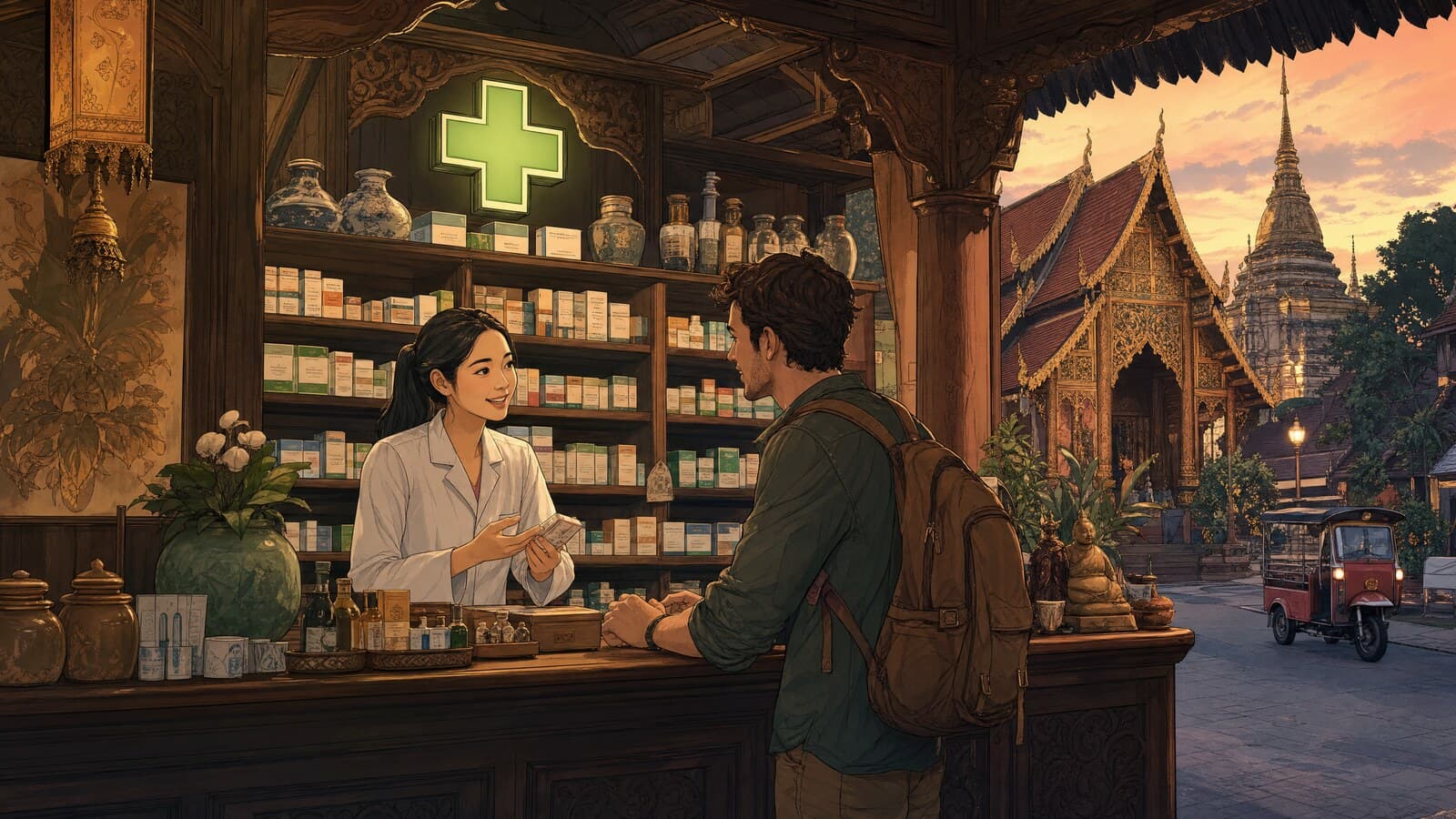
Chiang Mai has three broad tiers. First, the independent pharmacies — small, often family-run shops that appear every few hundred metres around the Old City, Nimman and the university. Look for a green cross on the sign, or the Thai word ยา ("ya" — medicine). Second, the chains: Boots and Watsons sit in most malls, and are best thought of as chemists in the British high-street sense — reliable for toiletries, sunscreen, skincare and basic remedies, and generally stricter about what they will sell. Third, hospital pharmacies at places like Chiang Mai Ram and Bangkok Hospital Chiang Mai, which dispense what their doctors prescribe, handle medicines needing careful storage, and in some cases run around the clock.
Talk to the pharmacist — that's the whole point
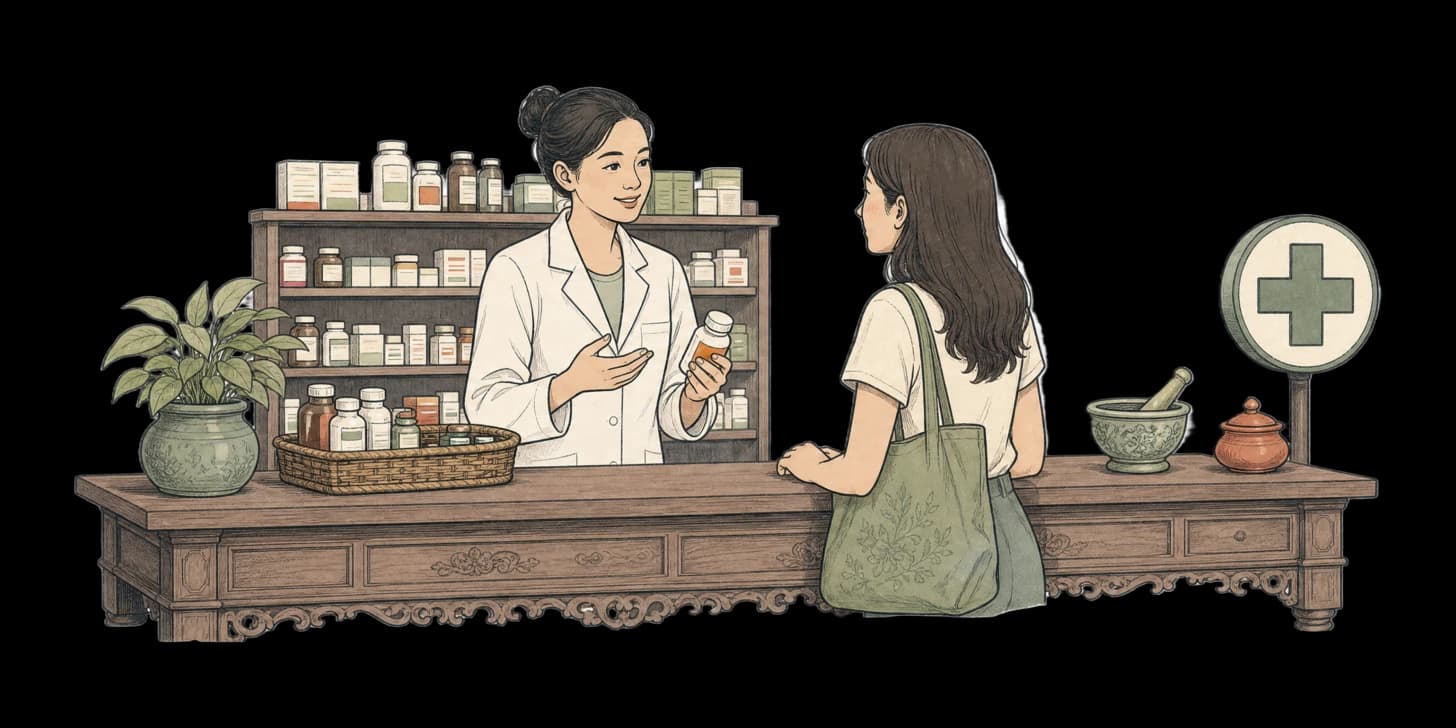
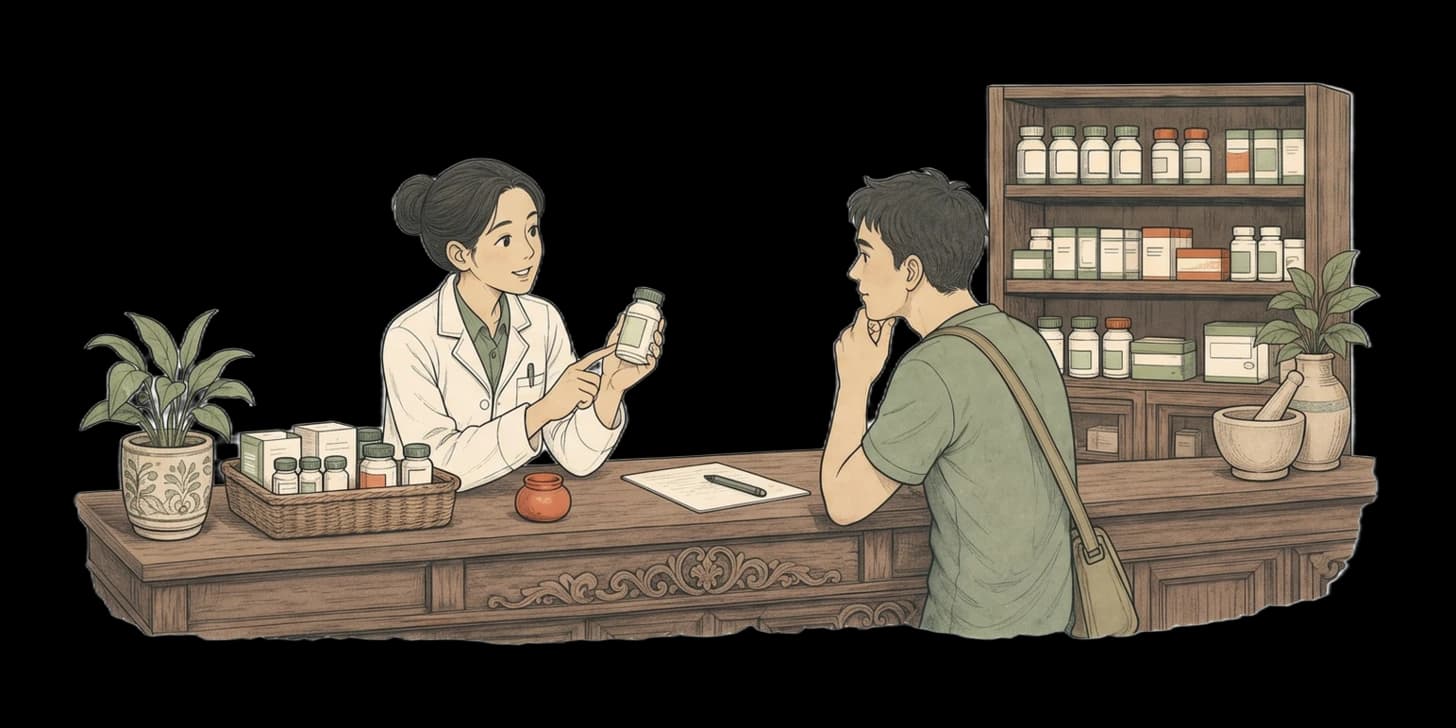
Licensed Thai pharmacies operate under a qualified pharmacist, and in central Chiang Mai many of them speak good English. For minor ailments — an upset stomach, a heat rash, an infected mosquito bite — describing your symptoms usually gets you sensible first-line advice and something suitable for very little money. A few points of etiquette: not everyone behind the counter is the pharmacist, so ask to speak to them if you have a real question; a translation app bridges any language gap; and be upfront about anything else you're taking. For prevention rather than cure — jabs before a jungle trek, say — a travel clinic is the better stop, and our guide to vaccinations and travel clinics in Chiang Mai covers those.
What's more available over the counter than at home
Thai law sorts medicines into categories, and the broad middle category — including most antibiotics and many other medicines that would need a prescription in Western countries — can legally be dispensed by a licensed pharmacist without one. We'd rather tell you plainly than let you discover it by surprise — but with an honest caveat: easy access is not a reason to self-prescribe. Antibiotics do nothing for colds or flu, casual use fuels antibiotic resistance — a problem Thailand is actively campaigning against — and some infections genuinely need a diagnosis first. If a pharmacist declines to sell you something and points you to a doctor instead, that's professionalism, not obstruction. Treat the open counter as a convenience for minor, familiar complaints, not a substitute for medical care.
What's controlled, restricted or simply unavailable
At the other end of the scale sit prescription-only "specially controlled" medicines, and beyond them substances regulated under Thailand's narcotics and psychotropics laws. In practice this means opioid painkillers, sleeping tablets, many psychiatric medicines and some ADHD medications are hospital-dispensed only, hard to source, or not available in Thailand at all. If you rely on medication in these families, plan ahead: don't assume you can refill here, and check with a hospital or your prescriber before travelling. Bringing your own supply? Thai FDA rules require a permit for certain controlled medicines — applied for at least 15 days before flying — plus the prescription, a declaration on arrival, and a capped supply (up to 90 days for eligible categories). A few substances cannot be brought in at all, and these rules sit alongside Thailand's other strict prohibitions, mapped in our guide to what's actually illegal in Thailand. Verify current requirements on the Thai FDA's official pages before you fly.
Generics, brand names and prices
The brand you know at home may not exist here, so bring the molecule name, not the brand — the generic name printed in small type on your packaging. A photo of the box and your prescription helps too. Thai-made generics are everywhere, perfectly mainstream, and often startlingly cheap by Western standards; imported originals cost more, and hospital pharmacies add a noticeable markup for convenience. Two habits worth keeping: check expiry dates, and buy from licensed pharmacies — counterfeits are rare in established shops, but the habit costs nothing.
When the pharmacy isn't the right stop
Good pharmacists will tell you this themselves: some things need a doctor. A fever that persists in a dengue region needs a blood test, not guesswork; chest pain, breathing trouble, deep cuts, animal bites and anything involving a small child belong at a clinic or hospital, where care in Chiang Mai is excellent and inexpensive — our healthcare in Chiang Mai guide explains the options. And since hospital visits are precisely where cover earns its keep, it's worth having decent travel insurance sorted before you need it.
Insulin and fridge-kept medicines
A last note for anyone whose medication needs the cold chain. Hospital pharmacies and some well-established independents stock insulin and other refrigerated medicines properly chilled — call ahead to confirm, bring a small cool bag for the ride home, and never leave medicine in a scooter's under-seat box in a city that spends months above 30°C. For long stays on temperature-sensitive medication, registering with one of the private hospitals makes refills and storage questions far simpler. Your fridge at Ada House, naturally, is at your disposal.
Frequently asked questions
How do I find a pharmacy in Chiang Mai?
Look for a green cross sign or the Thai word ยา ("ya", meaning medicine). Independent pharmacies appear every few hundred metres around the Old City, Nimman and the university, Boots and Watsons sit in most malls, and hospitals such as Chiang Mai Ram and Bangkok Hospital Chiang Mai have their own pharmacies, some running around the clock.
Do pharmacists in Chiang Mai speak English?
In central Chiang Mai, many do. Licensed pharmacies operate under a qualified pharmacist who can give sensible first-line advice for minor ailments — though not everyone behind the counter is the pharmacist, so ask to speak to them, and use a translation app if needed. For anything concerning your own health, this is general information, not medical advice: talk to a pharmacist or doctor about your situation.
Can you really buy antibiotics over the counter in Thailand?
Thai law lets licensed pharmacists dispense many medicines — including most antibiotics — without a prescription. That easy access is not a reason to self-prescribe: antibiotics do nothing for colds or flu, casual use fuels antibiotic resistance, and some infections genuinely need a doctor's diagnosis first. This is general information, not medical advice.
Can I bring my own medication into Thailand?
It depends on the medicine. Certain controlled medicines — opioid painkillers, many psychiatric medicines, some ADHD medications — require a Thai FDA permit applied for at least 15 days before flying, plus your prescription, a declaration on arrival and a capped supply (up to 90 days for eligible categories); a few substances cannot be brought in at all. Always verify current requirements on the Thai FDA's official pages before you fly.
What if my usual brand of medicine doesn't exist in Thailand?
Bring the molecule name, not the brand — the generic name printed in small type on your packaging — plus a photo of the box or your prescription. Thai-made generics are mainstream and often startlingly cheap, while imported originals cost more and hospital pharmacies add a markup.
When should I go to a clinic or hospital instead of a pharmacy?
A persistent fever in a dengue region needs a blood test, not guesswork — and chest pain, breathing trouble, deep cuts, animal bites and anything involving a small child belong at a clinic or hospital. Care in Chiang Mai is excellent and inexpensive, and good pharmacists will point you there themselves. This is general information, not medical advice.